 Quick View
Microevolution in Action: Lemur Tooth Size, Natural Selection & Gene Pool Change (Biology)
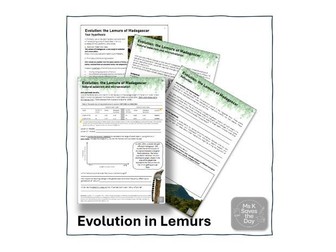
Investigate evolution using a real-world study of ring-tailed lemurs! Explore microevolution, natural selection, selective pressures and changes in allele frequency in this resource using lemur teeth as an example.
In this lesson, students investigate how an environmental pressure influences survival of lemurs and the inheritance of alleles, leading to changes in tooth size over subsequent generations.
This 4 page worksheet activity is a standalone resource, which guides learners through key concepts of evolution, navigating common misconceptions carefully.
This activity is grounded in published scientific research, but presented in a clear, student-friendly way suitable for secondary biology classrooms.
The activity can be completed as a whole, challenging learners to think and reflect metacognitively about their own preconceptions or can be truncated to a shorter two page activity (pages 2a, 2b).
Teaching notes
• No specialist equipment required (printable worksheet)
• Works as a standalone lesson or as part of an evolution unit
• Academic references are provided for teacher background knowledge