 Quick View
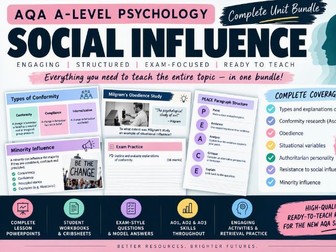
AQA A-Level Psychology: Social Influence - Complete Unit Bundle
Complete AQA A-Level Psychology Social Influence bundle FEATURING 14 ready-to-teach lessons, workbooks, exam practice and model answers.
Stop planning the Social Influence topic from scratch.
This comprehensive AQA A-Level Psychology bundle contains everything you need to confidently teach the entire Social Influence unit, from first delivery through to revision and exam preparation.
Designed with both teacher workload and student outcomes in mind, this bundle combines engaging lesson content, structured student materials and explicit exam-skills instruction to help students develop secure knowledge and strong examination performance.
What’s Included?
Complete lesson PowerPoints covering the Social Influence topic
Structured student workbooks and crib sheets
AO1 knowledge-building activities
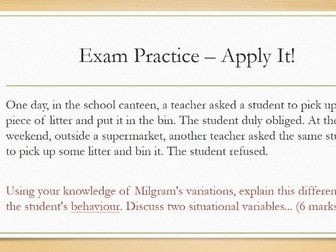
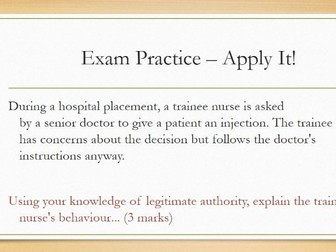
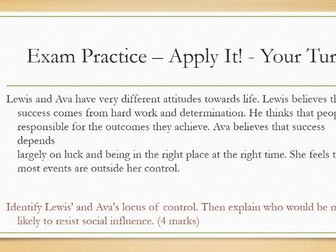
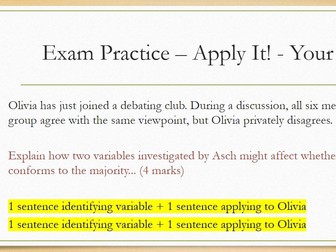
AO2 application tasks and scenario practice
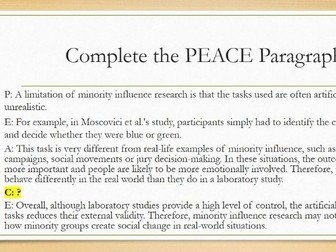
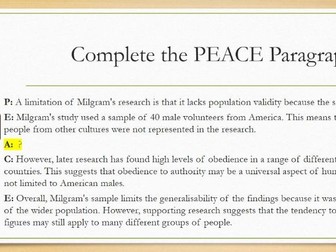
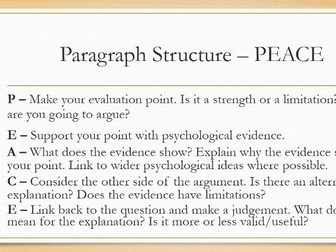
AO3 evaluation activities
Retrieval practice throughout
Exam-style questions
Model answers and worked examples
Independent learning opportunities
Assessment and exam-skills support
Easily editable resources to suit your teaching style
Why Teachers Love This Bundle
This isn’t simply a collection of slides.
Every lesson has been designed to develop students’ understanding of Psychology whilst continually reinforcing the skills required for success in A-Level examinations.
Students are guided through:
Building secure AO1 knowledge
Applying theories to novel situations
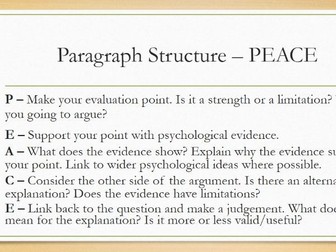
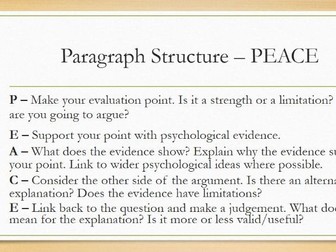
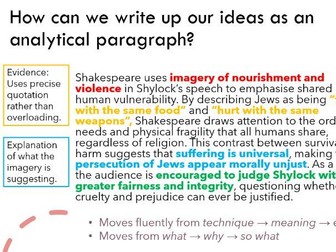
Developing sophisticated AO3 evaluation
Analysing psychological research
Constructing effective exam responses
Improving confidence with extended-answer questions
The resources follow a consistent structure across the unit, allowing students to focus on learning rather than adapting to different lesson formats each week.
Across the bundle, students will develop their understanding of:
Types of conformity
Explanations of conformity (NSI and ISI)
Conformity research, including Asch’s studies
Situational variables affecting obedience
Situational explanations of obedience
Dispositional explanations of obedience
Resistance to social influence
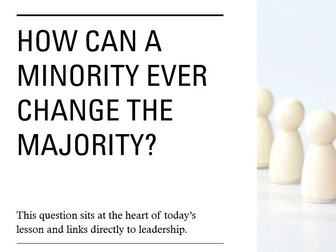
Minority influence
Alongside developing the AO1, AO2 and AO3 skills required for A-Level success.
Save Hours of Planning
Whether you’re teaching Social Influence for the first time or looking to refresh an existing scheme of work, this bundle provides high-quality, classroom-ready resources that can be delivered immediately or adapted to suit your students.
Purchasing the bundle offers substantial savings compared to buying individual lessons separately, making it the most cost-effective way to access the complete Social Influence unit.