Simone Veil WWII, Women’s Rights, Europe & Panthéon.Quick View
NadiaHerzog

Simone Veil WWII, Women’s Rights, Europe & Panthéon.

(0)
Parlez-vous l’Histoire de France ? – Simone Veil | French History Activities Faites découvrir à vos élèves le parcours exceptionnel de Simone Veil, de son enfance à Nice à son entrée au Panthéon, à travers une ressource progressive qui mêle lecture, histoire, compréhension, enquête, réflexion et esprit critique. Ce livret ne se limite pas à raconter une biographie. Les élèves suivent Simone Veil à travers les grandes étapes de sa vie et découvrent, à travers son parcours, plusieurs moments essentiels de l’histoire française et européenne du XXe siècle. Au programme • Simone Jacob et son enfance à Nice • La persécution des Juifs pendant la Seconde Guerre mondiale • La déportation à Auschwitz-Birkenau • Survivre et revenir en France • La reconstruction après la guerre • Simone Veil magistrate • Son action au sein de l’administration pénitentiaire • Le débat autour de la loi Veil de 1974-1975 • Les femmes qui ont ouvert la route • Simone Veil et la construction européenne • 1979 et le Parlement européen • La mémoire et le témoignage • Simone Veil face aux insultes et à la violence du débat public • La famille Jacob • Les femmes du Panthéon • L’entrée de Simone et Antoine Veil au Panthéon en 2018 • Activités de réflexion personnelle • Bilan final Une progression en plusieurs niveaux Green Level Une première découverte accessible de Simone Veil et de son parcours. Blue Levels Des lectures progressives accompagnées d’activités de compréhension, de vocabulaire, de chronologie et de réflexion. Purple Missions Les élèves deviennent enquêteurs et historiens : • Témoigner ou se taire ? • Les femmes qui ont ouvert la route • Justice ou injustice ? • Construire l’Europe pour la paix Les élèves travaillent notamment ✓ Reading comprehension ✓ French vocabulary ✓ Chronology ✓ Historical documents and sources ✓ True or False activities ✓ Critical thinking ✓ Historical reasoning ✓ Written expression ✓ Discussion and debate ✓ Citizenship and human rights ✓ Memory and remembrance
Parlez-vous l’Histoire de France ? – Émile ZolaQuick View
NadiaHerzog

Parlez-vous l’Histoire de France ? – Émile Zola

(0)
Parlez-vous l’Histoire de France ? – Émile Zola Découvrez Émile Zola autrement à travers un livret de 26 pages en français, à la croisée de l’Histoire, de la littérature, de l’art et de l’éducation civique. Qui était vraiment Émile Zola ? Un grand romancier ? Un journaliste ? Un observateur de la société française ? Un défenseur de la justice ? Un ami des artistes ? Un photographe passionné ? Dans ce livret richement illustré, les élèves découvrent progressivement l’homme, l’écrivain et son époque, depuis son enfance entre Paris et Aix-en-Provence jusqu’à son engagement dans l’affaire Dreyfus et son entrée au Panthéon. Au programme : • une BD d’introduction autour de J’accuse…! • une progression de lecture et de compréhension du niveau vert aux niveaux bleus • 4 missions pourpres pour enquêter, réfléchir et argumenter • l’affaire Dreyfus et la publication de J’accuse…! • la mystérieuse mort de Zola • Zola au Panthéon • les Rougon-Macquart et le grand projet littéraire de Zola • des extraits et activités autour de Germinal, Au Bonheur des Dames, La Bête humaine, L’Assommoir et J’accuse…! • Zola et ses amis artistes • Zola et Paul Cézanne • Zola photographe • le XIXe siècle et ses grandes figures • des activités de compréhension, vocabulaire, analyse, recherche, expression écrite et réflexion • un bilan final • une page personnelle « Mon avis sur Émile Zola » permettant aux élèves de comparer ce qu’ils savaient avant avec ce qu’ils ont appris. Les élèves ne se contentent pas de mémoriser une biographie. Ils lisent, observent, enquêtent, confrontent des informations, découvrent des textes et réfléchissent aux choix d’un écrivain qui décide d’intervenir dans les grands débats de son époque. Une ressource particulièrement adaptée au CM2 et au collège, pour travailler l’Histoire de France tout en développant la compréhension de l’écrit, la culture littéraire, l’esprit critique et l’expression personnelle. 26 pages • En français • Histoire + littérature • Lectures • Documents • Enquêtes • Réflexion
Victor Hugo – Histoire de France & LittératureQuick View
NadiaHerzog

Victor Hugo – Histoire de France & Littérature

(0)
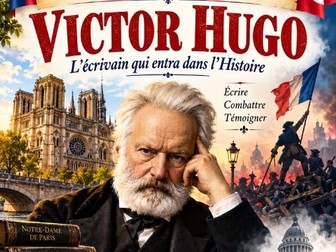
Victor Hugo – Histoire de France & Littérature | Textes, enquêtes et activités RESSOURCE ENTIÈREMENT EN FRANÇAIS Partez à la découverte de Victor Hugo, non seulement comme l’un des plus grands écrivains français, mais aussi comme poète, homme politique, artiste, exilé et témoin engagé de son siècle. Ce livret entièrement illustré permet aux élèves d’explorer sa vie, ses œuvres et ses combats à travers des documents historiques, des textes authentiques, des activités de compréhension, des missions d’enquête et des activités d’expression et de réflexion. Au programme Les élèves découvrent notamment : l’enfance et les premiers écrits de Victor Hugo ; son immense succès littéraire ; la mort tragique de sa fille Léopoldine ; son engagement politique ; son combat contre la peine de mort et la misère ; son opposition à Napoléon III ; son exil et sa vie à Hauteville House, à Guernesey ; son retour en France ; sa mort, ses funérailles nationales et son entrée au Panthéon. Des textes de Victor Hugo Le livret permet également de découvrir et d’étudier plusieurs œuvres et extraits : Melancholia • Les Misérables : Cosette • Les Misérables : Gavroche • Le Dernier Jour d’un condamné • Les Châtiments • Demain, dès l’aube • Les Djinns Les élèves lisent, observent, comprennent, interprètent et donnent progressivement leur propre avis sur les textes. Des missions pour enquêter Les missions permettent de devenir tour à tour historien, enquêteur, juré ou journaliste : Le procès de Victor Hugo L’enquête des Misérables Hugo contre Napoléon III Une place au Panthéon ? Et pour aller plus loin… Le livret comprend également : une BD d’introduction ; une progression Green Level puis Blue Levels ; Hugo et Notre-Dame de Paris ; une visite de Hauteville House ; les grands personnages de Victor Hugo ; un Art Corner consacré à Victor Hugo dessinateur ; « Si tu rencontrais Victor Hugo… » ; « Mon avis sur Victor Hugo » ; un bilan final. Les élèves rencontrent Jean Valjean, Cosette, Gavroche, Quasimodo, Esmeralda et d’autres personnages tout en découvrant la société française du XIXe siècle. Une question au cœur du livret Comment un écrivain est-il devenu une figure de l’Histoire de France ? À travers la littérature et l’Histoire, les élèves découvrent un Victor Hugo qui écrit, observe, dénonce, défend et témoigne. Une ressource riche pour travailler l’Histoire de France, la littérature, la compréhension écrite, le vocabulaire, l’expression, l’analyse de documents et l’esprit critique. Lire • Comprendre • Enquêter • Réfléchir • S’exprimer Ressource 100 % en français
Lucie Aubrac | Résistance | Femmes remarquablesQuick View
NadiaHerzog

Lucie Aubrac | Résistance | Femmes remarquables

(0)
Parlez-vous l’Histoire de France ? – Lucie Aubrac | Résistance | Femmes remarquables Partez à la découverte de Lucie Aubrac, enseignante, résistante et grande figure de l’Histoire de France ! Cette ressource de 19 pages en français propose aux élèves de découvrir le parcours exceptionnel de Lucie Aubrac à travers des textes accessibles, des documents illustrés, des activités de compréhension, des enquêtes historiques et des missions de réflexion. De son entrée dans la Résistance à son engagement au sein de Libération-Sud, de la clandestinité à l’arrestation de Raymond Aubrac, les élèves suivent son parcours et découvrent comment elle participe à la spectaculaire opération du 21 octobre 1943 permettant la libération de plusieurs prisonniers. Mais le livret ne s’arrête pas à la Seconde Guerre mondiale. Les élèves découvrent également Lucie Aubrac comme enseignante, témoin auprès des jeunes, défenseuse de la mémoire et femme engagée. CONTENU Introduction • Couverture • BD d’introduction • Niveau vert : Qui était Lucie Aubrac ? 7 niveaux bleus • Une professeure entre en Résistance • Libération-Sud : des mots pour résister • Une vie clandestine • Caluire : une arrestation qui change tout • Faire évader Raymond • 21 octobre 1943 : une opération audacieuse • Vers la liberté 4 missions pourpres • Qui est Lucie ? • Résister : jusqu’où aller ? • Témoin de l’Histoire • Lucie Aubrac au Panthéon ? Pour aller plus loin • Les femmes dans la Résistance • Lucie et Raymond : un couple dans la Résistance • Témoin auprès des jeunes : transmettre pour ne pas oublier • Lucie Aubrac et les droits des femmes • Bilan final LES ÉLÈVES VONT… • lire et comprendre des textes historiques accessibles ; • observer et interpréter des documents ; • remettre des événements dans l’ordre ; • enrichir leur vocabulaire historique ; • découvrir différentes formes de Résistance ; • comprendre le rôle essentiel des femmes dans la Résistance ; • distinguer mémoire, témoignage et travail de l’historien ; • argumenter et justifier leurs choix ; • réfléchir aux notions de liberté, de courage, d’engagement et de citoyenneté. Les activités alternent compréhension, vrai/faux, classement, association, observation de documents, prise de décision, argumentation et expression personnelle. Une ressource pensée pour faire de l’Histoire une véritable enquête et permettre aux élèves de comprendre non seulement ce que Lucie Aubrac a fait, mais aussi les choix, les risques et les valeurs qui ont marqué son parcours. Ressource entièrement en français 19 pages 7 niveaux bleus 4 missions pourpres Textes, documents, activités et bilan final Une nouvelle ressource de la collection Parlez-vous l’Histoire de France ? – Femmes remarquables.
The Moon Activities | Apollo 11, Artemis, Lunar ScienceQuick View
NadiaHerzog

The Moon Activities | Apollo 11, Artemis, Lunar Science

(0)
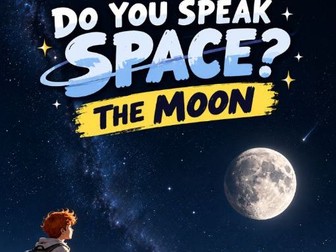
Take your students on a journey from the violent birth of the Moon to the next generation of lunar exploration! This illustrated cross-curricular resource combines English, science, history, speaking, critical thinking and hands-on STEM challenges to help students explore our closest neighbour in space. Students don’t simply read about the Moon. They investigate mysteries, analyse evidence, solve problems, make decisions, experiment and imagine the future of lunar exploration. DISCOVER THE MOON Students explore fascinating questions including: • How was the Moon born? • What is the Giant Impact Hypothesis? • Why does the Moon have so many craters? • Why does the Moon change shape in the sky? • Why do we always see almost the same side? • What is the difference between the near side and the far side? • How do solar and lunar eclipses happen? • How does the Moon affect Earth’s tides? • Is there really water on the Moon? • Could humans one day live there? FROM APOLLO TO ARTEMIS Travel through the history and future of lunar exploration: • Apollo 11 and the first Moon landing • Astronauts and life on the Moon • Moon rocks and scientific discoveries • India’s Chandrayaan missions • China’s Chang’e missions • Exploration of the lunar far side • Artemis II and future crewed exploration • Artemis III and plans for future lunar surface missions • The possibilities and challenges of future Moon bases
Space Conquest: From the Space Shuttle to ArtemisQuick View
NadiaHerzog

Space Conquest: From the Space Shuttle to Artemis

(0)
DO YOU SPEAK SPACE? – SPACE CONQUEST: FROM THE SPACE SHUTTLE TO ARTEMIS Take your students beyond the Apollo era and into the new age of space exploration! This illustrated, activity-packed resource follows the story of space exploration from the Space Shuttle to Artemis, introducing students to European, Chinese, Indian and international achievements along the way. Students discover how space exploration has changed: reusable spacecraft, Ariane rockets, new space nations, permanent space stations, robotic exploration of the Solar System, Mars missions and the return to the Moon. 7 BLUE LEVELS • The Space Shuttle • Europe & Ariane • New Space Nations: China, India & Japan • Space Stations • Exploring the Solar System • Mars Exploration • Back to the Moon & Artemis 4 PURPLE MISSIONS Students move from reading to investigation, problem solving and decision making: • The Moon Base Challenge • Mission to Mars • Message from Voyager • Where Should We Go Next? 8 EXTRA SPACE FILES Go further with engaging topics that connect space exploration with science, technology and society: • Astronaut, Cosmonaut, Taikonaut… Who Is Who? • Hubble & James Webb: Two Eyes on the Universe • Mars: The Goal? • Who Owns Space? • Space Tourism • Can We Live Without Satellites? • Space Junk: A Growing Problem • Women of the New Space Age 2 HANDS-ON STEM CHALLENGES Balloon Rocket Challenge Students build, test, measure and improve a simple balloon rocket while exploring action and reaction. Build a Mars Habitat Students become engineers and design, build, test and improve a habitat capable of protecting future explorers on Mars.
Kilimanjaro – Geography, Science & Culture Activities |Quick View
NadiaHerzog

Kilimanjaro – Geography, Science & Culture Activities |

(0)
DO YOU SPEAK PLACES? – KILIMANJARO Take your students on an unforgettable journey from the African plains to Uhuru Peak, 5,895 metres above sea level! This colorful, highly visual resource turns Mount Kilimanjaro into a fascinating cross-curricular adventure combining geography, science, history, culture, reading, speaking and critical thinking. Students discover where Kilimanjaro is, explore its volcanic origins and changing landscapes, travel through its different climate zones, meet its wildlife and learn what makes climbing Africa’s highest mountain such an extraordinary challenge. But the journey goes much further! 7 BLUE LEVELS Students progressively explore: • Kilimanjaro’s location in Tanzania • its volcanic origins • landscapes from the plains to the summit • plants and animals • changing climates and altitude zones • life on the mountain • the challenge of climbing Kilimanjaro Each page combines accessible reading with varied activities, observation, vocabulary, comprehension and thinking tasks. 4 PURPLE MISSIONS Students become investigators and problem-solvers: The Disappearing Glaciers Compare past and present evidence and investigate how Kilimanjaro’s glaciers are changing. The Mystery of the Snow How can there be snow so close to the Equator? Students use scientific clues to solve the mystery. The Chagga Files Discover the people who live on the slopes of Kilimanjaro, their agriculture, villages and relationship with the mountain. Kilimanjaro in 2050 Imagine the mountain’s future and explore questions involving glaciers, wildlife, tourism, local communities and conservation. EXTRA DISCOVERY PAGES Go even further with: • The Seven Summits • Porters of Kilimanjaro • Where Did the Oxygen Go? • Who Was First? • What Does “Kilimanjaro” Mean? These extension pages introduce fascinating connections with world geography, altitude science, human stories and historical investigation. MINI REVIEW – REACH UHURU PEAK!
Sputnik to Apollo 11 | Space Conquest Reading & HistoryQuick View
NadiaHerzog

Sputnik to Apollo 11 | Space Conquest Reading & History

(0)
DO YOU SPEAK SPACE? – SPACE CONQUEST From Sputnik to the Man on the Moon Take your students on an extraordinary journey through one of the most exciting chapters of modern history! From the mysterious “beep… beep…” of Sputnik 1 to Yuri Gagarin’s historic flight, from Laika and Valentina Tereshkova to the first human steps on the Moon, this illustrated booklet turns the Space Race into a reading, investigation and critical-thinking adventure. Students don’t simply learn dates and names. They investigate mysteries, compare the American and Soviet space programmes, examine evidence, debate historical questions and discover how competition eventually gave way to cooperation in space. WHAT’S INCLUDED? Introduction & Green Level • Intro comic set in a Space Museum • The Space Race – essential vocabulary and historical context 7 Blue Levels • Sputnik – Beep! Beep! From Space • Laika – A One-Way Journey • Yuri Gagarin – The First Human in Space • America Joins the Race • The Race Gets Dangerous • Apollo 11 – One Small Step, A Giant Leap • A Lasting Legacy 4 Purple Investigation Missions • The Space Race Trial • The Lost Cosmonaut File – Fact, Rumour or Conspiracy? • The Secret Race to the Moon – the Soviet lunar programme and the N1 rocket • Space Race Time Capsule GO FURTHER • Valentina Tereshkova – The First Woman in Space • Cosmonaut or Astronaut? • The Space Suit – Your Personal Spacecraft • Meeting in Space – Apollo–Soyuz: From Rivals to Partners • Complete Mini Review SKILLS Students practise: • Reading comprehension • Vocabulary in context • Chronology and timelines • Historical investigation • Fact vs. claim vs. evidence • Critical thinking • Speaking and discussion • Written justification • Comparing perspectives • Using historical evidence MORE THAN A SPACE WORKSHEET Why did a tiny satellite frighten a superpower? Why was Laika sent on a mission from which she could never return? Why did the Soviet Union, after so many early successes, fail to put a cosmonaut on the Moon? Were there really “lost cosmonauts”? And how did two Cold War rivals finally end up shaking hands in space? These questions encourage students to think like historians, not simply memorize facts. Perfect for space units, modern history, science and technology topics, cross-curricular learning, reading comprehension, enrichment activities and independent work. From Sputnik to Apollo 11, the Space Race becomes an investigation.
Les Champs-Élysées – French Reading, HistoryQuick View
NadiaHerzog

Les Champs-Élysées – French Reading, History

(0)
Take your students on a journey through one of the most famous avenues in the world, from its origins under André Le Nôtre to the Champs-Élysées of today. This illustrated French resource goes far beyond a simple reading comprehension. Students explore how the avenue changed over time, meet important historical figures, investigate the historic axis of Paris and discover how the Champs-Élysées became a place for parades, commemorations, sporting victories and national celebrations. Students will: discover the origins and evolution of the Champs-Élysées explore André Le Nôtre, Napoleon, Haussmann and other key figures understand the historic axis of Paris read accessible informational texts in French complete comprehension, vocabulary and chronology activities investigate historical documents and visual clues distinguish between parades, commemorations and celebrations discover Victor Hugo and the Unknown Soldier explore the Tour de France and World Cup celebrations think critically about tourism, traffic and the future of the avenue complete four engaging Purple Missions express and justify their own opinions in French Purple Missions The Historic Axis Mystery Save the Champs-Élysées! The Most Beautiful Avenue in the World? Who Made the Champs-Élysées? The resource ends with additional historical documents and a comprehensive review bringing the whole investigation together. Perfect for French, history, culture, interdisciplinary learning, independent work or a Paris/France unit.
New Orleans Activities | Louisiana CultureQuick View
NadiaHerzog

New Orleans Activities | Louisiana Culture

(0)
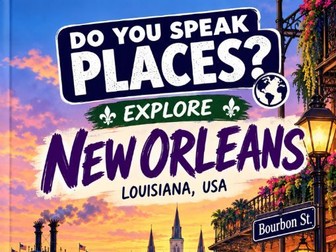
Take your students on an unforgettable journey to New Orleans, Louisiana! This completely redesigned Do You Speak Places? Explore New Orleans booklet combines English learning with geography, history, culture, nature and real-world discovery. Students begin with accessible reading activities before progressing through increasingly rich texts and creative missions. They explore the French Quarter, Bourbon Street, New Orleans streetcars, jazz, Mardi Gras, Lake Pontchartrain, Café du Monde and the Superdome. The adventure then goes deeper. Students investigate New Orleans through four creative Purple Missions before discovering Hurricane Katrina, the Louisiana bayou and wetlands, Tulane University, the fascinating connection between Lake Pontchartrain, the Higgins Boat and D-Day, and the New Orleans Saints. This resource goes far beyond a traditional reading-comprehension packet. Students read, investigate, interpret clues, use maps, make choices, justify opinions, write, speak and think critically. Students will explore: New Orleans and Louisiana The French Quarter & Bourbon Street Historic streetcars The birthplace of jazz Mardi Gras traditions Lake Pontchartrain & its Causeway Café du Monde & beignets The Superdome Hurricane Katrina & the flooding of New Orleans Louisiana bayous, wildlife & wetlands Tulane University & campus life Andrew Higgins, Lake Pontchartrain & the D-Day landing craft The New Orleans Saints & “Who Dat?” culture
Aliénor d’Aquitaine | French History ActivitiesQuick View
NadiaHerzog

Aliénor d’Aquitaine | French History Activities

(0)
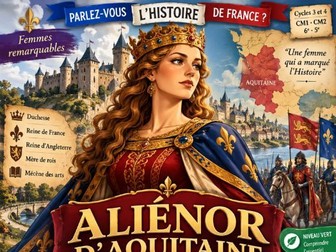
Discover the extraordinary life of Aliénor d’Aquitaine, one of the most fascinating and influential women of the Middle Ages! This fully redesigned French history resource takes students from Aliénor’s inheritance of Aquitaine to her remarkable final years. Students don’t simply read about history: they investigate, compare, interpret, make decisions, write and defend their ideas. What’s included: Illustrated introductory comic strip Green Level introduction 7 progressive Blue Levels Maps, timelines and historical context Aliénor and Louis VII The Second Crusade Henri Plantagenêt and the Plantagenêt territories Political rivalries and family conflicts 4 Purple Missions: Le procès d’Aliénor, Sauvez Richard Cœur de Lion !, Les lettres d’Aliénor, Aliénor au Panthéon des femmes remarquables Aliénor prisonnière Une mère de rois: Richard et Jean Aliénor à 80 ans: toujours sur les routes ! Final comprehensive review Students work with reading comprehension, chronology, maps, historical evidence, argumentation, creative writing and critical thinking throughout the resource. Perfect for a French history unit, medieval history study, interdisciplinary French/history work, independent work, enrichment or historical inquiry. READ • INVESTIGATE • DECIDE • WRITE • THINK LIKE A HISTORIAN
Louis XVI & la Révolution FrançaiseQuick View
NadiaHerzog

Louis XVI & la Révolution Française

(0)
LOUIS XVI – FROM VERSAILLES TO THE FRENCH REVOLUTION Take your students beyond dates and names with a complete historical investigation into the reign and fall of Louis XVI. Designed in French, this resource helps students understand how a young king inherited a kingdom in financial crisis, attempted to govern during a period of enormous change, faced the French Revolution, fled to Varennes, was put on trial, and ultimately lost both his crown and his life. Students are encouraged not only to learn what happened, but also to investigate why it happened, examine evidence, distinguish facts from interpretations, and consider the choices available to historical figures. Students will explore: • Louis XVI’s childhood and unexpected path to the throne • His marriage to Marie-Antoinette • Versailles, wars and the financial crisis • Louis XVI and the American Revolution • The Estates-General of 1789 • The beginning of the French Revolution • The Flight to Varennes • The fall of the monarchy • The trial and execution of Louis XVI • The mystery of the Armoire de fer • Louis XVI’s interest in science, geography, navigation and exploration • La Pérouse • What happened in France after Louis XVI 4 PURPLE MISSIONS Students become historical investigators through four deeper challenges: The Trial of Louis XVI Examine arguments from the prosecution and defense. Varennes: The Investigation Reconstruct the failed escape using clues, chronology and maps. The King Faces the Revolution Explore the difficult choices Louis XVI faced as France changed around him. What If the King Had Not Fled? Create an alternative historical scenario while learning the difference between history and uchronia. Skills included ✓ Reading comprehension ✓ French vocabulary ✓ Chronology and timelines ✓ Cause and consequence ✓ Maps and historical documents ✓ Critical thinking ✓ Fact vs. interpretation ✓ Historical reasoning ✓ Written expression ✓ Speaking and discussion ✓ True/false and matching activities ✓ Final review MORE THAN A BIOGRAPHY Was Louis XVI simply a king overwhelmed by events? Could the monarchy have survived? What did the secret papers found in the Tuileries reveal? Why did a king help American revolutionaries fight another king? These questions invite students to discover that history is rarely black and white. Perfect for French history, French immersion, bilingual classrooms, Francophone programs, homeschool, and interdisciplinary history/French lessons. Parlez-vous l’Histoire de France ? A visually rich journey from Versailles to Revolution, designed to make students observe, investigate, question and think like historians.
Josephine Baker Activities | Black History MonthQuick View
NadiaHerzog

Josephine Baker Activities | Black History Month

(0)
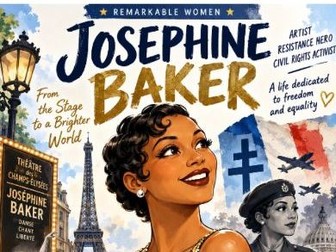
Discover the extraordinary life of Josephine Baker through history, music, critical thinking and creative activities! From her childhood in St. Louis to the stages of Paris, Josephine Baker lived an extraordinary life. She became an international star, helped the French Resistance during World War II, stood against racial segregation, created her famous Rainbow Tribe, spoke at the March on Washington in 1963, and was later honored at the Panthéon in France. This engaging resource takes students far beyond a simple biography. Through progressively challenging activities, they read, investigate, speak, think, create and make connections while discovering the many sides of Josephine Baker. Students will explore: Josephine Baker’s early life and journey from St. Louis to Paris Her rise to international fame Her work with the French Resistance during World War II Secret messages and wartime missions Her French medals and honors Her fight against racism and segregation The Rainbow Tribe and her vision of a more united world Her participation in the 1963 March on Washington Her legacy and entry into the Panthéon J’ai deux amours in a dedicated Music Corner Josephine Baker’s own words and ideas Creative Purple Missions and a final review The activities combine reading comprehension, vocabulary, history, speaking, writing, source analysis, reflection and creative challenges. Students are encouraged not only to learn what Josephine Baker did, but also to consider why her choices mattered. Perfect for Black History Month, Women’s History, World War II, the French Resistance, Civil Rights, biography studies, history and culture lessons, or cross-curricular projects. READ • SPEAK • THINK • CREATE
Marie Curie Activities | Science HistoryQuick View
NadiaHerzog

Marie Curie Activities | Science History

(0)
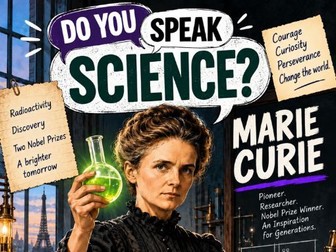
Discover the extraordinary story of Marie Curie through investigation, history, science, reading, and critical thinking! This highly illustrated resource invites students to investigate one central mystery: How did a Polish girl who was once unable to attend university become one of the most famous scientists in history, win two Nobel Prizes, and eventually enter the Panthéon? Rather than simply reading a biography, students follow the evidence step by step, from Maria Skłodowska’s early life in Warsaw to her studies in Paris, her scientific partnership with Pierre Curie, the discovery of polonium and radium, her Nobel Prizes, and the Little Curies of World War I. WHAT’S INCLUDED Green Level – Meet Marie Curie Students discover the first clues about her life, education, scientific career, and journey from Poland to France. 7 Progressive Blue Levels The Secret University The Sisters’ Pact A Room, a University & a Dream Marie & Pierre The Mystery Inside the Rock Two Nobel Prizes The Little Curies Each stage combines accessible informational texts with comprehension, vocabulary, timelines, evidence analysis, sequencing, comparison, and short written responses. 4 Purple Investigation Missions The Nobel Prize Trial The Panthéon Mystery The Invisible Danger Bronia’s File Students move beyond simple recall to examine evidence, defend ideas, solve historical questions, role-play, discuss, and write. BEYOND THE LESSON The resource also explores fascinating aspects of Marie Curie’s story through: What a Family! – the remarkable Curie family Her Notebooks Are Still Radioactive! The Curie Legacy Mini Review
Explore the Pyramids | Ancient EgyptQuick View
NadiaHerzog

Explore the Pyramids | Ancient Egypt

(0)
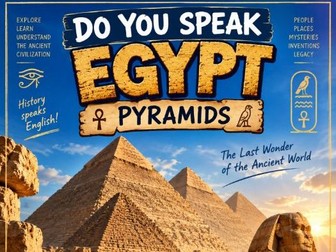
Travel back more than 4,500 years and explore the fascinating world of Ancient Egypt and the Pyramids of Giza! This cross-curricular resource combines English, History, STEM, Maths and critical thinking in a highly visual, progressive learning adventure. Students don’t simply read about the pyramids. They investigate evidence, compare theories, solve problems, experiment, calculate, discuss and think like historians and engineers. Students will explore: The Great Pyramid and how it may have been built Inside the Great Pyramid The people who built the pyramids Khufu and the pharaohs The three pyramids of Giza Mummies, tombs and beliefs about the afterlife The Great Sphinx 4 Purple Missions Pyramids Around the World The Orion Mystery Save the Great Pyramid! The Sphinx Cold Case 2 hands-on STEM Challenges Can You Build a Pyramid? Students design, build, test and improve their own structure. The Ramp Test: Students experiment with different angles and investigate the relationship between slope, effort and distance. Also included: Maths Corner: The Pyramids by Numbers Speak Like a Historian: Evidence First! Mini Review: The Great Pyramid Challenge Vocabulary, reading comprehension, speaking, problem solving and historical enquiry throughout
Charles de Gaulle et la Ve RépubliqueQuick View
NadiaHerzog

Charles de Gaulle et la Ve République

(0)
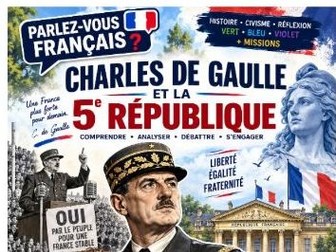
Faites découvrir Charles de Gaulle et la naissance de la Ve République à travers un livret riche, progressif et résolument tourné vers la réflexion historique. Cette ressource ne se limite pas à mémoriser des dates. Les élèves découvrent la crise de 1958, le retour de Charles de Gaulle, la Constitution de la Ve République, le référendum, l’évolution de l’élection présidentielle, les pouvoirs du Président, la guerre d’Algérie, Mai 68, la politique internationale et le départ de De Gaulle en 1969. Les activités les amènent progressivement à observer, comprendre, comparer, contextualiser, vérifier des sources, argumenter et construire une réflexion personnelle. Le livret comprend : 1 Niveau Vert pour poser les repères essentiels 7 Niveaux Bleus progressifs 4 Missions Pourpres consacrées à des problématiques historiques plus complexes un Coin de l’historien autour de « Je vous ai compris » De Gaulle et la télévision De Gaulle et le monde une enquête sur les phrases de De Gaulle : vraies, fausses ou sorties de leur contexte ? 1969 : pourquoi De Gaulle s’en va-t-il ? un Grand Bilan : De Gaulle, l’homme ou les institutions ? Les élèves travaillent notamment sur la stabilité politique, la démocratie, les pouvoirs et contre-pouvoirs, le référendum, la légitimité présidentielle, l’indépendance de l’Algérie, la contestation de Mai 68 et l’héritage institutionnel de De Gaulle.
Olympe de Gouges – Révolution françaiseQuick View
NadiaHerzog

Olympe de Gouges – Révolution française

(0)
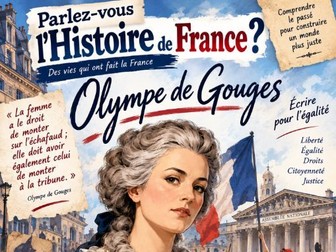
Parlez-vous l’Histoire de France ? – Olympe de Gouges Une femme, une plume, des combats, un héritage. Faites découvrir Olympe de Gouges à travers une ressource illustrée et progressive qui invite les élèves à aller bien au-delà d’une simple biographie. De Marie Gouze à la femme de lettres engagée, de sa dénonciation de l’esclavage à la Déclaration des droits de la femme et de la citoyenne, de ses prises de position pendant la Révolution à son procès en 1793, les élèves découvrent une personnalité complexe tout en apprenant à observer, comparer, contextualiser, argumenter et raisonner en historien. La ressource comprend Un niveau vert Une vie dans la Révolution Frise chronologique et premiers repères 7 niveaux bleus De Marie Gouze à Olympe de Gouges Une femme de lettres Olympe de Gouges et l’esclavage 1789 : des droits vraiment universels ? 1791 : elle réécrit les droits Quand la Révolution se déchire 1793 : la plume devient dangereuse 4 missions pourpres Le duel des Déclarations : 1789 face à 1791 Olympe face à Robespierre Le procès d’Olympe de Gouges Olympe de Gouges au Panthéon ? Pour aller plus loin Olympe de Gouges était-elle féministe ? : réfléchir au vocabulaire historique et aux anachronismes Les femmes dans la Révolution : découvrir différentes formes d’engagement féminin Je parle comme un historien : sources, contexte, citoyenneté, anachronisme, postérité… Après Olympe de Gouges : suivre le long chemin vers l’égalité et les droits politiques des femmes Bilan final : connaissances, compréhension, vocabulaire et raisonnement historique
Time Zones Math Activities | World Time, UTCQuick View
NadiaHerzog

Time Zones Math Activities | World Time, UTC

(0)
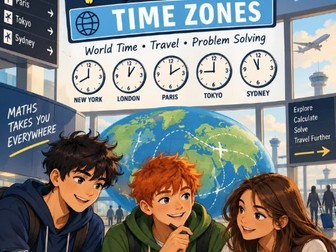
Do You Speak Maths? – Time Zones takes students around the world as they calculate local times, cross midnight, organise international calls, investigate boarding passes and solve travel-based challenges. Rather than practising isolated calculations, students use maths in meaningful situations involving world clocks, flights, sport, space missions, geography and everyday communication. What’s inside? Students progress from guided activities to increasingly challenging problem solving: Green Level Build the foundations: Earth’s rotation, UTC and basic time-zone calculations. 7 Blue Levels Read world clocks • East or West? • calculate local times • organise international calls • work across changing dates • solve airport maths • manage a traveller’s schedule. 4 Purple Missions The New Year Race Mission Control The Champions League Final The Impossible Boarding Pass These missions encourage students to combine several skills, reason, investigate and explain their answers. Cross-curricular learning The resource goes beyond maths with: Historian Corner – Why Greenwich and not Paris? Discover the Prime Meridian and the international decision of 1884. Health Corner – Jet Lag Explore what happens when your watch changes faster than your body clock. Geography Corner – One Country, Many Times! Compare countries using several time zones with the fascinating case of China. Mini Review – Ready to Travel? Bring everything together through world clocks, flights, international communication, geography and reasoning.