Free Primary Colours Activity SheetQuick View
CMYashop

Free Primary Colours Activity Sheet

(0)
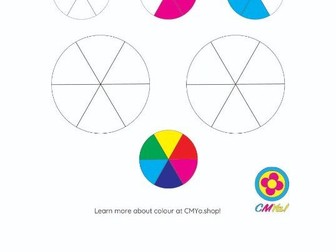
We found a simple and easy way to make colour wheels with easy to access art supplies. Markers work best but the colour wheels can also be made with paint. All you need are cyan, magenta, and yellow materials to layer and create red, green, and blue. The primary colours for art supplies are cyan, magenta, and yellow. This is true for all coloured materials. Red and blue are only primary colours if you are mixing coloured lights. They are too dark to be primary colours for art supplies. You can learn more at CMYa. shop, especially by reading Sonya Rowan’s new book about colour that is available on the Books page.
Free Complementary Colours Activity SheetQuick View
CMYashop

Free Complementary Colours Activity Sheet

(0)
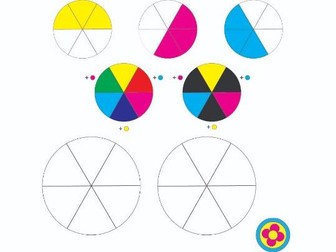
It is easy to create colour wheels using cyan, magenta, and yellow art supplies like markers. This activity sheet shows how you can turn a colour wheel into a black dot. People are often taught the complementary or opposite colours are red/green, blue/orange, and yellow/purple. As Sonya Rowan explains in her book, available at CMYa. shop, the actual complementary colours are red/cyan, blue/yellow, and green/magenta. This is because the primary and secondary colours are able to mix black together. Together they have equal amounts of cyan, magenta, and yellow and enough light and dark to mix black.
Free Tertiary Colours Activity SheetQuick View
CMYashop

Free Tertiary Colours Activity Sheet

(0)
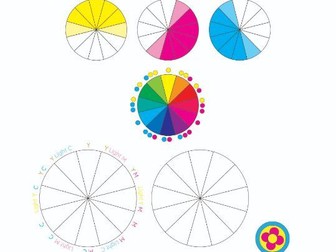
It is easy to create colour wheels using cyan, magenta, and yellow art supplies like markers. This activity sheet shows how to make a 12 colour wheel. Highlighters work well for the lighter version of CMY that is needed for the tertiary colours. Mixing the lighter CMY with a more saturated vivid CMY creates a wider range of colours. Pink and aquamarine are more difficult to find because the magenta and cyan can overpower the lighter yellow. You can experiment with different materials to see what works best. Most people are taught that green, purple, and orange are secondary colours but this isn’t true. Green is a secondary colour when mixing materials. Purple and orange are tertiary colours. The tertiary colours are: orange, pink, purple, azure, aquamarine, and lime. You can learn more about colour at CMYa. shop where there are many resources for learning and teaching others about colour.