 Quick View
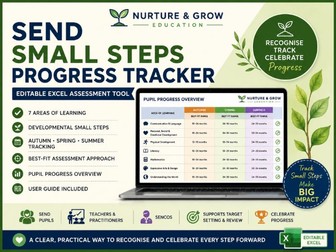
SEND Small Steps Progress Tracker | Excel
An editable Excel SEND progress tracker designed to help teachers identify, recognise and celebrate small-step developmental progress using a best-fit approach.
The SEND Small Steps Progress Tracker provides a clear and practical way to record progress for pupils who may be working developmentally below age-related expectations.
The tracker is organised across broad developmental ranges, allowing practitioners to build an individual picture of a pupil’s strengths, emerging skills and next steps. Progress can be highlighted term by term, making small but meaningful achievements clearly visible across the academic year.
What’s included:
Editable Excel SEND Small Steps Progress Tracker
Professional PDF User Guide
START HERE guidance page
Pupil Progress Overview
Autumn, Spring and Summer progress tracking
Developmental statements organised across broad ranges
Best-fit assessment guidance
Seven key areas of learning
Areas covered:
Communication & Language
Personal, Social & Emotional Development (PSED)
Physical Development, including gross and fine motor skills
Literacy
Mathematics
Expressive Arts & Design
Understanding the World
A best-fit approach
This resource is designed to support professional judgement rather than a rigid checklist approach. Pupils do not need to demonstrate every statement within a developmental range before progress can be recognised.
A pupil may remain within the same broad developmental range while making several significant smaller steps of progress. The termly colour-coding system helps practitioners make this progress visible and celebrate achievement over time.
Ideal for:
SEND pupils
Primary schools
SEND teachers and practitioners
SENCOs
Pupils working developmentally below age-related expectations
Individual progress monitoring
Target setting and review meetings
Supporting evidence of progress over time
The accompanying User Guide provides clear instructions, a worked example and guidance on using the tracker through a best-fit approach.
Please note: This resource is designed to support ongoing assessment and professional judgement. It is not a diagnostic tool and should be used alongside observations and other relevant assessment information.