Visualizing Esterification in 3D: Formic Acid + Ethanol ReactionQuick View
3DChemLab

Visualizing Esterification in 3D: Formic Acid + Ethanol Reaction

(0)
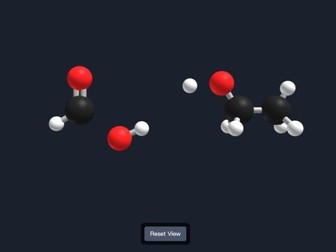
Resource Description:Engage your chemistry students with this interactive 3D visualization of the esterification reaction between formic acid and ethanol. Perfect for A-Level chemistry! What’s included in this interactive tool? This HTML-based resource uses 3D graphics (Three.js) to provide a smooth, step-by-step animation of how esterification occurs at the molecular level. Students can rotate, zoom, and explore the molecules in a fully 3D environment. Key Features: Interactive 3D Models: Clear, standard color-coded representations of molecules (Carbon = Black, Oxygen = Red, Hydrogen = White). Step-by-Step Reaction Mechanism: Step 1 (Bond Breaking): Visually demonstrates the cleavage of the C-O bond in formic acid and the O-H bond in ethanol. Step 2 (Bond Forming): Animates the formation of the new ester bond to create ethyl formate and the formation of the byproduct, water. Clear Equation Display: The overall balanced chemical equation (HCOOH + CH₃CH₂OH ⇌ HCOOCH₂CH₃ + H₂O) is prominently displayed for reference. User Control: Students can reset the view and control the pacing of the reaction steps, making it ideal for both front-of-class demonstrations and independent study. How to use:Simply download the HTML file and open it in any modern web browser. No installation or specialized software is required! It can be easily shared with students via your school’s VLE (Virtual Learning Environment) or displayed on a smartboard during lessons on organic chemistry, carboxylic acids, or alcohols.
Chemical Bonds Explained: Ionic vs. Covalent!Quick View
3DChemLab

Chemical Bonds Explained: Ionic vs. Covalent!

(0)
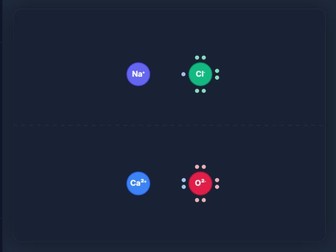
Key Features: Interactive Animations: Students and teachers can click “Form Bonds!” to watch electrons move and bonds form in real-time. Ionic Bonding Mode: Demonstrates electron transfer in NaCl (Sodium Chloride) and CaO (Calcium Oxide). Visually reinforces the formation of charged ions such as Na⁺, Cl⁻, Ca²⁺, and O²⁻. Covalent Bonding Mode: Visualizes electron sharing, showing two single bonds in H₂O (Water) and a strong double bond in O₂ (Oxygen Gas). User-Friendly Interface: Includes a “Reset” button to easily replay animations and interactive tabs to switch between bond types seamlessly. How to Use: This resource is a single HTML file containing a pure Canvas visualization. Simply download the file and open it in any modern web browser. It is perfect for front-of-class demonstrations on an interactive whiteboard or for students to explore independently on their own devices.
3D Interactive Atomic Models ViewerQuick View
3DChemLab

3D Interactive Atomic Models Viewer

(0)
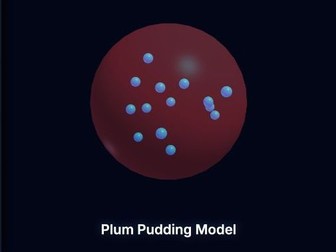
Engage your science students with this interactive 3D viewer exploring the evolution of atomic theory! No installation needed—just open in a web browser. Resource Overview: This ready-to-use HTML file provides a stunning 3D visualization of how our understanding of the atom has changed over time. It is a fantastic visual aid for Chemistry and Physics lessons, helping students grasp complex abstract concepts through interactive exploration. Models Included: Solid Sphere Model (Dalton, 1803): The indivisible atom concept. Plum Pudding Model (Thomson, 1904): Positive sphere with scattered electrons. Nuclear Model (Rutherford, 1911): Dense nucleus with random orbiting electrons. Bohr Model (Bohr, 1913): Protons and neutrons with electrons in fixed energy levels. Quantum Mechanical Model (Present): 3D probability clouds (orbitals). Key Features: Zero Setup: It’s a single .html file. Just double-click to open it in Chrome, Edge, or Safari. Interactive Controls: Teachers or students can easily rotate, zoom in, and switch between models to examine the structures from any angle. Built-in Info Panels: Each model comes with a sidebar explaining the key characteristics and a clear color legend. Auto-Play Function: Includes a “Play” button for a smooth, guided presentation of the atomic timeline. Ideal for middle and high school science classrooms!
Interactive 3D Hydrogen Fuel CellQuick View
3DChemLab

Interactive 3D Hydrogen Fuel Cell

(0)
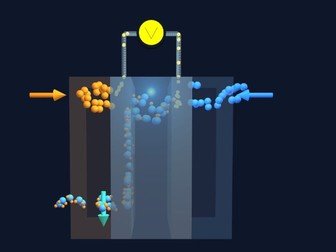
Engage your chemistry students with this interactive 3D simulation of an Alkaline Hydrogen Fuel Cell! This zero-installation, browser-based tool is perfect for demonstrating complex electrochemical concepts on a smartboard or for independent student revision. Key Features: Interactive 3D Model: Users can drag to rotate and scroll to zoom, exploring the fuel cell’s structure from any angle. Animated Particle Flow: Visually demonstrates the dynamic movement of hydrogen, oxygen, electrons, and water molecules through the system. 3. Integrated Theory Panels: Provides clear, step-by-step explanations of the anode, cathode, alkaline electrolyte, and total chemical reactions. How to Use:Simply download, unzip the folder, and double-click the HTML file. It runs perfectly in any modern web browser (Chrome, Edge, Safari) across Windows, Mac, or Chromebooks. No software installation is required!