 Quick View
Choir Voice Placement Kit, range test pack
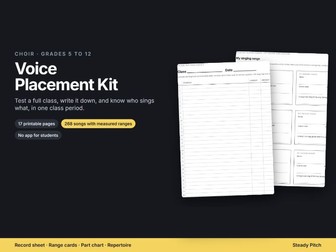
Printable choir voice placement kit. Test a whole class in one period, record every range, and pick songs that fit each section. 17 pages, PDF, grades 5 to 12.
What’s in it
A 25 minute placement routine, step by step, written for a teacher doing this for the first time.
A class record sheet with 30 lines, lowest and highest comfortable note for each student.
Range cards, six to a page. Students fill in their own and keep them.
A section chart showing the usual span of soprano, mezzo, alto, tenor, baritone and bass, with the overlaps.
A song table of 268 songs, each with its sung range and the sections it suits, sorted from narrowest to widest.
How the song ranges were worked out
Each range comes from at least two separate transcriptions of the original recording. If the two disagreed by more than a major third, the song was dropped. More than half the starting list went that way. What’s left is a list you can trust for key and range, not a list of songs someone thought would work.
What it won’t do
Range alone doesn’t make someone an alto. Weight and where the voice sits comfortably count as much as the extremes, and a changing voice will measure narrow for a few weeks. The kit gives you a first sort in one lesson instead of six, and tells you to re-check the five students you were least sure about the following week.
You can measure by ear at a piano, or with the free browser range test linked on page 1. If you use a laptop mic, low boys’ voices often read an octave high. Trust your ear.
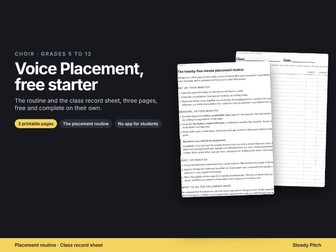
A free three-page starter with the routine and the record sheet is also in my shop if you’d like to try the method first.
Single classroom licence.