Evaporation and Condensation Year 4 | KS2 Science LessonQuick View
Fatikhan2013

Evaporation and Condensation Year 4 | KS2 Science Lesson

(0)
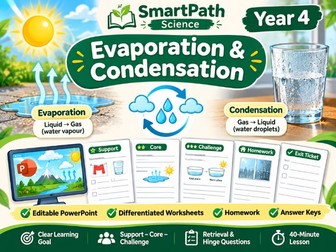
Teach Year 4 evaporation and condensation with this free, illustrated KS2 Science lesson pack. Includes an editable PowerPoint, differentiated worksheets, homework, an exit ticket and teacher answer keys. Designed for the UK National Curriculum Year 4 States of Matter topic, this 40-minute lesson helps pupils understand how water changes between liquid and gas and how temperature affects evaporation. What is included? 19-slide editable PowerPoint with colourful science illustrations, retrieval questions, explanations and teacher notes. Support worksheet with picture-based activities, vocabulary support and sentence starters. Core worksheet encouraging pupils to explain everyday examples using scientific vocabulary. Challenge worksheet developing scientific reasoning, fair-test planning and interpretation of sample data. Water Detective homework linking classroom learning to familiar situations at home. Exit ticket to assess understanding and pupil confidence. Teacher guide and answer keys with suggested timings, differentiation and expected responses. Learning objectives By the end of the lesson, pupils should be able to: Identify evaporation and condensation. Explain evaporation as liquid water changing into invisible water vapour. Explain condensation as water vapour changing into liquid droplets. Describe everyday examples, including drying clothes, shrinking puddles and droplets on cold surfaces. Recognise that warmer conditions generally increase the rate of evaporation. How to use this resource Begin with the puddle mystery retrieval activity. Introduce the two changes of state using visual explanations and familiar examples. Check understanding with hinge questions before pupils complete their Support, Core or Challenge tasks independently. Finish with peer review and an exit ticket. The differentiated activities allow pupils to work towards the same learning objectives with varying levels of support and challenge. Curriculum links KS2 Science | Year 4 | States of Matter | Evaporation | Condensation | Water Cycle | Working Scientifically Format: Editable PowerPoint (.pptx) and printable PDF worksheets. Teacher guidance and answer keys included. Created by SmartPath Science — practical, engaging science resources designed to encourage independent thinking and scientific understanding.
Year 4 Water Cycle | Science Lesson PackQuick View
Fatikhan2013

Year 4 Water Cycle | Science Lesson Pack

(0)
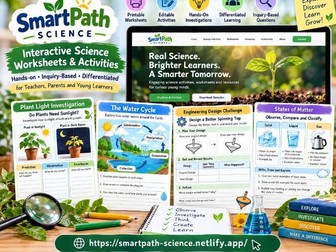
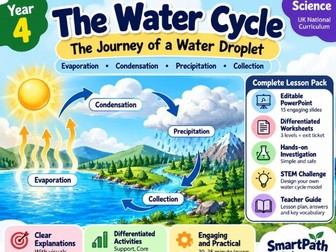
Year 4 Water Cycle Science Lesson – FREE PowerPoint, Worksheets & Investigation Teach the Year 4 water cycle with this free, ready-to-use science lesson pack. Includes an editable PowerPoint, differentiated worksheets, a practical investigation and teacher guidance. Designed for KS2 Science (ages 8–9) and aligned with the England National Curriculum, this resource helps pupils understand evaporation, condensation, precipitation and collection through clear explanations and practical learning. What’s included? Editable PowerPoint lesson – step-by-step explanations, scientific vocabulary, prediction questions and water-cycle diagrams. Differentiated worksheets – printable support, core and greater-depth activities with matching tables, sequencing, writing spaces and reasoning questions. Practical science investigation – explore how temperature affects evaporation using a simple fair test. Teacher guide and answer key – lesson guidance, common misconceptions and suggested answers. Exit ticket – five questions to assess pupils’ understanding. Learning objectives Pupils will learn to: Explain evaporation and condensation using scientific vocabulary. Identify precipitation and collection in the water cycle. Describe how water moves between Earth’s surface and the atmosphere. Recognise how temperature affects the rate of evaporation. Ideal for Year 4 Science lessons, KS2 classroom teaching, science revision, home education and differentiated learning. Why teachers will find it useful This print-ready resource reduces lesson preparation time while encouraging scientific thinking, independent learning and classroom discussion. SmartPath Science | Clear explanations. Practical investigations. Confident learners.
Year 4 States of Matter | Solids, Liquids and GasesQuick View
Fatikhan2013

Year 4 States of Matter | Solids, Liquids and Gases

(0)
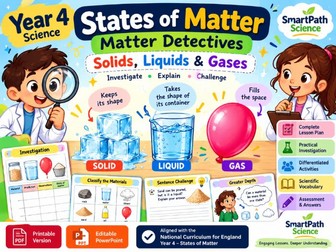
Year 4 States of Matter – Solids, Liquids and Gases Help Year 4 pupils investigate, classify and explain solids, liquids and gases with this colourful, editable science resource aligned with the National Curriculum for England. Designed to reduce teacher preparation time while developing scientific understanding, this resource combines visual learning, practical investigation, scientific vocabulary and differentiated reasoning activities. What’s included? Editable PowerPoint teaching and activity pack Printable PDF version Colourful visual examples of solids, liquids and gases Prediction and classification activities Practical investigation and evidence-recording tasks Supported, core and greater-depth questions Scientific vocabulary and English-language integration Misconception checks, exit ticket and retrieval questions Teacher guidance and answers What will pupils learn? Pupils compare and group materials according to whether they are solids, liquids or gases. They investigate observable properties, justify their classifications and apply their understanding to less obvious examples such as sand, rice and air. A key misconception is addressed: although sand and rice can be poured, their individual grains remain solid. National Curriculum alignment England, Year 4 Science – States of Matter: comparing and grouping materials as solids, liquids or gases. The activities also support lower Key Stage 2 Working Scientifically through observation, practical enquiry, evidence recording and explanation. Why teachers may find it useful The resource provides a structured lesson sequence, adaptable activities, visual explanations and assessment opportunities in one package. Suitable for whole-class teaching, guided group work and independent consolidation. Format: Editable PPTX and printable PDF Age group: 8–9 years | Year 4 | KS2 Subject: Primary Science SmartPath Science – Beyond Worksheets. Towards Understanding.
Year 4 Sound and Vibrations Lesson | KS2 ScienceQuick View
Fatikhan2013

Year 4 Sound and Vibrations Lesson | KS2 Science

(0)
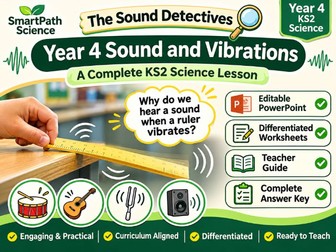
Teach Year 4 sound and vibrations with this practical KS2 science lesson, featuring an editable PowerPoint, differentiated worksheets, teacher guide and complete answer key. Year 4 Sound – The Sound Detectives Why do we hear a sound when a ruler vibrates? In this engaging 45-minute science lesson, pupils become Sound Detectives. They investigate how vibrations produce sounds, make predictions, record observations and use scientific evidence to explain their findings. Aligned with the England National Curriculum for Year 4 Science, this resource helps pupils identify how sounds are made and associate some sounds with something vibrating. What’s included? 1. Editable PowerPoint – 12 slides Engaging mystery hook Learning objectives and success criteria Scientific explanations and vocabulary Practical investigation instructions Misconception checks and assessment questions 2. Pupil Worksheets – 7 pages Predict, Observe, Explain investigation Observation and evidence recording Support, Core and Challenge activities Scientific vocabulary practice Application questions Exit ticket and delayed retrieval 3. Teacher Guide – 3 pages Lesson preparation and equipment Suggested 45-minute teaching sequence Curriculum links Assessment guidance 4. Complete Answer Key – 4 pages Model answers and explanations Acceptable alternative answers Common misconceptions Marking guidance Why teachers will find it useful Low-preparation practical investigation using a ruler and desk Differentiated activities for mixed-attainment classes Ready-to-use assessment and retrieval questions Separate answer key to reduce marking time Editable PowerPoint for adapting lessons Learning objective Identify how sounds are made and associate some sounds with vibrations. Subject: KS2 Science – Physics – Sound Year group: Year 4 (ages 8–9) Duration: Approximately 45 minutes Equipment: Flexible ruler and desk Format: 1 editable PPTX and 3 printable PDFs Created by SmartPath Science to make primary science practical, engaging and accessible.