Letter formation Set 3 PhonicsQuick View
LearningWithoutLimits9

Letter formation Set 3 Phonics

(0)
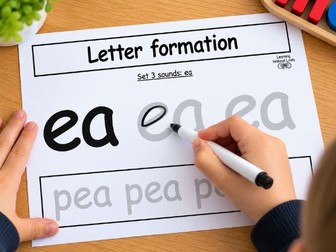
Phonics Letter Formation – Set 3 Sounds | Printable Handwriting Worksheets A collection of 17 Set 3 phonics letter formation worksheets designed to help children develop their handwriting skills, phonics knowledge and letter recognition through simple, structured tracing activities. Each worksheet focuses on an individual phonics sound, providing children with opportunities to practise forming letters, digraphs and trigraphs before applying their skills to writing corresponding words. What’s Included? 17 printable worksheets covering Set 3 phonics sounds. Includes: ea, oi, a-e, i-e, o-e, u-e, aw, are, ur, er, ow, ai, oa, ew, ire, ear and ure. Large phonics sounds to support recognition and accurate letter formation. Light grey letters for children to trace and practise independently. Corresponding words to practise handwriting and reinforce phonics knowledge. Clear, uncluttered layouts designed to minimise distractions and support accessibility. Black-and-white worksheets suitable for cost-effective printing. Learning Objectives Develop accurate letter formation and handwriting skills. Recognise and identify Set 3 phonics sounds. Strengthen letter-sound correspondence. Practise writing words containing targeted phonics sounds. Develop pencil control and fine motor coordination. Build confidence and independence in early writing. Suitable For EYFS and KS1 learners SEN and additional learning needs Home education and private tutoring Phonics interventions Handwriting practice Individual and small-group activities How to Use Simply print the worksheets and encourage children to identify and say the target phonics sound before tracing the large letters. Children can then practise writing the corresponding words at the bottom of each sheet, reinforcing both letter formation and phonics knowledge. For repeated use, laminate the worksheets or place them inside reusable dry-wipe pockets. A simple, accessible and versatile resource that combines Set 3 phonics learning with essential handwriting practice. Perfect for classroom teaching, home learning and targeted literacy interventions.
Set 1 Sounds- Letter formationQuick View
LearningWithoutLimits9

Set 1 Sounds- Letter formation

(0)
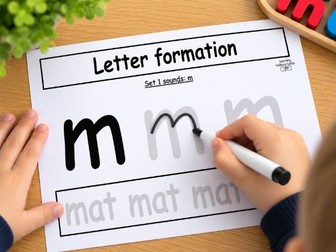
Phonics Letter Formation – Set 1 Sounds | Printable Handwriting Worksheets A collection of Set 1 phonics letter formation worksheets designed to help children develop their handwriting skills, letter recognition and phonics knowledge through simple, structured tracing activities. Each worksheet focuses on an individual letter or sound, providing children with opportunities to practise letter formation before applying their skills to writing corresponding words. What’s Included? Printable letter formation worksheets covering Set 1 phonics sounds. Large letters and sounds to support letter recognition and formation. Light grey letters for children to trace and practise independently. Corresponding words to practise handwriting and reinforce phonics knowledge. Clear, uncluttered layouts designed to minimise distractions and support accessibility. -Black-and-white worksheets suitable for cost-effective printing. Learning Objectives: Develop accurate letter formation and handwriting skills. Recognise and identify individual letters and phonics sounds. Strengthen letter-sound correspondence. Practise writing words containing targeted phonics sounds. Develop pencil control and fine motor coordination. Build confidence and independence in early writing. Suitable for: EYFS and KS1 learners -SEN and additional learning needs -Home education and private tutoring Phonics interventions Handwriting practice Individual and small-group activities How to Use: Simply print the worksheets and encourage children to identify the target sound before tracing the large letters. Children can then practise writing the corresponding words at the bottom of each sheet, reinforcing both letter formation and phonics knowledge. For repeated use, laminate the worksheets or place them inside reusable dry-wipe pockets. A simple, accessible and versatile resource that combines phonics learning with essential handwriting practice. Perfect for classroom teaching, home learning and targeted literacy interventions.
Letter formation set 2 soundsQuick View
LearningWithoutLimits9

Letter formation set 2 sounds

(0)
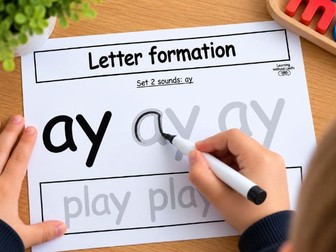
Phonics Letter Formation – Set 2 Sounds | Printable Handwriting Worksheets A collection of 12 Set 2 phonics letter formation worksheets designed to help children develop their handwriting skills, phonics knowledge and letter recognition through simple, structured tracing activities. Each worksheet focuses on an individual phonics sound, providing children with opportunities to practise forming digraphs and trigraphs before applying their skills to writing corresponding words. What’s Included? -12 printable worksheets covering Set 2 phonics sounds. Includes: ay, ee, igh, ow, oo (zoo), oo (book), ar, or, air, ir, ou and oy. Large phonics sounds to support recognition and accurate letter formation. Light grey letters for children to trace and practise independently. Corresponding words to practise handwriting and reinforce phonics knowledge. -Clear, uncluttered layouts designed to minimise distractions and support accessibility. Black-and-white worksheets suitable for cost-effective printing. Learning Objectives: Develop accurate letter formation and handwriting skills. Recognise and identify Set 2 phonics sounds. Strengthen letter-sound correspondence. Practise writing words containing targeted phonics sounds. Develop pencil control and fine motor coordination. Build confidence and independence in early writing. Suitable for: -EYFS and KS1 learners SEN and additional learning needs Home education and private tutoring Phonics interventions Handwriting practice Individual and small-group activities How to Use: Simply print the worksheets and encourage children to identify and say the target phonics sound before tracing the large letters. Children can then practise writing the corresponding words at the bottom of each sheet, reinforcing both letter formation and phonics knowledge. For repeated use, laminate the worksheets or place them inside reusable dry-wipe pockets. A simple, accessible and versatile resource that combines Set 2 phonics learning with essential handwriting practice. Perfect for classroom teaching, home learning and targeted literacy interventions.
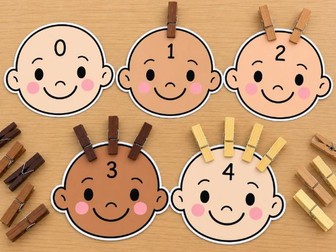
Counting hair to 10Quick View
LearningWithoutLimits9

Counting hair to 10

(0)
Counting Hair 0–10 – Hands-On Maths & Fine Motor Activity A fun, engaging and interactive maths resource designed to develop number recognition, counting skills and fine motor coordination through practical learning. This resource includes 11 colourful faces, individually numbered from 0 to 10, featuring a range of skin tones. Children are encouraged to identify the number displayed on each face and attach the corresponding number of clothes pegs around the top of the head to create hair! Learning Objectives: Recognise numbers from 0 to 10. Count accurately using one-to-one correspondence. Match quantities to written numerals. Develop fine motor skills and hand strength through squeezing and attaching pegs. Improve hand-eye coordination and finger dexterity. Understand the concept of zero. Encourage independent learning and problem-solving. Suitable for: EYFS, KS1, SEN, home education, maths interventions, fine motor activities and individual or small-group learning. How to Use: Simply print and cut out the numbered faces. For durability and repeated use, laminate each face. Provide children with a selection of colourful clothes pegs. Children identify the number displayed on the forehead and attach the correct number of pegs around the top of the head to create colourful hairstyles! This resource combines early mathematical understanding with practical fine motor development, making counting fun, interactive and accessible through hands-on learning. Please note: Clothes pegs are not included.
Spider Counting to 10Quick View
LearningWithoutLimits9

Spider Counting to 10

(0)
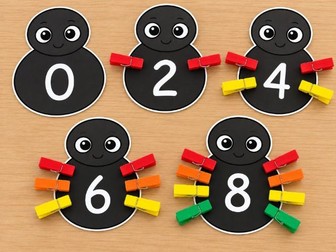
Spider Counting 0–10 – Hands-On Maths & Fine Motor Activity A fun, engaging and interactive maths resource designed to develop number recognition, counting skills and fine motor coordination through practical learning. This resource includes 11 friendly spiders, individually numbered from 0 to 10. Each spider features a large number displayed on its body. Children are encouraged to identify the number displayed on each spider and attach the corresponding number of pegs around its body to create the spider’s legs! Learning Objectives: Recognise numbers from 0 to 10. Count accurately using one-to-one correspondence. Match quantities to written numerals. Develop fine motor skills and hand strength through squeezing and attaching pegs. Improve hand-eye coordination and finger dexterity. Understand the concept of zero. Encourage independent learning and problem-solving. Suitable for: EYFS, KS1, SEN, home education, maths interventions, fine motor activities and individual or small-group learning. How to Use: Simply print and cut out the numbered spiders. For durability and repeated use, laminate each spider. Provide children with a selection of clothes pegs. Children identify the number displayed on the spider and attach the correct number of pegs around its body to represent its legs. This resource combines early mathematical understanding with practical fine motor development, making counting fun, interactive and accessible through hands-on learning. Please note: Clothes pegs are not included.
Fish bowl counting to 10Quick View
LearningWithoutLimits9

Fish bowl counting to 10

(0)
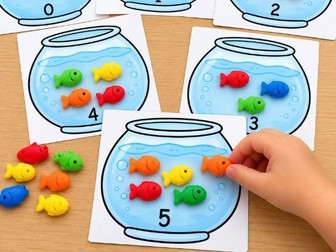
Fish Bowl Counting 0–10 – Hands-On Maths Activity A fun, engaging and interactive maths resource designed to develop number recognition, counting skills and one-to-one correspondence through practical learning. This resource includes 11 colourful fish bowls, individually numbered from 0 to 10. Children are encouraged to identify the number displayed on each fish bowl and add the corresponding number of fish. Children can use small toy fish, playdough fish or other suitable manipulatives to represent the fish, making this a versatile and engaging activity. Learning Objectives: Recognise numbers from 0 to 10. Count objects accurately using one-to-one correspondence. Match quantities to written numerals. Develop fine motor skills through handling and placing objects. Understand the concept of zero as an empty set. Encourage independent learning and problem-solving. Suitable for: EYFS, KS1, SEN, home education, maths interventions and individual or small-group activities. How to Use: Simply print the fish bowls and provide children with small toy fish or playdough. Children identify the number displayed on each bowl and add the correct number of fish to match. For repeated use, laminate the sheets. This resource provides a fun, practical approach to early counting, allowing children to develop their mathematical understanding through hands-on, sensory learning. Please note: Toy fish and playdough are not included.
House counting to 10Quick View
LearningWithoutLimits9

House counting to 10

(0)
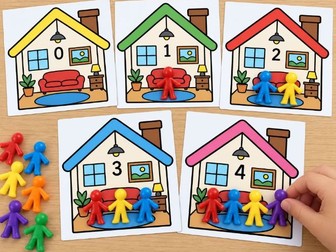
House Counting 0–10 – Hands-On Maths Activity A fun, colourful and interactive maths resource designed to develop number recognition, counting skills and one-to-one correspondence through practical learning. This resource includes 11 colourful houses, individually numbered from 0 to 10. Each house features a different coloured roof and a cosy living room setting. Children are encouraged to identify the number displayed inside each house and add the corresponding number of people. Children can use small people counters, miniature figures or playdough people to represent the occupants of each house, making this a versatile and engaging activity. Learning Objectives: Recognise numbers from 0 to 10. Count objects accurately using one-to-one correspondence. Match quantities to written numerals. Develop fine motor skills through handling and placing counters. Understand the concept of zero as an empty set. Encourage independent learning and problem-solving. Suitable for: EYFS, KS1, SEN, home education, maths interventions and individual or small-group activities. How to Use: Simply print the numbered houses and provide children with small people counters or miniature figures. Children identify the number displayed inside each house and place the correct number of people inside to match. For repeated use, laminate the sheets. This resource provides a fun, practical approach to early counting, allowing children to develop their mathematical understanding through hands-on learning. Please note: People counters and other manipulatives are not included.
Count and stack- Counting to 10 with cubesQuick View
LearningWithoutLimits9

Count and stack- Counting to 10 with cubes

(0)
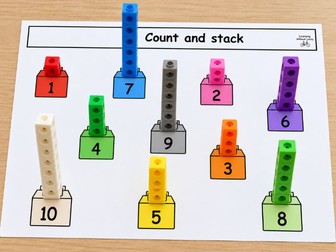
Count and Stack to 10 – Hands-On Maths Activity A fun, colourful and interactive maths resource designed to develop number recognition, counting skills and one-to-one correspondence through practical learning. This resource includes 4 different activity sheets, each featuring 10 colourful building blocks displaying numbers from 1 to 10. Children are encouraged to recognise the number displayed on each block and use linking cubes to build a tower containing the corresponding number of cubes. Learning Objectives: Recognise numbers from 1 to 10. Count accurately using one-to-one correspondence. Match quantities to written numerals. Develop fine motor skills through stacking and connecting cubes. Explore number quantities through practical, hands-on learning. Encourage independent learning and problem-solving. Suitable for: EYFS, KS1, SEN, home education, maths interventions and individual or small-group activities. How to Use: Simply print the activity sheets and provide children with linking cubes. Children identify each number and build a tower using the correct number of cubes. For repeated use, laminate the sheets. This resource provides an engaging, practical approach to early number skills, helping children develop confidence in counting while learning through play.
Cookie counting to 1-= A hands-on fun maths activityQuick View
LearningWithoutLimits9

Cookie counting to 1-= A hands-on fun maths activity

(0)
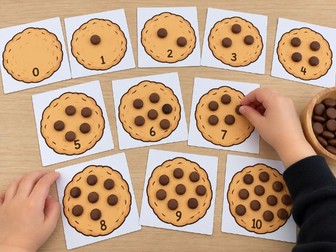
Cookie Counting 0–10 | Practical Maths Activity A fun, hands-on maths resource designed to develop number recognition, counting skills and one-to-one correspondence. This resource includes 11 blank cookies, individually numbered from 0 to 10. Children must identify the number displayed on each cookie and add the correct number of ‘chocolate chips’ to match. Children can use playdough, buttons, counters, pom-poms or other practical manipulatives to represent the chocolate chips, making this a versatile and engaging activity. Learning Objectives: Recognise numbers from 0 to 10. Count objects accurately using one-to-one correspondence. Match quantities to written numerals. Develop fine motor skills through practical activities. Encourage independent learning and problem-solving. Suitable for: EYFS, KS1, SEN, home education and individual or small-group interventions. This resource is ideal for making early maths learning fun, interactive and accessible through practical play.