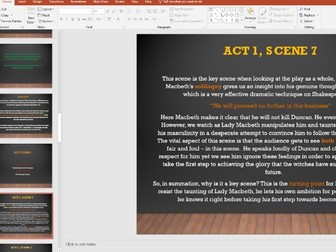
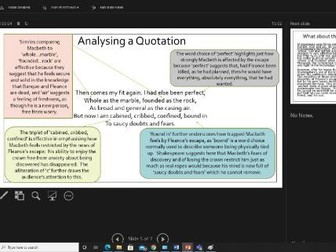
One lesson, using Macbeth as a prompt, that introduces students to analyses of key quotes, modelling middling and better answers for them. The final task asks students to write their own analysis of key quotations.
This is suitable for one 45/50 minute lesson.
Use this comprehensive, “pick-up-and-teach” presentation to engage pupils in Anne Donovan’s All that Glisters. This PowerPoint breaks down the complex themes of grief, dialect, and symbolism into an engaging, pupil-centered lesson, using integrated active learning strategies, including a “Scots Decoder” entry task, a physical “Freeze Frame” drama activity, and a collaborative “Diamond 9” character analysis. It covers narrative voice, the father-daughter bond, disassociation, and symbolism (glitter, hands, stains) through active thinking and learning.
This PowerPoint is a lesson that introduces students (National 4/5/Higher/Key Stage 3/4 etc.) to personal reflective writing. It explains what personal writing is, and it offers prompts, models and exemplars.
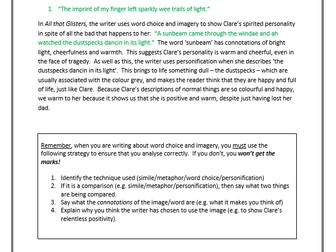
A revision guide for the Scottish short story, All that Glisters. It includes a full analysis of the text, including key quotations, along with a framework to help pupils analyse and an exemplar essay at the end.
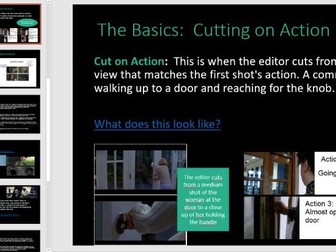
This PowerPoint could take either one or two lessons, depending on whether you want the students to do activities in between. The PowerPoint introduces students to some basic editing techniques, such as the eyeline match, and some more creative ones, i.e. match cuts. There are links to YouTube videos to help students visualise the cuts. Usually, after the PowerPoint, I ask the students to storyboard a narrative focusing on using the different techniques that they have learned.
This is a one page placemat designed for pupils to have beside them as a prompt when writing. It offers guidance on how to structure the work, give enough detail and description, write reflectively and include thoughts and feelings. It is designed for use for the Scottish curriculum but will work for any curriculum that has personal or reflective writing in it.
This is a concise guide with some “dos and don’ts” for critical essay writing. It tells pupils how to write an essay on common exam questions, such as turning points, and offers advice on how to structure an overall piece of critical essay writing.
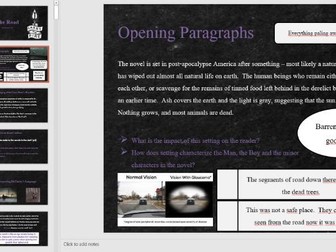
This is a complete PowerPoint unit on Cormac McCarthy’s “The Road”, suitable for older students studying Higher, A Level or IB. The PowerPoint consists of a mixture of teaching points, notes and student tasks. There are also many additional files, including a timeline of events, documents of key quotations, an exemplar essay, an essay plan, a PowerPoint teaching essay planning, and some documents with additional student tasks.
The main PowerPoint unit is organised into sections by page numbers, however I have added the quotations relevant to the start and end of each section, so they can be easily searched for in a pdf version, which can be found for free online. I have taught this unit many times with different copies of the text, and I have always used a pdf to help me to update the page numbers. If students are using a pdf version, it is even easier as they can then Ctrl+F the relevant quotations.
This is a comprehensive study guide for The Road, with an analysis of characters, themes, setting, structure, imagery, allusion, and symbolism. It includes key quotations as well, some of which are accompanied by analysis. There is also a plot timeline (which is listed, not an infographic), some practice questions, and some modelled paragraphs.
This is a pupil booklet with a series of tasks that scaffolds students’ learning. It introduces students to key film terms and leads them to writing an analytical essay on the film. The unit is split into lessons with learning objectives at the start. There are also analyses at the end of the booklet, which the teacher can either use his or herself or choose to give to the students. Images have been removed for copyright reasons, but the unit explains what is needed and they are easy to input (i.e. ‘Your teacher will show you a picture of a suburb’ or 'your teacher will show you some screenshots of the character called Peg.) Alternatively, you can just stop the film at these parts for the images you need. Or, if you don’t want to do that, feel free to email me at crowe2ms at gmail dot com and I will send you some images.
This is suitable for a double lesson and is an introduction to imagery and word choice. It has some basic definitions and basic exercises to help students start to recognise and analyse these techniques. It’s suitable for a younger or lower ability class. I have used it with both 11-year-olds and 16-year-olds (in lower sets).
A booklet of notes on the film, Jurassic Park, which includes detailed analysis of key scenes (for the teacher to use as a guide) and some tasks to give students. This isn’t a unit of work, but it is useful if you are new to teaching film or simply can’t be bothered analysing the film yourself.
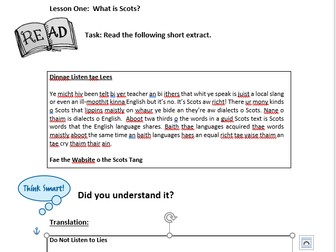
This is a really comprehensive unit of work on Scots language in the form of a pupil work booklet with a full set of activities. It is designed to be printed off and given directly to pupils. There is also a teacher’s guide at the end with learning intentions/success criteria, additional teacher instructions and links to online resources that could not be included in the pupil booklet.
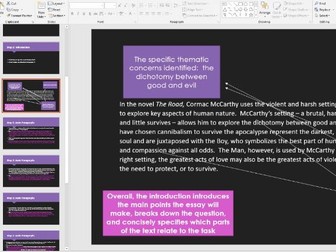
This is a single lesson that takes breaks down essay writing into constituent parts and gives modelled, labelled answers using McCarthy’s The Road as the text.
This is a long PowerPoint designed either as an introductory lesson (if students have read the play, “Macbeth”, already) or as a revision recap. It includes analysis of key themes, characters and scenes. There are no activities, but there are several class discussion questions that can be used as activities throughout it. This PowerPoint would take two lessons to deliver.
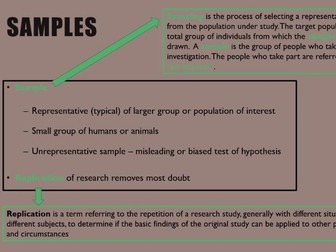
This is a PowerPoint lesson that introduces students to approaches to research. It introduces theory, hypothesis, sampling. There are one or two short activities designed to help students understand the difference between theory and hypothesis and to consider the appropriateness of different samples. It is suitable for a 50 minute lesson.
This is a very comprehensive unit of work designed for S3 on Scottish literature. It asks pupils to consider Scottish identity today and introduces pupils to a series of short stories and poems. The activities are scaffolded and include a range of active learning and cooperative learning approaches. There are a range of assessment outcomes, such as a personal essay and several critical essays (fully scaffolded). It is a long unit, but it is designed for the teacher to be able to dip in and out of if required.
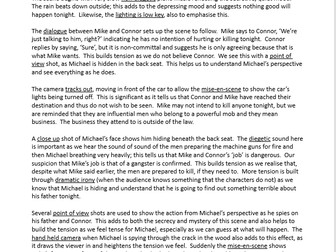
This is a full analysis of the film Road to Perdition. It breaks down key scenes, analysing themes, characterisation, dialogue, mise-en-scène, cinematography etc. This is a good resource as a revision guide for a good National 5 class or a Higher English class. Alternatively, if you’re new to teaching film or media (or just don’t have time to do the analysis yourself), you can use it as your own notes when designing a unit of work.
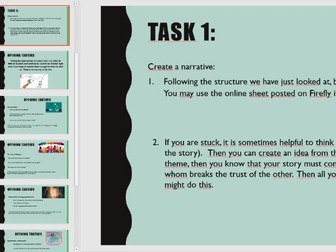
This is a one (50 minute) lesson PowerPoint that introduces the five-point structure and some ideas for opening hooks. It ends with an analytical task based on a short story opening, and includes an extension, or homework task, that requires students to plan and write a short story.
This also includes a prompt sheet with examples for openings and a blank structure worksheet to help students plan.
This is suitable for any students between the ages of 11 - 18, really.
A 21 slide PowerPoint with some basic notes on Ray Bradbury’s “The Veldt”, including literary devices, and some instructions for how to analyse literary devices and embed quotations.
This is a one-page resource designed as an aid to be placed on pupils’ desks as they write. It identifies common patterns of spelling in the English language, which should help pupils to avoid common errors.


 Quick View