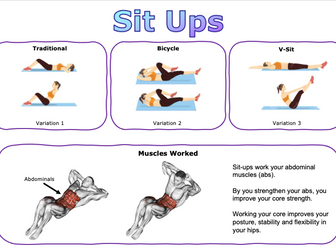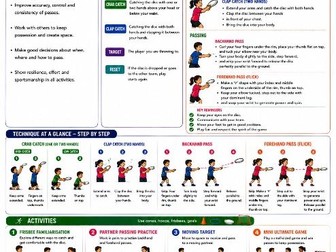
17 bodyweight exercise stations to be used for circiuts.
Each circuit consists of 3 variations of the exercise as well as indicate which muscles are being worked.
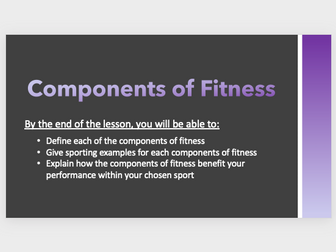
PowerPoint for components of fitness.
The content relates to GCSE OCR PE (new spec) but can be changed to accommodate other exam boards.
The PowerPoint has animations and transitions to support learning.
Content includes:
Starter
Muscular endurance – definition and practical examples
Strength – definition and practical examples
Balance – definition and practical examples
Flexibility – definition and practical examples
Cardiovascular endurance – definition and practical examples
Speed – definition and practical examples
Power – definition and practical examples
Agility – definition and practical examples
Reaction time – definition and practical examples
Coordination – definition and practical examples
Questions to facilitate learning / plenary
Booklet covers the following components fitness testing:
Muscular endurance - one minute sit up test, one minute press up test
Strength - handgrip dynamometer, one repetition max
Balance - standing stork test
Flexibility - sit and reach test
Cardiovascular Endurance - multistage fitness test, 12 minute cooper run
Speed - 30m sprint test
Power - vertical jump test, standing broad jump
Agility - Illinois test
Reaction Time - ruler drop test
Coordination - alternative wall toss
Work booklet also includes reliability and validity of each test, normative data and a table for students to record their scores for each test.
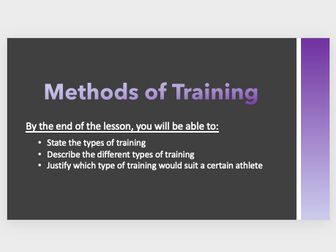
PowerPoint for methods of training.
The content relates to GCSE OCR PE (new spec) but can be changed to accommodate other exam boards.
The PowerPoint has animations and transitions to support learning.
Content includes:
Starter
Methods of training definitions
Why are each method of training important?
Training examples for each method
Questions to facilitate learning / plenary
AQA a level PE knowledge organisers.
Topics include:
Cardiovascular system.
Energy systems.
Guidance and feedback
Information processing
Learning and practice.
Impact of lifestyle factors
Muscular and skeletal system
Neuromuscular system
Respiratory system
Skill classification.
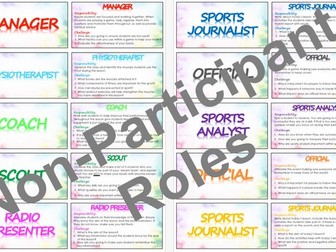
Roles for non-participants in PE lessons.
Each role has a title, responsibility and a challenge made up of questions the students need to answer within the lesson.
Print out the resource and cut out each of the roles to give to students.
Personally, I have put each role into a lanyard which is easy to store and hand out to students, plus making them last longer.
The content relates to AQA A Level PE but can be changed to accommodate other exam boards.
Energy systems knowledge organiser can be printed on A4 double sided.
PowerPoint for diet and nutrition.
The content relates to GCSE OCR PE (new spec) but can be changed to accommodate other exam boards.
The PowerPoint has animations and transitions to support learning.
Content includes:
Starter
Balanced diet
Carbohydrates with examples
Proteins with examples
Fats with examples
Minerals with examples
Vitamins with examples
Fibre with examples
Water with examples
Food choice factors
Government guidelines
Athlete’s diets – considerations and strategies
Energy expenditure
Obesity – risks
BMI
Questions to facilitate learning / plenary
PowerPoint for warm-up and cool-down
The content relates to GCSE OCR PE (new spec) but can be changed to accommodate other exam boards.
The PowerPoint has animations and transitions to support learning.
Content includes:
Starter
Warm-up components with explanation and examples
Benefits of a warm-up
Cool-down components with explanation and examples
Benefits of a cool-down
Considerations when planning a warm-up and cooldown
Questions to facilitate learning / plenary
Two revision booklets and two answer booklets for OCR GCSE PE.
Paper 1 booklet content:
Skeletal system
Muscular system
Planes and axis
Levers
Cardiovascular system
Respiratory system
Energy systems
Effects of exercise
Components of fitness
Methods of testing
Training
Injuries
89 exam questions
Paper 2 booklet content:
Participation rates
Commercialisation
Ethics in sport
Drugs
Violence
Skills
Goal setting
Guidance
Mental preparation
Feedback
Health, fitness adn well-being
Diet and nutrition
90 exam questions
PowerPoint of planes and axis with worksheet/cut outs.
The content relates to GCSE OCR PE (new spec) but can be changed to accommodate other exam boards.
The PowerPoint animations and transitions to support learning.
Content includes:
Starter
Name and location of each plane and axis
Type of movement at each plane
Type of rotation on each axis
Sporting examples for each plane and axis
Questions to facilitate learning / plenary
Specifically designed for OCR GCSE PE but has some cross-over with other exam boards. Aimed for students to remember key content (AO1) for both paper 1 and paper 2.
Downloads include an A3 answer sheet, an A3 blank sheet for your higher able students and an A3 fill in the blanks sheet for your lower able students.
**Paper 1 **
Bones
Skeletal functions
Components of joints
Joint types, muscles
Antagonistic pairs
Planes and axis
Heart structure
Components of blood
Structure of blood vessels
Lever classes and features
Pathway of air
Movement types
Short and long term effects of exercise on the CV system, respiratory system and muscular system
Methods of training
Principles of training
Overload principles
Fitness components
Fitness testing
Warm-up and cool down stages
Benefits of a warm-up and cool-down
Preventing injury
Hazards - sports hall, fields, gyms and swimming pools
Paper 2:
Factors affecting performance
Participation trends
Improving participation
Golden triangle
Media types
Positive and negative effects of the media
Positive and negative effects of sponsorship
Examples of sportsmanship, gamesmanship and deviance,
Consequences of deviance
Preventing deviance,
Drug types
Negative impact of drugs
Reasons for taking drugs and violence,
Skill characteristics
SMART targets
Importance of goal setting
Types of guidance and feedback
Mental preparation techniques
Continuum
Physical, emotional and social benefits of exercise
Physical emotional and social consequences of inactivity
Balanced lifestyle
Balanced diet
Sports injuries
Types of well-being
Document gives a breakdown of each of the assessment criteria allowing students to plan their AEP coursework.
Booklet includes:
Analysis
Evaluation
Overview
Assessment
Movement analysis
Action plan
PowerPoint for mental preparation.
The content relates to GCSE OCR PE (new spec) but can be changed to accommodate other exam boards.
The PowerPoint has animations and transitions to support learning.
Content includes:
Starter
Imagery with examples
Mental rehearsal with examples
Selective attention with examples
Positive thinking with examples
How does mental rehearsal and imagery help athletes?
Effects of positive thinking
Questions to facilitate learning / plenary
Question flashcards with answers for AQA a level PE.
This is based on paper 1 section A and B content.
Questions are split into the following categories:
Cardiovascular system
Guidance and feedback
Skills - classification and continua
Energy systems
Principle of learning
Respiratory system
Musculo-skeletal system
Lifestyle choices
Information processing
Neuromuscular system
Resource is ready to print - double sided.
AQA a level PE knowledge organiser - information processing
Includes:
Information Processing Stages
Selective Attention
Whiting’s Model (1969)
Memory Systems
Working Memory Model (Baddeley & Hitch, 1978)
Perception
Anticipation
Storing Information in the LTM
Simple and Choice Reaction Time
Hick’s Law
Single-Channel Hypothesis
Psychological Refractory Period (PRP)
Schema (Schmidt, 1982)
PowerPoint for health, fitness and well-being and match-up cut outs.
The content relates to GCSE OCR PE (new spec) but can be changed to accommodate other exam boards.
The PowerPoint has animations and transitions to support learning.
Content includes:
Starter
Definitions of health, fitness and well-being
Sedentary lifestyle
Physical effects on a healthy and sedentary lifestyle
Emotional effects on a healthy and sedentary lifestyle
Social effects on a healthy and sedentary lifestyle
Questions to facilitate learning / plenary
Similar format as the app.
Student develops:
Active Recall: Students actively retrieve knowledge about PE concepts, reinforcing their learning.
Collaborative Learning: Encourages teamwork and discussion, which can help clarify difficult concepts.
Engagement: Makes revision fun and interactive, increasing motivation to study.
Peer Teaching: Clue givers often teach the guesser as they describe terms, benefiting both players.
Resource includes rules as well as cards for printing
AQA a level PE paper 1 section A and B revision game.
Revision game - ‘password’ requires students to choose words that associate with the ‘password’.
Develops active recall, key concepts, critical thinking and collaborative working.
Includes rules, variations and passwords for printing.