KS3 Computer Science Unit: Core ConceptsQuick View
Michaelwalmisley

KS3 Computer Science Unit: Core Concepts

(0)
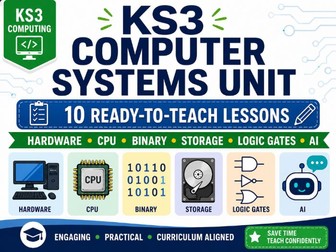
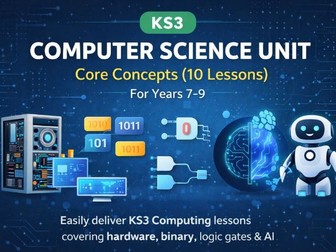
A complete KS3 Computer Science unit consisting of 10 fully prepared PowerPoint lessons, designed for Key Stage 3 students. This resource covers the core foundations of Computer Science, building knowledge progressively from basic computer components through to binary, logic gates, and introductory artificial intelligence concepts. The lessons are suitable for Years 7–9, and are ideal for non-specialists, ECTs, or experienced teachers looking for a clear, structured scheme of learning. Included lessons: Elements of a Computer Hardware The CPU Binary Representation Binary (Data Representation) Binary Addition Storage Devices Logic Gates Introduction to Artificial Intelligence AI Prompt Engineering Each lesson is clearly structured and can be delivered straight away, with explanations, examples, and opportunities for student interaction. The unit supports curriculum coverage of computer systems, data representation, and emerging technologies, and works well as a standalone KS3 scheme or preparation for GCSE Computer Science. Suitable for: KS3 Computer Science / Computing Years 7, 8, or 9 Whole-class teaching or cover lessons Building strong foundations for GCSE Computer Science
KS3 Networks & Encryption – 6 LessonsQuick View
Michaelwalmisley

KS3 Networks & Encryption – 6 Lessons

(0)
A complete 6-lesson KS3 Computing unit covering networks, network hardware, security threats, encryption, ciphers and decryption challenges. This resource is a fully planned 6-week KS3 Computing scheme of work designed for Years 7–9, introducing students to computer networks, cyber security and encryption through clear explanations and engaging activities. The unit includes: Lesson 1: Networks – LAN, WAN and real-world network examples Lesson 2: Network Hardware – routers, switches, servers and their roles Lesson 3: Security Threats – malware, phishing and staying safe online Lesson 4: Ciphers – introduction to encryption and Caesar ciphers Lesson 5: More Ciphers – extended encryption and decryption practice Lesson 6: Decrypting Challenges – Marvel-themed challenges to apply learning in a fun, motivating way Each lesson is suitable for a 55–60 minute lesson and can be used as: A half-term KS3 unit A standalone encryption or networks topic A foundation for GCSE Computer Science security concepts Ideal for both specialist and non-specialist teachers, with engaging content designed to build knowledge, confidence and enjoyment.
KS3 Digestion, Food Groups & Food TestsQuick View
Michaelwalmisley

KS3 Digestion, Food Groups & Food Tests

(0)
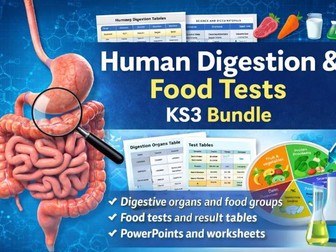
Complete KS3 unit bundle covering food, digestion, nutrients, and healthy living. This resource pack includes full lessons, worksheets, practical food tests, assessment materials, and exam-style questions designed to support teaching the human digestive system, food groups, enzymes, and nutrition. All PowerPoint lessons include starter retrieval questions to recap prior knowledge and lead directly into each new lesson, supporting effective knowledge recall and progression. The bundle is ideal for Key Stage 3 Science and includes PowerPoints, Word worksheets, tables, starters, and practical activities that can be used across multiple lessons or as a full topic sequence. What is included in this bundle: Food groups and healthy diet lessons Food plate and calorific value activities Digestion organs structure, order, labelling, and functions Chemical and physical digestion worksheets Adaptations of the digestive system Enzymes including digestion of starch and protein Food tests for starch, sugar, and protein Practical result tables and exam-style questions Digestive disorders match-up and patient activities Healthy living and lifestyle lesson Starter activities, summaries, and assessment resources Practical focus: Includes clear guidance and resources for food test practicals, digestion modelling, and data recording, making it suitable for both theory and hands-on lessons. Suitable for: Key Stage 3 Science Mixed ability classes Cover lessons Revision or catch-up Teaching a full digestion and nutrition topic File types included: PowerPoint presentations, each with retrieval starter questions Word documents including worksheets, tables, and questions
OCR J277 ComputerScience Unit 1 RevisionQuick View
Michaelwalmisley

OCR J277 ComputerScience Unit 1 Revision

(0)
This is a complete OCR J277 Computer Science Unit 1 revision booklet designed to support structured, long-term revision across the full specification. The booklet is organised into a clear weekly format, covering approximately 30 weeks of revision. Each week focuses on a specific Unit 1 topic and includes revision content, retrieval practice, application tasks, and exam-style questions. Every topic follows the same consistent structure to support knowledge retention and exam preparation: Revision content explained clearly and accessibly Retrieval questions using multiple choice and short-answer formats An application task to apply understanding An exam-style question with mark guidance Topics covered include: System architecture and CPU components Memory (RAM, ROM, cache) and virtual memory Secondary storage and storage technologies Storage sizes and capacity calculations Binary and hexadecimal (conversions, addition, shifts) Character representation (ASCII and Unicode) Image representation, sound, and compression Operating systems and utility software Computational thinking (abstraction, decomposition, algorithms) Networks, hardware, topologies, threats, and security The booklet is ideal for: GCSE Computer Science (OCR J277) Year 10 or Year 11 revision Homework, independent study, or catch-up Structured revision over time Exam preparation and consolidation This resource works well as a standalone revision guide or alongside classroom teaching and lessons. File type included: PDF revision booklet