iGCSE Geography Edexcel - Topic 3. Hazardous Environments - 3.2 Hazard ImpactsQuick View
SZeglam

iGCSE Geography Edexcel - Topic 3. Hazardous Environments - 3.2 Hazard Impacts

(0)
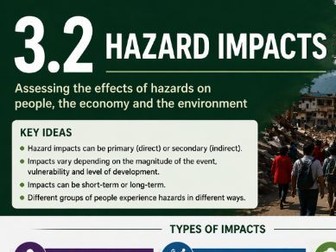
A structured resource pack for Edexcel International A Level Geography Topic 3.2 (Hazard Impacts), focused on analysing the effects of hazardous events on people, the economy, and the environment. The materials examine both primary and secondary impacts, as well as short-term and long-term consequences such as loss of life, displacement, infrastructure damage, and economic disruption. Content emphasises how impacts vary depending on magnitude, preparedness, and level of development. The pack includes case study materials, data interpretation tasks, and exam-style questions designed to develop analytical skills and the ability to compare impacts across different contexts.
iAL Edexcel Geography - Topic A2 Biodiversity Under Threat  - 3.4.3 Managing BiodiversityQuick View
SZeglam

iAL Edexcel Geography - Topic A2 Biodiversity Under Threat - 3.4.3 Managing Biodiversity

(0)
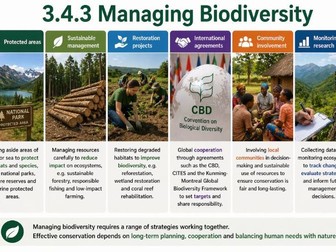
A focused resource set on strategies used to conserve and protect biodiversity. Content includes conservation approaches such as protected areas, sustainable management, restoration projects, and international agreements. It also explores the role of different stakeholders, including governments, NGOs, and local communities, in managing ecosystems. Emphasis is placed on evaluating the effectiveness and limitations of different strategies, with resources designed to develop higher-level judgement and exam-ready evaluation skills.
iAL Edexcel Geography - Topic A2 Biodiversity Under Threat - 3.4.2 Threats to BiodiversityQuick View
SZeglam

iAL Edexcel Geography - Topic A2 Biodiversity Under Threat - 3.4.2 Threats to Biodiversity

(0)
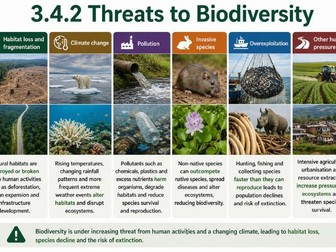
A structured resource pack examining the natural and human causes of biodiversity loss. Content covers key threats including habitat destruction, climate change, pollution, invasive species, and overexploitation of resources. It focuses on how these pressures disrupt ecosystems and reduce species populations at local, regional, and global scales. Case studies are used to illustrate real-world impacts, with resources supporting analysis of cause-and-effect relationships and the ability to apply knowledge to unfamiliar contexts.
iAL Edexcel Geography - Topic A2 Biodiversity Under Threat  -3.4.1 Biodiversity PatternsQuick View
SZeglam

iAL Edexcel Geography - Topic A2 Biodiversity Under Threat -3.4.1 Biodiversity Patterns

(0)
A specification-aligned resource set focused on the global distribution and variability of biodiversity. Content explores patterns such as latitudinal gradients, with the highest biodiversity found in tropical regions, and the influence of climate, energy availability, and habitat diversity. It also examines concepts such as ecosystems, biomes, and species richness, alongside the role of factors like isolation and environmental stability. Resources are designed to develop clear understanding through annotated maps, data interpretation tasks, and exam-style questions requiring explanation of spatial patterns.
iAL Edexcel Geography - Topic A1 Atmosphere and Weather - 3.3.1 Global Atmospheric CirculationQuick View
SZeglam

iAL Edexcel Geography - Topic A1 Atmosphere and Weather - 3.3.1 Global Atmospheric Circulation

(0)
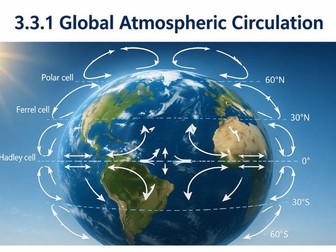
A specification-aligned resource set focused on the large-scale processes that drive global weather and climate patterns. Content covers the tri-cellular model (Hadley, Ferrel, and Polar cells), the role of insolation, pressure belts, and global wind systems. It also explores how atmospheric circulation influences climate zones, including deserts and tropical regions, and the seasonal shifting of systems such as the ITCZ. Resources are designed to build process understanding through annotated diagrams, sequencing tasks, and exam-style questions requiring explanation and application.
iAL Edexcel Geography - Topic A1 Atmosphere and Weather - 3.3.3 Managing Extreme ClimateQuick View
SZeglam

iAL Edexcel Geography - Topic A1 Atmosphere and Weather - 3.3.3 Managing Extreme Climate

(0)
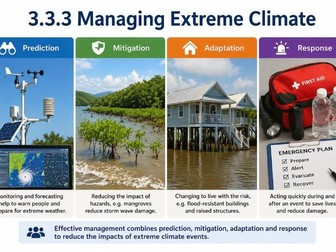
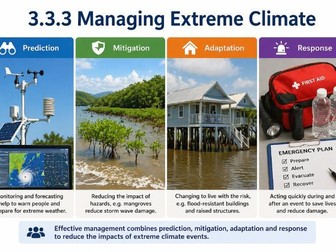
A focused resource set on strategies used to reduce the risks associated with extreme weather and climate hazards. Content includes prediction, monitoring, mitigation, and adaptation approaches, as well as short-term responses and long-term planning. Emphasis is placed on evaluating the effectiveness of management strategies in different contexts, considering economic capacity, governance, and vulnerability. Resources include decision-making tasks, case studies, and exam-style questions aimed at developing evaluative judgement for higher-mark responses.
iAL Edexcel Geography - Topic A1 Atmosphere and Weather - 3.3.2 Extreme Weather HazardsQuick View
SZeglam

iAL Edexcel Geography - Topic A1 Atmosphere and Weather - 3.3.2 Extreme Weather Hazards

(0)
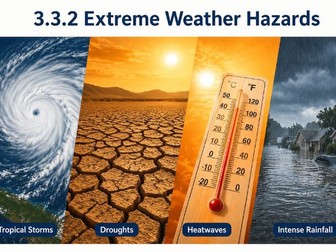
A structured resource pack examining the formation, characteristics, and impacts of extreme weather events, including tropical storms, droughts, heatwaves, and intense rainfall. Content focuses on the atmospheric conditions required for their development, global distribution patterns, and how climate change may influence their frequency and intensity. Case studies are used to analyse impacts and responses, with resources supporting data interpretation, extended writing, and synoptic links between physical processes and human consequences.
iGCSE Geography Edexcel - Topic 7. Fragile Environments - 7.3 ResponsesQuick View
SZeglam

iGCSE Geography Edexcel - Topic 7. Fragile Environments - 7.3 Responses

(0)
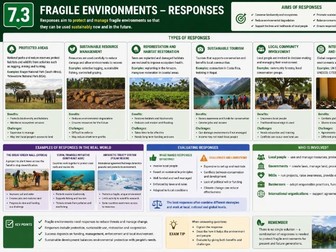
Focuses on strategies used to protect and manage fragile environments in a sustainable way. Content explores conservation methods such as national parks, protected areas, ecotourism, and international agreements. It also considers the role of local communities, governments, and global organisations in balancing environmental protection with economic development. Emphasis is placed on evaluating the effectiveness of different responses and the challenges of achieving sustainability.
iGCSE Geography Edexcel - Topic 7. Fragile Environments - 7.2 ImpactsQuick View
SZeglam

iGCSE Geography Edexcel - Topic 7. Fragile Environments - 7.2 Impacts

(0)
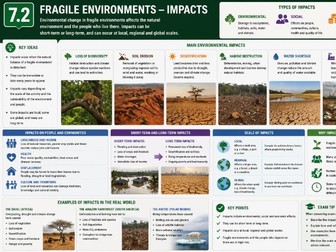
Examines the consequences of environmental change on fragile ecosystems and the people who depend on them. Content includes impacts such as loss of biodiversity, soil erosion, desertification, habitat destruction, and disruption to local communities and livelihoods. The section focuses on both short-term and long-term impacts, as well as how effects vary depending on the scale of activity and level of management.
iGCSE Geography Edexcel - Topic 7. Fragile Environments - 7.1 ThreatsQuick View
SZeglam

iGCSE Geography Edexcel - Topic 7. Fragile Environments - 7.1 Threats

(0)
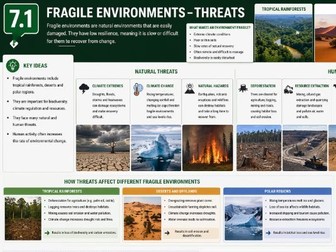
Focuses on the characteristics of fragile environments and the range of natural and human threats they face. Content examines environments such as tropical rainforests, deserts, and polar regions, highlighting their sensitivity to change. Key threats include climate change, deforestation, resource extraction, overgrazing, tourism, and urbanisation. Emphasis is placed on understanding why these environments are vulnerable and how human activity can accelerate degradation.
iGCSE Geography Edexcel - Paper 2 Human. Section B. Fieldwork - UrbanQuick View
SZeglam

iGCSE Geography Edexcel - Paper 2 Human. Section B. Fieldwork - Urban

(0)
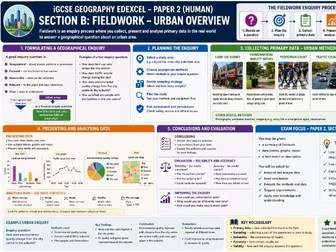
A structured, specification-aligned resource pack for Edexcel iGCSE Geography Paper 2 (Human), Section B (Urban Fieldwork), designed to develop both practical enquiry skills and exam-ready application. The materials guide students through the full fieldwork process, including forming geographical questions and hypotheses, selecting appropriate urban methods, and collecting primary data such as land use surveys, environmental quality assessments, pedestrian and traffic counts, and questionnaires. Content emphasises data presentation techniques (graphs, maps, GIS, annotated sketches) and basic statistical analysis, alongside critical evaluation of reliability, accuracy, and sampling methods. The pack includes fieldwork guides, data collection sheets, worked examples, and exam-style questions, ensuring students can confidently apply their knowledge to unfamiliar contexts. Strong emphasis is placed on linking methods to enquiry questions, interpreting urban patterns, and producing well-supported conclusions and evaluations in line with higher-mark assessment requirements.
iGCSE Geography Edexcel - Topic 6. Urban Environments (6.3 Making Cities Sustainable)Quick View
SZeglam

iGCSE Geography Edexcel - Topic 6. Urban Environments (6.3 Making Cities Sustainable)

(0)
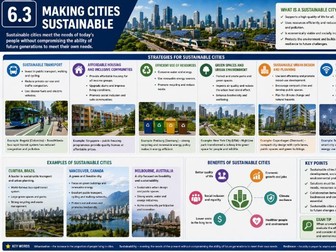
Focuses on strategies to improve the long-term sustainability of urban areas. Content explores solutions to urban challenges, including transport systems, waste management, green spaces, energy efficiency, and urban planning approaches such as smart growth and sustainable design. Emphasis is placed on evaluating the effectiveness of these strategies in balancing economic development, environmental protection, and social well-being.
iGCSE Geography Edexcel - Topic 6. Urban Environments (6.2 Challenges in Cities)Quick View
SZeglam

iGCSE Geography Edexcel - Topic 6. Urban Environments (6.2 Challenges in Cities)

(0)
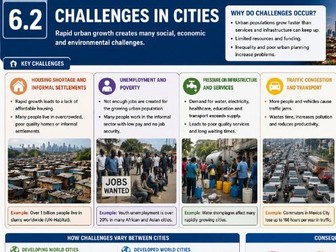
Examines the social, economic, and environmental challenges associated with rapid urban growth. Content includes issues such as housing shortages, informal settlements, unemployment, traffic congestion, pollution, and pressure on infrastructure and services. The section focuses on how these challenges vary between cities and are influenced by levels of development, governance, and planning.
iGCSE Geography Edexcel - Topic 6. Urban Environments (6.1 Growing Urban Populations)Quick View
SZeglam

iGCSE Geography Edexcel - Topic 6. Urban Environments (6.1 Growing Urban Populations)

(0)
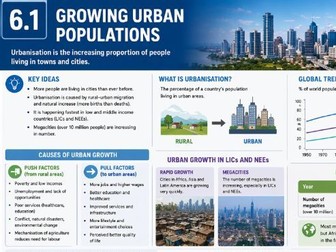
Focuses on the causes and patterns of urbanisation at a global scale, including rural–urban migration, natural increase, and the emergence of megacities. Content examines push and pull factors, differences between developed and developing countries, and the rapid growth of cities in developed and developing locations. Emphasis is placed on understanding urban growth trends, population structure, and the spatial expansion of cities over time.
iGCSE Geography Edexcel - Topic 4. Economic Activities & Energy (4.2 Economic Sector Change)Quick View
SZeglam

iGCSE Geography Edexcel - Topic 4. Economic Activities & Energy (4.2 Economic Sector Change)

(0)
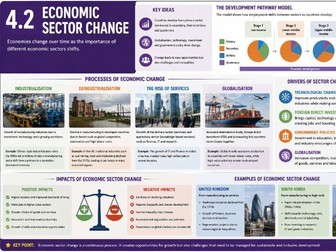
Examines how economies evolve over time, shifting from primary to secondary and increasingly to tertiary and quaternary dominance as development progresses. Content focuses on processes such as industrialisation, deindustrialisation, and globalisation, alongside the role of technology, foreign direct investment (FDI), and government policy in driving change. These shifts result in changing employment structures and regional inequalities, reflecting broader development pathways.
iGCSE Geography Edexcel - Topic 4. Economic Activities & Energy (4.1 Economic Sectors)Quick View
SZeglam

iGCSE Geography Edexcel - Topic 4. Economic Activities & Energy (4.1 Economic Sectors)

(0)
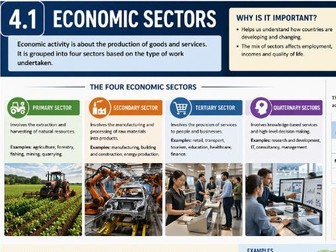
Focuses on how economic activity is classified into primary, secondary, tertiary, and quaternary sectors, and how their relative importance varies between countries and over time. Content examines patterns of employment and output, linked to levels of development and models such as Clark–Fisher. It also explores the factors influencing the location of economic activity, including labour, raw materials, accessibility, and government policy. Economic activity is fundamentally about the production of goods and services and is grouped into these sectors based on function.
iGCSE Geography Edexcel - Topic 4. Economic Activities & Energy (4.3 Energy Security)Quick View
SZeglam

iGCSE Geography Edexcel - Topic 4. Economic Activities & Energy (4.3 Energy Security)

(0)
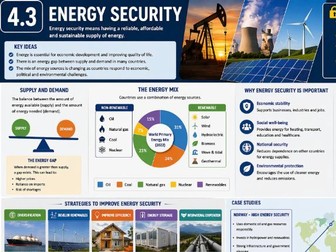
Focuses on the relationship between energy supply and demand, and how countries manage resources to ensure reliable access to energy. Content explores fossil fuels and renewable energy, changing energy mixes, and the concept of an “energy gap” where demand exceeds supply. It also examines the geopolitical, economic, and environmental challenges linked to energy production and consumption, with emphasis on sustainability and long-term energy strategies.
iGCSE Geography Edexcel - Paper 1 Physical. Section B. Fieldwork - CoastsQuick View
SZeglam

iGCSE Geography Edexcel - Paper 1 Physical. Section B. Fieldwork - Coasts

(0)
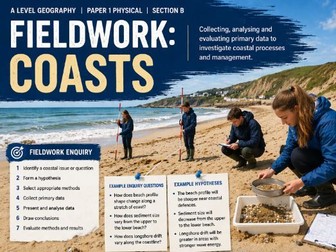
A comprehensive, specification-aligned resource pack for Edexcel International A Level Geography Fieldwork (Coasts), designed to develop both practical fieldwork skills and exam-ready enquiry understanding. The materials guide students through the full enquiry process, including forming hypotheses, selecting appropriate methods, and collecting primary data such as beach profiles, sediment size and shape, and longshore drift measurements. Content emphasises data presentation techniques (graphs, maps, field sketches) and statistical analysis, alongside the evaluation of reliability, accuracy, and validity. The pack includes fieldwork guides, data collection sheets, worked examples, and exam-style questions, ensuring students can confidently apply fieldwork knowledge to unfamiliar contexts. Strong emphasis is placed on linking methods to enquiry questions, interpreting results, and producing well-supported conclusions and evaluations in line with higher-mark assessment requirements.
iGCSE Geography Edexcel - Topic 3. Hazardous Environments - 3.3 Hazard ManagementQuick View
SZeglam

iGCSE Geography Edexcel - Topic 3. Hazardous Environments - 3.3 Hazard Management

(0)
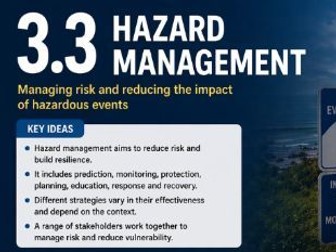
A specification-aligned resource pack for Edexcel International A Level Geography Topic 3.3 (Hazard Management), focused on how risks from hazardous environments are reduced and managed. The materials cover prediction, monitoring, protection, planning, and education, alongside immediate responses and long-term recovery strategies. Content is framed around effectiveness, sustainability, and the role of different stakeholders in managing risk and reducing vulnerability. The pack includes lesson presentations, decision-making tasks, case studies, and exam-style questions, designed to develop evaluative judgement and support higher-mark responses.