Creative Writing Workbook (Ages 9–12) – Chapter 4 Sample: ConflictQuick View
Caroline0703

Creative Writing Workbook (Ages 9–12) – Chapter 4 Sample: Conflict

(0)
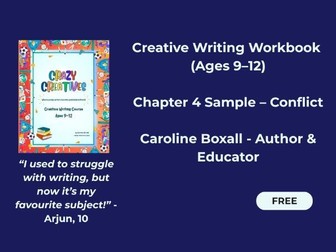
A step‑by‑step creative writing course for ages 9–12, with fun warm‑ups, SPAG activities and creative challenges that help pupils craft a strong short story. This free sample includes Chapter 4: Conflict, one of the most engaging lessons from Crazy Creatives, a 10‑chapter writing workbook created by English teacher and published author Caroline Boxall. The full course guides young writers through the essential elements of story craft, building confidence and skill with every chapter. What’s included in this sample A Crazy Warm‑Up to spark imagination A SPAG activity that makes grammar purposeful and engaging An Awesome Activity focused on developing conflict in narrative writing Clear, friendly explanations suitable for classroom or home learning A strong sense of the workbook’s structure, tone, and creative approach About the full Crazy Creatives course Across ten structured chapters, pupils learn to: build characters create vivid settings develop conflict and plot write dialogue use descriptive techniques edit and polish their work By the end of the full course, students produce a polished 500‑word short story they can enter into Caroline’s** International Short Story Competition,** where 50 young writers are published in a real book. Ideal for KS2 and early KS3 English Creative writing lessons After‑school clubs Home learning Stretch and challenge Supporting reluctant writers About the author Caroline Boxall is a children’s author, educator, and curriculum designer who specialises in helping young writers unlock confidence, creativity, and craft. Find more creative writing resources and competition details at: [CarolineBoxall.com] (https://www.carolineboxall.com/)
Creative Writing Competition – Printable Classroom PosterQuick View
Caroline0703

Creative Writing Competition – Printable Classroom Poster

(0)
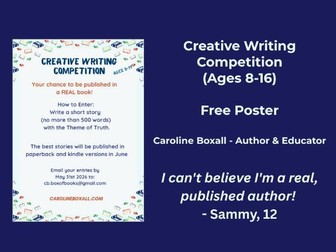
A free, printable poster to promote a national creative writing competition for KS2/KS3 pupils. Perfect for classroom displays, library boards, English corridors or tutor groups. This poster includes: competition theme age range deadline entry details For full competition details and entry forms: CarolineBoxall.com
Year 6 English Scheme of Work – The Runaway Children of Chennai (6‑Week Unit + Advocacy Week)Quick View
Caroline0703

Year 6 English Scheme of Work – The Runaway Children of Chennai (6‑Week Unit + Advocacy Week)

(0)
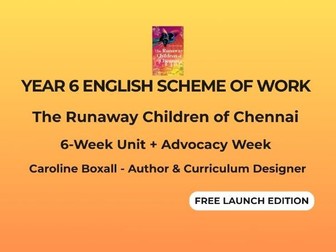
A complete 6‑week Year 6 English scheme of work (SOW) with lesson plans, SEND support, stretch tasks, assessments, vocabulary and printouts for Upper KS2. A fully planned, fully differentiated 6‑week English unit for Year 6 based on The Runaway Children of Chennai. Includes detailed lesson plans, vocabulary bank, cultural glossary, SEND scaffolds, stretch challenges, homework tasks, model answers, assessment guidance and an optional Week 7 on advocacy, authorship and global citizenship. Designed for Upper KS2 and aligned with the National Curriculum for England. What’s included Full 6‑week scheme of work (SOW) + optional Advocacy Week Detailed lesson plans for Chapters 1–23 Vocabulary bank (Tier 2 + contextual terms) Cultural glossary Differentiation guidance (SEND + stretch) Homework tasks requiring annotation Stretch tasks (symbolism, structure, theme tracking) Assessment overview (formative + summative) Model answers Teacher notes for every lesson PSHE/SMSC links Author visit invitation + sequel teaser Printouts Pack (worksheets, organisers, scaffolds) Why this text works for Year 6 Strong models of sensory description, tension, figurative language and character voice Clear narrative arc ideal for prediction, inference and structural analysis Sensitive handling of themes such as poverty, exploitation and survival Real‑world links to the Railway Children charity Supports transition to KS3 through deeper inference and extended writing How to use this resource Teachers can deliver the unit immediately: each lesson includes comprehension questions, analytical tasks, writing activities, SEND scaffolds, stretch challenges and homework. The scheme encourages pupils to annotate directly in their own copy of the novel, deepening engagement and supporting evidence‑based responses. Text required The novel The Runaway Children of Chennai is required for this unit. For class sets, direct orders, or school invoices, contact Caroline: [cb.boxofbooks@gmail.com] For more information about the author and resources: http://carolineboxall.com