Revision WJEC Level 3 Criminology Unit 2Quick View
Domomviyr

Revision WJEC Level 3 Criminology Unit 2

(0)
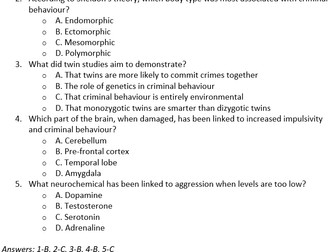
WJEC Level 3 Criminology Unit 2 Study Guide Review This comprehensive student study guide for WJEC Level 3 Criminology Unit 2 is an exceptional teaching resource that transforms complex criminological theories into accessible, exam-focused content. What makes this resource stand out: The guide expertly balances academic rigour with student-friendly presentation. It systematically covers all assessment criteria for Unit 2, breaking down difficult concepts into manageable sections with clear explanations and practical examples. Each theoretical perspective is thoughtfully explored with relevant case studies (Robert Napper, Fred West, Nick Leeson) that demonstrate real-world applications. Particularly valuable features: Exceptional structure: Content is organized by topic, matching specification requirements with logical progression Embedded assessment opportunities: Multiple-choice questions follow each section, allowing students to check understanding immediately Varied practice questions: Strategic placement of 4, 6, 9, and 15-mark questions develops extended writing skills Evaluation focus: Clear strengths/weaknesses tables for all major theories develop critical thinking Policy application: Detailed connections between theories and real-world policies demonstrate relevance Contemporary examples: Discussions of campaigns like Sarah’s Law and Clare’s Law connect theory to current issues The guide concludes with excellent revision materials including a complete practice exam paper with marking scheme, glossary of key terms, and practical exam technique tips. This resource represents significant time savings for teachers while offering students a single, reliable reference for their Unit 2 studies. It’s particularly effective for supporting independent study and exam preparation. An outstanding teaching resource that delivers complex criminological content in an accessible, exam-focused format.
AQA GCSE COMBINED SCIENCE TRILOGY - CHEMISTRY REVISIONQuick View
Domomviyr

AQA GCSE COMBINED SCIENCE TRILOGY - CHEMISTRY REVISION

(0)
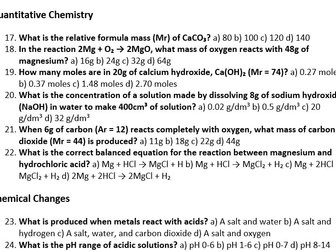
Comprehensive AQA Combined Science Trilogy Chemistry Revision Resource This exceptional resource provides a complete revision package for students studying AQA Combined Science Trilogy GCSE Chemistry. It features: What’s Included Clear, accessible explanations of all Chemistry content for the AQA Trilogy specification Systematic coverage of all 10 key topic areas: from Atomic Structure to Using Resources Practical examples and diagrams to illustrate complex concepts 75 carefully crafted multiple-choice questions with answers Curated list of 10 quality online revision resources A structured one-hour revision task focusing on chemical calculations (one of the most challenging topics) Why It’s Effective This resource breaks down complex chemistry concepts into manageable, easy-to-understand explanations even for students who find chemistry challenging. Each topic includes practical examples that bring abstract ideas to life, making scientific principles more relatable and easier to grasp. The extensive multiple-choice question bank allows students to test their knowledge while providing immediate feedback through detailed answers. The resource concludes with valuable online revision suggestions and a ready-to-use revision session focusing on chemical calculations—perfect for targeted exam preparation. Perfect for teachers looking to provide comprehensive revision materials, students seeking to strengthen their understanding, or parents supporting home learning. This resource serves as an all-in-one companion for achieving success in GCSE Combined Science Chemistry.
WJEC CRIMINOLOGY UNIT 1 AC1.1 NOTES AND QsQuick View
Domomviyr

WJEC CRIMINOLOGY UNIT 1 AC1.1 NOTES AND Qs

(0)
WJEC CRIMINOLOGY UNIT 1 AC1.1 Types of Crime: A Critical Analysis This set of notes examines four categories of crime: white-collar, moral, technological, and honour-based offenses. By analysing the characteristics, perpetrators, victims, and societal impacts of each type, we can gain insights into the complex nature of criminal behaviour and its effects on society. You can assess your knowledge by answering the associated comprehension questions. A mark scheme is also provided.
New School Year Settling ActivityQuick View
Domomviyr

New School Year Settling Activity

(0)
Title: “Secondary School Transition Toolkit: Building Character, Community, and Critical Thinking” Description: Introducing the first resource in what will be a comprehensive “Secondary School Transition Toolkit” - an essential resource designed to ease Year 7 students into their new academic journey while fostering crucial life skills and ethical decision-making abilities. It can also be used in vertical tutor groups and across keystages 3 to 5 in the UK. This meticulously crafted activity sheet goes beyond typical orientation materials, offering a holistic approach to student integration that benefits educators, students, and parents alike. Here’s what makes our toolkit stand out: Community-Focused Behaviour Expectations: Encourages students to reflect on and articulate the behaviours that create a positive learning environment, promoting a sense of ownership and responsibility from day one. Personalised Learning Self-Assessment: Empowers students to evaluate their own learning attitudes and skills, fostering self-awareness and goal-setting that will serve them throughout their academic career. Ethical Decision-Making Scenarios: Presents 12 thought-provoking situations that challenge students to prioritize community needs over individual wants, developing critical thinking and ethical reasoning skills. Customised Behaviour Policy Creation: Guides students in crafting their own behaviour policy, which they sign and commit to upholding. This innovative approach promotes accountability and personal responsibility. Key Benefits: Facilitates a smooth transition to a new secondary school year Develops critical thinking and ethical decision-making skills Promotes self-reflection and personal growth Encourages community-mindedness and social responsibility Provides a tangible reference point for behaviour expectations This toolkit is an invaluable asset for schools aiming to create a positive, inclusive, and academically rigorous environment from the outset of a student’s secondary school journey. By investing in this resource, you’re not just preparing students for academic success - you’re shaping responsible, thoughtful citizens for the future. Perfect for: Secondary school orientation programs Year 7 form tutors and classroom teachers School counselors and behaviour support staff Parents seeking to support their child’s transition Invest in your students’ future today.
Three differentiated study/cover worksheets for WJEC Level 3 Criminology Unit 3 AC1.1.Quick View
Domomviyr

Three differentiated study/cover worksheets for WJEC Level 3 Criminology Unit 3 AC1.1.

(0)
These three worksheets provide a range of questions at different levels of complexity, all focusing on evaluating the effectiveness of personnel involved in criminal investigations (Unit 3 AC1.1). The foundation level focuses on basic knowledge and understanding, the intermediate level requires more explanation and analysis, and the advanced level demands critical thinking and evaluation.
SOCIAL UNREST - DIFFERENTIATED ACTIVITY SHEETSQuick View
Domomviyr

SOCIAL UNREST - DIFFERENTIATED ACTIVITY SHEETS

(0)
Three differentiated comprehension worksheets for UK secondary school students addressing social unrest in England. To ensure accuracy and relevance, the worksheets are based on general themes related to social unrest rather than specific recent events. The three worksheets are at different difficulty levels: Foundation (easier) Intermediate Advanced Each worksheet will include a short passage followed by comprehension questions. The content will aim to address the topic thoughtfully while being appropriate for secondary school students. There are three differentiated comprehension worksheets addressing the topic of social unrest, suitable for secondary school students in the UK. Each worksheet increases in complexity and depth of analysis: The Foundation level focuses on basic understanding of social unrest, its causes, and the importance of peaceful problem-solving. The Intermediate level delves deeper into the dynamics of social unrest, its potential for positive change, and the need for empathy and dialogue. The Advanced level explores the multifaceted nature of social unrest, its historical significance, and challenges students to think critically about complex societal issues. Each worksheet includes a reading passage, comprehension questions, and an extension activity to encourage further engagement with the topic.
Three differentiated Criminology Comprehensions Unit 3 AC1.1Quick View
Domomviyr

Three differentiated Criminology Comprehensions Unit 3 AC1.1

(0)
The three Comprehension worksheets progressively increase in complexity to align with WJEC Level 3 Criminology Unit 3 AC1.1 requirements. The foundation level focuses on basic comprehension and identification of key concepts related to crime and investigations. The intermediate level introduces more complex scenarios, requiring students to analyze motivations and compare different circumstances. The advanced level demands critical evaluation, application of criminological investigation, and consideration of broader techniques and personnel. This progression supports students in developing a deeper understanding of the subject matter, moving from simple recall to sophisticated analysis and evaluation. These resources are valuable for independent learning as they provide realistic scenarios that engage students and encourage critical thinking. The differentiated approach allows students to work at their own pace and level, promoting self-directed learning. For teachers, these worksheets offer ready-to-use materials for unexpected cover lessons, ensuring productive use of class time even in the absence of the regular instructor. The comprehensive nature of the scenarios and questions provides substantial content for meaningful discussion and assessment, making them ideal for both planned and impromptu teaching situations.
Three differentiated study/cover worksheets for WJEC Level 3 Criminology Unit 1 AC1.1.Quick View
Domomviyr

Three differentiated study/cover worksheets for WJEC Level 3 Criminology Unit 1 AC1.1.

(0)
The three worksheets progressively increase in complexity to align with WJEC Level 3 Criminology Unit 1 AC1.1 requirements. The foundation level focuses on basic questions requiring basic answers and identification of key concepts related to crime and deviance. The intermediate level introduces more complex matter, requiring students to analyze and consider different perspectives. The advanced level demands critical evaluation of broader societal implications. This progression supports students in developing a deeper understanding of the subject matter, moving from simple recall to sophisticated analysis and evaluation. These resources are valuable for independent learning as they provide realistic controlled assessment questions that engage students and encourage critical thinking. The differentiated approach allows students to work at their own pace and level, promoting self-directed learning. For teachers, these worksheets offer ready-to-use materials for unexpected cover lessons, ensuring productive use of class time even in the absence of the regular instructor. The straight forward nature of the questions provides substantial content for meaningful discussion and assessment, making them ideal for both planned and impromptu teaching situations.
Three differentiated Criminology Comprehensions Unit 1 AC1.1Quick View
Domomviyr

Three differentiated Criminology Comprehensions Unit 1 AC1.1

(0)
The three Comprehension worksheets progressively increase in complexity to align with WJEC Level 3 Criminology Unit 1 AC1.1 requirements. The foundation level focuses on basic comprehension and identification of key concepts related to crime and deviance. The intermediate level introduces more complex scenarios, requiring students to analyze motivations and compare different perspectives. The advanced level demands critical evaluation of ethical dilemmas, application of criminological theories, and consideration of broader societal implications. This progression supports students in developing a deeper understanding of the subject matter, moving from simple recall to sophisticated analysis and evaluation. These resources are valuable for independent learning as they provide realistic scenarios that engage students and encourage critical thinking. The differentiated approach allows students to work at their own pace and level, promoting self-directed learning. For teachers, these worksheets offer ready-to-use materials for unexpected cover lessons, ensuring productive use of class time even in the absence of the regular instructor. The comprehensive nature of the scenarios and questions provides substantial content for meaningful discussion and assessment, making them ideal for both planned and impromptu teaching situations.
Pay Attention - a spot test with a twistQuick View
Domomviyr

Pay Attention - a spot test with a twist

(0)
This resource can be described as a test designed to see if students are actively paying attention or are just mindlessly following expectations. The resource starts by looking like it is a knowledge check concerning the Earth’s resources but then switches to some complex tasks that are a test of critical thinking versus generic obedience. It makes a point about paying attention in a fun and memorable way.