English Unit of work Year 4 - Non-Chronological Report incl slides and differentiated worksheetsQuick View
misswoowoo

English Unit of work Year 4 - Non-Chronological Report incl slides and differentiated worksheets

(0)
This unit supports the Herts for learning essentials planning for Year 4 Summer 1 writing a non chronological report about play. In the unit the following objectives are covered: Plan writing by discussing and recording ideas. Discuss ideas about play and its benefits, then develop thinking through playing games. Build on ideas by coming back together as a group to discuss and record ideas. Discuss writing similar to that which they are planning to write in order to learn from its grammar, vocabulary and structure. Identify common features of non-chronological reports and their impact on the reader by exploring a range of examples. Begin to co-create a success criteria for non-chronological reports for 8/9-year-olds. In non-narrative material, use simple organisational devices such as subheadings. Organise ideas into subsections and then create interesting subheadings relevant to those. Use commas after fronted adverbials. Write a paragraph about play making use of fronted adverbials in some sentences to help provide information for the reader in a concise way. Organise paragraphs around a theme. Write a subsection about toys for their non-chronological report. Use paragraphs to organise ideas. Indicate possession by using the possessive apostrophe with plural nouns. Practise possessive apostrophes and write phrases, sentences or a short paragraph including them. Choose nouns or pronouns appropriately for clarity and cohesion and to avoid repetition. Children bring in a toy to write a paragraph about. Make choices about use of nouns and pronouns to ensure the writing flows. Plan writing by discussing and recording ideas. Write a plan for a non-chronological report about play, or specific games/activities that they know and enjoy, using ideas from the unit so far. Use the present perfect form of verbs in contrast to the past tense. Write an introduction to their non-chronological report. In non-narrative material, use simple organisational devices. Use and punctuate direct speech. Write a non-chronological report about play, making use of subheadings and paragraphs to structure and organise the information. Include a quote punctuated with inverted commas. In non-narrative material, use simple organisational devices. Create a glossary for the non-chronological report by identifying and defining key vocabulary. Assess the effectiveness of their own and others’ writing and suggest improvements. Share and discuss work with a partner, offering each other advice. Edit non-chronological reports using ‘ARMS’ acronym.
Jesus inspires Christians to save and serveQuick View
misswoowoo

Jesus inspires Christians to save and serve

(0)
Based on the Emmanuel Project these power-points and quizzes explore the big question - How does believing Jesus is their saviour inspire Christians to save and serve others? This includes: ENGAGE with the idea and meaning of the words save, saviour and salvation. ENQUIRE into what it means when Christians call Jesus their ‘saviour’ EXPLORE the Christian belief that Jesus brings ‘salvation’, through - Biblical narrative EXPLORE the Christian belief that Jesus brings ‘salvation’, through - Church practice EXPLORE the Christian belief that Jesus brings ‘salvation’, through - Christian living EVALUATE our RE learning about Jesus as saviour
Do Christians believe they're on a mission?Quick View
misswoowoo

Do Christians believe they're on a mission?

(0)
These power-points and quizzes are based on the planning from the Emmanuel project for Year 4. There are 5 weeks of power-points which are very easy to follow and include clear tasks for the children to follow up the teaching. Big Question - Why do Christians believe they are people on a mission? includes work on: Jonah the importance of salt and light in the bible the Great Commission Pentecost mission in Anglican churches
EYFS - Maths progressionQuick View
misswoowoo

EYFS - Maths progression

(4)
This Long Term plan outlines key activities that help with planning for; fluency, reasoning, problem solving and mathematical vocabulary.
Sikh beliefs about equality into practiceQuick View
misswoowoo

Sikh beliefs about equality into practice

(0)
4 lessons which explore the Emmanuel project scheme developed by Diocese of Edmonsbury and Ipswich. Unit is called - How do Sikhs put their beliefs about equality into practice? Lesson 1 - Sikhs understanding equality and everyone matters. This includes a powerpoint and a quiz. Lesson 2 - Understanding equality related to Guru Nanak. This includes a powerpoint and a quiz. Lesson 3 - To explore equality in Sikh teachings and texts specifically related to Guru Amar Das. This includes a powerpoint and poster scaffold sheet. Lesson 4 - Exploring Sikh equality through Langar. This includes a powerpoint. Within the powerpoints I have attached links to videos these will need checking before you use the slides.
Art unit exploring use of line stoneage linkQuick View
misswoowoo

Art unit exploring use of line stoneage link

(0)
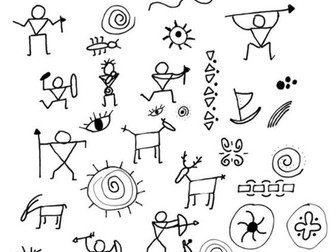
This unit of work links is a selection of slides to support the teaching of PKC unit of work in year 3 - line I made changes so that this unit made cross curricular links to the history unit about Stone Age man too. Lesson 1a- sketchbooks and line. Lesson 1b - Cave painting lesson. Lesson 2- Line weight. Lesson 3- How artists use line to show form. Lesson 4- The Great Wave. Lesson 5/6- Printing.
Primary Art and DT CPD materials -  teaching of sketching painting printing and puppet makingQuick View
misswoowoo

Primary Art and DT CPD materials - teaching of sketching painting printing and puppet making

(0)
Days INSET designed for Art and DT lead teachers to facilitate improvements in the delivery of their subject - To improve everyone’s knowledge of different art and craft skills. To identify progression we can put in place when planning and if children need taking to the next step. To look at how we can plan for art within the creative curriculum making links to other areas. The power-points and accompanying notes explore; Sketching techniques; including mark making from F up to year 6 composition work. Trace puppetry skills through DT overview. Printing techniques in line with our progression overview. Painting techniques explored and view progression overview alongside. Also attached are progression documents and policies for Art and DT.
Cross Curricular Medium Term Planning - RobotsQuick View
misswoowoo

Cross Curricular Medium Term Planning - Robots

(0)
This medium term plan includes planning for ICT, Art, Dance, History, DT, History and maths and writing cross curricula opportunities. There are web-links and resource ideas included in the detailed cross curricular plans that I use with year 3 and 4 children. The children have always found this topic very engaging and it's fun to teach too.
Year 1 - Maths progression for masteryQuick View
misswoowoo

Year 1 - Maths progression for mastery

(3)
A differentiated maths planning tool to aid in short term and medium term planning so progression is evident and so that fluency, reasoning, problem solving and key vocabulary are easily accessible as all in one place. Staff have said they have found it very easy to use and cut and paste pieces they want to use straight onto their whiteboards and into worksheets. Also they can easily evidence in their books the key areas of maths.
Year 5 - maths progression for masteryQuick View
misswoowoo

Year 5 - maths progression for mastery

(2)
A differentiated maths planning tool to aid in short term and medium term planning so progression is evident and so that fluency, reasoning, problem solving and key vocabulary are easily accessible as all in one place. Staff have said they have found it very easy to use and cut and paste pieces they want to use straight onto their whiteboards and into worksheets. Also they can easily evidence in their books the key areas of maths so it's very easy to show children who are exceeding, expected or emerging.
Year 4 - maths progression for masteryQuick View
misswoowoo

Year 4 - maths progression for mastery

(1)
A differentiated maths planning tool to aid in short term and medium term planning so progression is evident and so that fluency, reasoning, problem solving and key vocabulary are easily accessible as all in one place. Staff have said they have found it very easy to use and cut and paste pieces they want to use straight onto their whiteboards and into worksheets. Also they can easily evidence in their books the key areas of maths so it's very easy to show children who are exceeding, expected or emerging.
Year 2 - Maths progression for masteryQuick View
misswoowoo

Year 2 - Maths progression for mastery

(2)
A differentiated maths planning tool to aid in short term and medium term planning so progression is evident and so that fluency, reasoning, problem solving and key vocabulary are easily accessible as all in one place. Staff have said they have found it very easy to use and cut and paste pieces they want to use straight onto their whiteboards and into worksheets. Also they can easily evidence in their books the key areas of maths so it's very easy to show children who are exceeding, expected or emerging.
Year 6 - Maths progression for masteryQuick View
misswoowoo

Year 6 - Maths progression for mastery

(0)
A differentiated maths planning tool to aid in short term and medium term planning so progression is evident and so that fluency, reasoning, problem solving and key vocabulary are easily accessible as all in one place. Staff have said they have found it very easy to use and cut and paste pieces they want to use straight onto their whiteboards and into worksheets. Also they can easily evidence in their books the key areas of maths so it's very easy to show children who are exceeding, expected or emerging.
Year 3 - Maths progression for masteryQuick View
misswoowoo

Year 3 - Maths progression for mastery

(0)
A differentiated maths planning tool to aid in short term and medium term planning so progression is evident and so that fluency, reasoning, problem solving and key vocabulary are easily accessible as all in one place. Staff have said they have found it very easy to use and cut and paste pieces they want to use straight onto their whiteboards and into worksheets. Also they can easily evidence in their books the key areas of maths so it's very easy to show children who are exceeding, expected or emerging.