Steps to the HolocaustQuick View
rbolster

Steps to the Holocaust

(1)
A teacher led lesson on the steps that led Nazi Germany to the Holocaust, focusing on how the Nazi party convinced Germany to go along with it. In this lesson the students take notes and evaluate the importance of each different step toward the Holocaust. Good for a confident class and can lead to interesting debates as well as introducing the idea of the German peoples ignorance of the true nature of the Holocaust.
The Trial of Mary Queen of Scots.Quick View
rbolster

The Trial of Mary Queen of Scots.

(2)
This lesson is an interactive lesson in which students use the information to make an informed opinion about the guilt of Mary Queen of Scots. this lesson also comes with a code breaker starter that is both engaging and historically accurate.
Primary and Secondary SourcesQuick View
rbolster

Primary and Secondary Sources

(0)
Introduction to Primary and Secondary sources. Perfect for an introduction to KS3 students linking to key GCSE skills. Also discusses identifying bias and how it affects a sources reliability.
Non Jewish victims of the HolocaustQuick View
rbolster

Non Jewish victims of the Holocaust

(0)
An expansion lesson for further context on the victims of the Holocaust to help students achieve a fuller understanding off the topic. Student led carousel activity with detailed information sheets investigating the various groups who were discriminated against by the Nazi party and how this manifested itself. Covering Political dissidents, Slavs, Homosexuals and Gypsies. Good for a high ability group and easily adapted for a weaker group.
The Spanish ArmadaQuick View
rbolster

The Spanish Armada

(0)
A student led lesson focusing on building a chronological story-line for the Spanish Armada as well as encouraging students to evaluate different aspects of the event for their importance to the overall victory. The resources also work well as a wall display about the Spanish Armada.
Knights and HeraldryQuick View
rbolster

Knights and Heraldry

(0)
A fun and interactive lesson about knights and heraldry aimed at a KS2 / KS3 fun and interactive lesson aimed at teaching about Coats of Arms through reading comprehension and imaginative writing tasks can be differentiated for a stronger group easily.
Why do people migrate?Quick View
rbolster

Why do people migrate?

(0)
An introduction lesson identifying what Push and Pull factors are and the difference between Social, Economic and Political reasons for moving. Ideal for an introduction to a KS4 group for History and Geography.
Elizabeth I PortraitsQuick View
rbolster

Elizabeth I Portraits

(0)
This lesson the students use the various portraits of Elizabeth Tudor to tell the story of her reign. In this lesson the students analysis the historical sources for their purpose and the information they provide to create a detailed picture of Elizabeth's life. We also discuss the necessity of portraits and the position Elizabeth found herself in when taking the throne.
The World War 1 Christmas ProjectQuick View
rbolster

The World War 1 Christmas Project

(0)
Students will complete a series of different tasks identifying key aspects of the Christmas in the trenches and at home during the First World War. Students will create Posters, Letters and Diaries in this lesson that also works as a fun Christmas project for your students. Great as a one off lesson as well as part of a comprehensive study this period.
Who should win the War of the Roses?Quick View
rbolster

Who should win the War of the Roses?

(0)
Student led lesson identifying the claims of Richard III and Henry Tudor to the English throne. Students have a variety of exciting and engaging tasks. Suitable and accessible for students of all abilities in KS3. Also introduces good historical analysis as well and good literacy skills.
Did the Liberal Reforms change lives?Quick View
rbolster

Did the Liberal Reforms change lives?

(0)
Source based student led lesson identifying the changes made by the liberal reforms. This lesson focuses primarily on: Women, the Working Class , Children and the Elderly. Good quality sources.
Introduction to Westward ExpansionQuick View
rbolster

Introduction to Westward Expansion

(0)
PowerPoint and carousel activity with sources to explain push and pull factors for the westward migration of the 19th century. Complete with research homework. Good for a context lesson for any American West topics.
How did the crime change between 1700 and 1900?Quick View
rbolster

How did the crime change between 1700 and 1900?

(0)
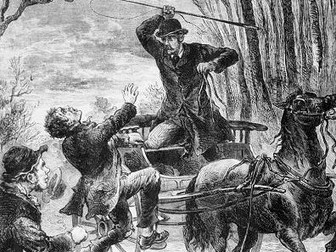
Interactive and accessible lesson forcusing on how crime changed between 1700 and 1900. Focus on Smuggling, Poaching and on Highway Robbery in link with the Edexcel syllabus. Linking in contemporary aspects of crime and punishment this lesson presents questions of what makes a crime and who decides on what punishment is fair.
D-DayQuick View
rbolster

D-Day

(0)
To be taught with Ben Walsh GCSE Modern World History
The Nazi's in SchoolQuick View
rbolster

The Nazi's in School

(0)
This is a source based lesson focusing on the indoctrination of young people. This lesson works for both GCSE and KS3 learners. It has been taught by both specialist and non specialist teachers and I have found it to be very effective in explaining what school would have been like and its purpose in the Nazi State.
Was James a good king?Quick View
rbolster

Was James a good king?

(0)
A source based analysis of James as a king focusing primarily on James the Man rather than James' decisions. Good for an introduction to Stuarts or as a source analysis task. approachable for SEN and easily adapted.
Intro to ArchaeologyQuick View
rbolster

Intro to Archaeology

(0)
An introduction of Archaeology and Aerial Photography. Include an explanation of the various markers with diagrams and examples.
Impact of Outlaws on the American WestQuick View
rbolster

Impact of Outlaws on the American West

(0)
Planned to be taught at part of the the AQA American West topic however with a few changes could be done independently to a lower year class. Intertwines the idea of societal change and its affect on the perceptions of criminality in the period. Includes information sheet about outlaws as well as the changes to technology in the period.