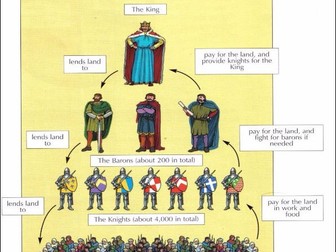
Lesson objective: To explain how William used the feudal system to control England.
Includes: Lesson starter
Feudal system diagram
Activity
This lesson is to be used with the 'Invasion, plague and murder - Britain 1066-1509' textbook
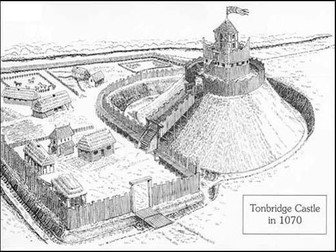
Lesson Objective: To evaluate how William controlled England through the use of castles and the Domesday book.
Includes:
Lesson starters
Activity
Exam style question
Writing frame
Lesson to be used with ‘Invasion, plague and murder - 1066-1509’ textbook.
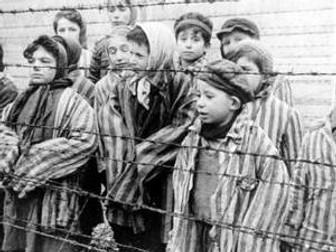
This is a detailed workbook that can be used alongside lessons or for homework for students. The workbook includes the following topics:
What was the Holocaust?
Historic antisemitism
Jewish life in the 1930
How did the Nazis make Jews non-citizens?
How did Nazi persecution change in World War II?
Who were the non-Jewish victims of the Holocaust?
Who were the perpetrators of the Holocaust?
What can we learn about resistance to the Holocaust?
What happened to survivors and perpetrators after the war?
The workbook gives detailed overviews and can be used in activities when teaching about the Holocaust.
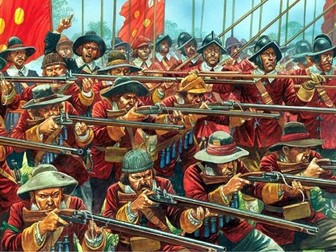
This fully resourced lesson investigates the New Model Army and looks at the impact that Cromwell made to the English Civil War.
Includes information worksheets.
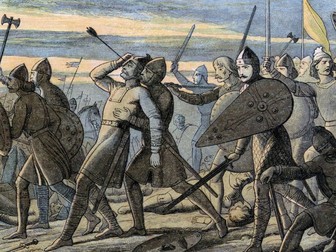
Lesson Objective: To analyse sources based on Harold Godwinson’s death.
Includes: Lesson starters
Source analysis grids
Exam style question with writing frame
Methodology of source analysis
Lesson Objective: Students will develop analytical skills by examining primary sources to understand the intricacies of crime and punishment during the Victorian era.
Starter:* Engage students in a brief discussion about modern crime, comparing it with historical perspectives to highlight changes over time.
Main Activity: Primary Source Analysis
Introduce various primary sources such as newspaper articles, court records, and illustrations depicting Victorian-era crimes and punishments.
Divide students into small groups and provide each group with a set of primary sources.
Guide students in analyzing the sources, encouraging them to identify key details about the crimes, punishments, societal attitudes, and legal systems of the time.
Facilitate group discussions where students share their findings and interpretations, fostering critical thinking and historical analysis.
Encourage students to consider the biases and perspectives of the primary sources, promoting a nuanced understanding of historical context.
Conclude the activity with a class-wide discussion, allowing each group to present their findings and insights, encouraging collaborative learning and diverse viewpoints.
Plenary
Summarize the key points discussed during the lesson, emphasizing the importance of primary sources in understanding historical events and societal norms.
Assign a follow-up activity, such as a short written reflection or a creative project, allowing students to further explore a specific aspect of Victorian-era crime and punishment.
This lesson provides students with a hands-on opportunity to delve into historical sources, fostering critical thinking skills and a deeper understanding of the complexities of crime and punishment during the Victorian era.
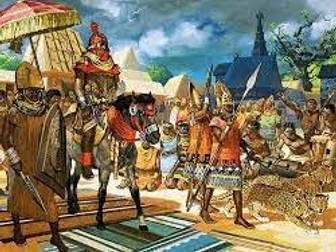
A depth study into the Kingdom of Benin.
Students will discover what this nation was like before the Transatlantic Slave Trade.
Included are a fully resourced PowerPoint with activities. There is also an information sheet on the Kingdom of Benin.
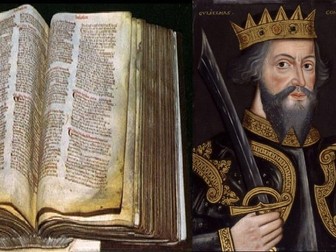
LO: To explain why William the Conqueror conducted the Domesday Book in 1086.
Lesson includes:
Interactive Domesday Book starter. Very enjoyable.
Video Activity.
Source activity questioning why William made the Domesday book
Lesson to be used with ‘Invasion, plague and murder - 1066-1509’ textbook
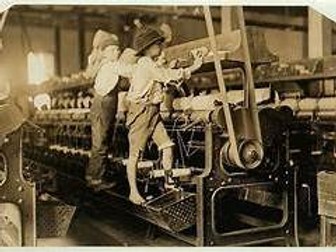
Objective: To explore and analyze primary sources to understand the harsh realities of factory conditions during the Industrial Revolution.
Starter: Discussion on Sources
Introduction to the Industrial Revolution and its impact on society.
Brief overview of primary and secondary sources.
Engage students in a discussion about the importance of historical sources in understanding the past.
Teacher Instruction on Analyzing Primary Sources
Explanation of primary sources related to factory conditions (photographs, letters, diaries, reports).
Guidance on how to critically analyze primary sources, considering context, authorship, and bias.
Demonstration of analyzing a sample primary source together as a class.
**Main Activity: **
Primary Source Analysis
Distribute various primary sources depicting factory conditions to small groups of students.
Students analyze the assigned sources, considering the experiences of workers, living conditions, and societal attitudes of the time.
Encourage students to discuss and debate their interpretations within their groups.
Groups present their findings, highlighting key aspects of the sources and discussing their implications.
**Plenary: **
Discussion on Horrific Factory Conditions
Recap of key findings from the primary sources analyzed by each group.
Facilitate a whole-class discussion on the horrific conditions faced by factory workers.
Explore the emotional and social impact of these conditions on individuals and communities.
Discuss the role of these conditions in shaping labor movements and social reforms during the Industrial Revolution.
Lesson objectives:
Describe the claimants to the throne in 1066.
Analyse which claimant is the most suitable candidate for the throne in 1066.
Includes:
Lessons whiteboard starters.
Information on claimants.
Activity on claimants.
Writing frame and GCSE style question.
Unit Focus:
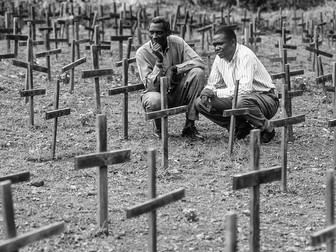
Investigating the Rwandan Genocide and its unique characteristics
Examining the question: “Are all genocides the same?”
Contents:
Presentation:
Provides an overview of the Rwandan Genocide, its historical context, and key events
Highlights distinctive aspects of the Rwandan Genocide
Compares and contrasts the Rwandan Genocide with other genocides in history
Raises thought-provoking questions to encourage critical thinking
Worksheet:
Engages students with comprehension questions related to the presentation content
Promotes analysis and reflection on the similarities and differences between genocides
Encourages students to consider the factors contributing to each genocide’s unique characteristics
Key Benefits:
Facilitates a deeper understanding of the Rwandan Genocide and its significance
Encourages critical thinking and analysis skills through comparative study
Explores the complexities surrounding genocides, challenging the notion that all genocides are the same
Enhances empathy and fosters a sense of social responsibility in students
Suitability:
Designed for secondary school students studying history, social sciences, or human rights
Can be adapted for various grade levels and educational contexts
Supports both classroom and individual learning
Note: The teaching resource aims to foster sensitivity and respect while discussing sensitive topics. It is crucial to provide appropriate guidance and create a safe and inclusive learning environment for students throughout the lesson.
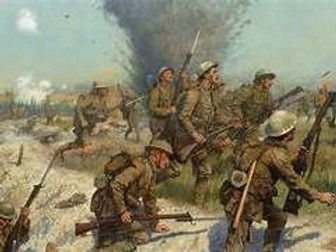
Lesson Objective: To analyse why militarism caused the First World War
Starter:
Engage students in a source discussion about militarism, focusing on primary sources related to the build-up to WWI.
Teacher Led Instruction:
Provide clear and concise instruction on the concept of militarism, emphasizing its role in the lead-up to the First World War.
Facilitate class discussion to ensure students grasp key points and encourage questions.
Main Activity:
Divide students into groups and assign each group a specific country involved in WWI (e.g., Germany, France, Britain).
In their groups, students analyze historical information about their assigned country’s militaristic policies and actions leading up to the war.
Students identify key events, policies, and decisions, discussing how militarism played a role in each country’s actions.
Plenary:
Bring the class back together for a concluding discussion on why militarism was a significant factor leading to the First World War.
Encourage students to synthesize the information they gathered during the main activity.
Facilitate a dialogue where students express their opinions and insights on the connection between militarism and the outbreak of the war.
A depth study into life on a plantation for slaves.
Students will discover what life was like on a plantation. This includes the slave auctions and who benefitted from the slave trade.
Included are a fully resourced PowerPoint with activities. There is also an information PowerPoint on the different roles of people on plantations.
This fully resourced lesson looks at the role of Olaudah Equiano in the abolition of the slave trade.
Includes primary sources of Equiano’s experience as a slave.
LO: To analyse what was the main cause of the Industrial Revolution
Lesson Includes:
Source starter
Information slides on Industrial Revolution
Video interpretation of the London 2012 Olympic Games Opening Ceremony
Information Carousel
Information Pack on different causes of the Industrial Revolution
Plenary
Includes:
Lesson Starter
Key reading
Main activity
Focus on key historical term ‘Significance’
Lesson to be used with ‘Invasion, plague and murder - 1066-1509’ textbook
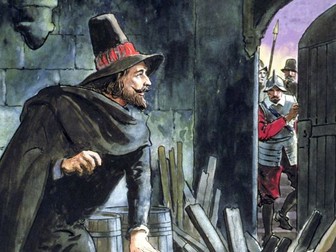
This lesson focuses on whether the Gunpowder Plotters were framed or not.
Lesson includes a PowerPoint, and two information sheets - one with key background information and a second with primary sources.
Starter:
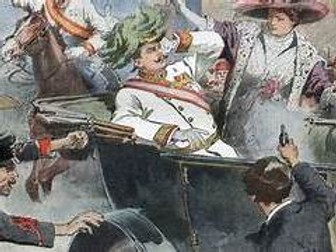
Engage students with anagrams of key terms related to WWI assassination.
Teacher-led Instruction:
Provide context on the assassination of Archduke Franz Ferdinand and its significance in the lead-up to WWI.
Facilitate a class discussion about the political climate, alliances, and tensions in Europe prior to the assassination.
Main Activity:
Distribute a reading material and show a video summarizing the events leading to the assassination and its aftermath.
Encourage students to take notes and identify crucial factors that contributed to the outbreak of WWI.
Plenary:
Lead a group discussion on the reasons why the assassination of Archduke Franz Ferdinand ultimately led to the First World War.
Encourage students to express their understanding and insights gained from the lesson, fostering critical thinking and analysis skills.
Lesson Objective: To analyse why nationalism caused the First World War
Starter:
Analyze national anthems of different countries, discussing their themes and symbolism related to nationalism.
Teacher-led Instruction:
Provide an overview of nationalism and its role in the lead-up to WWI.
Facilitate a class discussion exploring various aspects of nationalism in different countries during the period.
Main Activity:
Analyze historical information specific to each country involved in WWI, focusing on events, policies, and sentiments that fueled nationalistic fervor.
Collaboratively examine primary sources and contextualize the information within the broader historical context.
Plenary:
Engage in a class discussion to evaluate and synthesize the analyzed information.
Discuss and draw connections between nationalism and the outbreak of the First World War, emphasizing cause-and-effect relationships.
 Quick View

 Quick View
 Quick View
 Quick View
 Quick View
 Quick View
 Quick View
 Quick View
 Quick View
 Quick View
 Quick View
 Quick View
 Quick View
 Quick View
 Quick View
 Quick View
 Quick View
 Quick View
 Quick View
 Quick View
 Quick View