RE: How and why do people in Cornwall mark significant events in community lifeQuick View
ajkevern

RE: How and why do people in Cornwall mark significant events in community life

(0)
A unit of work based on the Cornwall SACRE unit: How and why do people in Cornwall mark significant events in community life? A series of five Powerpoints each with both retrieval and learning tasks designed to make pupils think and question the world around them. Lesson 1 - Why do we celebrate special times in our lives? Lesson 2 - What pilgrimages do people of faith make during their lifetime? Lesson 3 - How do we celebrate special times on Cornwall? Lesson 4 - What is a festival? Lesson 5- What is the connection between Harvest Festival and Cornwall?
Gospel: What kind of world did Jesus want?Quick View
ajkevern

Gospel: What kind of world did Jesus want?

(0)
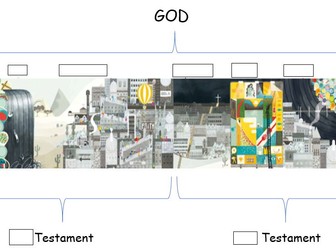
A series of six lessons based on the SACRE unit Gospel: What kind of world did Jesus want? Each lesson focuses on a different Ways of Knowing aspect. All lessons included printable retrieval tasks and a main activity which can easily be adapted for different learners. All lessons begin with a retrieval linked back to Emma Yarlett’s Big Frieze to help pupils place the events into the timeline of the Bible.
The Clockwork Crow - Whole Class Reading novel studyQuick View
ajkevern

The Clockwork Crow - Whole Class Reading novel study

(0)
A series of 14 Powerpoints based on each chapter of ;The Clockwork Crow; by Catherine Fisher for Whole Class Reading lessons. Each Powerpoint includes focussed reading comprehension activities based on Retrieval, vocabulary, Inference and Explain questions. Powerpoints also contain easily printable question slides for books if desired.
King of the Cloud Forest - Whole Class Reading PowerpointsQuick View
ajkevern

King of the Cloud Forest - Whole Class Reading Powerpoints

(0)
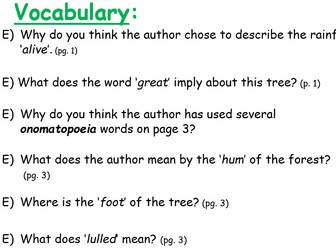
A set of 12 powerpoints focusing on each chapter of Michael Morpurgo’s classic book, King of the Cloud Forest. Each Powerpoint is structured in the same way focusing on; vocabulary - reading and explaining the meaning of words in context retrieval - presented in a variety of ways, including SATs style questions inference - presented in a variety of ways Links to animated video also included.
Shackleton's Journey - Whole Class Reading PowerpointsQuick View
ajkevern

Shackleton's Journey - Whole Class Reading Powerpoints

(0)
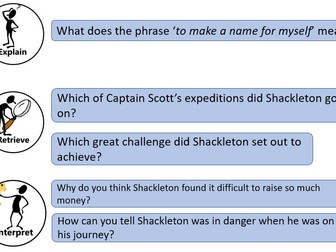
A set of 11 Powerpoints based on the award-winning illustrative book Shackleton’s Journey by William Grill (2014). Suitable for whole class reading, or guided reading, sessions aimed at KS2. SATs style questions based on the following areas of reading comprehension: Vocabulary Retrieval Inference Explaining
Salvation - Why do Christians call the day Jesus died 'Good Friday'Quick View
ajkevern

Salvation - Why do Christians call the day Jesus died 'Good Friday'

(1)
A series of six teaching Powerpoints based around the SACRE scheme: Salvation -Why do Christians call the day Jesus dies ‘Good’ Friday? The teaching and learning slides are divided up into three parts: Making sense of the text; Understanding the impact; and Making connections. Retrieval activities are included for the start and end of each lesson as well as a main activity. These help pupils to build core knowledge. Some Task Design ideas are also included. Slides are animated and include teacher questions at various points to encourage class discussion as well as Teacher notes to support knowledge.
Kingdom of God - When Jesus left, what was the impact of Pentecost?Quick View
ajkevern

Kingdom of God - When Jesus left, what was the impact of Pentecost?

(1)
Six Powerpoints to teach the SACRE Christianity Unit: Kingdom of God - When Jesus left, what was the impact of Pentecost? These teaching and learning slides are divided up into three parts: Making sense of the text; Understanding the impact; and Making connections. All slides are animated, include key vocabulary, and printable retrieval of key knowledge quizzes. Also included are teacher questions at various points to encourage class discussion. All lesson slides start with a retrieval task link to Emma Yarlett’s Big Frieze. Each lesson is focussed on a different aspect of Ways of Knowing. Learning tasks are included for each lesson and can be printed from the Powerpoint and photocopied as required. Core knowledge for non-specialist teachers of RE are also included in the ‘Notes’ for each slide.
RE - Incarnation: Trinity of GodQuick View
ajkevern

RE - Incarnation: Trinity of God

(1)
A comprehensive Powerpoint for teaching the Lower Key Stage 2 Unit 2A.3 topic of 'Incarnation / God - What is the Trinity? It starts by looking at the BIG Frieze by the artist Emma Yarlett before following the Understanding Christianity unit 2A.3 planning document. The teaching and learning slides are divided up into three parts: Making sense of the text; Understanding the impact; and Making connections. Slides are animated and include teacher questions at various points to encourage class discussion.
What do Hindus believe that God is like?Quick View
ajkevern

What do Hindus believe that God is like?

(0)
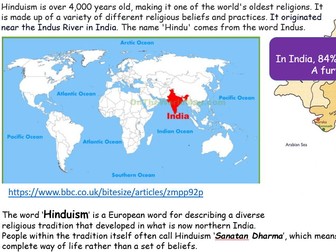
A series of six detailed Powerpoint lessons, with accompanying notes, based on the SACRE Religious Education unit - What do Hindus believe that God is like? Each Powerpoint contains all relevant information to teach the unit, as well as accompanying learning tasks & activities. Each lesson focusses on a different Way of Knowing aspect. Lesson 1 begins by looking at statistics involving the districution of Hindus around the world and within the United Kingdom. (Statistics are also given for Cornwall but can easily be changed to any English county.)
RE: What does it mean to be Hindu in Britain Today - Teaching slidesQuick View
ajkevern

RE: What does it mean to be Hindu in Britain Today - Teaching slides

(0)
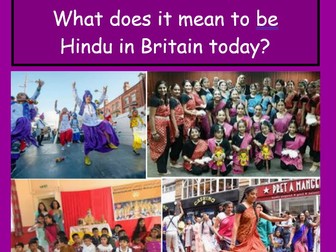
Teaching slides for a series of six RE lessons based on Hinduism: What does it mean to be Hindu in Britain today? Suitable for key stage two. All six lessons focus on a different aspect of Ways of Knowing. Each lesson contains printable knowledge retrieval grids which build on prior learning and help to retain new learning. Each lesson also has a specific learning task which can be printed direct from the Ppt. Lesson 1 starts by looking at data and the distribution of Hindus living within the world and the Unithed Kingdom. (Hindu population data is included for Cornwall but can be changed for any English county depending on your location.) Also included are slides with the core knowledge to be taught and retained.
Geography - Why are Rainforests so important to us?Quick View
ajkevern

Geography - Why are Rainforests so important to us?

(0)
A sequence of six teaching Powerpoints based around the big enquiry question: Why are rainforests important to us? Each individual lesson focusses on a smaller enquiry which builds towards enabling pupils to answer the BIG enquiry question by the end of the unit. These are: Where in the world are tropical rainforests located? Where is the Amazon rainforest? What are the layers in a rainforest? Who lives in the Amazon rainforest? Who are rainforests under threat from and how are they changing? What role can we play in protecting our rainforests? Each Powerpoint includes retrieval quizzes, teaching slides with lots of information and facts and learning tasks carefully designed to help pupils remember core knowledge. Slides are also animated and include lots of images to support and develop pupils’ understanding.
Anglo-Saxon Boy Whole Class ReadingQuick View
ajkevern

Anglo-Saxon Boy Whole Class Reading

(0)
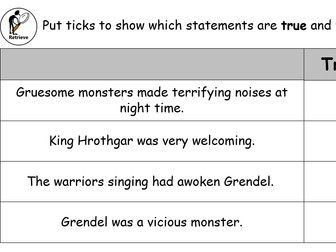
A series of twenty-two Powerpoints covering all chapters from Tony Bradman’s Anglo-Saxon Boy (2017 edition). A fantastic book to read for whole class reading if studying the Anglo-Saxons in history. Each Powerpoint contains a range of slides covering all the National Curriculum Reading objectives: Synonyms starter Key Vocabulary slide for sight reading Explain questions Retrieval questions Interpret questions True or False activity Sequencing activity Printable slide with a selection of questions Summary slide Updated Dec 2025 to include SATs style reading questions for all areas. Easy to print for pupil access.
Y4 Morning Work - Retrieval PractiseQuick View
ajkevern

Y4 Morning Work - Retrieval Practise

(0)
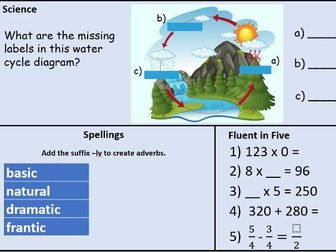
A whole year of Retrieval practice for each term. Daily Fluent in 5 Daily Spag Daily Spelling Daily rotation of Geography / History / Science / Art question Slides give six weeks coverage per term with five slides per week. Great for reinforcing key concepts / ideas and offering challenge to your more able pupils.
Whole Class Reading - The ExplorerQuick View
ajkevern

Whole Class Reading - The Explorer

(0)
A series of whole class reading Powerpoints based on chapters 1 - 17 of Katherine Rundell’s award winning book, ‘The Explorer’. Each Ppt is based on a chapter study with a focus on vocabulary, retrieval, explaining, interpret and sequencing. Also included are SATs style reading questions to practice. Great link to topic on the Rainforest.
How To Train Your Dragon - Whole Class Reading PowerpointsQuick View
ajkevern

How To Train Your Dragon - Whole Class Reading Powerpoints

(0)
A series of Whole Class Reading Powerpoints based on each chapter of ‘How To Train Your Dragon’ by Cressida Cowell. Each lesson follows the same structure with some variation focussing on the different reading strands. Heavy focus on developing and understanding vocabulary, retrieval, inference, sequencing and summarising. SATs style questions included for each chapter. All page numbers based on 2017 edition.
Gangsta Granny - Whole Class Reading PowerpointsQuick View
ajkevern

Gangsta Granny - Whole Class Reading Powerpoints

(0)
A series of 24 Powerpoints covering every chapter of David Walliams best-selling book - Gangsta Granny. Each Powerpoint follows the same structure which can easily be adapted depending on your individual lesson focus. Slides focus on all elements of the KS2 reading curriculum. Vocabulary Retrieval Sequencing Explaining Interpreting Predicting All Powerpoints have a big focus on developing and understanding vocabulary, along with various opportunities to practise other reading skills such as retrieval, explaining, sequencing and inference through SATs style questions. Page numbers are also included to support less able readers locate information quickly. Some chapters include a short writing task.
Year 3 & 4 Statutory Words PowerpointQuick View
ajkevern

Year 3 & 4 Statutory Words Powerpoint

(0)
A comprhensive Powerpoint of all the statutory year 3 & 4 words grouped by area. Letter tiles used to support children building an image of what the word looks like and be able to identify common prefixes and suffixes.