Everyday Foods and Sometimes Foods Sorting Activity. Cutting and Sticking.Quick View
victoriabirkett90

Everyday Foods and Sometimes Foods Sorting Activity. Cutting and Sticking.

(0)
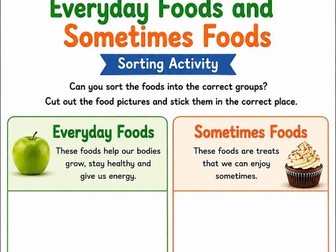
Everyday foods and sometimes foods sorting activity with realistic photographs to support EYFS and KS1 healthy eating, PSHE and science lessons. Help children develop a positive understanding of healthy eating with this engaging cut-and-stick sorting activity. Pupils sort a range of foods into Everyday Foods and Sometimes Foods, encouraging discussion about balanced diets, healthy choices and enjoying treats as part of a healthy lifestyle. Designed for EYFS and KS1, this resource uses realistic photographs and child-friendly language to help children identify different foods and understand that some foods are eaten more often than others. What’s Included A4 sorting mat A4 sheet of food picture cards Realistic food photographs Cut-and-stick activity Child-friendly healthy eating messages Print-ready resource Food Categories Included Everyday Foods Fruit Vegetables Dairy foods Protein foods Bread and grains Water Sometimes Foods Cake Biscuits Crisps Ice cream Doughnuts Chocolate Pizza Fizzy drinks Perfect For Healthy eating topics PSHE lessons Science lessons Food and nutrition units Independent learning Small group activities Continuous provision Healthy Schools topics Learning Objectives Identify a variety of foods Understand that different foods have different purposes Recognise foods that can be enjoyed every day and foods that are enjoyed sometimes Develop healthy eating vocabulary Sort and classify objects into groups This practical and engaging resource helps children build a positive relationship with food while learning about balance, variety and making healthy choices. The realistic photographs and simple sorting task make it ideal for EYFS and KS1 learners.
Plant Life Cycle Vocabulary CardsQuick View
victoriabirkett90

Plant Life Cycle Vocabulary Cards

(0)
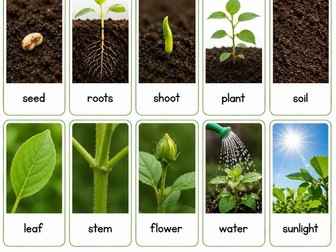
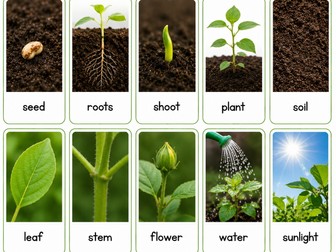
Plant life cycle vocabulary cards with realistic photographs and clear labels to support EYFS and KS1 science learning. Help children develop their understanding of plant growth and life cycles with these engaging photo vocabulary cards. Each card features a realistic photograph and a clear, single-word label, making it easy for young learners to identify key parts of a plant and understand the conditions needed for growth. Designed for EYFS and KS1, these cards are ideal for introducing scientific vocabulary, supporting discussions, enhancing continuous provision, and creating attractive classroom displays. Vocabulary Included Seed Roots Shoot Plant Soil Leaf Stem Flower Water Sunlight Perfect For Plant life cycle topics Science lessons on plants and growth Vocabulary displays Working walls and word banks Matching and sorting activities Continuous provision areas Small group and independent learning Display boards and classroom environments The realistic photographs help children make meaningful real-world connections while building confidence with key scientific vocabulary. A versatile resource that supports learning about plants, growth and the natural world.
Minibeast Hunt Checklist EYFS/KS1Quick View
victoriabirkett90

Minibeast Hunt Checklist EYFS/KS1

(0)
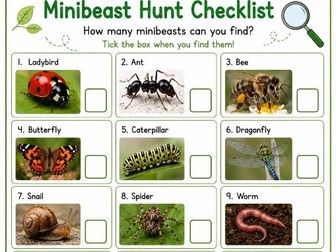
Minibeast hunt checklist with realistic photographs and tick boxes to support EYFS and KS1 science, outdoor learning and nature exploration. Encourage children to explore the natural world with this engaging photo-based minibeast hunt checklist. Children can search for common minibeasts in the school grounds, garden, forest school area or local environment and tick them off as they find them. Designed for EYFS and KS1, this resource helps children develop observation skills, identification skills and scientific vocabulary while learning about living things and habitats through hands-on exploration. Minibeasts Included Ladybird Ant Bee Butterfly Caterpillar Dragonfly Snail Spider Worm Woodlouse Grasshopper Beetle Millipede Centipede Fly Larva Slug Wasp Perfect For Outdoor learning Forest school activities Science lessons Minibeast topics Nature walks Habitat investigations Garden and playground hunts Continuous provision Independent learning activities What’s Included A4 printable minibeast hunt checklist 18 realistic minibeast photographs Tick boxes for recording discoveries Clear, child-friendly layout Suitable for EYFS and KS1 pupils Ideal for indoor and outdoor learning This practical resource supports early science learning by encouraging children to observe, identify and discuss common minibeasts in their natural habitats while developing curiosity about the world around them.
Minibeast Vocabulary CardsQuick View
victoriabirkett90

Minibeast Vocabulary Cards

(0)
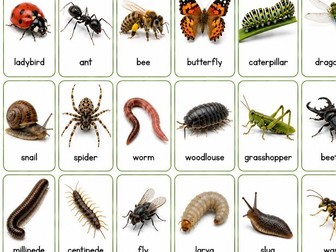
Minibeast vocabulary cards with realistic photographs and clear labels to support EYFS and KS1 science learning and topic work. Help children identify and name common minibeasts with this engaging set of photo vocabulary cards. Each card features a realistic photograph and a clear, single-word label, making it easy for young learners to develop scientific vocabulary and build confidence when discussing the natural world. Designed for EYFS and KS1, these cards are perfect for introducing key vocabulary, supporting minibeast topics, enhancing continuous provision and creating attractive classroom displays. Vocabulary Included Ladybird Ant Bee Butterfly Caterpillar Dragonfly Snail Spider Worm Woodlouse Grasshopper Beetle Millipede Centipede Fly Larva Slug Wasp Perfect For Minibeast topics Science lessons Vocabulary displays Working walls and word banks Matching and sorting activities Continuous provision areas Outdoor learning Nature and garden topics Small group and independent learning The realistic photographs help children make meaningful real-world connections while developing observation skills and scientific vocabulary. An ideal resource for supporting learning about minibeasts, habitats and the natural environment. What’s Included 18 realistic photo vocabulary cards Clear, easy-to-read labels Print-ready classroom resource Suitable for EYFS and KS1 pupils Ideal for displays, discussions and hands-on learning activities
EYFS and KS1 Life Cycles BundleQuick View
victoriabirkett90

EYFS and KS1 Life Cycles Bundle

6 Resources
Life cycle activities and vocabulary cards bundle featuring butterfly, frog and plant life cycles with realistic photographs for EYFS and KS1 science. This engaging science bundle combines hands-on sequencing activities with photo vocabulary cards to help children learn about life cycles, growth and the natural world. Designed for EYFS and KS1, the resources use realistic photographs and child-friendly layouts to support vocabulary development, scientific understanding and fine motor skills. Included Resources Butterfly Life Cycle Cut and stick sequencing activity Vocabulary cards with realistic photographs Frog Life Cycle Cut and stick sequencing activity Vocabulary cards with realistic photographs Plant Life Cycle Cut and stick sequencing activity Vocabulary cards with realistic photographs Perfect For EYFS science KS1 science Life cycle topics Plants and growth Living things and habitats Vocabulary development Classroom displays Working walls Independent activities Small group learning Skills Developed Scientific vocabulary Sequencing and ordering Observation skills Fine motor skills Understanding growth and change Discussion and communication This comprehensive bundle provides a range of practical and engaging science resources that support children’s understanding of life cycles while developing key early learning skills.
Butterfly life cycle vocabulary cardsQuick View
victoriabirkett90

Butterfly life cycle vocabulary cards

(0)
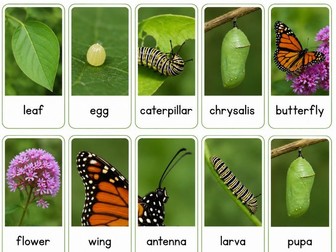
Butterfly life cycle vocabulary cards with realistic photographs and clear labels to support EYFS and Year 1 science learning. Support children’s understanding of the butterfly life cycle with these engaging photo vocabulary cards. Each card features a realistic photograph and a clear, single-word label, helping young learners develop scientific vocabulary while exploring life cycles and minibeasts. Designed for EYFS and Year 1, these cards are perfect for introducing key vocabulary, supporting discussions, enhancing continuous provision, and creating eye-catching classroom displays. Vocabulary Included Leaf Egg Caterpillar Chrysalis Butterfly Flower Wing Antenna Larva Pupa Perfect For Science lessons on life cycles Minibeast topics Vocabulary displays Word banks and working walls Matching and sorting activities Reading and discussion prompts Continuous provision areas The clear photographs help children make real-world connections while building confidence with new scientific vocabulary. Ideal for supporting butterfly life cycle topics in a fun, visual and meaningful way. Suitable for EYFS and KS1 Real-life photographs Supports scientific vocabulary development Ideal for displays, provision and learning activities
Frog Life Cycle Vocabulary CardsQuick View
victoriabirkett90

Frog Life Cycle Vocabulary Cards

(0)
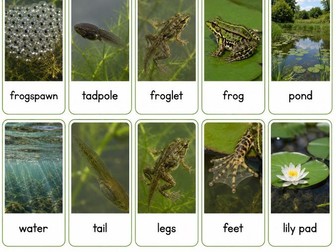
Frog life cycle vocabulary cards with realistic photographs and clear labels to support EYFS and Year 1 science learning. Support children’s understanding of the frog life cycle with these engaging photo vocabulary cards. Each card features a realistic photograph and a clear, single-word label, helping young learners develop scientific vocabulary while exploring life cycles, habitats and animal growth. Designed for EYFS and Year 1, these cards are ideal for introducing key vocabulary, supporting discussions, enhancing continuous provision and creating engaging classroom displays. Vocabulary Included Frogspawn Tadpole Froglet Frog Pond Water Tail Legs Webbed Feet Lily Pad Perfect For Science lessons on life cycles Animal and habitat topics Vocabulary displays Word banks and working walls Matching and sorting activities Reading and discussion prompts Continuous provision areas The realistic photographs help children make real-world connections while building confidence with new scientific vocabulary. Ideal for supporting frog life cycle topics in a fun, visual and meaningful way. Suitable for EYFS and KS1 Real-life photographs Supports scientific vocabulary development Ideal for displays, provision and learning activities
Prevent Safeguarding Micro Teach Lesson PackQuick View
victoriabirkett90

Prevent Safeguarding Micro Teach Lesson Pack

(0)
Would You Know When to Act? Safeguarding and Prevent – Interactive Micro Teach This engaging and interactive resource has been designed to support the delivery of a 10-minute micro-teach or short lesson on the Prevent duty within safeguarding. It is ideal for college tutors, trainee teachers, or interview preparation, helping to develop confidence in recognising and responding to early signs of concern. The session takes a student-centred, discussion-based approach, encouraging participation through practical activities rather than passive learning. ⸻ What’s included • A fully structured PowerPoint presentation • Clear progression from recognising concerns to understanding responsibility and taking action • A realistic scenario-based activity • Interactive elements including: • Post-it note activity (identifying signs of concern) • Whiteboard activity (deciding appropriate action) • A simple and memorable Notice – Check – Share framework ⸻ Learning focus • Understanding the Prevent duty as part of safeguarding • Recognising early warning signs of vulnerability • Developing confidence in professional response and referral • Reinforcing that safeguarding is about support, not judgement ⸻ Ideal for • FE, Sixth Form, and College tutors • PGCE and teacher training candidates • Interview micro-teach preparation • Safeguarding or Prevent awareness sessions ⸻ Why this resource stands out • Interactive and easy to deliver • Uses realistic, classroom-based scenarios • Designed to demonstrate effective teaching practice in a short time • Balances safeguarding knowledge with practical application ⸻ This resource supports educators in delivering a clear, engaging, and professional introduction to Prevent, while modelling effective teaching strategies.
Plant life cycleQuick View
victoriabirkett90

Plant life cycle

(0)
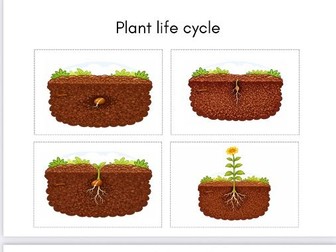
Plant Life Cycle Cut and Stick Activity – EYFS & KS1 Science Plant Life Cycle for EYFS & KS1 – Printable science activity showing seed, roots, sprout, seedling and flowering plant stages with a cut and stick sequencing task. Description Help young learners understand how plants grow with this simple and engaging plant life cycle activity. This printable resource includes clear cross-section diagrams showing what happens above and below the soil as a plant grows. Children can cut out the pictures and stick them in the correct order to show the stages of the plant life cycle, making it a great hands-on science activity for Early Years and Key Stage 1. What’s Included • Plant life cycle picture sheet for cutting • Sequencing page where children stick the stages in order • Clear visual diagrams suitable for young learners Plant Life Cycle Stages Shown • Seed in soil • Roots and sprout beginning to grow • Seedling emerging above the soil • Flowering plant with roots, stem, leaves and flower Perfect For • EYFS Understanding the World • KS1 Science – Plants • Plant topic lessons • Science centres • Independent activities • Classroom displays • Early life cycle learning This resource helps children visually understand how a plant grows from a seed to a flowering plant while developing sequencing and fine motor skills through a cut and stick activity.
Frog Life Cycle Sequencing Activity | Real Photo Cut and Stick WorksheetQuick View
victoriabirkett90

Frog Life Cycle Sequencing Activity | Real Photo Cut and Stick Worksheet

(0)
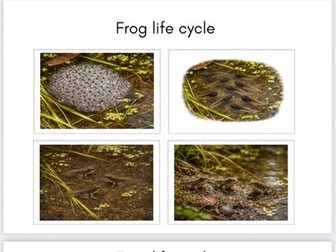
Frog life cycle cut-and-stick activity for EYFS and Year 1 pupils to sequence the stages of a frog’s life using clear, engaging images. This hands-on cutting and sticking science activity helps young learners explore the frog life cycle in a simple and engaging way. Children cut out the pictures and stick them in the correct order to show how a frog grows and changes. Designed for EYFS and Year 1, this resource supports early understanding of life cycles, animals and growth, while also helping to develop fine motor skills, sequencing and discussion skills. Children will learn about the four stages of the frog life cycle: • Frogspawn (eggs) • Tadpoles • Froglets • Adult frog What’s included: • Life cycle sequencing sheet • Cut-out picture cards • Clear, realistic images suitable for young learners Perfect for: • Science lessons on life cycles • EYFS Understanding the World • KS1 science topics on animals • Independent work, small groups or morning activities A simple and engaging resource to help children learn the stages of the frog life cycle through cutting, sticking and sequencing.
Butterfly life cycle cutting and sticking activityQuick View
victoriabirkett90

Butterfly life cycle cutting and sticking activity

(0)
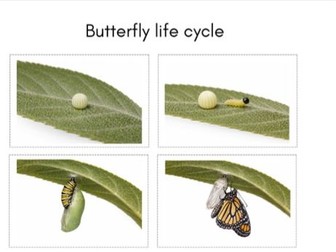
Engage young learners with this fun butterfly life cycle cut-and-stick activity. Pupils sequence the stages of a butterfly’s life by cutting out pictures and sticking them in the correct order. This resource helps children understand the process of metamorphosis while developing important fine motor and sequencing skills. It’s perfect for Early Years, KS1, and elementary science lessons. Children will learn about the four stages of the butterfly life cycle: • Egg • Caterpillar (larva) • Chrysalis (pupa) • Butterfly (adult) What’s included: • Life cycle sorting sheet • Cut-out picture cards • Clear visual stages for young learners Ideal for science lessons, life cycles topics, minibeasts units, or spring activities. It also works well for independent work, group activities, or homework tasks. A simple, hands-on way to help children explore the butterfly life cycle while practicing cutting and sticking skills.