
The Pearl: Year 9 KS3 Scheme of WorkQuick View
treadwelle

The Pearl: Year 9 KS3 Scheme of Work

(0)
A complete Year 9 unit on Steinbeck’s The Pearl: 27 editable lessons on symbolism, greed, colonial oppression and patriarchy, with assessments and model answers. Guide students through Kino’s journey from hope to tragedy while building the analytical reading skills they need for GCSE. Lessons combine close reading of key extracts with rich context on Steinbeck, inequality and the pearl divers of Mexico, so students understand not just what happens but why Steinbeck wrote it. What’s included Editable PowerPoint lessons with retrieval starters, Word of the Lesson, Frayer-model vocabulary, modelled analysis and exit tasks Resource booklet with knowledge organiser, additional activities menu, wider reading list and lesson resources Knowledge organiser and quiz with answers Context resources on Steinbeck and the Mexican pearl divers, including a version for lower-ability students and a model answer sheet Mid-term deliberate practice on greed, with feedback lesson and standardisation exemplars Final reading assessment with prep lesson and standardisation document Scaffolds and support sheets: quotation hunt cut-outs, gap-fill plot summaries, writing frames, multiple-choice quizzes and extract sheets Curriculum rationale and medium-term plan Lesson journey Hook: does wealth lead to happiness? Context: Steinbeck and inequality 3–4. Chapter 1: the opening and the scorpion 5–6. The doctor: injustice and language analysis Kino vs Juana The songs as symbols 9–11. Blessing or curse? Pearl symbolism and dreams Analytical response: hope 13–14. The priest and the doctor: power and exploitation 15–16. Mid-term deliberate practice and feedback: greed 17–18. Chapter 4: colonial oppression and patriarchy 19–20. Chapter 5: patriarchy and Kino’s transformation 21–24. Chapter 6: turning point, corruption, climax and Steinbeck’s moral vision 25–26. Reading assessment prep and assessment Knowledge organiser quiz Skills covered: inference, language and structural analysis, symbolism, context, character and theme, and GCSE-style analytical writing. Fully editable to suit your classes. It works well as a bridge into GCSE English Literature and Paper 1 reading skills.
19th Century Gothic: Year 7 Scheme of WorkQuick View
treadwelle

19th Century Gothic: Year 7 Scheme of Work

(0)
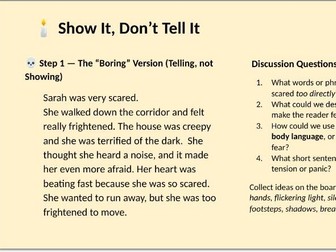
A complete Year 7 Gothic unit: 23 editable lessons on Poe, Dickens, Stoker and Stevenson, building to a creative writing assessment, plus a knowledge organiser. Immerse your students in candlelit corridors, crumbling mansions and unreliable narrators. This scheme takes Year 7 from “What is the Gothic?” to confidently writing their own atmospheric Gothic fiction, with every lesson built around a clear enquiry question. What’s included 23 editable PowerPoint lessons, each with a retrieval starter, Word of the Lesson, modelled annotation, structured tasks and an exit ticket Resource booklet with all the extracts in one place, including Frankenstein, The Tell-Tale Heart, Jekyll and Hyde, Dracula and Dickens Knowledge organiser covering context, key features, language methods and key vocabulary Additional tasks menu with writing, creative, research, analytical and challenge tasks for early finishers or homework Wider reading list of classic and modern Gothic texts suitable for Year 7 Assessment lessons: deliberate practice, a feedback lesson, assessment preparation and a final creative writing assessment with mark scheme and support sheet Lesson journey What defines the Gothic genre? How does setting create fear? How can weather mirror emotion? Using Gothic conventions in my own writing How does Poe build psychological tension? Duality in Jekyll and Hyde Writing as an unreliable narrator Symbolism and fear 9–10. Deliberate practice and feedback How Dickens makes the ordinary frightening Claustrophobia in Dracula Blurring reality and the supernatural 14–19. Crafting Gothic writing: structure, hooks, showing fear without naming it, sentences that mirror emotion, ambitious vocabulary, and putting it all together 20–21. Assessment preparation and assessment 22–23. Flexible teacher-choice lessons Skills covered: inference, language and structural analysis, pathetic fallacy, symbolism, narrative perspective, sentence craft and descriptive and narrative writing. Fully editable, so you can adapt it to your classes. Ideal for a half-term Year 7 unit, and it also works well as a KS3 Gothic writing unit.