Boy in the Tower Whole Class Guided Reading comprehension resources (Lesson 1-5, Chapters 1-13)Quick View
LGJones

Boy in the Tower Whole Class Guided Reading comprehension resources (Lesson 1-5, Chapters 1-13)

(0)
These carefully written resources link carefully to each chapter (or page range within a larger chapter) of Polly Ho-Yen’s excellent book Boy in the Tower. They are designed to develop the ‘Miss Wilson Says’ ERIC reading skills (Explain, Retrieve, Interpret and Choice). There are a wide range of engaging question styles to keep the class interested and active in their learning once each chapter has been read. These resources cover chapters 1- 13 (over 5 lessons) and I also have resources ready to go for the whole book. They often spark lively debates in class and are fantastic for developing language. These resources are suitable for Year 5, 6 or 7.
Boy in the Tower Whole Class guided Reading Comprehension resources Lesson 16 - 20 Chapter 33 - 41Quick View
LGJones

Boy in the Tower Whole Class guided Reading Comprehension resources Lesson 16 - 20 Chapter 33 - 41

(0)
These carefully written resources link carefully to each chapter (or page range within a larger chapter) of Polly Ho-Yen’s excellent book Boy in the Tower. They are designed to develop the ‘Miss Wilson Says’ ERIC reading skills (Explain, Retrieve, Interpret and Choice). There are a wide range of engaging question styles to keep the class interested and active in their learning once each chapter has been read. These resources cover chapters 33 - 41 (over 5 lessons) and I also have resources ready to go for the whole book. They often spark lively debates in class and are fantastic for developing language. These resources are suitable for Year 5, 6 or 7.
Boy in the Tower Whole Class Guided Reading Comprehension resources Lesson 6 - 10 Chapters 14 -24Quick View
LGJones

Boy in the Tower Whole Class Guided Reading Comprehension resources Lesson 6 - 10 Chapters 14 -24

(0)
These carefully written resources link carefully to each chapter (or page range within a larger chapter) of Polly Ho-Yen’s excellent book Boy in the Tower. They are designed to develop the ‘Miss Wilson Says’ ERIC reading skills (Explain, Retrieve, Interpret and Choice). There are a wide range of engaging question styles to keep the class interested and active in their learning once each chapter has been read. These resources cover chapters 14 - 24 (over 5 lessons) and I also have resources ready to go for the whole book. They often spark lively debates in class and are fantastic for developing language. These resources are suitable for Year 5, 6 or 7.
Boy in the Tower Whole Class Guided Reading comprehension resources Lesson 11-15 Chapter 25 - 33Quick View
LGJones

Boy in the Tower Whole Class Guided Reading comprehension resources Lesson 11-15 Chapter 25 - 33

(0)
These carefully written resources link carefully to each chapter (or page range within a larger chapter) of Polly Ho-Yen’s excellent book Boy in the Tower. They are designed to develop the ‘Miss Wilson Says’ ERIC reading skills (Explain, Retrieve, Interpret and Choice). There are a wide range of engaging question styles to keep the class interested and active in their learning once each chapter has been read. These resources cover chapters 25 - 33 (over 5 lessons) and I also have resources ready to go for the whole book. They often spark lively debates in class and are fantastic for developing language. These resources are suitable for Year 5, 6 or 7.
Boy in the Tower Whole Class Guided Reading Comprehension resources lesson 21 - 25 Chapter 46 - EndQuick View
LGJones

Boy in the Tower Whole Class Guided Reading Comprehension resources lesson 21 - 25 Chapter 46 - End

(0)
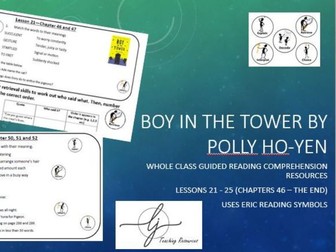
These carefully written resources link carefully to each chapter (or page range within a larger chapter) of Polly Ho-Yen’s excellent book Boy in the Tower. They are designed to develop the ‘Miss Wilson Says’ ERIC reading skills (Explain, Retrieve, Interpret and Choice). There are a wide range of engaging question styles to keep the class interested and active in their learning once each chapter has been read. These resources cover chapters 46 - The end (over 5 lessons) and I also have resources ready to go for the whole book. They often spark lively debates in class and are fantastic for developing language. These resources are suitable for Year 5, 6 or 7.
Natural Disasters Reading ComprehensionQuick View
LGJones

Natural Disasters Reading Comprehension

(0)
I created this resource for the beginning of a Geography unit of work on Natural Disasters. It helped the class to gather knowledge about the main natural disasters and gain a general understanding before digging deeper. The reading questions develop the ERIC reading skills of explain, retrieve, interpret and choice. Used in Year 5 but suitable for KS2.
Air and water resistance reading comprehensionQuick View
LGJones

Air and water resistance reading comprehension

(0)
This resource was developed when teaching KS2 Science objectives: Forces, including air and water resistance. It clearly explains what friction is and has many engaging pictures showing streamlined objects and examples of forces. The questions use the ERIC symbols to develop reading.
Rights and Responsibilities Matching jigsaw activityQuick View
LGJones

Rights and Responsibilities Matching jigsaw activity

(0)
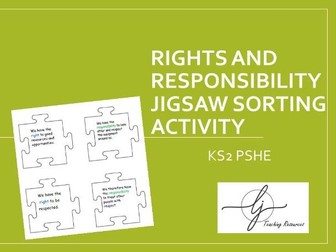
This is a fantastic resource to use in KS2 PSHE to develop children’s understanding of their rights and the associated responsibilities that go with them. Print enough for each group to sort them out and discuss as a class. I used this at the beginning of a new school year to reinforce expectations and they link really well to the Unicef Rights of a child. There are 17 statements in total (1 right and 1 responsibility to match).
Volcanoes: Snowdon 4 Figure Grid References lessonQuick View
LGJones

Volcanoes: Snowdon 4 Figure Grid References lesson

(0)
A great resource to use when teaching 4 figure grid references. This one links to KS2 Natural Disasters unit of work with a focus on Volcanoes. The activity has a map of Snowdon and asks children to find the key features found at certain grid references.
Ancient Greeks KS2 History analysing primary sources of evidenceQuick View
LGJones

Ancient Greeks KS2 History analysing primary sources of evidence

(0)
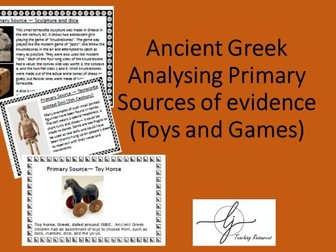
This is a very useful resource when teaching History and in particular what can be learned from primary sources of evidence. This resource has a focus on what it was like growing up as a child in Ancient Greece. There are images of toys and games that they used to play and vases depicting different lifestyles and activities. There is space for the children to write what they can learn from each item.
Levers, pulleys and gearsQuick View
LGJones

Levers, pulleys and gears

(0)
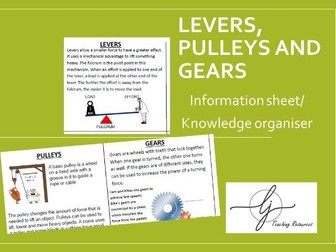
This information sheet is great to support the learning of levers, pulleys and gears. It could be used to gather information, for a display or you could use it alongside comprehension questions to further develop children’s understanding of forces and motion. It also explains how Archimedes invented the compound pulley system and used levers to move a ship. Used in Year 5 when teaching Science.
Boy in the Tower (Polly Ho Yen) Guided reading bundleQuick View
LGJones

Boy in the Tower (Polly Ho Yen) Guided reading bundle

5 Resources
Whole Class Guided reading Comprehension questions for the whole book! These carefully written resources link carefully to each chapter (or page range within a larger chapter) of Polly Ho-Yen’s excellent book Boy in the Tower. They are designed to develop the ‘Miss Wilson Says’ ERIC reading skills (Explain, Retrieve, Interpret and Choice). There are a wide range of engaging question styles to keep the class interested and active in their learning once each chapter has been read. They often spark lively debates in class and are fantastic for developing language. These resources are suitable for Year 5, 6 or 7. Grab a bargain!
Classification binomial namesQuick View
LGJones

Classification binomial names

(0)
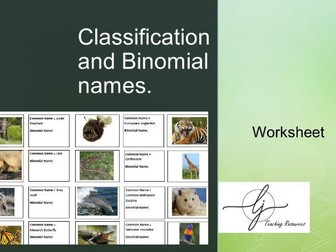
I used this engaging and fun resource when teaching my class about classification of animals. It uses the Carl Linnaeus binomial name system. The children have to research and record the binomial names on the worksheet. It meets some of the KS2 Science classification objectives really well.
Judaism - The Torah - Reading Comprehension (Text and Questions)Quick View
LGJones

Judaism - The Torah - Reading Comprehension (Text and Questions)

(0)
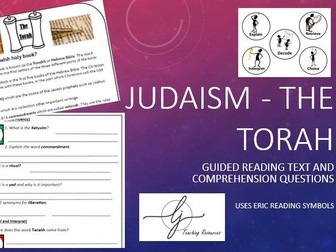
This text explains all about the Jewish Holy book - The Torah. It explains how the book is subdivided and gives general information which is really helpful at the beginning of a RE unit of work on how special the Torah is. It worked as a really successful lesson in Year 5 but could be used in Year 4 - Year 6.
Ancient Greek mini assessmentQuick View
LGJones

Ancient Greek mini assessment

(0)
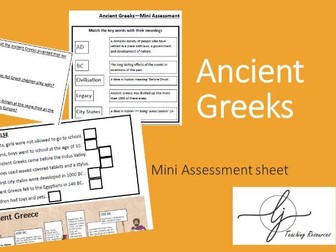
A really useful mini assessment to use at the beginning or end of a History unit on the Ancient Greeks. Used in KS2 in a Year 5 class but could be used from Year 4-Year 8. Engages the children with images, timelines, true or false questions etc.
Volcanoes of the World - Google Earth research challengeQuick View
LGJones

Volcanoes of the World - Google Earth research challenge

(0)
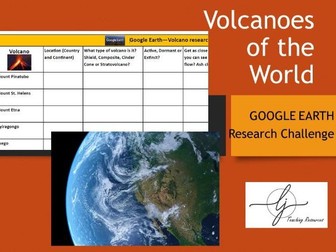
This is a fantastic resource to use when teaching Geography - Natural Disasters in KS2. We focussed on studying volcanoes and this challenge was to use Google Earth to research the main volcanoes in the world. The children zoom in on each volcano (Mount Pelee, Vesuvius, Mount St. Helens, Pinatubo etc) and discover what type of volcano it is (active, dormant, extinct) and whether it is a shield, cinder cone, stratovolcano or composite shape. This also met some of the computing objectives. Used in year but relevant for KS2 or KS3.
Classification of living things reading comprehensionQuick View
LGJones

Classification of living things reading comprehension

(0)
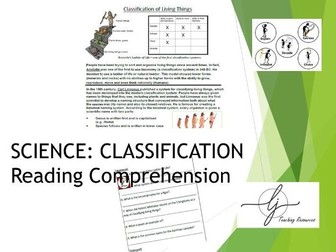
This text all about classification of living things comes with questions that extend and develop reading through using the ERIC symbols. I developed it to use when teaching Science - Living things in their environment. Used in a year 5 class but could be used in other Ks2 or KS3 classes. It covers early classification systems, including Aristotle’s ladder of life and Carl Linnaeus’ binomial naming system.
Melting Ice InvestigationQuick View
LGJones

Melting Ice Investigation

(0)
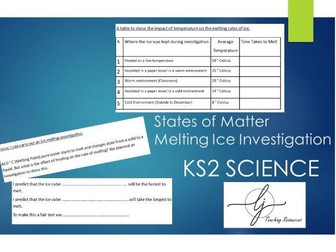
This resource is ready made for an ice melting investigation. Used effectively in KS2 in a States of Matter learning experience in Science. Children investigate the rate of ice melting in different environments inside and outside. They complete the table by adding the times taken to melt. There are enough tables for 8 different groups to record their findings (A-H). This experiment encourages children to make predictions and consider how to make it a fair test. They could use the data to complete graphs or write up their method notes.
The Bantu People of East Africa - Case study about migrationQuick View
LGJones

The Bantu People of East Africa - Case study about migration

(0)
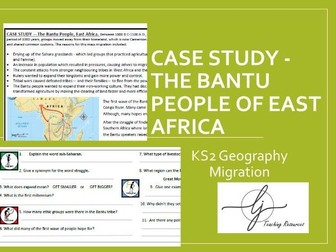
This resource has three parts: A case study explaining all about the Bantu people of East Africa (the largest migration in history) and their migration patterns from sub-saharan Africa to the south. It goes into detail about the different reasons they were pushed away from their land. A series of comprehension questions using the ERIC reading skills to further develop understanding. A table where children can note down the political, environmental, social and economic reasons for their mass migration. It is a fantastic resource to use when teaching KS2 Geogrpahy and Migration. I used it in a learning experience entitled ‘Why are people forced to flee’. It meets many of the KS2 Geography objectives while extending reading skills also.
Push and pull factors of migration reading comprehensionQuick View
LGJones

Push and pull factors of migration reading comprehension

(0)
I used this reading comprehension (which uses the ERIC reading symbols to develop reading) when teaching my KS2 class about human migration and push and pull factors. It meets many of the geography objectives and is great for developing understanding and gathering knowledge.
Solar System reading comprehensionQuick View
LGJones

Solar System reading comprehension

(0)
This is a super reading comprehension with a text that is jam packed full of information about the Solar system, including galaxies, comets, stars, planets, moons and asteroids. Used when teaching in Year 5 and 6 and links very well with KS2 Scince - Space and Forces objectives. The questions use the ERIC reading symbols to develop reading.