It fell from the sky recount planningQuick View
pringc

It fell from the sky recount planning

(0)
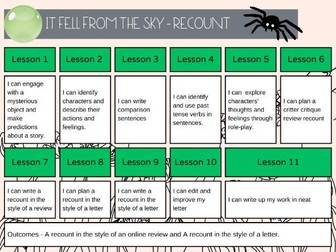
It fell from the sky by the fan brothers recount planning. 11 lessons aimed at children in year 2 but could be adapted for children in year 1 or 3. Rapunzel Traditional Tales- Year 2 could be simplified for Year 1 or enhanced for Year 3. 11 lessons - You need the following book for this unit: It fell from the sky by the fan brothers. For the first lesson you will need a ‘mystery object’ Lesson 1 I can engage with a mysterious object and make predictions about a story. Lesson 2 I can identify characters and describe their actions and feelings. Lesson 3 I can write comparasion sentences Lesson 4 I can identify and use past tense verbs in sentences. Lesson 5. I can explore characters’ thoughts and feelings through role-play. Lesson 6 I can plan a critter critique review recount Lesson 7 I can write a recount in the style of a review Lesson 8 I can plan a recount in the style of a letter Lesson 9 I can write a recount in the style of a letter Lesson 10 I can edit and improve my letter Lesson 11 I can write up my letter in neat.
Barnabus project planning KS1Quick View
pringc

Barnabus project planning KS1

(0)
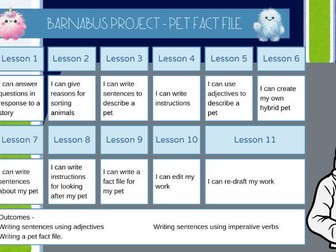
Barnabus project by the fan brothers English planning for KS1 - aimed at year 1 or beginning of year 2 . 11 lessons can easily shortened to 8 or 9 lessons. Also leaves scope for adding PSHE based lessons around what makes a perfect pet/ do we need to be perfect? Lesson 1 I can answer questions in response to a story Lesson 2 I can give reasons for sorting animals Lesson 3 I can write sentences to describe a pet Lesson 4 I can write instructions Lesson 5 I can use adjectives to describe a pet Lesson 6 I can create my own hybrid pet Lesson 7 I can write sentences about my pet Lesson 8 I can write instructions for lookingafter my pet Lesson 9 I can write a fact file for my pet Lesson 10 I can edit my work Lesson 11 I can re-draft my work
Brain Science + Emotional regulation planQuick View
pringc

Brain Science + Emotional regulation plan

(0)
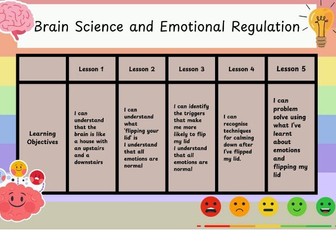
Brain Science and Emotional regulation planning using the upstairs and downstairs brain model by Dan Siegel. Including the idea of ‘flipping your lid’ aimed at KS1 and KS2 children to support with emotional resilience, problem solving, emotional awareness and recognising their emotions. This is a set of 5 lessons which will compliment PSHE schemes of work and Zones of regulation learning. 5 lessons Lesson 1 Learning about the upstairs and downstairs brain within the brain house Lesson 2 Learning about ‘flipping your lid’ Lesson 3 Learning about your triggers for angry emotions and flipping your lid Lesson 4 Learning about calming strategies Lesson 5 Applying what we have learnt about our brains and emotions to solve problems.
English language comprehension and reading key stage 1 activitiesQuick View
pringc

English language comprehension and reading key stage 1 activities

(0)
An assessment tool to use with pupils who are working at Pre-key stage 1 curriculum standards - pupils working below the national curriculum assessment standard for English language comprehension and reading. There is a set of activities based on each statement to allow teachers to find the best fit judgement for their pupils. These activities are helpful for end of year assessments, EHCP judgements, to identify IEP taregts, SENDCos looking to assess pupils. These assessments can be carried about by classroom teacher, teaching assistants (TAs) or SENCOs. They have been written to be quick, easy and use resources that are commonly found in the classroom. There is a section for notes so teachers can easily identify next steps.
English Writing  pre key stage 1 activitiesQuick View
pringc

English Writing pre key stage 1 activities

(0)
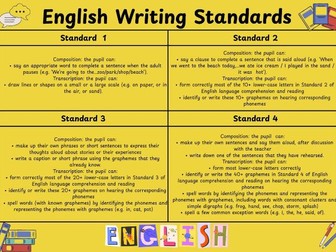
An assessment tool to use with pupils who are working at Pre-key stage 1 curriculum standards - pupils working below the national curriculum assessment standard for English Writing. There is a set of activities based on each statement to allow teachers to find the best fit judgement for their pupils. These activities are helpful for end of year assessments, EHCP judgements, to identify IEP taregts, SENDCos looking to assess pupils. These assessments can be carried about by classroom teacher, teaching assistants (TAs) or SENCOs. They have been written to be quick, easy and use resources that are commonly found in the classroom. There is a section for notes so teachers can easily identify next steps.
Reading, writing and maths pre-curriculum standards assessment activities  for KS1Quick View
pringc

Reading, writing and maths pre-curriculum standards assessment activities for KS1

3 Resources
An assessment tool to use with pupils who are working at Pre-key stage 1 curriculum standards - pupils working below the national curriculum assessment standard for English language comprehension and reading, English writing and Maths. There is a set of activities based on each statement to allow teachers to find the best fit judgement for their pupils. These activities are helpful for end of year assessments, EHCP judgements, to identify IEP taregts, SENDCos looking to assess pupils. These assessments can be carried about by classroom teacher, teaching assistants (TAs) or SENCOs. They have been written to be quick, easy and use resources that are commonly found in the classroom. There is a section for notes so teachers can easily identify next steps.
Maths pre key stage 1 activitiesQuick View
pringc

Maths pre key stage 1 activities

(0)
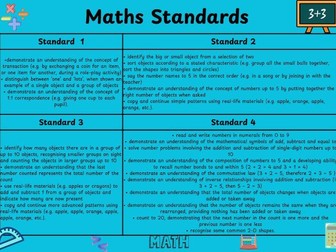
An assessment tool to use with pupils who are working at Pre-key stage 1 curriculum standards - pupils working below the national curriculum assessment standard for Maths. There is a set of activities based on each statement to allow teachers to find the best fit judgement for their pupils. These activities are helpful for end of year assessments, EHCP judgements, to identify IEP taregts, SENDCos looking to assess pupils. These assessments can be carried about by classroom teacher, teaching assistants (TAs) or SENCOs. They have been written to be quick, easy and use resources that are commonly found in the classroom. There is a section for notes so teachers can easily identify next steps.
Starbird fable and character poemQuick View
pringc

Starbird fable and character poem

(0)
Starbird descriptive character poem and fable writing. Written for KS1 best suited for Year 2 or 3. 12 lessons can easily be shortened to 9. You will need a copy of the book ’ Starbird’ Lesson 1 Create a collage in response to a story Lesson 2 I can use adjectives to describe a character Lesson 3 I can use adjectives to describe a character Lesson 4 I can describe how a character is feeling Lesson 5 I can write a character poem Lesson 6 I can edit my work Lesson 7 I can write up my work in neat Lesson 8 I can plan a story Lesson 9 I can write the beginning of a story Lesson 10 I can write the middle of a story Lesson 11 I can write the end of a story Lesson 12 I can edit my work
Children of the Lir - traditional talesQuick View
pringc

Children of the Lir - traditional tales

(0)
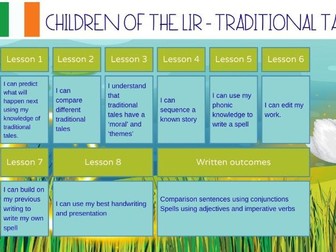
Study of traditional tale - Children of the Lir (Irish traditional tale) 8 lessons For Year 1 or Year 2 pupils. Focus on: Lesson 1 I can predict what will happen next using my knowledge of traditional tales. Lesson 2 I can compare different traditional tales Lesson 3 I understand that traditional tales have a ‘moral’ and ‘themes’ Lesson 4 I can sequence a known story Lesson 5 I can use my phonic knowledge to write a spell Lesson 6 I can edit my work. Lesson 7 I can build on my previous writing to write my own spell Lesson 8 I can use my best handwriting and presentation Written outcomes Comparison sentences using conjunctions Spells using adjectives and imperative verbs You will need your own copy of the books! Oxford Tree Guided reading level 9 , Twinkl powerpoint story or by Caroll Ann would all work but as this is a traditional tale you may be able to find free ones to download online. I have written this aimed at the beginning of Year 2 but would easily work in Year 1 too. This can be easily cut down to 5 or 6 lessons depending on your timings. Additional resources needed: A range of traditional tales Photocopies pages of the book.
Rapunzel Traditional TalesQuick View
pringc

Rapunzel Traditional Tales

(0)
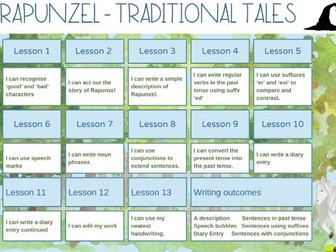
Rapunzel Traditional Tales- Year 2 could be simplified for Year 1 or enhanced for Year 3. 13 lessons - 12 lessons if you only need 1 lesson to write the diary entry - could be edited down to 10 lessons if needed. You need the following books for this unit: Rapunzel ladybird traditional tale (or old traditional tale of Rapunzel can be used just adapt the planning and Beth Woolvin Rapunzel Lesson 1 I can recognise ‘good’ and ‘bad’characters Lesson 2 I can act out the story of Rapunzel Lesson 3 I can write a simple description of Rapunzel Lesson 4 I can write regular verbs in the past tense using suffx‘ed’ Lesson 5. I can use suffuxes ‘er’ and ‘est’ to compare and contrast. Lesson 6 I can use speech marks Lesson 7 I can write noun phrases Lesson 8 I can use conjunctions to extend sentences Lesson 9 I can convert the present tense into the past tense. Lesson 10 I can write a diary entry Lesson 11 I can write a diary entry continued Lesson 12 I can edit my work Lesson 13 I can use my neatest handwriting Writing outcomes .A description Sentences in past tense Speech bubbles Sentences using suffixes Diary Entry Sentences with conjunctions
Flotsam story writingQuick View
pringc

Flotsam story writing

(0)
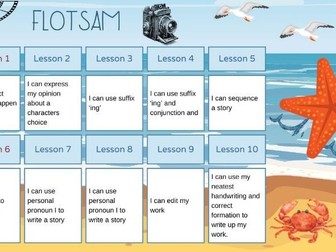
10 lessons which culminate in the children writing the text for the story of Flotsam. This could very easily be edited to be a diary entry. Best for children in Year 1 could also work for Year 2 but would need to consider if it is the correct level of challenge or use in the autumn term. Focus on: Predicting what will happen next Oracy skills – discussing their opinions on the boys actions. Opportunities for practicing suffix ing Opportunities to practice joining 2 sentences using conjunction ‘and’ Children write the story using pronoun I Children edit their work Children write up their work in neat.
Midnight Fair diary entry  planningQuick View
pringc

Midnight Fair diary entry planning

(0)
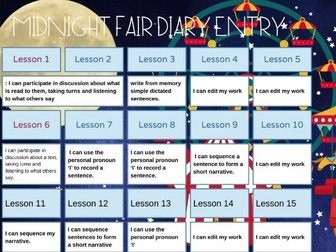
Midnight Fair Diary Entry planning. This is 15 lessons at a very slow pace culminating in a diary entry. There is a huge emphasis on editing work and checking work and taking the writing slowly. Would be best suited for a Year 1 class but would also work for Year 2. Week 1 - children focus on writing captions. Week 2 - children write speech bubbles Week 3 - children write a diary entry. Based on the Midnight Fair by Gideon Sterer.
Here We Are Oliver Jeffers  Poetry PlansQuick View
pringc

Here We Are Oliver Jeffers Poetry Plans

(0)
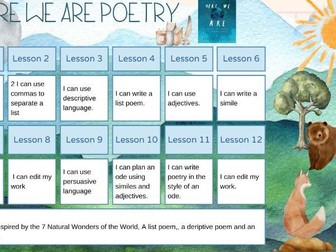
Here We Are by Oliver Jeffers is used as inspiration for this unit of poetry planning. There are 12 days of planning (this would be 3 weeks in my school). Week 1 - Children explore the 7 Natural Wonders of the World and then explore how to use commas to separate the items on a list. They then add in adjectives to make list poems. Week 2 - Children continue their work on descriptive vocabulary and then use similes to write a descriptive poem that has a structured format. Week 3 - Children tie together all of their learning so far including commas for a list, descriptive language and similes to write an Ode to Earth. Lesson 1, 5 and 9 (this would be our first lesson of the week) are practical ‘hook’ lessons to get children ready for their learning for the week. All additional resources are included but there may be youtube links you need to google i.e Oliver Jeffers Ted Talk and additional videos for the 7 natural wonders of the world.
Rosie Revere Engineer Explanation TextQuick View
pringc

Rosie Revere Engineer Explanation Text

(0)
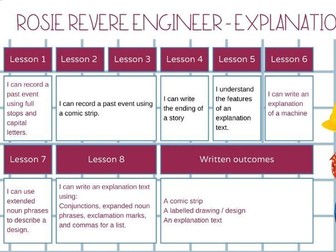
2 weeks of planning (8 lessons) which culminate in an explanation text using Rosie Revere Engineer as the starting point by Andrea Beaty. Week 1 - comic strip and conjunctions / connectives Week 2 - labeled drawing using expanded noun phrases and explanation text using commas, expanded noun phrases, apostrophe for possession. Aimed at year 2 children but would also work for KS2 pupils. Extra lessons / time could be added to allow children time to edit their work or write up in neat for displays etc.
Dinosaur Topic History and Geography 6 week planningQuick View
pringc

Dinosaur Topic History and Geography 6 week planning

(0)
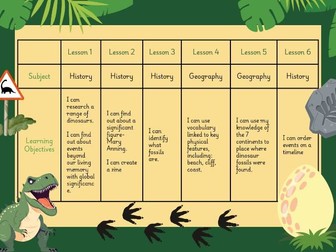
6 weeks of planning for Dinosaurs topic with 2 Geography lessons and 4 History lessons. Fully linked to the National Curriculum. Activities included for the lesson plans and internet links within the planning to support with learning. Powerpoints included where needed. Lesson written for the KS1 curriculum but could be adapted for KS2 as well. Lesson 1 -History- Introduction to dinosaurs and children research a given dinosaur using tablets, books or chomebooks/ laptops Lesson 2- History - creating a Zine and learning about Mary Anning Lesson 3 - History - Learning about fossils and then making their own salt dough fossils or completing a missing word activity Lesson 4 - Geography - Learning about physical Geography of Lyme Regis then creating a sketch map Lesson 5 - Geography - recapping the 7 continents and then finding where fossils have been found on a world map Lesson 6 - History creating a timeline of the dinosaur time periods.
Printmaking lesson Favianna RodriguezQuick View
pringc

Printmaking lesson Favianna Rodriguez

(0)
2 lessons aimed at year 2 but could work for KS2 too. It assumes that children have a foundation in printmaking and have done this skill previously. Lesson 1 - revision of different print making styles Lesson 2 - monoprinting inspired by Favianna Rodriguez