Blues Unit for Keyboard: COMPLETE SCHEME OF WORKQuick View
makemusicmagic

Blues Unit for Keyboard: COMPLETE SCHEME OF WORK

(0)
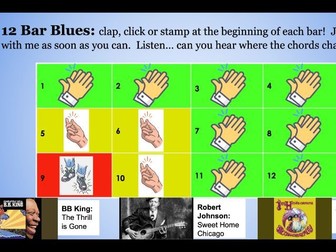
Includes all lesson slides, a full colour, double-sided help sheet for use by students during the lesson, and a unit map This is my entire Blues scheme of work, which aims to introduce key stage 3 students to the Blues in a fun, practical and musical way, using keyboards. This is the outline of the whole scheme of work: Lesson 1: Introduction to the Blues, learning how to play the 12 bar blues chords Lesson 2: Improvising with the blues scale Lesson 3: Combining the 12 bar blues chords with the blues scale Lesson 4: Understanding what a walking bass line is and learning to play one Lesson 5: Understanding and being able to play with a swing rhythm Lesson 6: Assessment The unit contains lots of listening and performing, with some improvisation. There is some use of stave notation, although letter names are provided as well. The unit will help your students to develop their chord playing, familiarity with notation and keyboard skills, as well as to give them a basic understanding of all the main elements of blues music.
Blues Worksheet/Classroom ResourceQuick View
makemusicmagic

Blues Worksheet/Classroom Resource

(0)
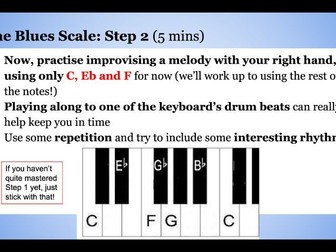
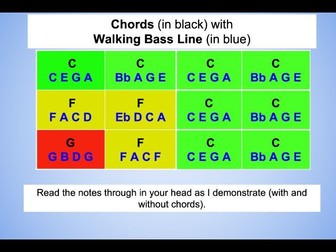
This colourful double-sided worksheet is designed to be used alongside my Blues scheme of work, but can also be used as a standalone resources. It shows students how to play (on keyboards): the chords of the 12 bar blues in C the notes of the blues scale a walking bass line (both with stave notation and letter names) a combination of a walking bass line and the 12 bar blues chords The unit of work that this worksheet is from is available to purchase here: https://www.tes.com/teaching-resource/resource-13414945
Blues Unit (Keyboard): LESSON 2Quick View
makemusicmagic

Blues Unit (Keyboard): LESSON 2

(0)
Includes all lesson slides and a full colour, double-sided help sheet for use by students during the lesson This is lesson 2 of my Blues scheme of work, which aims to introduce key stage 3 students to the Blues in a fun, practical and musical way, using keyboards. This is the outline of the whole scheme of work: Lesson 1: Introduction to the Blues, learning how to play the 12 bar blues chords Lesson 2: Improvising with the blues scale Lesson 3: Combining the 12 bar blues chords with the blues scale Lesson 4: Understanding what a walking bass line is and learning to play one Lesson 5: Understanding and being able to play with a swing rhythm Lesson 6: Assessment The unit contains lots of listening and performing, with some improvisation. There is some use of stave notation, although letter names are provided as well. The unit will help your students to develop their chord playing, familiarity with notation and keyboard skills, as well as to give them a basic understanding of all the main elements of blues music. If you choose to purchase the full scheme of work, you get a small discount compared to buying individual lessons, and this also includes a unit map: https://www.tes.com/teaching-resource/resource-13414945
Blues Unit (Keyboard): LESSON 3Quick View
makemusicmagic

Blues Unit (Keyboard): LESSON 3

(0)
Includes all lesson slides and a full colour, double-sided help sheet for use by students during the lesson This is lesson 3 of my Blues scheme of work, which aims to introduce key stage 3 students to the Blues in a fun, practical and musical way, using keyboards. This is the outline of the whole scheme of work: Lesson 1: Introduction to the Blues, learning how to play the 12 bar blues chords Lesson 2: Improvising with the blues scale Lesson 3: Combining the 12 bar blues chords with the blues scale Lesson 4: Understanding what a walking bass line is and learning to play one Lesson 5: Understanding and being able to play with a swing rhythm Lesson 6: Assessment The unit contains lots of listening and performing, with some improvisation. There is some use of stave notation, although letter names are provided as well. The unit will help your students to develop their chord playing, familiarity with notation and keyboard skills, as well as to give them a basic understanding of all the main elements of blues music. If you choose to purchase the full scheme of work, you get a small discount compared to buying individual lessons, and this also includes a unit map: https://www.tes.com/teaching-resource/resource-13414945
Blues Unit (Keyboard): LESSON 5&6Quick View
makemusicmagic

Blues Unit (Keyboard): LESSON 5&6

(0)
Includes all lesson slides and a full colour, double-sided help sheet for use by students during the lesson This is lesson 5&6 of my Blues scheme of work, which aims to introduce key stage 3 students to the Blues in a fun, practical and musical way, using keyboards. This is the outline of the whole scheme of work: Lesson 1: Introduction to the Blues, learning how to play the 12 bar blues chords Lesson 2: Improvising with the blues scale Lesson 3: Combining the 12 bar blues chords with the blues scale Lesson 4: Understanding what a walking bass line is and learning to play one Lesson 5: Understanding and being able to play with a swing rhythm Lesson 6: Assessment The unit contains lots of listening and performing, with some improvisation. There is some use of stave notation, although letter names are provided as well. The unit will help your students to develop their chord playing, familiarity with notation and keyboard skills, as well as to give them a basic understanding of all the main elements of blues music. If you choose to purchase the full scheme of work, you get a small discount compared to buying individual lessons, and this also includes a unit map: https://www.tes.com/teaching-resource/resource-13414945
Blues Unit (Keyboard): LESSON 4Quick View
makemusicmagic

Blues Unit (Keyboard): LESSON 4

(0)
Includes all lesson slides and a full colour, double-sided help sheet for use by students during the lesson This is lesson 4 of my Blues scheme of work, which aims to introduce key stage 3 students to the Blues in a fun, practical and musical way, using keyboards. This is the outline of the whole scheme of work: Lesson 1: Introduction to the Blues, learning how to play the 12 bar blues chords Lesson 2: Improvising with the blues scale Lesson 3: Combining the 12 bar blues chords with the blues scale Lesson 4: Understanding what a walking bass line is and learning to play one Lesson 5: Understanding and being able to play with a swing rhythm Lesson 6: Assessment The unit contains lots of listening and performing, with some improvisation. There is some use of stave notation, although letter names are provided as well. The unit will help your students to develop their chord playing, familiarity with notation and keyboard skills, as well as to give them a basic understanding of all the main elements of blues music. If you choose to purchase the full scheme of work, you get a small discount compared to buying individual lessons, and this also includes a unit map: https://www.tes.com/teaching-resource/resource-13414945
Samba: Lesson 5 and 6 (KS2 or KS3)Quick View
makemusicmagic

Samba: Lesson 5 and 6 (KS2 or KS3)

(1)
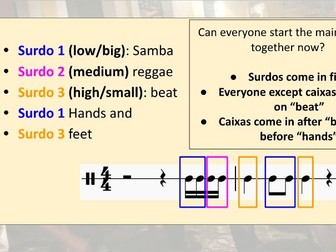
This is the last 2 lessons in a really fun, entirely practical scheme of work that introduces students to Brazilian Samba, with some music theory thrown in (rhythm notation reading). I normally do it with year 7, and they love it - especially the silly phrases for remembering rhythms! I’ve also done this with primary students - it’s appropriate (and equally useful) for any students over about 7 years old. It’s one of my favourite units to teach. These lessons include a review of the concepts introduced in lesson 4, the assessment criteria and instructions for the group assessment, and an additional small group task. Students will develop performance skills, listening skills, ensemble skills, notation reading and awareness of musical structure. You will need enough percussion instruments for each student to have one. You can either use samba instruments, or if you don’t have these, any percussion instruments will do. If you like it, please do let me know with a review :)
Video Game Music: Logic Pro Composition LESSON 2Quick View
makemusicmagic

Video Game Music: Logic Pro Composition LESSON 2

(0)
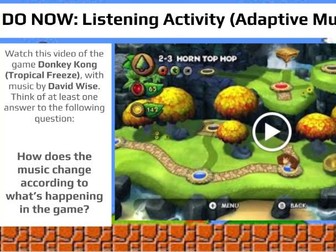
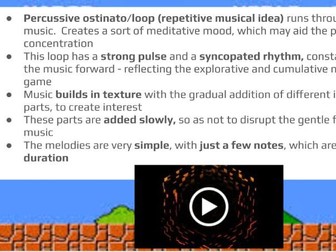
Lesson 2 of an information-packed unit of work that guides students through the process of composing music for video games, using Logic Pro. It functions as a tutorial on how to use Logic Pro, as well as a tutorial on composition in general. There are also frequent references to musical elements, and vocabulary that is vital for GCSE study. I do this unit with year 9, but it’s suitable for any KS3 or GCSE class. This lesson contains a listening activity starter and a main composition activity, based on slow-paced or meditative games/music. There is a written plenary, to be completed on the worksheet. Included are all the lesson slides and the plenary worksheet (with plenary activities for the whole unit). The sheet also contains a vocabulary list. This is a unit of work I put my heart and soul into (I love my video games) and my students love it too!
Samba: Lesson 2 (KS2 or KS3)Quick View
makemusicmagic

Samba: Lesson 2 (KS2 or KS3)

(0)
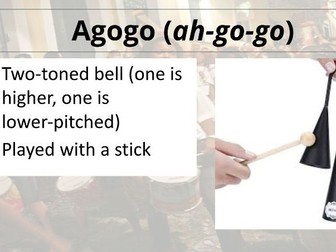
This is the second lesson in a really fun, entirely practical scheme of work that introduces students to Brazilian Samba, with some music theory thrown in (rhythm notation reading). I normally do it with year 7, and they love it - especially the silly phrases for remembering rhythms! I’ve also done this with primary students - it’s appropriate (and equally useful) for any students over about 7 years old. It’s one of my favourite units to teach. This lesson includes a review of the concepts introduced in lesson 1, as well as an introduction to all the main samba instruments, and the rhythms they all play for the main groove (included in notation form as well as spoken phrases). It develops performance skills, listening skills, ensemble skills and notation reading. You will need enough percussion instruments for each student to have one. You can either use samba instruments, or if you don’t have these, any percussion instruments will do. If you like it, please do let me know with a review :)
Video Game Music: Logic Pro Composition LESSON 3Quick View
makemusicmagic

Video Game Music: Logic Pro Composition LESSON 3

(0)
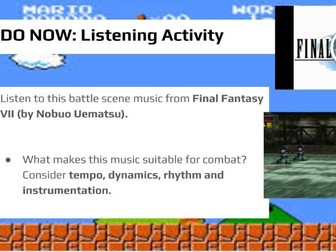
Lesson 3 of an information-packed unit of work that guides students through the process of composing music for video games, using Logic Pro. It functions as a tutorial on how to use Logic Pro, as well as a tutorial on composition in general. There are also frequent references to musical elements, and vocabulary that is vital for GCSE study. I do this unit with year 9, but it’s suitable for any KS3 or GCSE class. This lesson contains a listening activity starter and a main composition activity, based on fast-paced and tense music/scenes. There is a written plenary, to be completed on the worksheet. Included are all the lesson slides and the plenary worksheet (with plenary activities for the whole unit). The sheet also contains a vocabulary list. This is a unit of work I put my heart and soul into (I love my video games) and my students love it too!
Video Game Music: Logic Pro Composition LESSON 4Quick View
makemusicmagic

Video Game Music: Logic Pro Composition LESSON 4

(0)
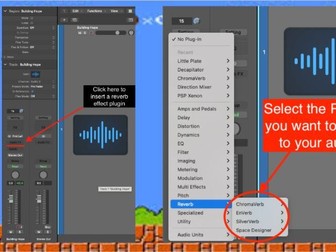
Lesson 4 of an information-packed unit of work that guides students through the process of composing music for video games, using Logic Pro. It functions as a tutorial on how to use Logic Pro, as well as a tutorial on composition in general. There are also frequent references to musical elements, and vocabulary that is vital for GCSE study. I do this unit with year 9, but it’s suitable for any KS3 or GCSE class. This lesson contains a listening activity starter and a main composition activity, based on using reverb and delay to create certain moods. There is a written plenary, to be completed on the worksheet. Included are all the lesson slides and the plenary worksheet (with plenary activities for the whole unit). The sheet also contains a vocabulary list. This is a unit of work I put my heart and soul into (I love my video games) and my students love it too!
Samba: Lesson 3 (KS2 or KS3)Quick View
makemusicmagic

Samba: Lesson 3 (KS2 or KS3)

(0)
This is the third lesson in a really fun, entirely practical scheme of work that introduces students to Brazilian Samba, with some music theory thrown in (rhythm notation reading). I normally do it with year 7, and they love it - especially the silly phrases for remembering rhythms! I’ve also done this with primary students - it’s appropriate (and equally useful) for any students over about 7 years old. It’s one of my favourite units to teach. This lesson includes a review of the concepts introduced in lesson 2, and an introduction to the break section, with all rhythms played by the ensemble. It develops performance skills, listening skills, ensemble skills and notation reading. You will need enough percussion instruments for each student to have one. You can either use samba instruments, or if you don’t have these, any percussion instruments will do. If you like it, please do let me know with a review :)
Video Game Music: Logic Pro Composition LESSON 5&6Quick View
makemusicmagic

Video Game Music: Logic Pro Composition LESSON 5&6

(0)
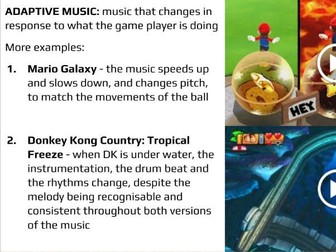
Lesson 5&6 of an information-packed unit of work that guides students through the process of composing music for video games, using Logic Pro. It functions as a tutorial on how to use Logic Pro, as well as a tutorial on composition in general. There are also frequent references to musical elements, and vocabulary that is vital for GCSE study. I do this unit with year 9, but it’s suitable for any KS3 or GCSE class. Lesson 5 contains a listening activity starter and a main composition activity, based on based on adaptive music and using automation to fade in and out in Logic. There is a written plenary, to be completed on the worksheet. Lesson 6 is an assessment lesson, complete with assessment criteria. Included are all the lesson slides and the plenary worksheet (with plenary activities for the whole unit). The sheet also contains a vocabulary list. This is a unit of work I put my heart and soul into (I love my video games) and my students love it too!
Video Game Music: Logic Pro Composition (Full Scheme of Work)Quick View
makemusicmagic

Video Game Music: Logic Pro Composition (Full Scheme of Work)

(0)
An information-packed unit of work that guides students through the process of composing music for video games, using Logic Pro. It functions as a tutorial on how to use Logic Pro, as well as a tutorial on composition in general. There are also frequent references to musical elements, and vocabulary that is vital for GCSE study. I do this unit with year 9, but it’s suitable for any KS3 or GCSE class. Lessons all contain listening examples, starter (“Do Now”) activities, practical composition activities and plenaries. There is an assessment at the end of the unit, complete with assessment criteria. Included are all the lesson slides, the plenary worksheet and the scheme of work laid out as a table, with more details about the lessons. This is a unit of work I put my heart and soul into (I love my video games) and my students love it too!
Samba: Complete Scheme of Work (KS2 or KS3)Quick View
makemusicmagic

Samba: Complete Scheme of Work (KS2 or KS3)

(0)
Resource includes lesson slides as well as a scheme of work grid with more details. This is a really fun, entirely practical scheme of work that introduces students to Brazilian Samba, with some music theory thrown in (rhythm notation reading). It develops performance skills, listening skills, ensemble skills, notation reading and awareness of musical structure. Each lesson has a starter (“Do Now”) task, a main activity and a plenary. I normally do it with year 7, and they love it - especially the silly phrases for remembering rhythms! I’ve also done this with primary students - it’s appropriate (and equally useful) for any students over about 7 years old. It’s one of my favourite units to teach. You will need enough percussion instruments for each student to have one. You can either use samba instruments, or if you don’t have these, any percussion instruments will do. If you like it, please do let me know with a review :)
Blues Unit (Keyboard): LESSON 1Quick View
makemusicmagic

Blues Unit (Keyboard): LESSON 1

(0)
The first (free) lesson does not include the student help sheet, but this can be purchased separately here if required: https://www.tes.com/teaching-resource/blues-worksheet-classroom-resource-13414952 This is lesson 1 of my Blues scheme of work, which aims to introduce key stage 3 students to the Blues in a fun, practical and musical way, using keyboards. This is the outline of the whole scheme of work: Lesson 1: Introduction to the Blues, learning how to play the 12 bar blues chords Lesson 2: Improvising with the blues scale Lesson 3: Combining the 12 bar blues chords with the blues scale Lesson 4: Understanding what a walking bass line is and learning to play one Lesson 5: Understanding and being able to play with a swing rhythm Lesson 6: Assessment The unit contains lots of listening and performing, with some improvisation. There is some use of stave notation, although letter names are provided as well. The unit will help your students to develop their chord playing, familiarity with notation and keyboard skills, as well as to give them a basic understanding of all the main elements of blues music. If you choose to purchase the full scheme of work, this also includes a unit map and a full-colour classroom resource to guide your students as they play: https://www.tes.com/teaching-resource/resource-13414945
Samba: Lesson 4 (KS2 or KS3)Quick View
makemusicmagic

Samba: Lesson 4 (KS2 or KS3)

(0)
This is the fourth lesson in a really fun, entirely practical scheme of work that introduces students to Brazilian Samba, with some music theory thrown in (rhythm notation reading). I normally do it with year 7, and they love it - especially the silly phrases for remembering rhythms! I’ve also done this with primary students - it’s appropriate (and equally useful) for any students over about 7 years old. It’s one of my favourite units to teach. This lesson includes a review of the concepts introduced in lesson 3, and an introduction to the structure of the full samba piece, performed as a whole class. It develops performance skills, listening skills, ensemble skills, notation reading and awareness of musical structure. You will need enough percussion instruments for each student to have one. You can either use samba instruments, or if you don’t have these, any percussion instruments will do. If you like it, please do let me know with a review :)
Video Game Music - Logic Pro Composition LESSON 1Quick View
makemusicmagic

Video Game Music - Logic Pro Composition LESSON 1

(0)
Lesson 1 of an information-packed unit of work that guides students through the process of composing music for video games, using Logic Pro. It functions as a tutorial on how to use Logic Pro, as well as a tutorial on composition in general. There are also frequent references to musical elements, and vocabulary that is vital for GCSE study. I do this unit with year 9, but it’s suitable for any KS3 or GCSE class. This lesson contains a listening activity starter and a main composition activity, based on various purposes of video game music. There is a written plenary, to be completed on the worksheet. Included are all the lesson slides and the plenary worksheet (with plenary activities for the whole unit). The sheet also contains a vocabulary list. This is a unit of work I put my heart and soul into (I love my video games) and my students love it too!
Samba: Lesson 1 (KS2 or KS3)Quick View
makemusicmagic

Samba: Lesson 1 (KS2 or KS3)

(0)
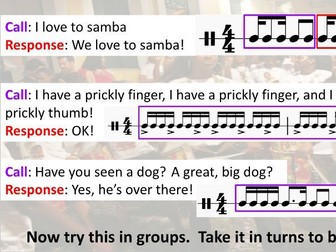
This is the first lesson in a really fun, entirely practical scheme of work that introduces students to Brazilian Samba, with some music theory thrown in (rhythm notation reading). I normally do it with year 7, and they love it - especially the silly phrases for remembering rhythms! I’ve also done this with primary students - it’s appropriate (and equally useful) for any students over about 7 years old. It’s one of my favourite units to teach. This lesson includes an introduction to samba with some context and listening, as well as some whole-class call and response activities. It develops performance skills, listening skills, ensemble skills and notation reading. You will need enough percussion instruments for each student to have one. You can either use samba instruments, or if you don’t have these, any percussion instruments will do. If you like it, please do let me know with a review :)