Year The Fall in Genesis: Choices, Temptation and ConsequencesQuick View
williamsgw

Year The Fall in Genesis: Choices, Temptation and Consequences

(0)
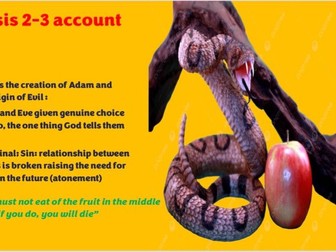
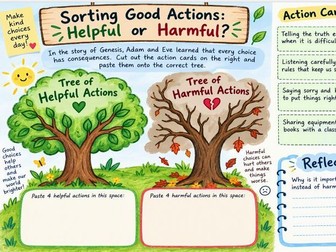
Engage pupils with one of the Bible’s most influential stories through this interactive and thought-provoking lesson on The Fall in Genesis (Genesis 3). Designed for Year 2/3 this resource helps children explore themes of rules, temptation, choices, responsibility and consequences in an accessible and age-appropriate way. The lesson begins by inviting pupils to consider why people are often tempted to break rules, even when they know the consequences. Through retelling the story of Adam, Eve and the serpent, pupils examine the events leading to the first act of disobedience in the Garden of Eden and reflect on what the narrative teaches about human behaviour. A key feature of the lesson is the inclusion of the famous Marshmallow Temptation Experiment video, allowing pupils to explore self-control and delayed gratification before making links to Eve’s temptation in the Garden. A second video retells the Genesis account in a visual and engaging way, supporting understanding and discussion. Activities include: Story comprehension and retrieval questions 2 embedded videos Discussion of temptation, trust and consequences Reflection on making good choices Sorting helpful and harmful actions Written personal response activities Opportunities for SMSC development and ethical thinking Learning Objectives Retell the story of The Fall in Genesis. Explain the meaning of temptation, disobedience and consequences. Reflect on how choices affect ourselves and others. This lesson works well within units on Creation, The Fall, Christian beliefs, Rules for Living, or Making Good Choices, and encourages pupils to make meaningful connections between biblical narratives and everyday life
Caring for Creation: How Human Choices Shape Our PlanetQuick View
williamsgw

Caring for Creation: How Human Choices Shape Our Planet

(0)
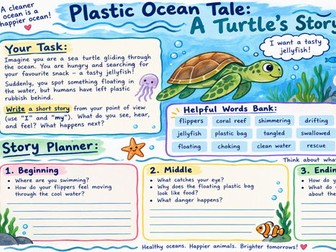
A follow on from Creation Stories An engaging and thought-provoking lesson exploring how human actions can both harm and protect the environment. Through powerful visual stimuli, discussion activities, a short video, and a literacy task, pupils investigate issues such as pollution, deforestation, climate change, sustainability, and environmental responsibility. Students will: Explore the impact of waste and pollution on wildlife and natural habitats. Understand how everyday choices can either damage or restore the environment. Consider secular and ethical reasons for environmental stewardship. Examine how food choices can affect the planet. Discuss practical actions individuals and communities can take to make a difference. Develop empathy through a creative writing task from the perspective of a sea turtle affected by plastic pollution. The lesson encourages critical thinking, discussion, and personal reflection while promoting key values of responsibility, citizenship, and care for the wider world. The included extended writing activity provides opportunities to develop descriptive language, perspective writing, and environmental awareness. Suitable for Year 3 Subjects: Religion and Worldviews, PSHE, Citizenship, Environmental Education, English Duration: 45-60 minutes Format: Fully editable PowerPoint presentation with discussion prompts and literacy extension activity. Keywords: environment, climate change, pollution, sustainability, stewardship, citizenship, conservation, wildlife, eco-schools, environmental ethics, creative writing, PSHE, RE, worldviews.
Upanayana (Sacred Thread) Ceremony.Quick View
williamsgw

Upanayana (Sacred Thread) Ceremony.

(0)
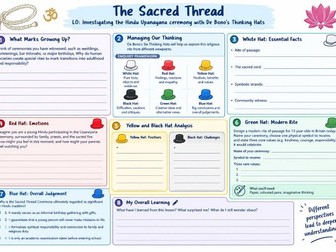
Bring Hinduism to life through enquiry, discussion and creative thinking with this engaging lesson on the Upanayana (Sacred Thread) Ceremony. Using Edward de Bono’s Thinking Hats, students explore this important Hindu rite of passage from multiple perspectives, moving beyond simple description to deeper analysis and evaluation. Through a sequence of retrieval activities, vocabulary building, empathy tasks, collaborative discussion and creative design challenges, learners investigate how the ceremony marks the transition into a life of learning, responsibility and spiritual growth. Students will: Discover the meaning and purpose of the Upanayana ceremony. Explore the thoughts and feelings of participants. Analyse benefits and criticisms of religious traditions. Create their own modern rite of passage. The lesson culminates in a thoughtful discussion of identity, belonging, tradition and growing up, helping students make meaningful connections between religious practice and their own lives. Included: Fully sequenced PowerPoint lesson withj embedded Video Detailed speaker notes for every slide Retrieval starter activity Key vocabulary tasks De Bono Thinking Hats activities Creative rite of passage challenge Reflection and plenary tasks Suitable for: KS3 Religious Education (Years 7-9) and as an engaging introduction to GCSE Hindu beliefs and practices. Keywords: Hinduism, Upanayana, Sacred Thread Ceremony, Rites of Passage, Hindu Practices, De Bono Thinking Hats, Religious Education, KS3 RE, GCSE RS, Hindu Identity, Dharma, Spiritual Development.
Puja Worship for Year 8 RS LessonQuick View
williamsgw

Puja Worship for Year 8 RS Lesson

(0)
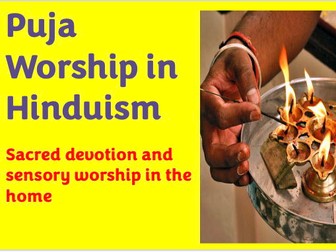
Bring Hindu worship to life through this engaging and visually rich lesson on Puja, designed to deepen students’ understanding of devotion, symbolism, and sensory worship in Hinduism. Using high-quality imagery, video analysis, retrieval activities, and clear explanations, students explore how Hindus engage all five senses in worship and why this is significant for developing a personal relationship with the divine. Based around the concepts of bhakti, murti, darsan, arti, and prashad, learners investigate key features of home-based worship and evaluate the importance of sensory experience in religious practice. Includes interactive tasks, a five senses analysis activity, knowledge checks, and opportunities for GCSE-style explanation and evaluation. Ideal for KS3 and as a foundation for GCSE Hindu Practices. Key features: Clear explanation of Puja and Hindu devotional worship Five senses learning framework throughout Video observation task Retrieval and matching activities GCSE style evaluative vocabulary and concepts embedded Attractive, engaging visuals Suitable for KS3 Topics covered: Puja, Bhakti, Murti, Darsan, Arti, Prashad, Hindu home shrine, symbolism and sensory worship.
Stewardship and Dominion and the Care of Creation Christianity GCSEQuick View
williamsgw

Stewardship and Dominion and the Care of Creation Christianity GCSE

(0)
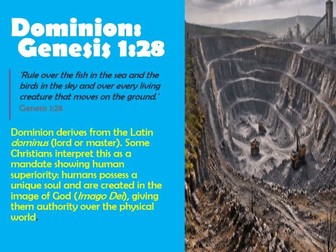
GCSE Religious Studies (Christianity): Stewarship and Dominion Bring one of Christianity’s most important debates to life with this engaging and academically rigorous GCSE lesson. Using retrieval tasks, scriptural analysis, note-making activities, discussion tasks, and evaluative thinking, students develop a secure understanding of how Christians treat creation. The resource includes: Clear GCSE-focused knowledge delivery Imaginative PPT Embedded Videos exploring domination and stewardship An 8 Mark exam question with advice on how to attempt – I Do- You Do Key Bible quotations for examination use Two truths and a Lie Plenary Ideal for GCSE Christianity units across AQA, Edexcel, OCR and Eduqas specifications, this lesson helps students master a frequently examined area of belief while developing the analytical skills needed for higher-mark evaluation questions. Created by an experienced Head of Department, former Head of Sixth Form and Assistant Head, and former university lecturer in Christian Theology and co-author of the SCM Study Guide to Christian Spirituality. Currently serving in a leading independent school.
Literal and Non-Literal views on creation GCSE ChristianityQuick View
williamsgw

Literal and Non-Literal views on creation GCSE Christianity

(0)
GCSE Religious Studies (Christianity): Literal and Non-Literal Beliefs About Creation Bring one of Christianity’s most important debates to life with this engaging and academically rigorous GCSE lesson exploring literal and non-literal interpretations of the Genesis creation accounts. Using retrieval tasks, scriptural analysis, note-making activities, discussion tasks, and evaluative thinking, students develop a secure understanding of how Christians interpret Genesis 1-3 in different ways. Students compare the Genesis creation narratives, explore key concepts such as omnipotence, creation ex nihilo, free will, The Fall, original sin, salvation and atonement, and examine contrasting Christian responses to modern science, including evolution and the Big Bang. The lesson carefully distinguishes between literalist approaches, such as Young Earth Creationism, and non-literal interpretations commonly associated with liberal Christianity. The resource includes: Clear GCSE-focused knowledge delivery Embedded Video exploring literal and non-literal interpretation on ‘Yom’ the Hebrew word for ‘Day’ Retrieval and comparison activities through Venn Diagaram Key Bible quotations for examination use Structured note-taking scaffold Critical thinking and discussion tasks An evaluative plenary encouraging students to consider and justify their own viewpoint Ideal for GCSE Christianity units across AQA, Edexcel, OCR and Eduqas specifications, this lesson helps students master a frequently examined area of belief while developing the analytical skills needed for higher-mark evaluation questions. Created by an experienced Head of Department, former Head of Sixth Form and Assistant Head, and former university lecturer in Christian Theology and co-author of the SCM Study Guide to Christian Spirituality. Currently serving in a leading independent school.
Year 3 Lesson on Muslim Creation story and how we are called to be caretakersQuick View
williamsgw

Year 3 Lesson on Muslim Creation story and how we are called to be caretakers

(0)
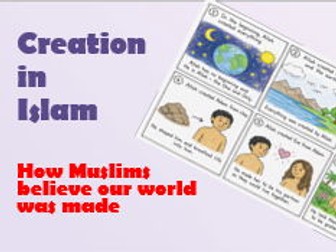
Take your pupils on a fascinating journey through the Islamic creation story with this engaging and fully illustrated Year 3 RE lesson. Children explore Muslim beliefs about how Allah (Al-Khaliq, “The Creator”) brought the universe into existence, discover the story of Adam and Hawwa (Eve), and learn what it means to be a Khalifah - a caretaker of the Earth. Packed with colourful visuals, vocabulary support, retrieval quizzes, discussion opportunities, and a hands-on sequencing activity, this lesson encourages curiosity whilst developing understanding of key Islamic beliefs. Pupils are also challenged to reflect on how they can care for the world around them through kindness to animals, protecting nature, reducing waste, and saving water. Included: Clear and pupil-friendly PowerPoint Embedded Video Key Islamic vocabulary (Allah, Al-Khaliq, Khalifah) Creation sequencing activity Retrieval and knowledge-check tasks Environmental stewardship discussion prompts Suitable for Key Stage 1 RE and world faiths units A highly accessible, engaging lesson that combines knowledge, reflection, and values education while supporting pupils’ understanding of Islam and caring for the world we share.
Plato's Analogy of the Cave and Digital Media PhilosphyQuick View
williamsgw

Plato's Analogy of the Cave and Digital Media Philosphy

(0)
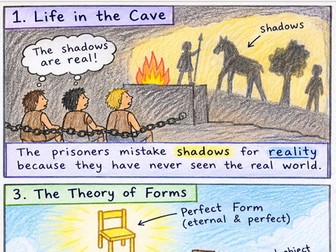
Bring the ancient world to life with this highly engaging and visually rich Year 7 Religious Studies lesson exploring the ideas of Plato and his famous Allegory of the Cave. Using thought-provoking contemporary links to mobile phones, social media and the nature of reality, students are encouraged to grapple with one of philosophy’s greatest questions: What is reality? The lesson introduces students to Plato, his role in the great philosophical tradition of Socrates and Aristotle, and the founding of the Academy. Through an engaging video task, clear teacher explanations and structured discussion activities, pupils explore the Allegory of the Cave and Plato’s Theory of Forms before applying their understanding in a creative storyboard challenge. A standout feature is the lesson’s contemporary application, where students analyse how Plato’s cave can help explain modern obsessions with social media and smartphones, encouraging critical thinking about truth, perception and digital influence. Included: Fully editable PowerPoint lesson 2 embedded videos Clear learning journey and differentiated outcomes Video-based learning task Creative storyboard activity with exemplar Literacy support through key vocabulary Modern social media links to philosophy Plenary application and evaluation task Perfect for Key Stage 3 Religious Studies, Philosophy, Ethics or Humanities, this lesson combines ancient wisdom with real-world relevance, helping students develop critical thinking skills while engaging with one of the most influential thinkers in history Author: An experienced educator, theologian, and school leader, the author has been Head of Department in two schools, Assistant Headteacher and Head of Sixth Form, taught Christian Theology at Cardiff University for five years, and currently works in a high-achieving independent school. Rated Outstanding in all formal inspections, they have also served as an ordained priest for over 30 years and are co-author of the SCM Study Guide to Christian Spirituality. Their resources combine academic rigour, classroom expertise, and extensive pastoral experience.
Hindu Beliefs on Life After Death: Reincarnation, Karma and MokshaQuick View
williamsgw

Hindu Beliefs on Life After Death: Reincarnation, Karma and Moksha

(0)
Hindu Beliefs on Life After Death: Reincarnation, Karma and Moksha A highly engaging and visually rich lesson exploring Hindu beliefs about life after death. Students investigate the key concepts of atman, samsara, karma, dharma, and moksha, considering how beliefs about reincarnation shape moral behaviour and attitudes towards death. Using an embedded video, Cornell note-taking, retrieval tasks, concept matching activities, and an applied case study, students develop both knowledge and evaluation skills. What’s included: Clear learning journey and differentiated objectives Thought-provoking starter discussion on life and second chances 2 Embedded video tasks with Cornell notes scaffold (template uploaded) Explicit teaching of atman, samsara, karma, dharma, and moksha Interactive case study applying karma to real-life actions Visual explanations and recap activities Retrieval and matching tasks to consolidate key terminology through worksheet Plenary review of the soul’s journey in Hindu belief Ideal for: KS3 Religious Studies (Years 7-9), Hinduism units, beliefs about life after death, world religions, and introduction to Eastern religious traditions. Designed to promote discussion, critical thinking, and secure understanding of one of Hinduism’s most important teachings. Author: An experienced educator, theologian, and school leader, the author has been Head of Department in two schools, Head of Sixth Form, taught Christian Theology at Cardiff University for five years, and currently works in a high-achieving independent school. Rated Outstanding in all formal inspections, they have also served as an ordained priest for over 30 years and are co-author of the SCM Study Guide to Christian Spirituality. Their resources combine academic rigour, classroom expertise, and extensive pastoral experience.
Theme 1B Educas WJEC The Nature of Jesus' Resurrected BodyQuick View
williamsgw

Theme 1B Educas WJEC The Nature of Jesus' Resurrected Body

(0)
Lesson 4 in my series on this Theme The Resurrected Jesus: Physical, Spiritual or Transformed? | A-Level Religious Studies Engage students in one of the most fascinating debates in Christian theology: What was the nature of Jesus’ resurrected body? This academically rigorous and highly interactive lesson explores biblical, theological and philosophical perspectives on resurrection, preparing students for success in A-Level Religious Studies and Theology assessments. Students analyse Gospel accounts, Paul’s teaching on the soma pneumatikon (“spiritual body”) in 1 Corinthians 15, and the views of key theologians including Irenaeus and the Catholic Catechism. Through a collaborative card-sorting activity, students classify evidence as supporting a physical, spiritual or transformed understanding of the resurrected body before evaluating competing interpretations. The lesson includes: 14 Slide Powerpoint Clear learning objectives and engaging starter discussion Interactive card-sort and classification task - cut out and classify as a re-cap of previous 3 lessons Detailed exploration of Gospel resurrection narratives Examination of Paul’s teaching on the “spiritual body” Theological perspectives from Irenaeus and Catholic doctrine Discussion of continuity, transformation and glorification Guided analysis of a model 15-mark essay Exam-focused support for AO1 and AO2 skills Structured preparation for the question:“The resurrected Jesus had a physical body” [15] Ideal for A-Level Religious Studies, Theology and Philosophy of Religion courses, this resource combines scholarly depth with accessible activities to help students develop confident, evidence-based evaluative arguments. Author: An experienced educator, theologian, and school leader, the author has been Head of Department in two schools, Head of Sixth Form, taught Christian Theology at Cardiff University for five years, and currently works in a high-achieving independent school. Rated Outstanding in all formal inspections, they have also served as an ordained priest for over 30 years and are co-author of the SCM Study Guide to Christian Spirituality. Their resources combine academic rigour, classroom expertise, and extensive pastoral experience.
Theme 1B Historical reliability of the ResurrectionQuick View
williamsgw

Theme 1B Historical reliability of the Resurrection

(0)
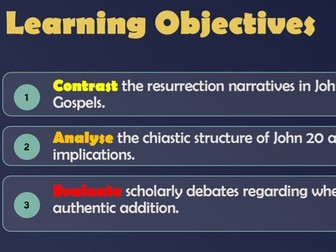
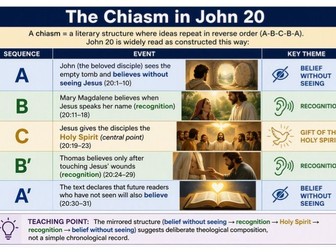
Historical Reliability of John 20–21 | A Level Religious Studies (Christianity) Engage students in a rigorous exploration of the historical reliability of the resurrection narratives in John 20–21. This lesson examines key scholarly debates surrounding eyewitness testimony, Gospel discrepancies, literary design, and the authenticity of John 21, helping students develop the evaluative skills required for A Level Religious Studies and Theology. Included in this resource: Fully editable PowerPoint lesson Embedded N. T. Wright video exploring the historical evidence for Jesus’ resurrection Accompanying student worksheet/comprehension activity Retrieval, inference and critical evaluation tasks Visual comparison of John’s account with the Synoptic Gospels Re-Examination of the chiastic structure of John 20 Scholarly arguments for and against the historical reliability of the resurrection accounts Evaluation activities designed to support essay-writing skills Students will: Contrast John’s resurrection narrative with the Synoptic Gospels Analyse the theological significance of John’s literary structure Evaluate arguments concerning the authenticity of John 21 Consider whether differences between the Gospel accounts undermine or strengthen claims of eyewitness testimony Develop balanced, evidence-based judgements on a key area of New Testament scholarship Ideal for A Level Religious Studies, Theology, Biblical Studies, and Christianity units, this lesson promotes higher-order thinking, textual analysis, and examination success through engaging discussion and structured evaluation. Author: An experienced educator, theologian, and school leader, the author has been Head of Department in two schools, Assistant Headteacher and Head of Sixth Form, taught Christian Theology at Cardiff University for five years, and currently works in a high-achieving independent school. Rated Outstanding in all formal inspections, they have also served as an ordained priest for over 30 years and are co-author of the SCM Study Guide to Christian Spirituality. Their resources combine academic rigour, classroom expertise, and extensive pastoral experience.
Diddy Disciples Assembly Format Nursery to Year 2 example is the man who built bigger barnsQuick View
williamsgw

Diddy Disciples Assembly Format Nursery to Year 2 example is the man who built bigger barns

(0)
Diddy Disciples: Ready-to-Use Assemblies for Nursery to Year 2 Take the stress out of weekly assemblies. This resource is one of my assemblies, but keep the stucture and swap out for your own. Diddy Disciples gives you a simple, engaging assembly format for young children that can be reused week after week — so you can spend less time preparing and more time engaging with your children. Each of my assemblies follows a familiar, child-friendly rhythm: Welcome → Sign of the Cross → Song → Bible Story → “Diddy Think” → Song → Prayer → The Grace [On the welcome slide I usually embed some peaceful music so that the young people settle (I took the file out because it was too big - plenty on youtube)] The repetition is intentional. Children quickly become familiar with the structure, join in with the rituals and responses, and begin to experience the rhythm of simple Christian liturgy in a way that feels natural and accessible. Just 30 minutes’ preparation each week You don’t need to reinvent your assembly every week. Once your core assembly is set up, simply swap in:** a new song a new Bible story (Youtube Saddleback are perfect) a new “Diddy Think” reflection That’s it. The rest stays the same, giving you a consistent framework that can be prepared in around half an hour each week. Designed for little ones The resources are created specifically with Nursery, Reception and Key Stage 1 children in mind, combining: simple rituals children can remember songs they can join in with engaging Bible stories from Saddleback (This is Jesus Ay Oh!) opportunities to talk and reflect simple prayers a familiar beginning and ending Inclusive Imagery of children and gender balance From “This is Jesus… Ay-oh!” to “From my head to my toes, from my heart to my nose,” children quickly learn the repeated elements and love joining in. Less preparation. More participation. A consistent Christian foundation. Diddy Disciples isn’t just another collection of assembly slides. It’s a ready-to-use tried and tested framework that makes weekly Christian worship simple, consistent and enjoyable for young children — while taking a significant amount of preparation off your plate. Set it up once. Change the content each week. You’re ready to go. Author: Previous Head of Department in two schools, taught Christian Theology at Cardiff University for Five years, previous Head of Sixth Form and currently working in a high achieving Independent School. Rated outstanding in all formal inspections. Priest for 30+ years and co-author of the SCM Study Guide to Christian Spirituality.
Year 3 Shabbat and Creation Lesson Judaism Jews SabbathQuick View
williamsgw

Year 3 Shabbat and Creation Lesson Judaism Jews Sabbath

(0)
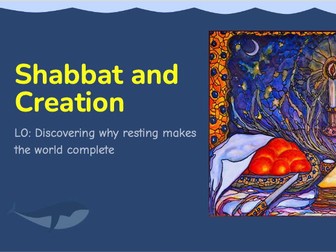
Year 3 RE: Shabbat and Creation – The Gift of Rest Having covered the 7 days of Creation Year 3 delve into the deeper meaning of Shabbat for Jews. A colourful and engaging Year 3 RE lesson exploring the Jewish understanding of Shabbat as the completion of creation. Through thought-provoking discussion, rich visual resources, and embedded video clips, pupils discover why Jewish people believe that rest is not simply stopping work, but an essential part of God’s design for the world. The lesson introduces key concepts including Shabbat, Menuha (peaceful rest), Kiddush, challah bread, and family worship, helping children understand how Jewish families celebrate the special seventh day. Pupils reflect on their own experiences of rest, explore the symbolism of Shabbat practices, and consider how stepping away from work and technology can strengthen relationships and appreciation for creation. Resources include: Fully editable PowerPoint with engaging visuals Embedded video content throughout the lesson (clip on Shabbat and a Shabbat song) Retrieval and discussion activities Interactive sorting task comparing work and rest during the week Reflection and thinking questions Teacher answers provided Opportunities for SMSC development and personal reflection Ideal for Key Stage 2 Religious Education, this lesson develops understanding of Jewish beliefs and practices while encouraging pupils to think deeply about the value of rest in modern life. Perfect for teachers seeking a well-structured, enquiry-based lesson with minimal preparation required.
Theme 1B Educas Resurrection and 1 Corinthians 15Quick View
williamsgw

Theme 1B Educas Resurrection and 1 Corinthians 15

(0)
A stimulating and academically rigorous lesson on Paul’s teaching in 1 Corinthians 15. Students explore why the resurrection is central to Christian belief, evaluate Paul’s evidence for Christ’s resurrection, and analyse his distinction between the earthly body (soma psychikon) and the spiritual body (soma pneumatikon). Through Paul’s seed analogy, learners examine transformation, continuity, and the nature of the resurrection in this teaching . What’s Included Professionally designed PowerPoint presentation A Structured and enaging analysis task of key passages from 1 Corinthians 15 A summary of Paul’s eyewitness evidence for the resurrection Visual explanations of key theological concepts Categorisation and retrieval activity on soma psychikon and soma pneumatikon Higher-order evaluation and exam-style discussion task with outline answer. Clear links to scholarship, including Richard Swinburne Teacher answer material Learning Outcomes • Explain why the resurrection is foundational to Christian faith. • Analyse Paul’s argument for the resurrection of Christ to be found in 1 Corinthians 15 • Distinguish between physical resuscitation and spiritual transformation. • Interpret and apply Paul’s seed analogy. • Evaluate the coherence of Paul’s understanding of bodily resurrection. Perfect for teachers seeking a lesson that combines close biblical scholarship, theological analysis and exam preparation. The activities encourage genuine engagement with the text while stretching students towards the highest grades. Author: An experienced educator, theologian, and school leader, the author has been Head of Department in two schools, Head of Sixth Form, taught Christian Theology at Cardiff University for five years, and currently works in a high-achieving independent school. Rated Outstanding in all formal inspections, they have also served as an ordained priest for over 30 years and are co-author of the SCM Study Guide to Christian Spirituality. Their resources combine academic rigour, classroom expertise, and extensive pastoral experience.
Them 1B Educas Resurrection in John 21Quick View
williamsgw

Them 1B Educas Resurrection in John 21

(0)
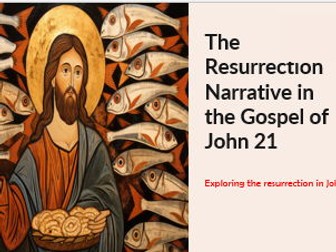
The Resurrection in John 21: Physical, Spiritual or Transformed? A follow in lesson from my resource on John 20. This engaging and academically rigorous A Level Religious Studies lesson explores the resurrection narratives of John 21, challenging students to examine the nature of Jesus’ resurrected body through close textual analysis and theological evaluation. Using structured activities, students investigate whether John’s Gospel presents the resurrection as physical, spiritual, or a transformed reality. Students analyse key episodes including the miraculous catch of fish, the commissioning of Peter, and the Gospel’s eyewitness claims, while engaging with scholarly perspectives on authorship, historical reliability, and the possible addition of John 21 as an epilogue. Links are also made to wider Christian beliefs about resurrection, drawing upon 1 Corinthians 15, the witness of the disciples, and debates surrounding faith versus empirical evidence. Included: Clear and visually engaging PowerPoint Guided textual analysis activities based on an embedded 7 minute clip of John 21 Retrieval and recap content from John 21 AO1 theological knowledge development AO2 evaluation of historical and theological issues Preparation for A Level exam-style discussion and written responses Author: An experienced educator, theologian, and school leader, the author has been Head of Department in two schools, Head of Sixth Form, taught Christian Theology at Cardiff University for five years, and currently works in a high-achieving independent school. Rated Outstanding in all formal inspections, they have also served as an ordained priest for over 30 years and are co-author of the SCM Study Guide to Christian Spirituality. Their resources combine academic rigour, classroom expertise, and extensive pastoral experience.
Theme 1A Educas Incarnation Kenotic and Substantial PresenceQuick View
williamsgw

Theme 1A Educas Incarnation Kenotic and Substantial Presence

(0)
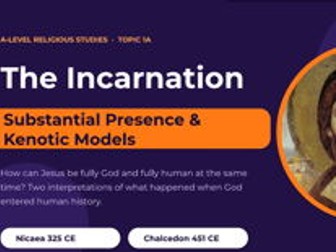
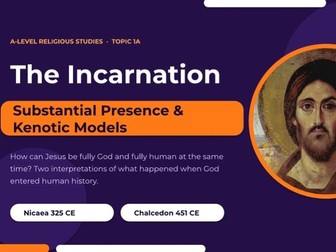
A Level Religious Studies: The Incarnation Substantial Presence & Kenotic Models. Outstanding A Level Religious Studies resource designed specifically for WJEC/Eduqas Christianity learners. This fully resourced lesson explores one of the most challenging areas of Christian theology: the Incarnation, with a detailed focus on the Substantial Presence and Kenotic interpretations of Christology. Students are guided through the development of doctrine from the Councils of Nicaea and Chalcedon to contemporary theological discussions surrounding Christ’s divinity and humanity. The lesson balances clear subject knowledge with evaluative thinking and exam preparation. Topics Covered The doctrine of the Incarnation Emmanuel and the pre-existence of Christ The Councils of Nicaea (325 CE) and Chalcedon (451 CE) The Hypostatic Union The Substantial Presence model The Kenotic model Philippians 2 and kenosis Jürgen Moltmann Evaluation of competing Christological interpretations Author: An experienced educator, theologian, and school leader, the author has been Head of Department in two schools, Head of Sixth Form, taught Christian Theology at Cardiff University for five years, and currently works in a high-achieving independent school. Rated Outstanding in all formal inspections, they have also served as an ordained priest for over 30 years and are co-author of the SCM Study Guide to Christian Spirituality. Their resources combine academic rigour, classroom expertise, and extensive pastoral experience.
WJEC/EDUCAS Theme 1B: Jesus and his resurrection with focus on John 20 and ChiasmQuick View
williamsgw

WJEC/EDUCAS Theme 1B: Jesus and his resurrection with focus on John 20 and Chiasm

(0)
A challenging and academically rigorous lesson designed to explore the literary device of chiasm, students investigate how John 20 has been carefully structured to communicate profound theological ideas about faith, belief, witness, and discipleship. This fully resourced lesson moves beyond simple retelling of the resurrection story and engages learners in genuine biblical scholarship. Students are asked to ‘watch’ a 7 min LUMO depicition of John 20 and analyse its five chiastic episodes. They identify the chiastic pattern within the chapter, and evaluate how the narrative moves readers from physical sight to faith without seeing. The lesson develops higher-order thinking, textual analysis, and theological evaluation skills while remaining accessible through clear visual scaffolding and structured activities. Included: Fully editable, visually engaging PowerPoint Embedded video of John 20 Guided introduction to Johannine resurrection theology Explicit teaching of chiastic literary structure Video-based analysis activities Worksheet (with answers) which provide a structured note-taking tasks Opportunities for critical theological discussion Examination of key themes including belief, witness, faith, and the Holy Spirit Plenary and consolidation activities I previously oversaw the BA in Theological Studies at Cardiff University where I taught Christian Theology, have been Head of RS in two schools and now work in a high acheiving independent school.
Theme 1A Birth Narratives Luke Matthew Educas Redaction, Demythology and HarmonisationQuick View
williamsgw

Theme 1A Birth Narratives Luke Matthew Educas Redaction, Demythology and Harmonisation

(0)
Birth Narratives: Complete Double Lesson Package A carefully structured double lesson covering the Birth Narratives in substantial detail. The resource pack includes: Ten slide teacher-led power point with embedded learning activities Six pages of student notes with annotation space throughout Redaction criticism worksheet (approximately fifteen minutes) Exemplar essay showing examination-standard responses The lesson is designed to stretch students beyond simple narrative recall, encouraging them to engage critically with Gospel accounts and explore scholarly approaches to the texts.
Theme 1A AS Educas WJEC Matthew and Luke Birth Narrative Similarities and DifferencesQuick View
williamsgw

Theme 1A AS Educas WJEC Matthew and Luke Birth Narrative Similarities and Differences

(0)
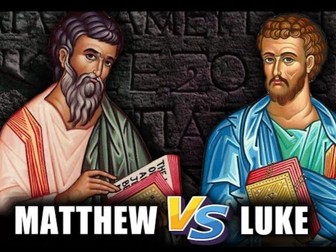
A full set of notes on this topic, 3 PPTS with embedded films of the 2 narratives. 3 PPT with the Birth naratives embedded as film scripts (better than just reading them) Give students the A3 sheet and ask them to timeline the events as they watch the 2 naratives together. Highly succesful I have been teaching many years at A Level but also oversaw the BA in Theological Studies when I lectured at Cardiff University. I currrentl teach in a high acheieving Independent school.
Incarnation Substantial and Kenotic Educas Theme 1A AS A AlevlQuick View
williamsgw

Incarnation Substantial and Kenotic Educas Theme 1A AS A Alevl

(0)
A full 10 Slide PPT , 4 Pages of Notes, and a 1 Page Mind Map together with an exemplar essay discssuing the relative stengths and weaknesses of each model I don’t overload with TEXT either in the notes or in the PPT. That said, the notes I produce are detailed but but not overbearing. Learning Outcomes By the end of this lesson, you should be able to: • Explain the Christian doctrine of the Incarnation. • Understand the significance of the Councils of Nicaea and Chalcedon and the meaning of ‘hypostatic union’ • Describe the Substantial Presence Model of the Incarnation. • Describe the Kenotic Model of the Incarnation. • Evaluate the relative strengths and weaknesses of each interpretation (exemplar essay) I have taught for many years both in secondary schools and also at Cardiff University where I oversaw the BA in Theological Studies. Currently teaching in a high acheiving independent school.