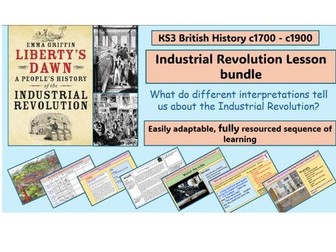
Industrial Revolution lesson bundle- Interpretation (Emma Griffin) focusedQuick View
clere

Industrial Revolution lesson bundle- Interpretation (Emma Griffin) focused

(0)
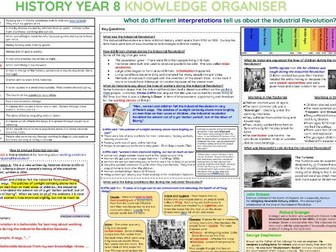
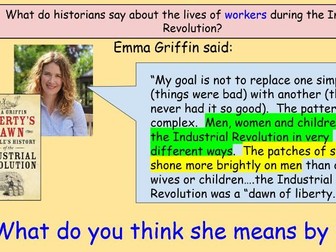
This is a fully resourced 11 lesson sequence which can be easily adapted to suit your school and needs of individual classes. The sequence uses images, videos and guided reading to build an understanding of the main changes, the working conditions for men, women and children, and living conditions. Students use their understanding to reinforce contemporary historical views put forward by Emma Griffin in her book “Liberty’s Dawn”. Lessons contain formative knowledge checks and an extended writing assessment. PEE paragraph format is used throughout. Local history in this unit is focused on the North East of England.
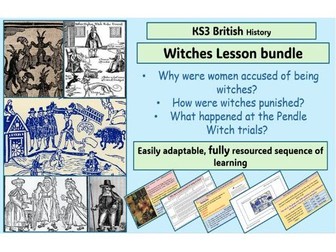
16th and 17th Witchcraft - 3 lesson bundleQuick View
clere

16th and 17th Witchcraft - 3 lesson bundle

(0)
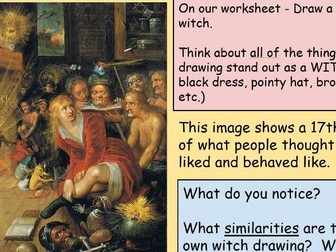
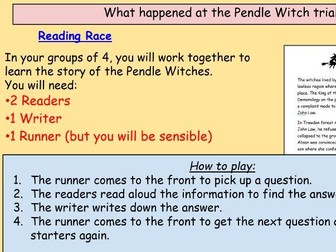
This is a 3 lesson fun and engaging bundle about 16th and 17th century witchcraft in England. It covers: Why were women accused of being witches? How were witches punished? What happened at the Pendle Witch Trials? The lessons use a variety of different activities to encourage fun and independent learning; source work, videos, guided reading, reading races, Carousel style case studies, Role play style trial. Can be easily adapted to suit your school or class needs.
Industrial Revolution - Living conditions (Toilets waste and disease) (10)Quick View
clere

Industrial Revolution - Living conditions (Toilets waste and disease) (10)

(0)
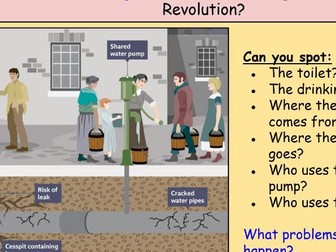
This is lesson 10 in an 11 lesson sequence entitled “What do different interpretations tell us about the Industrial Revolution?” This lesson uses images, reading and videos to build an understanding of which diseases were common during the Industrial Revolution and why they spread and the role of John Snow in the discovery of cholera. A court for King cholera source analysis and writing task. Students agree or disagree with Emma Griffin’s interpretation on living conditions.
Industrial Revolution - Knowledge CheckQuick View
clere

Industrial Revolution - Knowledge Check

(0)
This is the last lesson in an 11 lesson sequence entitled “What do different interpretations tell us about the Industrial Revolution?” This is a knowledge check test. It checks fingertip knowledge and understanding of the Industrial Revolution but also contains questions from previous topics so can be adapted to suit your own curriculum.
Industrial Revolution - Extended writingQuick View
clere

Industrial Revolution - Extended writing

(0)
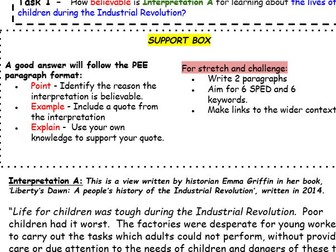
This is lesson 8 in an 11 lesson sequence entitled “What do different interpretations tell us about the Industrial Revolution?” This is the extended writing lesson where students use their previous knowlegde from earlier lessons to support the view put forward by Emma Griffin in her book “Liberty’s Dawn”. Consolidation tasks are provided so that students are confident to complete their extended writing blind. WWW and EBI mark scheme provided.
Industrial Revolution - Living conditions (housing and water) (9)Quick View
clere

Industrial Revolution - Living conditions (housing and water) (9)

(0)
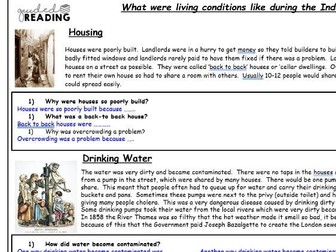
This is lesson 9 in an 11 lesson sequence entitled “What do different inteperpretations tell us about the Industrial Revolution?” This lesson uses videos and reading to teach students about the poor living conditions of the Industrial Revolution. Key words - squalor, contaminated, cholera. Students then use their knowledge to support what Emma Griffin said in her book “Liberty’s Dawn” - that the Industrial Revolution came at the cost to our environment and ultimately all living things.
Industrial Revolution - Children (7)Quick View
clere

Industrial Revolution - Children (7)

(0)
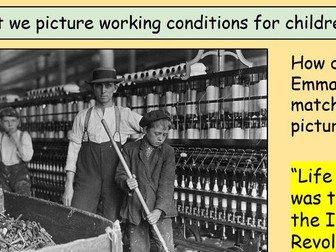
This is the 7th lesson in an 11 lesson sequence entitled “What do different interpretations tell us about the Industrial Revolution?” This lesson focses on the lives of children during the Industrial Revolution. It uses images and videos to build an understanding of: The jobs performed by children in the factories The dangers for children in the factories The role of the overseer The jobs performed by children in the mines The dangers in the mines Students then what they have learned to address Emma Griffin’s view that life for children was extremely tough.
Industrial Revolution - Class modelQuick View
clere

Industrial Revolution - Class model

(0)
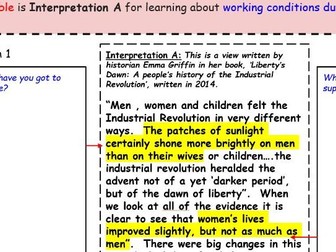
This is the 6th lesson in an 11 lesson sequence entitled “What do different interpretations tells us about the Industrial Revolution?” This lesson helps students to wrote well in history by providing an opportunity for them to complete a class model for the question “How believable is Interpretation A about the working conditions during the Industrial Revolution?” It provides an easy to follow template for students and a teacher version of the class model. There is also an independent written task for students to demonstrate their understanding of how to structure an answer.
Industrial Revolution - Workers (WOMEN) (5)Quick View
clere

Industrial Revolution - Workers (WOMEN) (5)

(0)
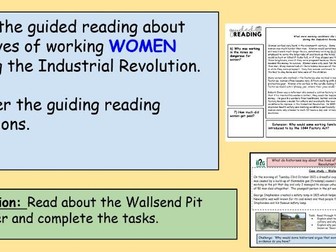
This is the 5th lesson in an 11 lesson sequence about “What do different interpretations tell us about the Industrial Revolution?” This lesson focuses on the effects the Industrial Revolution had on the working conditions of women and how these compare to men. It centres around Emma Griffin’s view that the Industrial Revolution was a “Dawn of Liberty” for men and that women did not benefit as much as their husbands. Students complete the guided reading and complete the PEE to show how whether what they have learned supports what Emma Griffin says. There is also extension knowledge about the Wallsend Pit disaster of 1821 which gets students thinking about changes to mine safety.
Industrial Revolution - Workers (Men) (4)Quick View
clere

Industrial Revolution - Workers (Men) (4)

(0)
This is the 4th lesson in an 11 lesson sequence entitled “What do different interpretations tell us about the Industrial Revolution?” This lesson reinforces student understanding of “source”, “interpretation” and “scholarship”. The lesson addresses: Arnold Toynbee’s view of the Industrial Revolution being dark and horrible for all. Emma Griffin’s view that the Industrial Revolution was felt in different ways by different people in society and that men benefited the most. Students complete guided reading to learn about the lives of men - the jobs available, the pay, the dangers etc. Students Write a PEE paragraph to show how what they have learned supports the assertions made by Griffin. Students can make a final judgement about which historian they most agree with.
Industrial Revolution - How do we revise?Quick View
clere

Industrial Revolution - How do we revise?

(0)
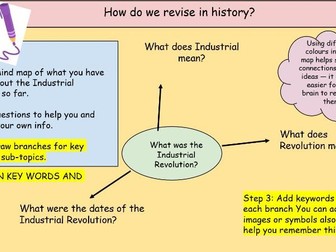
This is the 3rd lesson in an 11 lesson sequence entitled “What do different interpretations tell us about the Industrial Revolution?” This lesson consolidates the learning from the previous 2 lessons and encourages students to use mind maps for revision and independent study.
Industrial Revolution - How did Britain change? (2)Quick View
clere

Industrial Revolution - How did Britain change? (2)

(0)
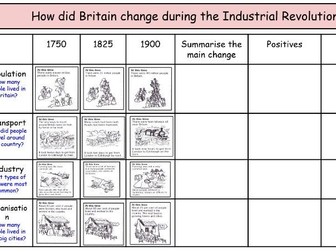
This is second lesson in an 11 lesson sequence “What do different interpretations tells us about the Industrial Revolution?” This lesson is entitled “How did Britain change” and focuses on 4 main changes which occurred in Britain at this time - Pupulation, transport, industry and urbanisation. Class WAGOLLs are included to help students write well in history. The lesson and resources included can easily be adapted to exciting schemes.
The Industrial Revolution - What was the Industrial Revolution?Quick View
clere

The Industrial Revolution - What was the Industrial Revolution?

(0)
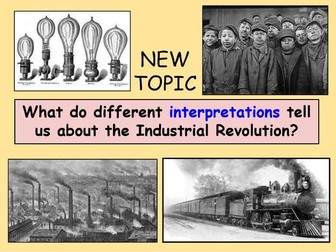
This lesson acts as an introduction to the Industrial Revolution aimed at year 8 students. It is typically used in Autumn A but can be placed anywhere in a larger sequence of learning. It fits into a larger sequence focused around the use of historical scholarship from Emma Griffin’s “Dawn of Liberty” entitled “What do different interpretations tells us about the Industrial Revolution?” Key terminology used: Mass production, Urbanisation, Industrial, Revolution. Landscape images are used to show students how the landscape physically changed during the Industrial Revolution to help them picture the time period and build a basis for future learning. Pupils will be expected to build on this understanding with further lessons. These are also available on TES. The Learning sequence and knowledge organiser is included - this provides the overview and can be used to help students to revise for their knowledge check tests.