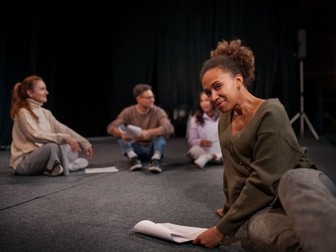
Last minute Drama cover lesson requiring no resources, ideal for Y9. Pupils devise a piece with a set scene structure around an a pupil who begins to develop an online relationship, who is revealed to be not quite who they claim to be. The scenes deal with the consequences of their actions and includes opportunities for multi-rolling.
Last minute Drama cover lesson requiring no resources, ideal for Y8 and Y9. Pupils devise a piece with a set scene structure around an illicit item found in a school pupil’s bag. The scenes deal with the consequences of their actions and includes opportunities for direct address to the audience.
Three Key Stage 3 Drama lessons, introducing the practitioner Augusto Boal and exploring the theme of oppression. Orginally used with Y8 but would work well with Y9 or be incorporated into GCSE practitioner study scheme of work.
Objectives:
Participate in practical performance work in an appropriate tone and style
Understand the meaning of the term ‘oppression’
Present practical performance work to suggest a tense and paranoid atmosphere
Be able to use two techniques developed by Augusto Boal
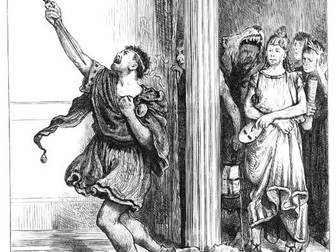
One discrete lesson on Medieval Theatre.
Pupils learn about Medieval Mystery, Miracle and Morality plays before devising their own - ideally in promenade around the school site and performed in the following lesson.
Versatile introduction to Drama lesson incorporating lots of low-fear whole class games before progressing to a simple improvisation task. Ideal for low ability groups or classes who lack confidence or for a first meeting of a school Drama Club.
Last-minute cover lesson for Key Stage 3 Drama in which pupils debate the pros and cons of being rich and famous before devising a series of short scenes exploring these themes.
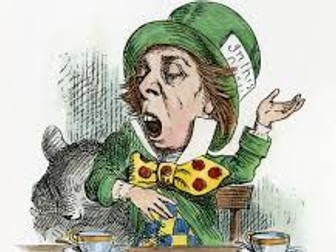
Adaptation of Lewis Carroll’s classic Alice books, running at around 45 minutes over eight scenes, with a cast of ten principal roles, ten supporting speaking roles and an ensemble. Opportunities for physical theatre and narration for all ten principal roles. Ideal for school play, end of term show, literature celebration. Flexibility to add songs and own choices of music.
Principal Cast:
Alice
White Rabbit
Dormouse
Duchess
Cheshire Cat
Caterpillar
Mad Hatter
March Hare
Queen of Hearts
King of Hearts
Speaking Roles:
Cook
Knave of Hearts
Tiger-Lily
Rose
Violet
Daisy
Larkspur
Two - a gardener
Five - a gardener
Seven - a gardener
Ensemble:
Guards
Talking Flowers
Special Guest Star:
Lobster
Complete set of seven practical lessons which can be used by Drama teachers or English teachers to explore themes and key scenes from the text.
Will enable English teachers to ensure key NC requirements for Drama are met:
“Pupils are taught to speak confidently and effectively through improvising, rehearsing and performing play scripts in order to generate language and discuss language use and meaning, using role, intonation, tone, volume, mood, silence, stillness and action to add impact”. (English Programmes of Study: Key Stage 3 National Curriculum in England)
Pupils explore the themes of ‘defiance’ and ‘forbidden fruit’ through contemporary improvisation scenarios before moving on to practical text explorations of the Prologue, the “Do you bite your thumb?” confrontation in Act I Sc I and the argument between Juliet and Lord Capulet from Act III Sc V. The final lessons allows pupils to devise an original piece of drama in which they ‘update’ the story of the play for a contemporary audience.
Full set of text resources including ‘translated’ variants are provided.
Five practical Drama lessons, ideal for Year 9 as a way to introduce the concept of mood and atmosphere in advance of GCSE Drama study.
Activities include staging the shipwreck, exploring the tensions between Prospero and Caliban and interpreting a comic scene between Caliban, Stephano and Trinculo.
There is also a costume design homework task.
Can also be used by English teachers who wish to include practical drama activities in their scheme of work.
Resource to enable theatrical design candidates to access the assessment requirements for costume design. Pupils outline their knowledge of costume design and apply this to the script for their group. Outcome makes for an excellent evidence portfolio to support artistic intention responses.
Task 1: Costume Design Knowledge Organizer
Task 2: Script Analysis
Task 3: Character Selection and Initial Ideas (Moodboard)
Task 4: Costume Design Sketch
Six practical drama lessons ideal for Year 8 or Year 9 pupils based on the play ‘Mary Shelley’s Frankenstein’ by Rona Munro.
Learning objectives:
Be able to apply acting skills to a scene to demonstrate a change in mood
Develop an understanding of ‘the uncanny’
Be able to interpret stage directions in an imaginative and creative way
Develop an understanding of mood and atmosphere
Be able to apply vocal acting skills to a scene to demonstrate mood and atmosphere
Be able to improvise a scene based on a thematic stimulus
Understand the concept of duality
Be able to interpret stage directions using physical acting acting skills
Be able to use narration in a drama scene
Demonstrate your understanding of the gothic genre in improvised drama
Seven lessons exploring the play ‘Bang Out of Order’ by Johnny Carrington and Danny Sturrock.
The lessons involve movement work, page-to-stage, off-text improvisation and thematic work.
Ideal play for Year 9 Drama students to study.
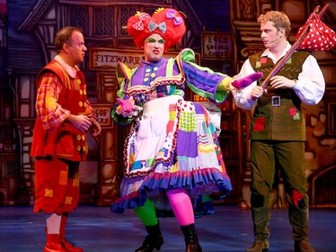
Ideal for Key Stage 3, this lesson includes an introductory slideshow on pantomime conventions and a worksheet which can be printed or used as a doucuent in chromebooks or laptops.
Ideal for classroom study, cover lessons or snow days.
Six lessons based on text study of Philip Pullman’s Sherlock Holmes and the Limehouse horror including improvisation, page-to-stage, costume design and set design activities.
An adaptation of a Midsummer Night’s Dream, as a self-contained playlet featuring just the Mechanicals and removing Starveling so the piece needs a cast of just five actors.
Comprises three scenes:
Scene 1: The Casting
Scene 2: The Rehearsal
Scene 3: The Performance
Cast:
Peter Quince (playing the Prologue)
Bottom (playing Pyramus)
Flute (playing Thisbe)
Snout (playing Wall and Moonshine)
Snug (playing Lion)