A Dummies Guide to Rehearsal/Performance linked to the Level 2 BTEC spec. Could be used for GCSE too with some adaptation. Includes tips for rehearsal sessions including warm ups and links to instrument-specific techniques.
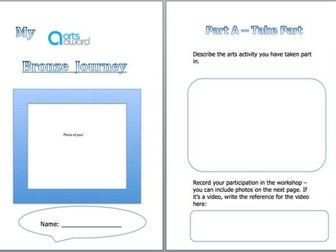
A fairly self-explanatory log book for young people completing Arts Award Bronze. Allows space for young people to write reflections as well as include their own pictures/photos etc and opportunity to reference any evidence which is on devices etc. I’ve left it in Word so that you can make and changes you may need to to suit your setting. I use the front cover to put a head shot of young people to assist moderator when watching videos etc.
A complete SOW for teaching film music at KS3 using the Wallace and Gromit ‘The Wrong Trousers’ train chase.
I have included a link to the video which could be used in the classroom - I have used the 58 seconds from just before Wallace lands on the train to the crash at the end with my students, but you could make it as long or short as you like.
There is the opportunity to use music technology with this project if you wish - I do.
Whilst the lessons are split into 1, 2 and 3, these often take longer than one lesson and you can adapt the timings to suit your groups’ abilities - usually for us this is a good term-long project when done properly.
The students then present what they have completed and write an evaluation of their own work, having discussed each others’ work. Peer assessment can be done as you move through the project, encouraging peer comments as you go informally.
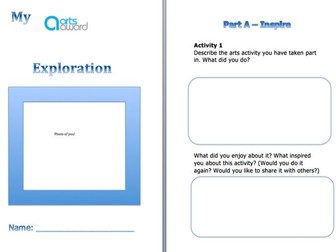
A complete log book for young people to complete the Arts Award Explore. Includes spaces for reflections, photos and drawings etc as well as opportunities to log where additional evidence may be.
5 lesson scheme of work, based on Carnival of the Animals. I do this with Year 7, but could be adapted for Year 8 or even KS2. We use percussion instruments, but would equally suit an ICT project or similar.
5 x lesson plans on PDF
Markscheme
Differentiated listening and appraising questions
Assessment grid
Lesson outline
Lesson 1 - Physical drama freeze frames whlist listening to Carnival of the Animals selection and using musical language
Lesson 2 - Using a bullet point story, create the music
Lesson 3 - Extending the musical ideas to include considering texture
Lesson 4 - Preparing for performance
Lesson 5 - Perform and evaluate
A powerpoint to recap/introduce the music of the Baroque era to GCSE students, particularly in preparation for AOS1 AQA before learning about Handel's oratorios.
An end of unit evaluation question prompt sheet where students have worked in groups to compose lyrics and perform 12-bar blues, walking bass and improvisation. Used for the listening and appraising part of the assessment.
A powerpoint to introduce Haydn's background and the background of the Clock symphony to GCSE students. Information would need teacher engagement to deliver to class, answer Qs etc.
Final slide encourages the students to have a first listen to the set work - you could set questions for students to answer whilst listening, or ask them to map the piece out etc. before discussing.
This presentation will provide you with the information and examples to introduce the concepts within film music in preparation for looking at suggested works for GCSE. Some elements may also be suitable for use with KS3.
A power point to accompany a lesson introducing GCSE students to the symphony in preparation for studying Haydn's Clock (but could be used for other boards too as generic). A short video allows the students to get an idea of the symphony and take notes (word doc), followed by teacher presentation (add in your own listening preferences!) on the different forms within the four movements.
A power point to accompany a lesson based on Lucy in the Sky for the AQA GCSE Study Pieces. The resources goes through looking at keys, chords and melodies, including the bass line. Notes outline the different parts of the lesson and how this can be made practical for the students. Also looks at theory/listening skills as well. The slides could be printed for the students to work on as a booklet to provide a basis for analysis of this piece.
A 5 lesson composing unit of work based on ostinato, using Super Tramp as a start point. 5 x power points to guide you through the unit which could be added to to suit the setting.
4 briefs in the style of the GCSE briefs to get students used to working in the way required for GCSE. Being used with Year 9 (first year of a 3 year GCSE course), but could be used in KS3 courses too.
A template for analysis of GCSE set works for all boards - also a good starting point to get A-Level students started before expanding onto more detailed analysis.
Keywords for tempo and dynamics for KS3/4 - the cards can be cut out and laminated, students sort the words into dynamics and tempo words. This could then form the basis of further discussion.
A basic arrangement of the riff and main melody of Havana ready to be used by a flexible ensemble. Piece can then be arranged around available musicians.