 Quick View
Ks3 Python complete SoW
Python Programming Workbook (KS3 & KS4)
A Comprehensive, Scaffolded and Knowledge-Rich Python Programming Resource.
Transform the way you teach Python with this expertly designed Python Programming Workbook, created for Key Stage 3 students and fully adaptable for Key Stage 4 learners. This all-in-one resource provides a structured pathway from foundational programming concepts to confident code development, making it ideal for both classroom teaching and independent learning.
What’s Included?
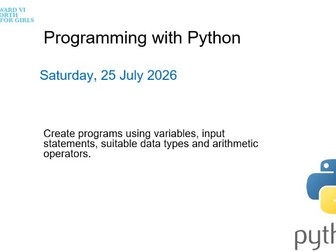
Bespoke Lesson PowerPoints
Ready-to-teach presentations that introduce concepts clearly, support modelling, and save valuable planning time.
Complete Python Programming Workbook
A carefully sequenced workbook packed with activities, practical coding tasks, retrieval opportunities, and guided practice to build confidence and mastery.
Embedded YouTube Video Tutorials
Scaffolded video support is linked directly within tasks, allowing students to revisit explanations, learn at their own pace, and receive additional guidance when needed.
Knowledge Organiser
A comprehensive reference guide containing key terminology, syntax, commands, and essential programming knowledge to support retention and revision.
Why Choose This Resource?
Fully aligned with a knowledge-rich curriculum approach
Scaffolded learning to support students of all abilities
Ideal for classroom teaching, homework, intervention, and revision
Promotes independence through integrated video support
Suitable for both KS3 and KS4 Computer Science courses
Saves teachers time while ensuring high-quality learning experiences
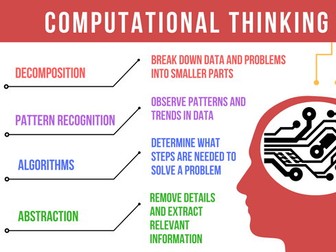
Give your students the resources they need to develop strong programming skills and computational thinking with a complete Python package designed for success.