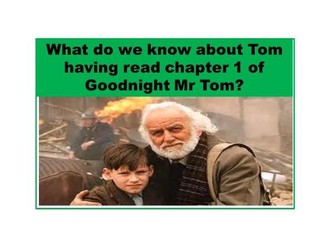
Character analysis of Tom from chapter 1 of Goodnight Mr Tom. Suitable for children in Upper KS2.
This resource includes:
A power point with snippets of the text from chapter 1 to support the teaching in this lesson. Answers provided on the powerpoint that teachers can share and discuss with pupils
A starter activity - using the text provided , draw a picture of what we think Tom looks like using evidence in the text.
A main differentiated task based upon what we know for certain about the character Tom( using evidence from the text) and what ideas and hints are we beginning to pick up about him ( inference)
An extension task to push the more able
Duration: 1 lesson.
This unit of work is suitable for children in years 5/6.
The unit of work compromises of :
Lesson 1- Where and What is Antarctica?
Within this lesson children identify where Antarctica is on a map and read an information text to discover what it’s like to live there. All technical vocab is defined on the powerpoint and highlighted in the reading text. Children in this lesson are expected to create a fact sheet about what they’ve discovered about the continent.
Included resources: powerpoint , reading text, pictures for children to put on their fact sheet ( found on the ppt) a LA sheet which can be stuck into their books.
Lesson 2 - Why do people visit Antarctica? What are the physical features of Antarctica that would make people want to visit?
Within this lesson physical and human geography is defined as well as weather and climate. In the starter activity children must sort out the statements which are linked to weather or climate. Answers are included on the powerpoint. Together you will then read an information text about why people want to visit the hostile environment unpicking the technical vocab together ( this is all defined on the ppt) Children’s task is to then answer reading comprehension questions.
Included resources: powerpoint , starter activity and answers, reading sheet and comprehension questions.
Lesson 3- What time is it in Antarctica?
Within this lesson children look at and define what lines of longitude and latitude are as well as time zones. Children use slide 11 from the ppt and a blank map to create their own time zone map.
Included resources: powerpoint, slide 11 ( map children will need to use to create their own) sheets for their books which includes an extension task. Also included is a LA sheet.
Lesson 4- What is the climate like in Antarctica?
Within this lesson children will find out about a research station as the starter activity and create a fact file. For the children’s main task they will create a climate graph for one of the research station looked at.
Included resources: powerpoint, factfile for the starter activity, differentiated main task activities which also include analysis questions.
G1- Use data that was collected over 26 years to create a line graph to show the mean average temperature that was recorded each month at the McMurdo research station
G2- • Use data that was collected over 26 years to create a line graph to show the mean average temperature that was recorded each month at the McMurdo research station. On the same graph construct a bar chart to show the mean average precipitation that fell each month.
Planning for the unit is also attached.
This resource is aimed upon pupils in upper KS2 writing a diary entry based upon William’s first day living with Mr Tom in Little Weirwold . The resources included help achieve the writing objectives:
Y3/4 To compose and rehearse sentences orally building a varied and rich vocabulary and an increasing range of sentence structures
Y5/6 To select appropriate grammar and vocabulary, understanding how such choices can change and enhance meaning
This resource includes a comprehensive powerpoint which ca be used over a sequence of 3/4 English lessons. Each lesson also compromises of reading activities linked to the beginning of Goodnight Mr Tom( all page numbers are referenced)
-Lesson 1
-Reading activity linked to children finding evidence in the text that help us explain what we know about William and how he’s feeling.
-Writing based activity based upon children planning their own diary entries having read and unpicked a model text together ( this is included in the resources)
Lesson 2
Reading activity - Modelling how to skim and scan in the text to find information.
Writing activity - Beginning to draft their diary entries. Example steps of success included within the powerpoint.
Lesson 3
Reading activity - Children independently find and copy using the text.
Writing activity- Children begin by looking back at what they wrote yesterday with an activity to improve a paragraph on the slides ( with a focus on vocabularly) Children then continue writing their diary entries.
What was life like for people who lived and worked in a Victorian workhouse? These reading activities are suitable for children in upper KS2.
This resource includes:
A 4 day reciprocal reading plan which covers both guided and independent tasks.
A diary entry to read during the reciprocal read ( based upon a young girl’s experience of being in a workhouse)
A comprehensive powerpoint which unpicks unfamiliar vocabulary in the diary entry. This vocab is ready to be displayed in your classroom.
A reading comprehension worksheet based upon the diary entry you’ve unpicked together.
A redraft exercise to be completed as a guided task. Suggestions of how to carry this out have been included on the power point.
Another diary entry and comprehension questions for children to answer based upon a young boy’s experience of being in a workhouse for children to complete independently.
Duration: These resources are intended to be used over a series of 4 short reading sessions.
What was life like for children who were evacuated during WW2? This investigative task is suitable for pupils in upper key stage two and is aimed to cover 1/2 lessons.
It includes:
-A powerpoint presentation which guides teachers through the interactive lessons
-A starter activity based upon differentiating between primary and secondary sources
-A video link to watch with the children
-Sources for children to read to find out about different perspectives of evacuation life
-A transcript of source 5 for teachers to unpick the difficult vocab with pupils in a mini plenary
-Worksheets for pupils to complete
-Worksheets for LA children to complete
-A plan of the lesson used.
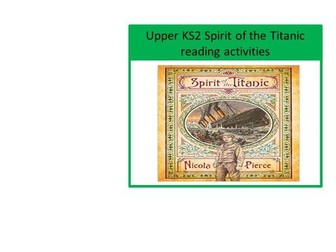
This resource is suitable for pupils in Upper KS2 who are reading the novel The Spirit of the Titanic. Resources begin by looking at the front cover and blurb and continue by delving into different chapters of the book.
Activity 1-
Resources included: powerpoint, field of white activity, inference activity.
Within this activity children look at the front cover and blurb and make predictions about what they think the novel is about. Children then read the prologue and define any technical vocabularly ( all included on the ppt) Children then make inferences and predictions about what they think will happen next in the story.
Activity 2-
Resources included: powerpoint, impression and what they know for certain activity sheet for Samuel.
Within this activity children will have read up to the end of chapter 2. Together on the powerpoint we look at what we know for certain about Samuel’s father and what impressions we are picking up using the text ( all answers on the ppt) Children’s activity is to then do a similar exercise but using the text to find out what they know for certain and what impressions they are picking up about the main character Samuel. In their final task children look at a plan a child has created for the question-
What impressions about Samuel’s feelings and thoughts are we picking up having read up to chapter two? ( 3 marks)
Children make comments about each part of the answer.
-Are ideas logically ordered?
-Have impressions about Samuel been given?
-Has evidence been provided? Does it back up your ideas?
Activity 3-
Resources included: powerpoint, reading comprehension questions, mark scheme that pupils can use to mark their own work.
Within this activity children look back at chapter 1 ( something they are familiar with, language already unpicked and defined together) Together children will look at questions which require them to unpick the authors use of language. On the ppt there are 4 different strategies children could use
1.Read the sentence before and after and pick out clues
2. Unpick the meaning of the word
3.Get in the scene.
4. Blank the word out
Activity 4-
Resources included: powerpoint, x 2 sources, questions
Within this lesson pupils read 2 difference sources from eyewitnesses who were there when the Titanic was sinking. Children read this and unpick the vocab together ( all defined on the ppt) Children then look at reading comprehension questions together. They are given two different model answers which they must discuss and explain why there are effective/ineffective. Children use the discussion to then answer their own questions.
Activity 5 -
Resources included : powerpoint,
Within this lesson children will read from page 35-43 to collect information about the different cabin styles on board the boat ( all technical vocab is defined on the ppt) Once children have a good understanding of the text children look at questions which require them to sequence. This is all explained on the ppt using shapes
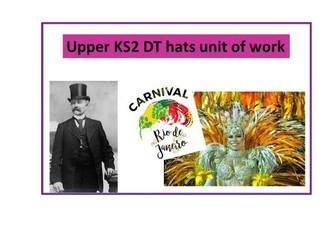
This resource is suitable for children in upper KS2. Within this unit of work children research how hat designs have changed over the ages, have a go at creating their own top hat having watched a video to support them and finally design and make their own head dress for the Rio Carnival. At the end of the project children will evaluate their final products.
Teachers will need to purchase some head bands prior to this unit for children to use.
The unit of work compromises of:
Lesson 1: How has the design and style of hats changed over time?
What makes an effective hat?
Children will need to bring in a variety of hats for the starter of the lesson where they explore the similarities and differences between them. Children will look at the different parts of a hat before investigating how hats have changed over time.
Resources included: powerpoint, information sheet about hats, pictures of hats for them to use on their own timelines.
Lesson 2: How is a hat constructed?
Linked to 1912 and the Titanic children will look at the different types of hats the passengers would have worn. Children to watch two videos for differing abilities which demonstrate how to make a top hat.
Resources included: powerpoint, x 2 videos for differing videos which demonstrate how to construct a top hat.
Lesson 3- How can I apply what I have learnt in DT to my product? ( Designing their product)
Hook - the Rio Carnival, children look at different head dresses to inspire them to desgin their own.
Resources included: powerpoint, wordbank ( on ppt) designing their head dress sheet
Lesson 4 and 5 - What methods will I use to ensure a quality product? How successful is my design? How can I improve my design?
Resources included: powerpoint including mini plenary discussion points, evaluation sheet for children to complete.
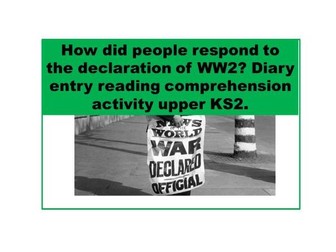
How did people in Britain feel when WW2 was declared? This reading based activity is aimed at children in Y5/6 with a focus on the learning objective :To draw inferences such as inferring characters’ feelings, thoughts and motives from their actions, and justifying inferences with evidence
This resource includes:
-A diary entry to read and analyse together in the main input of the lesson. Tricky/ unfamiliar words have been highlighted in bold.
-A comprehesive powerpoint which:
includes the diary entry to share with class and unpick the unfamiliar vocabularly using the following strategies: reading the sentences before and after and picking out clues from the text, unpick the meaning of the word, getting into the scene and blanking out the word.
Example questions to unpick together as a class supporting them with their main activity
mock answers provided
-differentiated questions for children to answer
-mark scheme for children to use to mark their own work in the plenary
Duration: 1 lesson
This unit of work is suitable for children in years 5/6.
The unit of work compromises of :
Lesson 1( shorter lesson) Creating questions about the topic.
Within this lesson children locate where WW2 is in a historical timeline. In this discussion based lesson children talk about what questions they’d like to investigate during the topic. There are lots of question stems on the ppt to help formulate pupils’ questions.
Included resources: powerpoint, LA question matrix.
Lesson 2- To place key WW2 events in chronological order on and comment on their significance.
Within this lesson children investigate the key events during the war. In the starter activity children are given key events to research so they can share what they’ve discovered with their peers. Children use information from the ppt and what they’ve researched themselves to create a timeline.
Included resources: powerpoint which includes an example of what their work could look like and a word bank to use as well as a LA sorting activity.
Lesson 3- To comment on the effectiveness of the war leaders.
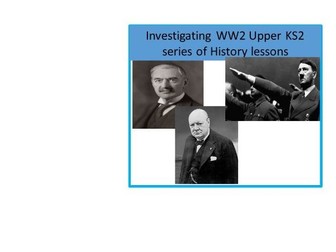
Within this lesson children investigate the main war leaders: Churchill, Chamberlain and Hitler. In the starter activity children read information about them to create a top trump card. The main activity involves children debating which leader was the most effective and why in the form of a podcast.
Included resources: powerpoint and top trump cards,
Lesson 4- To communicate an understanding of how people kept themselves safe during the Blitz -
Witthin this investigative lesson children will study a range of sources ( some written and some images) to find out how : gas masks, taping up windows, ARW and shelters kept people safe.
Lesson 5- To understand why rationing was introduced and that it was a major change for the people of Britain
Within this lesson children will watch 2 videos to immerse them into what rationing was and how it effected people in Britain. Children think about different food groups ( links to science previously taught topic ) and predict which items were rationed by sticking items onto their paper plates.Were their diets healthy? Children use all the information collected to write a historical paragraph to answer the question: What was rationing and how did it impact people who lived in Britain? Model answer and word banks provided on the powerpoint.
Included resources: powerpoint, food cards.
Lesson 6/7 To find out about the experiences of children who were evacuated during WW2. THIS ENQUIRY BASED LESSON CAN BE BOUGHT SEPERATLEY FROM MY SHOP. IN THIS LESSON CHILDREN INVESTIGATE A SERIES OF DIFFERENT SOURCES TO FIND OUT WHAT THE EXPERIENCES OF EVACUATION WERE LIKE.
++NO RESOURCES INCLUDED++
Planning for all lessons included.
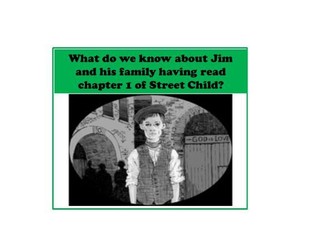
What inferences can we pick up using the front cover of Street Child? What inferences can we pick up about Jim, his mother and his siblings from chapter 1 ? This lesson is suitable for children in upper KS2
This resource includes:
-A plan of the lesson
-A powerpoint which compromises of:
a) A starter activity whereby the pupils and teacher discuss what an inference is and what they can infer from the image from the front cover of the book.
b) Unpicking of technical vocab from chapter 1 that children may need unpicking
c) Discussion points where teachers and students can share what inferences can be made from chapter 1 backing up their ideas using evidence
d) A plenary task
-A worksheet activity
Duration: 1 lesson
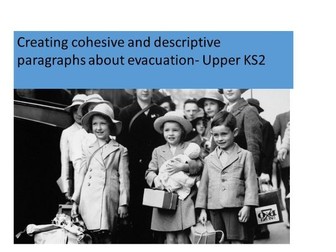
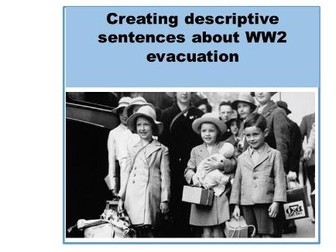
This resource is based upon students creating their own paragraphs about evacuation in WW2. They will use photographs as a stimulus to create their own sentences before thinking about how to
-order and link sentences together
-create their paragraphs
This resource is suitable for children in upper KS2.
This resource includes:
A comprehensive ppt that teachers can use to support their teaching for a sequence of 3/4 lessons. The ppt includes:
-Descriptive sentences that teachers can use as models to share
-Additional extension activites where children can read further texts to enrich the vocabualrly they are using in their sentences.
-Examples of how children can make their paragraphs cohesive.
-Learning objectives and photos that can be stuck into their books
A word mat children can use to support them.
This resource is suitable for Y6 teachers.
You will receive 13 individual documents which align to power maths units . They can still be used if you don’t use this scheme however. Each document outlines a topic/ unit in power maths. Key vocabulary and stem sentences for each area are defined. These have been taken from the scheme and NCETM. In each document I have also explained what children should have learnt in Y5 . For example in the geometry topic
Children coming up from Y5 should already be able to :
• identify 3-D shapes, including cubes and other cuboids, from 2-D representations
• know angles are measured in degrees: estimate and compare acute, obtuse and reflex angles
• draw given angles, and measure them in degrees (o)
• identify: angles at a point and 1 whole turn (total 360o), angles at a point on a straight line and half a turn (total 180o) and other multiples of 90o
• use the properties of rectangles to deduce related facts and find missing lengths and angles
• distinguish between regular and irregular polygons based on reasoning about equal sides and angle
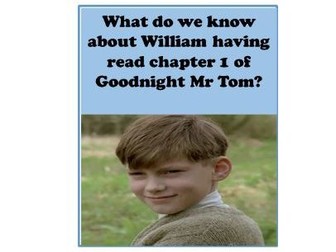
Character analysis of William from chapter 1 of Goodnight Mr Tom. Suitable for children in Upper KS2.
This resource includes
A lesson plan
A power point with snippets of the text from chapter 1 to support the teaching in this lesson.
A starter activity - using the text provided , draw a picture of what we think William looks like.
A main differentiated task based upon what we know for certain about the character William and what ideas and hints are we beginning to pick up about him.
An extension task to push the more able
Duration: 1 lesson.
What was it like for children who were evacuated? This lesson is aimed at children in upper KS2.
This resource includes a powerpoint presentation with lots of modelled examples of figurative language that could be used when writing a descriptive paragraph.
Lesson duration: 1 lesson
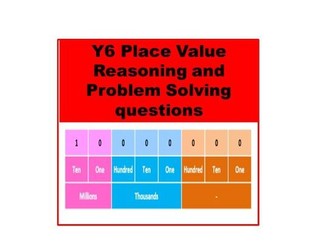
Reasoning and problem solving questions designed to promote deeper thinking for Y6 pupils when studying place value
This resource includes questions that could be given to pupils to stretch their learning in a main input or with a partner. Pupils could also be given these in a plenary session


 Quick View