Utilitarianism - ApplicationQuick View
AGE12

Utilitarianism - Application

(0)
Application of Utilitarianism Resource Pack Make teaching these tricky Religion and Ethics topics straightforward with this complete, ready-to-use pack! What’s included: One PowerPoint that covers: The application of Bentham’s Act Utilitarianism and Mill’s Rule Utilitarianism to both of the issues listed below: animal experimentation for medical research the use of nuclear weapons as a deterrent Mind Maps of animal experimentation and use of nuclear weapons as a deterrent Student writing framework: helps students structure exam-style responses. Completed exemplar answers: perfect for modelling, teacher reference, or feedback. Key Features: Clear, engaging slides that break down complex concepts step by step. Ready-made structure saves hours of planning. Fully adaptable to different exam boards (based on Eduqas Philosophy of Religion and Religion and Ethics). Supports students with scaffolding and model answers. This resource gives you everything you need to teach, explain, and assess these challenging topics with confidence — whether you’re introducing them for the first time or revising before exams.
Act Utilitarianism - BenthamQuick View
AGE12

Act Utilitarianism - Bentham

(0)
Act Utilitarianism Resource Pack Make teaching these tricky Religion and Ethics topics straightforward with this complete, ready-to-use pack! What’s included: One PowerPoint that covers: Bentham’s theory of ‘utility’ or ‘usefulness’ Ultimate aim is to pursue pleasure and avoid pain Principle of utility (‘the greatest happiness for the greatest number’) The hedonic calculus as a means of measuring pleasure in each unique moral situation By considering seven factors: intensity, duration, certainty, remoteness, fecundity, purity and extent Act Utilitarianism as a form of moral relativism, a consequentialist and teleological theory ‘A Christian’s Endurance’ Class Activities Criticisms – including W.D. Ross Two exemplar 30 – mark essays Student writing framework: helps students structure exam-style responses. Completed exemplar answers: perfect for modelling, teacher reference, or feedback. Mind Map Key Features: Clear, engaging slides that break down complex concepts step by step. Ready-made structure saves hours of planning. Fully adaptable to different exam boards (based on Eduqas Philosophy of Religion and Religion and Ethics). Supports students with scaffolding and model answers. This resource gives you everything you need to teach, explain, and assess these challenging topics with confidence — whether you’re introducing them for the first time or revising before exams.
Rule Utilitarianism - John Stuart MillQuick View
AGE12

Rule Utilitarianism - John Stuart Mill

(0)
Rule Utilitarianism Resource Pack Make teaching these tricky Religion and Ethics topics straightforward with this complete, ready-to-use pack! What’s included: One PowerPoint that covers: Mill’s idea that not all pleasure is the same: ‘higher pleasures’ (intellectual) are superior to ‘lower pleasures’ (basic physical pleasure) Mill’s Proof The ‘Harm Principle’: the actions of individuals should be limited to prevent harm to other individuals Mill’s Qualitative Hedonistic Utilitarianism Higher and Lower Pleasures Mill’s Secondary Principles Impartiality vs Partiality Not all actions need to be morally assessed as actions are morally right if they conform to a historical rule that has demonstrated that it fulfils the principle of utility (now known as ‘Rule’ Utilitarianism) Mill’s Utilitarianism as a teleological/deontological hybrid Exemplar Essays Student writing framework: helps students structure exam-style responses. Completed exemplar answers: perfect for modelling, teacher reference, or feedback. Key Features: Clear, engaging slides that break down complex concepts step by step. Ready-made structure saves hours of planning. Fully adaptable to different exam boards (based on Eduqas Philosophy of Religion and Religion and Ethics). Supports students with scaffolding and model answers. This resource gives you everything you need to teach, explain, and assess these challenging topics with confidence — whether you’re introducing them for the first time or revising before exams.

Natural Law BundleQuick View
AGE12

Natural Law Bundle

3 Resources
AS Deontological Ethics Resource Pack Make teaching these tricky Religion and Ethics topics straightforward with this complete, ready-to-use pack! What’s included: Five PowerPoints: Natural Law – Laws and Precepts Natural Law – Virtues and Goods Application to Abortion Application to Euthanasia Analysis of Natural Law Essay exemplars List of past essay titles Student writing framework: helps students structure exam-style responses. Completed exemplar answers: perfect for modelling, teacher reference, or feedback. Key Features: Clear, engaging slides that break down complex concepts step by step. Ready-made structure saves hours of planning. Fully adaptable to different exam boards (based on Eduqas Philosophy of Religion and Religion and Ethics). Supports students with scaffolding and model answers. This resource gives you everything you need to teach, explain, and assess these challenging topics with confidence — whether you’re introducing them for the first time or revising before exams.
Ethical Thought BundleQuick View
AGE12

Ethical Thought Bundle

3 Resources
Make teaching these tricky Religion and Ethics topics straightforward with this complete, ready-to-use pack! What’s included: Power Points on: Divine Command Theory Virtue Ethics Ethical Egoism Sample Essays Student writing framework: helps students structure exam-style responses. Completed exemplar answers: perfect for modelling, teacher reference, or feedback. Key Features: • Clear, engaging slides that break down complex concepts step by step. • Ready-made structure saves hours of planning. • Fully adaptable to different exam boards (based on Eduqas Philosophy of Religion and Religion and Ethics). • Supports students with scaffolding and model answers.
Utilitarianism Bundle Resource PackQuick View
AGE12

Utilitarianism Bundle Resource Pack

3 Resources
Utilitarianism Bundle Resource Pack Make teaching these tricky Religion and Ethics topics straightforward with this complete, ready-to-use pack! What’s included: Four PowerPoints that cover: Bentham’s Act Utilitarianism Mill’s Rule Utilitarianism Application to animal experiments and nuclear weapons as a deterrence Exemplar Essays Student writing framework: helps students structure exam-style responses. Completed exemplar answers: perfect for modelling, teacher reference, or feedback. Key Features: Clear, engaging slides that break down complex concepts step by step. Ready-made structure saves hours of planning. Fully adaptable to different exam boards (based on Eduqas Philosophy of Religion and Religion and Ethics). Supports students with scaffolding and model answers. This resource gives you everything you need to teach, explain, and assess these challenging topics with confidence — whether you’re introducing them for the first time or revising before exams.
Situation Ethics BundleQuick View
AGE12

Situation Ethics Bundle

3 Resources
Situation Ethics Bundle Resource Pack Make teaching these tricky Religion and Ethics topics straightforward with this complete, ready-to-use pack! What’s included: Three PowerPoints that cover: Situation Ethics on Agape Situation Ethics on Fundamental Principles Situation Ethics – Application and Analysis Exemplar Essays Student writing framework: helps students structure exam-style responses. Completed exemplar answers: perfect for modelling, teacher reference, or feedback. Key Features: Clear, engaging slides that break down complex concepts step by step. Ready-made structure saves hours of planning. Fully adaptable to different exam boards (based on Eduqas Philosophy of Religion and Religion and Ethics). Supports students with scaffolding and model answers. This resource gives you everything you need to teach, explain, and assess these challenging topics with confidence — whether you’re introducing them for the first time or revising before exams.
Situation Ethics - AgapeQuick View
AGE12

Situation Ethics - Agape

(0)
Situation Ethics Agape Resource Pack Make teaching these tricky Religion and Ethics topics straightforward with this complete, ready-to-use pack! What’s included: One PowerPoint that covers: Fletcher’s rejection of other approaches within ethics: legalism, antinomianism and the role of conscience Fletcher’s rationale for using the religious concept of ‘agape’ (selfless love) as the ‘middle way’ between the extremes of legalism and antinomianism Fletcher and the role of conscience The biblical evidence used to support this approach: the teachings of Jesus (Luke 10:25:37) and St Paul (1 Corinthians 13) Situation Ethics as a form of moral relativism, a consequentialist and teleological theory Essay Structure: The Degree to which Agapé IS the only Intrinsic Good Essay Structure: The Degree to which Situation Ethics promotes Immorality Student writing framework: helps students structure exam-style responses. Completed exemplar answers: perfect for modelling, teacher reference, or feedback. Key Features: Clear, engaging slides that break down complex concepts step by step. Ready-made structure saves hours of planning. Fully adaptable to different exam boards (based on Eduqas Philosophy of Religion and Religion and Ethics). Supports students with scaffolding and model answers. This resource gives you everything you need to teach, explain, and assess these challenging topics with confidence — whether you’re introducing them for the first time or revising before exams.
Application and Analysis of Natural LawQuick View
AGE12

Application and Analysis of Natural Law

(0)
Application and Analysis of Natural Law Resource Pack Make teaching these tricky Religion and Ethics topics straightforward with this complete, ready-to-use pack! What’s included: Three PowerPoints that cover: Application of Natural Law to Abortion Application of Natural Law to Euthanasia Analysis of Natural Law Exemplar essays in each PowerPoint Student writing framework: helps students structure exam-style responses. Completed exemplar answers: perfect for modelling, teacher reference, or feedback. Key Features: Clear, engaging slides that break down complex concepts step by step. Ready-made structure saves hours of planning. Fully adaptable to different exam boards (based on Eduqas Philosophy of Religion and Religion and Ethics). Supports students with scaffolding and model answers. This resource gives you everything you need to teach, explain, and assess these challenging topics with confidence — whether you’re introducing them for the first time or revising before exams.
Divine Command Theory and Euthyphro DilemmaQuick View
AGE12

Divine Command Theory and Euthyphro Dilemma

(0)
Divine Command Theory & Euthyphro Dilemma Resource Pack Make teaching these tricky Religion and Ethics topics straightforward with this complete, ready-to-use pack! What’s included: Two linked PowerPoints: Divine Command Theory: covers three types of Ethics, the concept of “good,” relativism vs absolutism, and God as the source of morality. Includes a slide on the God of classical theism and His key attributes. Euthyphro Dilemma: explains the challenge to Divine Command Theory, with responses from William Ockham and Robert Adams’ Modified Divine Command Theory, plus Julian Baggini’s critique. Also explores the arbitrariness problem and pluralism objection. Student writing framework: helps students structure exam-style responses. Completed exemplar answer: perfect for modelling, teacher reference, or feedback. Clear, engaging slides that break down complex concepts step by step. Ready-made structure saves hours of planning. Fully adaptable to different exam boards (based on Eduqas Philosophy of Religion and Religion and Ethics). Supports students with scaffolding and model answers. This resource gives you everything you need to teach, explain, and assess these challenging topics with confidence — whether you’re introducing them for the first time or revising before exams.
Application of Situation Ethics: Homosexuality and Polyamorous RelationshipsQuick View
AGE12

Application of Situation Ethics: Homosexuality and Polyamorous Relationships

(0)
Application of Situation Ethics Resource Pack Make teaching these tricky Religion and Ethics topics straightforward with this complete, ready-to-use pack! What’s included: One PowerPoint that covers: What does the Bible teach about Polyamorous Relationships and Homosexuality? New Testament Scriptures: Sexual Immorality Different Christian Attitudes to the Bible Fletcher on Homosexuality and Sexual Relationships Wolfenden Report Alan Turing: (1912-1954) The application of Fletcher’s Situation Ethics to: Homosexual Relationships Polyamorous Relationships Essay Structure: Should Agapé Replace Religious Rules? Essay Structure: Is Situation Ethics a Practical Basis for Making Moral Decisions for Religious Believers? Essay Structure: Examine the religious principles involved in the response of ONE major world religion to the issue of same-sex marriage. [20] Evaluation: ‘As same-sex marriage is now legal in the UK, religious responses to this issue are irrelevant.’ Assess this view.[30] Student writing framework: helps students structure exam-style responses. Completed exemplar answers: perfect for modelling, teacher reference, or feedback. Key Features: Clear, engaging slides that break down complex concepts step by step. Ready-made structure saves hours of planning. Fully adaptable to different exam boards (based on Eduqas Philosophy of Religion and Religion and Ethics). Supports students with scaffolding and model answers. This resource gives you everything you need to teach, explain, and assess these challenging topics with confidence — whether you’re introducing them for the first time or revising before exams.
Situation Ethics - Fundamental PrinciplesQuick View
AGE12

Situation Ethics - Fundamental Principles

(0)
Situation Ethics Fundamental Principles Resource Pack Make teaching these tricky Religion and Ethics topics straightforward with this complete, ready-to-use pack! What’s included: One PowerPoint that covers: The boss principle of Situation Ethics (following the concept of agape) ‘Jesus propounded Love not Rules’ Woman Caught in the Act of Adultery ‘The Heart of Christian Ethics is based on Love not the Law’ The four working principles (pragmatism, relativism, positivism and personalism) The six fundamental principles (love is the only good, love is the ruling norm of Christianity, love equals justice, love for all, loving ends justify the means and love decides situationally) Essay Structure: The Extent to which Situation Ethics Promotes Justice Essay Structure: The Extent to which Situation Ethics Promotes Injustice Essay Structure: Explain how Effective Situation Ethics is in dealing with Ethical Issues Essay Structure: Explain how Ineffective Situation Ethics is in dealing with Ethical Issues Test on Working and fundamental Principles Student writing framework: helps students structure exam-style responses. Completed exemplar answers: perfect for modelling, teacher reference, or feedback. Key Features: Clear, engaging slides that break down complex concepts step by step. Ready-made structure saves hours of planning. Fully adaptable to different exam boards (based on Eduqas Philosophy of Religion and Religion and Ethics). Supports students with scaffolding and model answers. This resource gives you everything you need to teach, explain, and assess these challenging topics with confidence — whether you’re introducing them for the first time or revising before exams.
Aristotle's Virtue EthicsQuick View
AGE12

Aristotle's Virtue Ethics

(0)
Virtue Ethics Resource Pack Make teaching these tricky Religion and Ethics topics straightforward with this complete, ready-to-use pack! What’s included: One PowerPoint that covers: Key Words Explanation of the meaning of eudaimonia and the concept of human flourishing Aristotle’s Moral Virtues The difference between moral and intellectual virtues The role of education in the development of the moral character Exercise on moral virtues Three types of person Four key virtues Jesus’ teaching on the virtues Student writing framework: helps students structure exam-style responses. Completed exemplar answer: perfect for modelling, teacher reference, or feedback. Two Part A sample essays (20 marks) Key Features: Clear, engaging slides that break down complex concepts step by step. Ready-made structure saves hours of planning. Fully adaptable to different exam boards (based on Eduqas Philosophy of Religion and Religion and Ethics). Supports students with scaffolding and model answers. This resource gives you everything you need to teach, explain, and assess these challenging topics with confidence — whether you’re introducing them for the first time or revising before exams.
Aquinas' Laws and PreceptsQuick View
AGE12

Aquinas' Laws and Precepts

(0)
Aquinas’ Laws and Precepts Resource Pack Make teaching these tricky Religion and Ethics topics straightforward with this complete, ready-to-use pack! What’s included: One PowerPoint that covers: Aquinas’ four levels of law (eternal, divine, natural and human) Natural Law derived from rational thought Based on a belief in a divine creator (the highest good as being the rational understanding of God’s final purpose) Natural Law as a form of moral absolutism and a theory which has both deontological and teleological aspects The five primary precepts (preservation of life, ordered society, worship of God, education and reproduction of the human species) as derived from rational thought and based on the premise of ‘doing good and avoiding evil’ The secondary precepts which derive from the primary precepts Essay exemplars List of past essay titles Student writing framework: helps students structure exam-style responses. Completed exemplar answers: perfect for modelling, teacher reference, or feedback. Key Features: Clear, engaging slides that break down complex concepts step by step. Ready-made structure saves hours of planning. Fully adaptable to different exam boards (based on Eduqas Philosophy of Religion and Religion and Ethics). Supports students with scaffolding and model answers. This resource gives you everything you need to teach, explain, and assess these challenging topics with confidence — whether you’re introducing them for the first time or revising before exams.
Aquinas' Virtues and GoodsQuick View
AGE12

Aquinas' Virtues and Goods

(0)
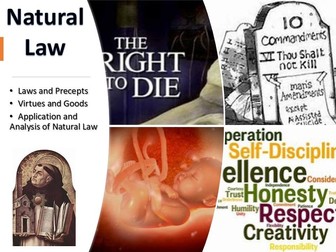
Aquinas’ Virtues and Goods Resource Pack Make teaching these tricky Religion and Ethics topics straightforward with this complete, ready-to-use pack! What’s included: One PowerPoint that covers: The need for humans to be more God-like by developing the three revealed virtues (faith, hope and charity) and four cardinal virtues (fortitude, temperance, prudence and justice). Aquinas’ definition of different types of acts and goods. Internal acts (the intention of the moral agent when carrying out an action) and external acts (the actions of a moral agent). Real goods (correctly reasoned goods that help the moral agent achieve their telos) and apparent goods (wrongly reasoned goods that don’t help the moral agent achieve their God given purpose). The Principle of Double Effect. Sample Essay Questions Exemplar Essays Student writing framework: helps students structure exam-style responses. Completed exemplar answers: perfect for modelling, teacher reference, or feedback. Key Features: Clear, engaging slides that break down complex concepts step by step. Ready-made structure saves hours of planning. Fully adaptable to different exam boards (based on Eduqas Philosophy of Religion and Religion and Ethics). Supports students with scaffolding and model answers. This resource gives you everything you need to teach, explain, and assess these challenging topics with confidence — whether you’re introducing them for the first time or revising before exams.
Max Stirner's Ethical EgoismQuick View
AGE12

Max Stirner's Ethical Egoism

(0)
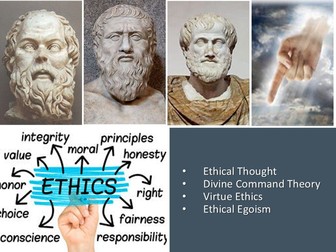
Ethical Egoism Resource Pack Make teaching these tricky Religion and Ethics topics straightforward with this complete, ready-to-use pack! What’s included: One PowerPoint that covers: The difference between altruism and egoism The Distinction between Ethical Egoism and Psychological Egoism Long-term and Short-term Self-interests Introduction to Max Stirner The difference between rational egoism and psychological egoism Uniqueness and the Self The ‘Spook’ Union of Egoists Evaluation of Stirner’s Teachings Student writing framework: helps students structure exam-style responses. Completed exemplar answers: perfect for modelling, teacher reference, or feedback. Key Features: • Clear, engaging slides that break down complex concepts step by step. • Ready-made structure saves hours of planning. • Fully adaptable to different exam boards (based on Eduqas Philosophy of Religion and Religion and Ethics). • Supports students with scaffolding and model answers. This resource gives you everything you need to teach, explain, and assess these challenging topics with confidence — whether you’re introducing them for the first time or revising before exams.
Pesach - Jewish PassoverQuick View
AGE12

Pesach - Jewish Passover

(0)
Twelfth of thirteen PowerPoint lessons from the Jewish Practices section of the Eduqas GCSE course on Judaism. By the end of this lesson, students will understand the significance of Passover and be able to describe how Jews prepare for and celebrate the festival. They will be familiar with key terms and customs related to Pesach, including Bedikat Chametz, the Seder, the Four Questions, the Four Promises, and the Haggadah. Additionally, students will grasp the importance of the prophet Elijah and the central theme of freedom in the celebration. The PowerPoint includes classwork, extension activities, and homework questions together with model answers, enabling students to engage in DIRT (Dedicated Improvement and Reflection Time). It also includes a starter activity, key terms, a plenary, key points for discussion and recommended video clips, which are embedded within relevant slides of the PowerPoint. There is an accompanying booklet for the whole Jewish Practices module to accompany this PowerPoint free-of-charge. The PowerPoint and accompanying booklet serve as an excellent resource for non-specialist teachers and is ideal for independent lesson planning. For specialist teachers, it offers a comprehensive foundation to which they can add their own expertise and creativity.
The Afterlife (Judaism)Quick View
AGE12

The Afterlife (Judaism)

(0)
Eighth of nine PowerPoint lessons from the Jewish Beliefs section of the Eduqas GCSE course on Judaism. This concise lesson explains Jewish beliefs about the afterlife (Olam HaBa) and explores the differing perspectives of Orthodox and Reform Jews. It serves as an excellent resource for non-specialist teachers and is ideal for independent lesson planning. For specialist teachers, it offers a comprehensive foundation to which they can add their own expertise and creativity. All classwork, extension activities, and homework questions come with model answers within the PowerPoint, enabling students to engage in DIRT (Dedicated Improvement and Reflection Time). The lesson includes a starter activity, key terms, a plenary, key points for discussion and recommended video clips,which are embedded within relevant slides of the PowerPoint. An accompanying booklet for the lesson series is also available in both standard and large print formats.
Mitzvot and FreewillQuick View
AGE12

Mitzvot and Freewill

(0)
Seventh of nine PowerPoint lessons from the Jewish Beliefs section of the Eduqas GCSE course on Judaism. This brief lesson explores Jewish teachings on sin, the devil, and free will, while examining why God permits evil and suffering. It serves as an excellent resource for non-specialist teachers and is ideal for independent lesson planning. For specialist teachers, it offers a comprehensive foundation to which they can add their own expertise and creativity. All classwork, extension activities, and homework questions come with model answers within the PowerPoint, enabling students to engage in DIRT (Dedicated Improvement and Reflection Time). The lesson includes a starter activity, key terms, a plenary, key points for discussion and recommended video clips,which are embedded within relevant slides of the PowerPoint. An accompanying booklet for the lesson series is also available in both standard and large print formats.
The Nature of God (Judaism)Quick View
AGE12

The Nature of God (Judaism)

(0)
This is the second of nine PowerPoint lessons in the Jewish Beliefs section of the Eduqas GCSE course on Judaism. It opens with an activity exploring students’ perceptions of God, aiming to highlight the distinction between their views and those of the Jewish patriarchs. The lesson defines the character of the God of Abraham and incorporates quotes from Maimonides and Judah Ha-Levi. Key teachings on the Shema and the Shekinah are also included. It serves as an excellent resource for non-specialist teachers and is ideal for independent lesson planning. For specialist teachers, it offers a comprehensive foundation to which they can add their own expertise and creativity. All classwork, extension activities, and homework questions come with model answers within the PowerPoint, enabling students to engage in DIRT (Dedicated Improvement and Reflection Time). The lesson includes a starter activity, key terms, a plenary, key points for discussion, and recommended video clips, which are embedded within the notes section of relevant PowerPoint slides. An accompanying booklet for the lesson series is also attached in both standard and large print formats.
Shabbat - Jewish SabbathQuick View
AGE12

Shabbat - Jewish Sabbath

(0)
Fifth of thirteen PowerPoint lessons from the Jewish Practices section of the Eduqas GCSE course on Judaism. By the end of the lesson, students will be familiar with the 39 Melachot and the significance of an eruv. They will also be able to explain in detail the three distinct stages of Shabbat: preparation, celebration, and Havdalah. The PowerPoint includes classwork, extension activities, and homework questions together with model answers, enabling students to engage in DIRT (Dedicated Improvement and Reflection Time). It also includes a starter activity, key terms, a plenary, key points for discussion and recommended video clips, which are embedded within relevant slides of the PowerPoint. There is an accompanying booklet for the whole Jewish Practices module to accompany this PowerPoint free-of-charge. The PowerPoint and accompanying booklet serve as an excellent resource for non-specialist teachers and is ideal for independent lesson planning. For specialist teachers, it offers a comprehensive foundation to which they can add their own expertise and creativity.