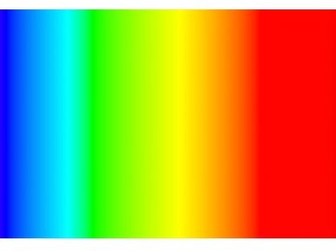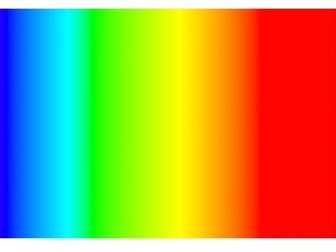
Coloured filter worksheet for pupils to predict the colour of light that will pass through a filter or combination of filters. It can used at KS3 or GCSE. I found it a challengin enough recap/intro when going through idea with the AQA GCSE course
Multiple choice questions designed for use with AQA A-level. Although this part of the course is not examined by multiple choice I find it useful in testing the syllabus as well as preparing students for multiple choice style questions in general
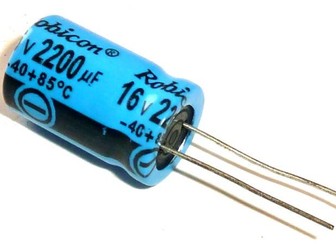
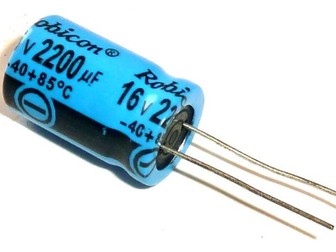
A bunch of questions I use to teach/assess/homework for A-level physics for the capacitor part of the course. I have used for AQA and OCR although questions are generic.
KS3 test on light. Word file with a few extra extension questions for v able pupils. Can be cut and pasted to form other assessments. Mainly reflection, pinhole camera, shadows.
A game I use for revision at the end of the thermal physics section of AQA A-level physics. Content must be enabled to work. Split the group in two teams and number is chosen. One member of each team comes up to a buzzer. First to hit it gets the chance to answer. If they get it right the square turns their colour, if they get it wrong it goes to the other team. Next two players take a turn until one team has made a chain of their colour from either top to bottom or side to side. Don’t save after playing (or save a clean version) or it takes a while to return the squares to the same colour.
Worksheet on what different flags will look like when viewed through primary and secondary coloured filters. This is a fun activity which helps pupils to think about what happens to the different components of white light when they pass through filters. Useful for KS3, I have also used with AQA GCSE (9-1).
Analogy of selling corn. Starter enables to see if they can work out how long it takes to decrease to a certain amount if half are sold each day. The more mathematically able can get it fairly soon and apply the idea to radioactivity.
5 Specific Charge multiple choice questions. I use as weekly assessment to check on understanding but could also be used as a worksheet or part of a homework.
A game I use for revision at the end of the particle physics section of AQA A-level physics. Content must be enabled to work. Split the group in two teams and number is chosen. One member of each team comes up to a buzzer. First to hit it gets the chance to answer. If they get it right the square turns their colour, if they get it wrong it goes to the other team. Next two players take a turn until one team has made a chain of their colour from either top to bottom or side to side. Don’t save after playing (or save a clean version) or it takes a while to return the squares to the same colour.
Insulation practical. Suitable for KS3 or 4 after pupils have learned about conduction, convection , radiation heat transfer. Pupils have to decide the most effective form of insulation on a budget. Practical can lead on to produce cooling curves, or homework can be set to complete a information sheet about the design saying which materials were chosen and why.
A game I use for revision at the end of the quantum physics section of AQA A-level physics. Content must be enabled to work. Split the group in two teams and number is chosen. One member of each team comes up to a buzzer. First to hit it gets the chance to answer. If they get it right the square turns their colour, if they get it wrong it goes to the other team. Next two players take a turn until one team has made a chain of their colour from either top to bottom or side to side. Don’t save after playing (or save a clean version) or it takes a while to return the squares to the same colour.
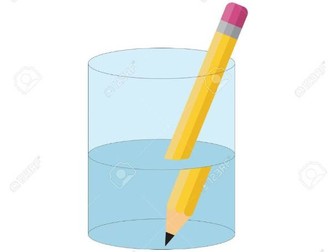
PowerPoint going through the derivation of Smell’s Law. It is used to show where it comes from. Although not required it does highlight how the change in speed causes the change in angle.
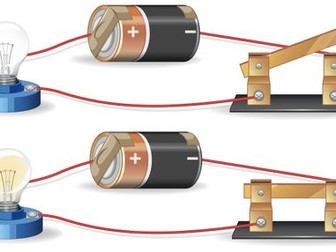
GCSE Electricity Blockbusters game, based on the original. Board is numbered 1 to 25. Group is spilt into 2 teams. One member of each team takes turns to come up to the buzzer to answer a question. First to buzz answers. Correct the hexagon turns their colour, wrong it goes to the other team. Winning team chooses next hexagon number. Repeat until either red team creates a complete chain left to right or green team creates one from top to bottom. Used at GCSE level after electricity section with AQA course but can used with others although may require the odd tweak. Individual questions can be easily changed if needed.
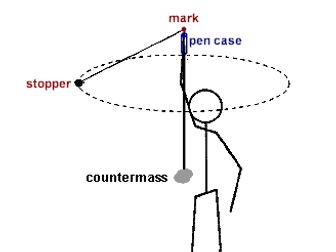
AQA A-Level Paper 3 Practical Practice Paper. Designed to involve some of the topics that may well come up in the exam (capacitors, pendulum, determining an unknown experimental power). 45 marks like the real. I have found it useful with my class as there aren’t that many past papers to go at. Includes a mark scheme
GCSE practical. Orginally designed to compare the power of bicep curls compared with step ups via calculation of the gain in gravitational potential energy (both sheets included). I have done this with a range of lift variations sometimes as a whole class practical or sometimes just measure one volunteer as an example (can be compared with teachers power). I have also included a variation where the calculation is completed via work done, as some courses leave GPE calculations until later.