By the end of this lesson students will:
Know what eschatology means
Understand what Catholics mean when they talk about heaven, hell, purgatory, resurrection and judgement.
Evaluate different ideas about heaven.
Clear,colourful Power Point presentation. This lesson begins with a quick starter activity as a revision aid. It moves onto a list of key words and uses pictures and a You Tube clip to reinforce the aim of the lesson.
Following the SOW/Specification, students interact with points raised and learn the art of note taking without realising!
Students will understand the different ways in which Xtians celebrate Holy Communion & consider the different ways in which Xtians understand Holy Communion.
A colourful and easy to follow Power Point presentation ensures that Students will have a clear understanding of what is meant by the Church and understand what help the Church provides for local communities, e.g. food banks & Street Pastors.
The lesson can be done over two periods and begins with a quick starter question, followed by a list of keywords.
Information is easy to follow and allows for interactive discussion. A sheet is included for a task, which can be done in pairs or individually.
Following the suggested Scheme of Work, students will be able to understand the difference between the Arhat & the Bodhisattva.
Students will be able to explain the importance of the Bodhisattva for the individual & for the Buddhist community. Slide 7 of the Power Point presentation, the six perfections, may be printed and stuck in students books. The lesson ends with an exam practice question.
What are ‘ethics’
Does the word mean the same to everyone.
Spartans and their selection method…was it right or wrong? why? What is the basis of their answers.
Utilitarian approach.
John Locke’s blank slate.
Does altruism exist?
Absolutism
Relativism
A colourful and easy to follow Power Point presentation. This lesson follows the Specification/SOW where students focus on a critical exploration of mission & evangelism as a priority for Christians & church communities & Church growth.
Key words begin the lesson , which includes useful sources of wisdom.
The clever use of marketing is explored in attracting new members and allows for wider discussion.
Students can either do the following activity in class if they have access to computers or as homework: Research the Church Army & the Alpha Course & critically evaluate each one.
Reinhard Bonnke & the Christ for all Nations are introduced.
The lesson concludes with a question.
An easy, colourful Power Point presentation following the specification. Students will focus on the practices associated with pilgrimage & their importance to individuals & to the church, as exemplified in two quite different places of pilgrimage. Computer access is needed for this lesson in order to conduct research. The lesson
clearly defines ‘pilgrimage’ and the main reasons for going on one. It outlines the effects and brief history of pilgrimage.
If students are unaware of the story of St Bernadette, a clip is included to illustrate the vision experienced. Lourdes and Iona are used by way of contrast.
This lesson is easily adapted to build on the strengths of a class.
This colourful and easy to follow Power Point presentation begins with a quick starter question and follows the Specification where students will focus on the religious meaning of Christmas & how its celebration impacts individuals, church & wider society. Students will be introduced to the celebration of Easter and the use and meaning of Paschal candles.The lesson ends with an exam essay skills building activity.
A colourful and easy to follow lesson recapping the Parable of the Sheep & Goats
COMPUTERS NEEDED:
Students will focus on gaining an understanding of the work & explain the motivation behind the work of one or more of the named agencies;
They will research:
CAFOD (Catholic Agency For Overseas Development),
Christian Aid,
Tearfund,
is in response to the teaching of Jesus.
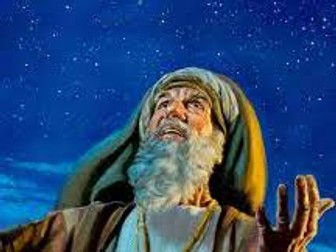
An introduction to Abraham and his total faith in God.
This lesson is based around a 25 minute clip which should be stopped at different points to allow questions and discussion, or recording of short answers.
This Power Point presentation focuses on the AQA Scheme of Work .Students will understand the role of Jesus’ crucifixion & resurrection in salvation. They will know & understand the idea of atonement in salvation and look at the Catholic Sacrament of Reconciliation. This lesson allows for discussion and concludes with an exam skills building activity.
This Power Point presentation allows the students to understand the beliefs & teachings of the incarnation & Jesus as the Son of God. The focus is on the theological concept of incarnation & its meaning rather than just the birth stories.
The lesson starts with a ‘game’ - a popcorn quiz which is a revision tactic. Questions can be from any lesson covered thus far. Keywords are listed and exam practice concludes the lesson.
Following the suggested AQA scheme of work, this Power Point presentation focuses on the examination requirement that students will be able to give examples of suffering & be able to describe how suffering is caused by ignorance, greed & hate. The Wheel of Life & the three poisons are explained in a clear way. The lesson concludes with an exam skills building exercise.
Following AQA’s suggested Scheme of Work, this lesson focusses on Students being able to identify the Four Sights experienced by the Buddha when he left the Palace.
Students will be able to explain the effects of these sights on the Buddha & his subsequent decision to leave the Palace.
This lesson takes the form of a Power Point presentation, setting out keywords and information supported by appropriate You Tube clips. The lesson concludes with a skills building examination style question.
Following AQA’s suggested Scheme of work, Students will be able to explain why the Buddha initially chose an ascetic path.
Students will be able to describe aspects of the Buddha’s ascetic life.
Students will be able to explain why the Buddha turned away from the ascetic path.
This Power Point presentation begins with a ‘popcorn quiz’ activity. Student 1 asks a question based on previous RS Buddhism lesson of a 2nd student. If answered correctly, that student sets a question based on their RS lessons of a 3rd student. If there is a chain of three correctly answered questions the whole class gets a prize. (House points or similar…I awarded chocolate…a great tool for learning!).
Keywords are listed and a Buddhist Source of Wisdom introduced for suffering. This PPt includes a supporting handout.
Following the suggested Scheme of work, students will focus on understanding key differences between liturgical, non-liturgical (informal) & private worship. They will understand what is meant by worship & its importance for Xtians (Christians).
This Power Point presentation sets out important Key words. Information is supported with discussion opportunities, You Tube clips and a handout.
Following the suggested Scheme of Work, Students will be able to describe the Five Aggregates in Theravada Buddhism & how they form the human personality.
Students will be able to relate the belief in anicca & anatta. The class is divided into small groups or pairs to complete an activity.
Following the suggested Scheme of Work, students will be able to explain the concept of dependent arising and to provide examples from the natural world to illustrate the belief. This Power Point presentation is clear and easy to follow, allowing for all levels of ability. Beginning with a ‘popcorn quiz’, It concludes with an exam practice activity. A short multiple choice quiz and a colourful copy of the Tibetan Wheel of Life is also included.
Following the AQA suggested Scheme of work, students will be able to explain how enlightenment marks the end of craving (tanha).
Students will be able to describe the various interpretations of nibbana (nirvana) and the importance & impact of nibbana for the Buddhist. This Power Point presentation allows for discussion and begins with a list of Keywords. The lesson concludes with an exam practice exercise.