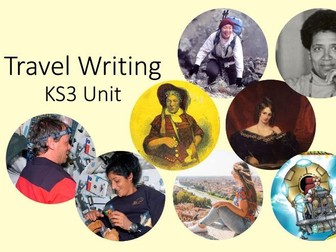
This unit is appropriate for Year 8 or Year 9 students and is made up of 12 lessons, an assessment preparation lesson, and an assessment lesson.
Extracts range from Mary Shelley’s diaries to diary entries from NASA astronauts.
Lessons and activity focus on the following reading skills:
Understanding a variety of 19th 20th and 21st century non-fiction and fiction texts focusing on different types of travel
Understanding the positive and negative parts of texts
Understanding different forms of travel writing – diaries, journals, blogs, information leaflets, fiction, articles
Understanding the difference between the author / journalist and the subject within the text, and the difference between their opinions and the reason for their crafting
Analysing writers’ language and craft
Writing analytical paragraphs
Selecting and using effective quotations
Comparing main ideas and writers’ use of language
Comparing the authors in the text, their positionality and contexts
Understanding how writers adapt their craft to the interests of their intended audience and purpose
Lessons and activities focus on the following writing skills:
Structuring information leaflets and blogs / articles
Using content, language and tone to appeal to a desired reader
There are two reading outcomes that can be marked ahead of the assessment, and two writing outcomes.
The assessment focuses on reading and comparison skills.
Four extracts and reading comprehension worksheets based on texts about the natural world:
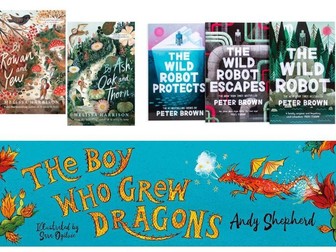
By Oak, Ash and Thorn by Melissa Harrison
The Boy Who Grew Dragons by Andy Shepherd
The Wild Robot by Peter Brown
By Rowan and Yew by Melissa Harrison
Suitable for Year 4-6, and maybe Year 7 to build comprehension skills and an enjoyment of reading.
Can be used to expand out into a wider topic unit based on the natural world, or as cover work or even as the basis for a standalone reading assessment.
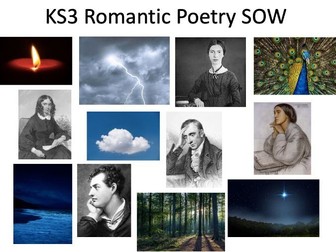
A set of 16 lesson slides focusing on six short, accessible Romantic poems as an introductory poetry unit suitable for Year 7-8.
The SOW includes:
16 lessons, with structured powerpoints for all lessons
Resources for all lessons included in the powerpoints
A suggestion at the start of each powerpoint about how to deliver the lesson and adapt it up / down depending on the ability of your class
Lessons on context
A gradual building up to students analysing poems and writing analytical response independently
A focus on key ideas in the poems, poetic techniques, the Romantic context and comparison
A booklet including all of the poems
Included in the poetry booklet: simple homework tasks suggestions
A final assessment task
The SOW does not include a separate planning document with an overview of all lessons.
Learning objectives are framed as questions for almost all lessons, and a variety of tasks are included to support adaptive teaching and inclusion of all students.
Poems include:
A Birthday - Rossetti
Hope is a Thing With Feathers - Dickinson
Lucy - Wordsworth
Sonnet 43 - Browning
Pleasure in the Pathless Wood - Byron
The Moon… - Dickinson
Daffodils - Wordsworth (included for optional independent study / stretch but no lesson included)
A Poison Tree - Blake (included for optional independent study / stretch but no lesson included)
The poems are suitably simple as to enable access and enjoyment on a surface level, but also complex enough to challenge the interpretive thinking of more able students, particularly when making the connection to the Romantic context.
A KS3 Greek Myths SOW designed for majority EAL students, so has a significant grammar focus. It takes students through word classes up to developing different sentence forms for descriptive and narrative writing. It also includes specific foci on writing structure, characterisation and descriptive techniques, culminating in a narrative writing assessment.
The SOW is engaging and integrates grammar with literature in an exciting way. It includes drama, group work, research projects, kinaesthetic activities and extended writing suitable for KS3 students.
This SOW includes:
- x 14 lessons, including an assessment and review
- Worksheets with clear instructions for group work lessons
- Resources and activities
- Written lesson plans for each lesson
- A diagnostic grammar test
This SOW does not include:
- Extracts of Greek myths
Page numbers and extracts referred to in the SOW are from Geraldine McCaughrean’s ‘Greek Myths’ (New Windmill version, 1997)
Please note: the assessment and review use the old KS3 AF grid.
Full essay title: Reread from ‘JIM: (looks at her a moment)’ to ‘he’ll come back’ – pp.69-70. How does Miller make this such a dramatic and revealing moment in the play?
A high level, teacher-written essay and essay plan focusing on Larry as a dramatic device. Has been used successfully with middle and higher ability students for:
Reading, collecting and discussing interpretations
Modeling high level essay writing
Transforming the essay into a character profile/ themes grid
Debate and developing multiple interpretations
General plot and content revision
An introduction to reading essays as literary criticism in preparation for KS4
Scheme of work and resources for the teaching of ‘Skellig’ to Year 7. Writing and reading assessment and planning questions included - descriptive passage, “The Day You Met Your Hero” and analytical literary response on the use of religion in the text. A focus throughout on grammar and spelling rules.
The full download includes:
Skeleton lesson plans - easily adapted to your department pro forma
Powerpoint slides
Accompanying lesson resources
Spelling lists (at the start of powerpoints)
A high level, teacher-written essay and essay plan focusing on Larry as a dramatic device. Has been used successfully with middle and higher ability students for:
Reading, collecting and discussing interpretations
Modeling high level essay writing
Transforming the essay into a character profile/ themes grid
Debate and developing multiple interpretations
General plot and content revision
An introduction to reading essays as literary criticism in preparation for KS4
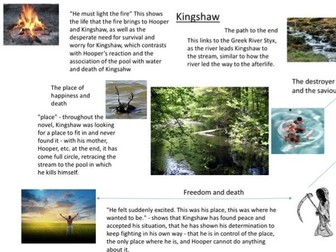
Visual-rich slides exploring the symbolic meaning of the interior and exterior settings of ‘I’m the King of the Castle’ and their significance to Kingshaw and Hooper:
Hangwood
Leydell Castle
the shed
the tractor field
Includes key quotations and space for annotations, and additional discussion notes.
A series of essay-writing tips for GCSE revision focusing on Macbeth . Useful as a revision guide for higher ability students, or as a CPD resource for teachers to improve teaching and learning around essay writing. Covers:
Planning
Language analysis
Exam timings
High level essay phrasing
Thesis statements
Example questions and plans for essay-writing practice
Model essay paragraphs focusing on structural analysis
Model introductions
Selecting points for an argument
Dramatic devices
A skills builder booklet appropriate for KS3 students using a short extract from Zora Neale Thurston’s ‘Their Eyes Were Watching God’ to explore analytical skills (comprehension, language analysis, characterisation, structure).
A great extract for exploring use of the vernacular (American South), and empowered female characters.
In this unit students will be developing the key concepts and processes through learning about how Conan Doyle’s original ‘Sherlock Holmes’ stories have been adapted for a variety of moving image, including the 2009 film version starring Robert Downey Jr. and the 1984 television version with Jeremy Brett. Students will develop their understanding of features of the detective genre and detective hero, and their understanding of the author’s craft by analysing the writing of an author from the literary heritage.
Students will be required to complete a descriptive, ‘what happened next’ writing task, which will assess their written skills in three areas:
Writing imaginative and thoughtful texts
Using paragraphs
Using interesting vocabulary
The unit will also implicitly develop their understanding of relating texts to their social, cultural and historical traditions.
The unit aligns itself with GCSE English Language units in Creative Writing and English Literature, 19th century texts.
All resources included:
Skeleton SOW - easily adapted for your school pro formas
Skeleton lesson plans - easily adapted for your department’s pro formas
Basic powerpoints
Extracts
Video clips
Relevant images
Selected Sherlock Holmes short stories (pdf)
Homework sheet
Creative writing assessment and planning sheet
Worksheets
Aims of Unit:
Pupils will understand how the different devices used in effective speeches help speakers to achieve their intended purpose.
Students will explore a range of different historical and current figures and topics including war, non-violent protest, human rights, colonisation and oppression, emancipation of women, terrorism and free speech. They will consider aspects of equality, empathy and explore and express different emotions in their performances. Pupils will be working in partners and groups throughout lessons and learn to debate and disagree respectfully.
Extracts of speeches from historical and literary characters:
• Queen Elizabeth I
• Gandhi
• Earl Spencer
• Barack Obama
• Harvey Milk
• Henry V
• Sam Gamgee
• Desdemona
• King George V
• Ted Kramer
• Sojourner Truth
The unit includes:
A skeleton medium term plan - easily adaptable to your school pro forma
A skeleton scheme of work with lesson by lesson plans - easily adaptable to your department pro forma
All extracts
Model written outcomes
Content grid of everything included in the SOW
Assessment suggestions
Multiple choice questions for each week
Relevant worksheets and planning sheets
High band unseen poetry response to Kevin Halligan’s ‘The Coackroach’. Includes a version of the essay with prompt questions to deconstruct and annotate the key skills demonstrated. Great as an independent resource for high level students, or a visualiser / whole class resource for other groups.
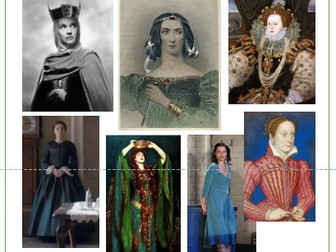
Six activity worksheets to stretch and challenge students to approach a reading of Macbeth from a feminist perspective.
Perfect for more able students who have a good understanding of the text and want to go beyond a straightforward reading and get their teeth into something a little more interesting.
These worksheets don’t provide students with an in depth explanation of feminist literary theory or even the standard contextual information about women in Jacobean England / 11th century Scotland, but guide students to focus on extracts, characters and stagecraft that focus on the female characters and their experiences, and therefore provide more interesting interpretations of the text.
How to use these worksheets
As independent study activities, homework or revision tasks once students have a confident knowledge of the text.
As prompts for group / whole class discussions supported by the teacher.
As prompts for text / extract annotation.
To prepare for the essay questions included.
As a planning prompt to transform into more structured lesson resources (e.g. powerpoints) for teacher delivery.
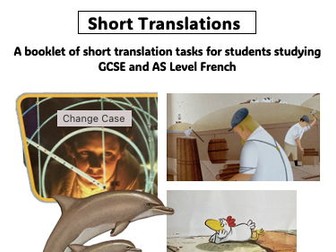
A fun French translation booklet with six extracts to translate from French to be used as starters / homework tasks appropriate for GCSE / AS Level students.
Extracts are taken from authentic French children’s books, encyclopedias, magazines and bandes dessinés with engaging visuals to put a little bit of fun, and ‘real life’ French into your students’ lives.
Translations and accepted translations given at the back of the booklet for self-checking or teacher marking.
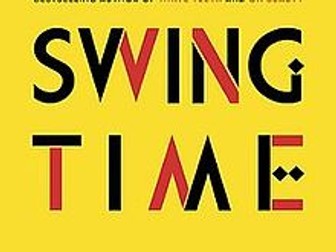
An AQA-style Paper 1 Section A skills booklet exploring an extract from Zadie Smith’s ‘Swing Time’.
Four developed activities to support with Q1-4 skills culminating in a practice paper (Section A). Perfect for using on the visualiser, for independent study / homework / revision, or for a straightforward and enjoyable series of 3-4 lessons.
Extract explores mother-daughter relationships so makes a great compliment to ‘Romeo and Juliet’.
Five AQA-style Language P1Q5 guided writing tasks. Task sheets include:
An interesting and culturally enriching image - normally a section of a celebrated piece of art
A series of creative and exploratory questions to support idea generation, structure, sensory descriptions and planning
Perfect as a one-resource double lesson (planning / exploration, and then writing), as a homework, revision or cover lesson task.
Enough Language Paper 2 Practice papers to resource a whole term - maybe two!
This bundle includes practice papers and skills booklets aligned with AQA Language Paper 2:
Military Wives Section A and B stepped booklet (texts from Mrs Duberly (19th C) and a Guardian film review)
Acts of Heroism Practice Paper Section A and B (texts about Alice Ayres (19th C) and Rosamund Halsey Carr)
Amy Johnson Section A skills booklet
Native American Trails Practice Paper Section A (texts from Lewis and Clarke (19th C) and the Guardian)
Leaving the Royal Family Practice Paper Section A (texts from Prince Harry and Prince Edward VIII (early 20th C))
Protests Section B research and writing task booklet
Can be used to resource Language schemes of work, as practice / revision assessment papers, homework booklets or independent study / cover work.
Provides a variety of texts with thematic links to different Literature set texs (e.g. Military Wives / war poetry, Leaving the Royal Family / Macbeth) and a diverse range of female voices, particularly tricky-to-find historical female voices.
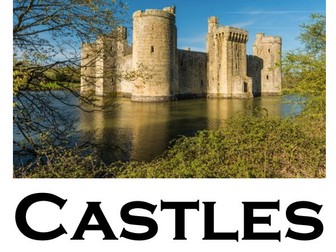
Five AQA-style English Language Paper 1 Section A practice paper using extracts that include castles. Extracts include:
Dracula by Bram Stoker
I Captured the Castle by Dodie Smith
The Mysteries of Udulpho by Ann Radcliffe
The Horse and His Boy by CS Lewis
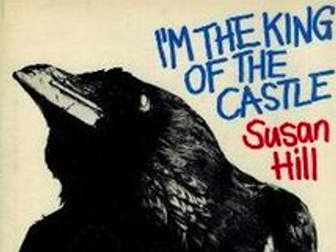
I’m the King of the Castle by Susan Hill
Appropriate for a good range of ability levels and interests with the older texts providing more challenge.
Can be used in class under the visualiser, as exam practice, for homework or revision, or practice assessments for Year 10 or Year 11.
 Quick View

 Quick View
 Quick View
 Quick View
 Quick View
 Quick View
 Quick View
 Quick View
 Quick View
 Quick View
 Quick View
 Quick View
 Quick View
 Quick View
 Quick View
 Quick View
 Quick View
 Quick View
 Quick View
 Quick View