Investigating Adaptation of Birds’ Beaks (Galapagos study)Quick View
Discovering_Galapagos

Investigating Adaptation of Birds’ Beaks (Galapagos study)

(3)
Explore adaptation in this activity and how and why birds’ beaks are shaped differently. Meet some of our Galapagos feathery friends! Suitable for KS2. Linked to current National Curriculum. You can find further resources on the Galapagos Conservation Trust website, under Our Work and Educational Resources.
Climate change and the marine iguana (Galapagos study)Quick View
Discovering_Galapagos

Climate change and the marine iguana (Galapagos study)

(1)
In this activity students are introduced to climate change and its effects on the wildlife of the Galapagos archipelago, including the marine iguana. Suitable for KS2 and 3. Linked to current National Curriculum. You can find further resources on the Galapagos Conservation Trust website, under Our Work and Educational Resources.
Conservation and sustainability (Galapagos study)Quick View
Discovering_Galapagos

Conservation and sustainability (Galapagos study)

(1)
Explore conservation and biodiversity, and consider why the Galapagos is so biodiverse. Using a case study from the Islands and other examples, students will have the opportunity to investigate conservation initiatives and their implications on stakeholders. Suitable for KS3. Linked to current National Curriculum. You can find further resources on the Galapagos Conservation Trust website, under Our Work and Educational Resources.
Amazing adaptations - The marine iguana (Galapagos study)Quick View
Discovering_Galapagos

Amazing adaptations - The marine iguana (Galapagos study)

(0)
Discover the fascinating story of the marine iguana, from how they colonised the Galapagos Islands as land iguanas and eventually diverged to become a different species. The amazing adaptations of the marine iguana will be revealed! Suitable for KS2 and 3. Linked to current National Curriculum. You can find further resources on the Galapagos Conservation Trust website, under Our Work and Educational Resources.
A story of Evolution - A Finch's Tale (Galapagos Study)Quick View
Discovering_Galapagos

A story of Evolution - A Finch's Tale (Galapagos Study)

(0)
Millions of years ago a little flock of birds made the perilous journey across the Pacific Ocean to the Galapagos Islands. These were the ancestors of the finches that live there today. Learn about their journey of evolution from one species to the 13 distinct species of today. Suitable for KS2 and 3. Linked to current National Curriculum. You can find further resources on the Galapagos Conservation Trust website, under Our Work and Educational Resources.
Teach evolution in a day! (Galapagos study)Quick View
Discovering_Galapagos

Teach evolution in a day! (Galapagos study)

(0)
Eager to explore evolution but need some help? Use our comprehensive resource to teach everything your students need to know through great examples from Galapagos. Suitable for KS2. Linked to current National Curriculum. You can find further resources on the Galapagos Conservation Trust website, under Our Work and Educational Resources.
Sustainable tourism (Galapagos study)Quick View
Discovering_Galapagos

Sustainable tourism (Galapagos study)

(0)
Investigate the history of tourism in the Galapagos, why do tourists visit and what is the impact of increased numbers? Suitable for KS3. Linked to current National Curriculum. You can find further resources on the Galapagos Conservation Trust website, under Our Work and Educational Resources.
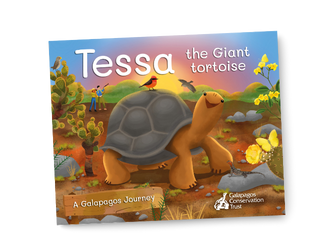
KS1 Science through storytelling: Tessa the Giant Tortoise: A Galapagos Journey.Quick View
Discovering_Galapagos

KS1 Science through storytelling: Tessa the Giant Tortoise: A Galapagos Journey.

(0)
Bringing science into the classroom through storytelling. A KS1 science reading resource: Tessa the Giant Tortoise: A Galapagos Journey. Join Tessa, a 60 year old female giant tortoise, as she makes her annual migration on the Galapagos Islands. Through exploring the difficulties she faces on her journey, children will learn and reflect on the positive relationship we can have with nature through everyday environmentally friendly actions, as well as learning more about the animals that call Galapagos their home. Our activity guide offers fun and engaging resources linked to the digital version book pages. You can find further resources on the Galapagos Conservation Trust website, under Our Work and Educational Resources.
Classification and Keys (Galapagos Study)Quick View
Discovering_Galapagos

Classification and Keys (Galapagos Study)

(0)
How can taxonomic keys be used to classify living organisms? Students can test their classification skills on Galapagos plants and animals. Suitable for KS2. Linked to current National Curriculum. You can find further resources on the Galapagos Conservation Trust website, under Our Work and Educational Resources.
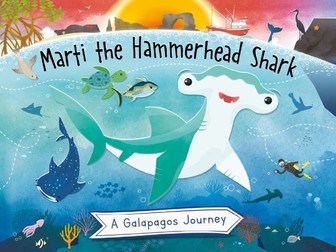
KS2 Guided reading sessions for home and school: Marti the Hammerhead SharkQuick View
Discovering_Galapagos

KS2 Guided reading sessions for home and school: Marti the Hammerhead Shark

(0)
KS2 Guided reading sessions for home and school: Marti the Hammerhead Shark Dive into storytelling with our free six-part guided reading session pack for teachers, parents, and carers to use in the classroom or at home! For KS2 readers, our comprehensive resources are based on the story of Marti the Hammerhead Shark: A Galapagos Journey. We believe storytelling is a fantastic and fun way to engage children in the world of science and conservation. Together you can learn about the animals that call the waters around Galapagos home as well as the conservation threats that these species face. You can find further resources on the Galapagos Conservation Trust website, under Our Work and Educational Resources.
Evolution of a Mockingbird (Galapagos study)Quick View
Discovering_Galapagos

Evolution of a Mockingbird (Galapagos study)

(0)
Explore Darwin’s journey of discovery, unravel the mystery of the mockingbird and learn how this inquisitive bird led to Darwin’s questioning of the origin of species. Suitable for KS2 and 3. Linked to current National Curriculum. You can find further resources on the Galapagos Conservation Trust website, under Our Work and Educational Resources.
Changing environments - Invasive species (Galapagos study)Quick View
Discovering_Galapagos

Changing environments - Invasive species (Galapagos study)

(0)
Discover Galapagos invasions! Explore the invasive species of the islands and their impact on native flora and fauna. Suitable for KS2 and 3. Linked to current National Curriculum. You can find further resources on the Galapagos Conservation Trust website, under Our Work and Educational Resources.
Evolution of the flightless cormorant (Galapagos study)Quick View
Discovering_Galapagos

Evolution of the flightless cormorant (Galapagos study)

(0)
Explore the fascinating world of a bird that has lived since the age of dinosaurs. Learn about the flightless cormorant and how it is suited to hunt in an aquatic environment. Suitable for KS3. Linked to current National Curriculum. You can find further resources on the Galapagos Conservation Trust website, under Our Work and Educational Resources.
Food chains and webs (Galapagos study)Quick View
Discovering_Galapagos

Food chains and webs (Galapagos study)

(0)
Introduce students to food webs and food chains using the wildlife of the Galapagos for illustration. Test your knowledge using our exciting animation as a guide. You can find further resources on the Galapagos Conservation Trust website, under Our Work and Educational Resources.
Sustainability Principles (Galapagos study)Quick View
Discovering_Galapagos

Sustainability Principles (Galapagos study)

(0)
Explore the concept of sustainability and sustainable development, using the Galapagos Islands as a focus. Consider the three main elements or pillars of sustainability and investigate and reason ways to manage issues in a sustainable way. Suitable for KS3. Linked to current National Curriculum. You can find further resources on the Galapagos Conservation Trust website, under Our Work and Educational Resources.
GCSE Biological Sampling  (Galapagos data case study)Quick View
Discovering_Galapagos

GCSE Biological Sampling (Galapagos data case study)

(0)
Are populations of Marine Iguana at critically low levels? Use current scientific data to investigate how biological sampling can protect vulnerable species in this exciting case study. Objectives link to National Curriculum, AQA and OCR standards for GCSE Biology. Galapagos Conservation Trust is the only UK registered charity that solely focuses on the conservation and sustainable development of the Galapagos Islands. We depend entirely on voluntary donations and by kindly paying for our resource, you will directly be supporting conservation on the Islands. Thank you. You can find further resources on the Galapagos Conservation Trust website, under Our Work and Educational Resources.
Colonisation of islands (Galapagos study)Quick View
Discovering_Galapagos

Colonisation of islands (Galapagos study)

(0)
Introduce students the concept of colonisation of species on islands. Students will have the opportunity to use their thinking and reasoning skills to consider how the species colonised the islands, and where some of them may have originated from. Suitable for KS2 and 3. Linked to current National Curriculum. You can find further resources on the Galapagos Conservation Trust website, under Our Work and Educational Resources.
Gene banks to maintain biodiversityQuick View
Discovering_Galapagos

Gene banks to maintain biodiversity

(0)
This case study takes students to the Millennium Seed Bank and shows how scientists are working hard to preserve many of the world’s plant species. Suitable for KS2 and 3. Linked to current National Curriculum. You can find further resources on the Galapagos Conservation Trust website, under Our Work and Educational Resources.
Living sustainably (Galapagos study)Quick View
Discovering_Galapagos

Living sustainably (Galapagos study)

(0)
Investigate how the increasing population of Galapagos inevitably leads to an increased demand for power and the issues arising from this. Study renewable sources of energy and which would be appropriate for producing energy in the Galapagos. Suitable for KS3. Linked to current National Curriculum. You can find further resources on the Galapagos Conservation Trust website, under Our Work and Educational Resources.
All about Variation - The marine iguana  (Galapagos study)Quick View
Discovering_Galapagos

All about Variation - The marine iguana (Galapagos study)

(0)
Find out about variation using the marine iguana as an example. What is meant by environmental and inherited variation? Suitable for KS3. Linked to current National Curriculum. You can find further resources on the Galapagos Conservation Trust website, under Our Work and Educational Resources.