GCSE Civil Rights Movement IntroductionQuick View
HMc353

GCSE Civil Rights Movement Introduction

(0)
An introduction to the Civil Rights Movement, in line with AQA America: Opportunity and Inequality 1920-1973 Intention is that students are part-way through study of this paper and have pre-existing knowledge of Jim Crow, experiences of Black Americans in early 20th century, which will then be built on with the content in this lesson. Resource provides a quick knowledge quiz assessing prior knowledge, with completed answers, core content linked with civil rights figures and groups including the NAACP and MLK, as well as exam-based literacy and application in line with AQA specification. Annotations can be removed or re-written as desired, no wider resources needed except for BBC Bitesize video access. Resource could also be slightly adapted to suit a KS3 curriculum of the Civil Rights Movement, particularly if your school subsequently delivers the GCSE America specification.
GCSE Edexcel Elizabeth Knowledge ReviewQuick View
HMc353

GCSE Edexcel Elizabeth Knowledge Review

(0)
An extensive set of knowledge-based questions linked with Edexcel’s Elizabethan England 1558-1588 specification Resource covers all aspects of Elizabeth’s social, political and religious issues linked with specification - can be utilised as a single document to give at the end of the paper (for revision) or can be broken down into smaller knowledge reviews Questions vary in conceptual focus and knowledge demand - from simpler lower-access knowledge to more developed explanation-style questions Resource comes complete with a full set of answers, including additional information educators may find useful for students aiming for higher grades, or for own subject knowledge. This also includes a small section on misconceptions students often have with these types of questions and topics.
A-Level Politics Supreme Court RevisionQuick View
HMc353

A-Level Politics Supreme Court Revision

(0)
A reflective, wrap-around revision session on the UK’s Supreme Court in line with AQA specification Resource offers scaffolded, reflective practice utilising prior knowledge, peer support and exam application centered around the tool of a graphic organiser. Intention is for students to depend on their pre-existing knowledge, critiquing and developing their peer’s knowledge before creating a centralised, summarised revision tool, something which many A-Level students struggle with. Exam strategies at the end provide useful literacy on breaking down the questions into core components and command phrases before linking back to practice and execution. Annotations can be deleted or re-written as desired.
Elizabeth I Quiz International RelationsQuick View
HMc353

Elizabeth I Quiz International Relations

(0)
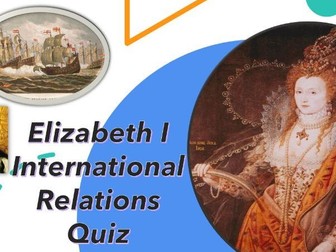
An extensive set of knowledge review questions on Elizabeth I and her international relations. These are non-AI generated, with relevant content applicable to both the AQA and Edexcel GCSE specification of Elizabeth (as this focuses primarily on her relationship with Spain and the Armada in 1588). *Note: the questions below can be edited, cut down or built upon for both Edexcel and AQA GCSE specification, as both Elizabeth papers cover her rivals and international relations. Resource also contains detailed answers AND a short misconceptions section to support teachers, especially those who may be new to the specification or teaching generally. Resource could easily be used as summative or formative assessment or indeed for building on prior knowledge in-lesson. Could also be utilised for KS3 curriculum (e.g. Year 8), especially where there are KS4 links.
Boston Tea PartyQuick View
HMc353

Boston Tea Party

(0)
Y8 Focus on the Boston Tea Party: what it was and its impact on the British colonies in America Starter of a poem inspired by the Boston Tea Party, which will be linked through into their investigation Students will be independently investigating what the Tea Party was using information around the room (info resources are intended to be stuck around a classroom) and fill in their tables (differentiated versions of the table on the ‘Activity’ labelled powerpoint)

Boudicca's RevoltQuick View
HMc353

Boudicca's Revolt

(0)
Y7 Lesson with contextual focus on who Boudicca was and what she did to oppose the Roman invasion Main task is source analysis, focussing on military and political strength of the two sides and students coming to a judgement abut how significant the revolt was for the Romans and their presence in Britain Really simple and effective lesson to get Y7 students thinking about different kinds of opposition and core concept skills of significance and evaluation. Can be differentiated/extended further to suit older groups
World Mental Health Day AssemblyQuick View
HMc353

World Mental Health Day Assembly

(0)
World Mental Health Day Whole-School Secondary Assembly An insightful and detailed assembly celebrating World Mental Health Day. Gives specific definitions on mental health and wellbeing, information on identifying poor and positive mental health, as well as signposts and guidance for supporting mental health. Can be used to deliver remotely or in person. If the latter, I would recommend to condense and have alternative version for presentation, with the rest used as presentation notes.
British Empire Intro: Age of ExplorationQuick View
HMc353

British Empire Intro: Age of Exploration

(0)
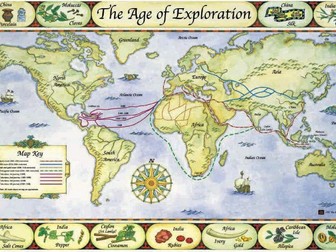
Y8 resources on the Age of Exploration as a contextual introduction to the British Empire Students will examine where the British Empire was at first, with preliminary questioning as to how students think the British managed to get such an empire, followed by focus into the other European powers of the time and their quest for colonies and wealth. Worked well for both LA and HA groups, that can be tweaked to provide extension/condensing *TIF = take it further (extension tasks)
Bloody MaryQuick View
HMc353

Bloody Mary

(1)
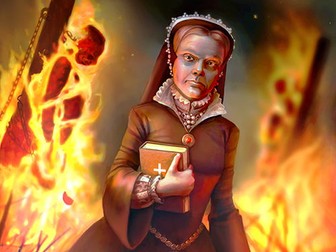
Y8 Investigation on Mary Tudor and how far her nickname was deserved Students take the role of a journalist to analyse different kinds of information to form judgements on Mary and if she deserved the nickname ‘Bloody Mary’ Idea is for students to be given 1 resource first, to then be given the others following thorough analysis of each individually via handouts Students then write an article, either as homework or make into two parts to then consolidate a judgement with evidence from the investigation Very engaging and effective way to practice skills of analysis and evaluation, which led to some very fruitful articles
The History of Anti-Semitism (Holocaust Unit)Quick View
HMc353

The History of Anti-Semitism (Holocaust Unit)

(0)
Resources that can be stretched across two lessons, the subject matter centres around understanding what, firstly, antisemitism actually is, followed by a study into the different examples and periods of antisemitism which occurred. The objective of the lesson(s) is to help students understand that the Holocaust’s context is much wider than just the 20th century, and the varying degrees and examples of antisemitism. The activities were pitched to HA, therefore tweaking to the activity info sheet would be recommended to ensure understanding for a broader cohort.
LGBTQ History Month AssemblyQuick View
HMc353

LGBTQ History Month Assembly

(0)
LGBTQ History Month Whole-School Secondary Assembly A detailed an informative assembly delivering some of the key concepts of the LGBTQ community. This assembly includes guidance on the differences between key terms such as ‘gender’ and ‘sexuality’, dispelling misconceptions and embedding/encouraging tolerant, curious and respectful attitudes with all students. Assembly also contains some signposts to UK-based charities and organisations such as the Proud Trust and Mermaids which provide detailed, informative support for LGBTQ people, those questioning as well as allies and families. An excellent assembly that can be delivered remotely or in person.
Jewish Life Before the Nazis (Holocaust Unit)Quick View
HMc353

Jewish Life Before the Nazis (Holocaust Unit)

(0)
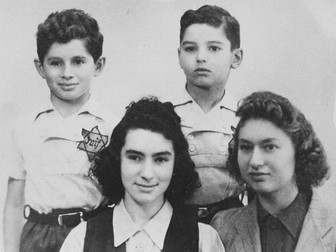
This lesson focuses on the ‘humanising’ of the Jewish population. The objective of the lesson is to demonstrate that those massacred in the Holocaust were not just statistics on a piece of paper, but human beings with lives, dreams and ambitions. Focus on Jewish children to create greater sense of empathy for the students. I found this particularly useful in creating a much more mature, sympathetic cohort. All resources are embedded within the lesson (i.e. table, video links etc.) - can be tweaked to focus on certain ability
Rosa Parks Day AssemblyQuick View
HMc353

Rosa Parks Day Assembly

(0)
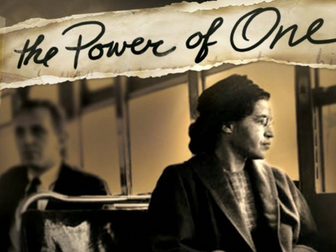
Rosa Parks Day Whole-School Assembly An informative and accessible insight into the figure of Rosa Parks; her background, main achievements and factors influencing her contributions to the American Civil Rights Movement. Students are encouraged to think about how qualities and principles of Rosa Parks could be transferred to their everyday life to ensure students fully identify the value of the assembly and day. An insightful assembly that can be delivered remotely or in person.
LGBTQ Historical Heroes AssemblyQuick View
HMc353

LGBTQ Historical Heroes Assembly

(0)
LGBTQ Whole-School Assembly on Heroes and Historically significant figures This assembly explores a handful of significant British and American figures who campaigned for the LGBTQ community, giving informed backgrounds into their reasonings and achievement This serves as an additional resource for colleagues wishing to explore LGBT History Month in detail, or with specific references to subjects like History. An insightful assembly that can be delivered remotely or in person.
Jack the Ripper InvestigationQuick View
HMc353

Jack the Ripper Investigation

(0)
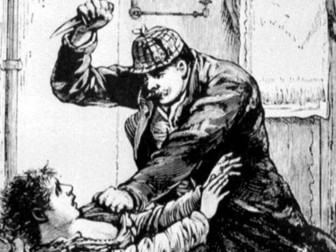
Y8-aimed lesson on Jack the Ripper’s victims but could also be used as a foundation for the GCSE Crime and Punishment Whitechapel topic Students are intended to be split up into groups of 4 focussing on one victim in detail. Each student will have a focus: background information, sequence of events prior to death, pathologist’s report and early findings, along with a map to focus on the location of victim’s murder. The idea is for students to identify key details about the savagery but also precise detail of the Ripper and his patterns of murder. All findings will be returned as a class so as to have a collective knowledge on all five murders Word banks provided for differentiation (i.e. students with lower literacy, dyslexia etc.) A very intensive lesson, I would advise to perhaps divide into two parts
Elizabeth I's Religious SettlementQuick View
HMc353

Elizabeth I's Religious Settlement

(0)
Challenge to the Religious Settlement for GCSE Elizabeth I topic (Edexcel) Clarification on what the Religious Settlement was and the difference between Protestant and Catholic religious practices Followed by an investigation into what challenges Elizabeth faced (Puritans, Catholics and abroad) using Edexcel textbook information (pp.26-30) Can be changed to suit KS3
Human Rights Day AssemblyQuick View
HMc353

Human Rights Day Assembly

(0)
Human Rights Day Secondary Whole-School Assembly Whole-school delivery designed to give students an insight into global issues impacting people and their human rights today, addressing the annual theme and providing positive ideas and encouragement for how students can embed this into their daily lives An insightful and visually pleasing assembly that can be delivered remotely or in person. Colleagues may wish to adapt the assembly to condense some of the reading material to notes
International Women's Day AssemblyQuick View
HMc353

International Women's Day Assembly

(0)
International Women’s Day Whole-School Assembly An inclusive, informative assembly designed to give students a coherent and guided insight into feminism, women’s rights and examples of gender-based violence and discrimination. Students are encouraged to take a positive view of concepts like feminism and provided with an extensive set of resources, key figures and social media channels to explore the key themes around International Women’s Day An accessible, insightful assembly that can be delivered remotely or in person. Colleagues are encouraged to condense the written material, transferring to notes where applicable if delivering in person to provide more accessible/more concise presentation material.
Y10 Transition Action Plan to Y11Quick View
HMc353

Y10 Transition Action Plan to Y11

(0)
Y10 GCSE Transition Action Plan to Y11 A useful catch-all reflection sheet preparing Y10’s for their impending Y11 study. Questions give students an opportunity to reflect honestly and in detail on aspects of their approach to GCSE study in any subject. I have found this to be particularly impactful when setting summer assignments or following mock exams and provides them with a document that keeps them accountable, as well as a meaningful action plan with specific time-based objectives for them moving forward. Can be adapted to tailor to specific departments and subjects.
Elizabeth I's Main ProblemsQuick View
HMc353

Elizabeth I's Main Problems

(0)
Edexcel Paper 2: Elizabeth’s Main Problems as Queen Resource provides collaborative and informative introduction to the main problems for Elizabeth I when she ascended the throne in 1558. Resource includes a detailed activity which is recommended as a collaborative/paired/group activity, along with detailed and helpful guidance in the slide notes. Additionally, there is informative, scaffolded application linked to the Edexcel specification at the end of the lesson, focused primarily on the 12 mark explain why question, including a ‘model’ paragraph, exam mark scheme criteria and breakdown.
Dunkirk: Meltdown or Miracle?Quick View
HMc353

Dunkirk: Meltdown or Miracle?

(0)
Y9 lesson on Dunkirk and whether its reputation as being a ‘miracle’ is justified Students will be using multiple sources - from recent film adaptations clips to written source material on the consequences and interpretations surrounding the Dunkirk evacuation Differentiated sources provided, with lots of room for manouevre in terms of discussion and challenge (AfL resources and tables are found at the bottom of the powerpoint presentation)