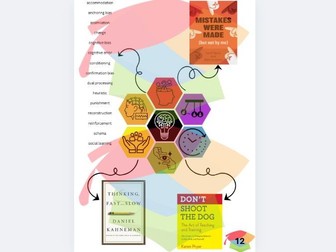
A powerpoint presentation that can serve as an introduction to some vocabulary and ideas related to the 6 concepts from the new syllabus.
There are activities, including comparison tables, definitions, discussions, mind-mapping and more.
This resources is designed to be used alongside a workbook that is also available in my shop with matching dual-coding to create a a full set set of resources ready to go for an introductory few lessons.
Also included are two hand outs (referred to in the powerpoint as part of that lesson’s activities.
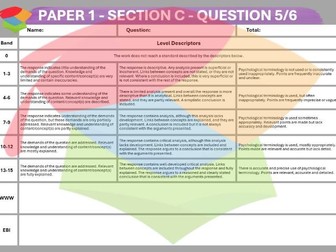
Marking Rubrics for the 2027 IB Psychology Assessment.
This pack covers all three papers:
Paper 1 - HL & SL
Paper 2 - HL & SL
Paper 3 - HL Only
Each paper is broken down, section by section and question. The mark bands and criteria are taken directly from the IB guidance and are presented in a student friendly way, with space to write name, total marks awarded and which question has been selected by the student where they have a choice of question.
Every question has it’s own grid to cover the range of questions in this syllabus.
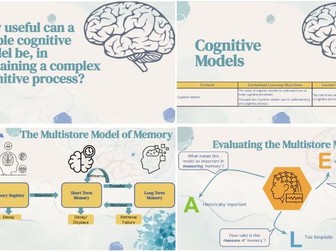
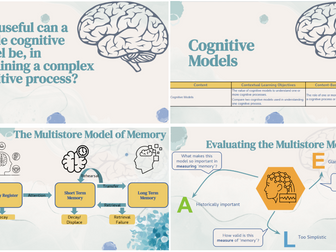
A powerpoint presentation that covers the entire Learning and Cognition Context
It contains 90 slides - around 10-12 weeks worth of lessons!
In this context, there is a choice of cognitive processes to study, this resource concentrates on ‘Memory’.
Each section includes an inquiry question aligned with th IB model of teaching and learning, followed by the learning objectives from the Context and Content that will be covered. There are then a set of lessons to address the inquiry question and the section is finished off with some example exam questions. And if that wasn’t enough, I’ve included revision resources half way through and at the end of the Context as a bonus for you and a thank you for supporting my TES Shop
There are so many activities:
labeling diagrams of memory models
comparison tables
a version of Murdock/Glanzer and Cunitz’s Study for students to take part in
discussions and evaluations based on Concepts from the syllabus
references to real life examples and studies to support students in answering exam questions that call for these examples
QR codes to take students to websites to take part in activities to make classroom discussions relevant to the students in your class
videos to help introduce new ideas
dual coding icons that match all my other resources in this series to support student retention
knowledge organiser/key revision points
useful revision strategies and ideas
opportunity for students to see how well they can learn via observation and discussion of what factors from SLT may have prevented their success
This resources is designed to be used alongside a workbook that can support students with note effective note taking in class, whilst avoiding time wasted drawing diagrams and tables or trying to make work look visually appealing instead of focusing on the content. The workbook is also available in my shop with matching dual-coding to create a a full set set of resources ready to go for an introductory few lessons.
Also included are a couple of hand outs to reduce your planning work load.
Includes:
1 powerpoint presentation
2 handouts
1 student workbook
Covers between approximately 5 and 8 lessons depending on lesson length and pacing.
Matching iconography throughout, wording directly from IB Psychology (first assessment 2027) syllabus, full colour, engaging examples.
Great set of resources to build vocabulary and start thinking like a psychologist ahead of teaching the course content within the contexts. Completed workbook will be very valuable for referring back to throughout the course.
Includes:
1 powerpoint presentation (complete lessons plus revision resources and example exam questions covering the entirety of the Learning and Cognition Context)
2 handouts to support with a couple of activities
1 student workbook (structured note taking, literacy support, class practical record sheet, and HL extension activity)
Covers between approximately 10 and 12 lessons depending on lesson length and pacing.
Matching iconography throughout, wording directly from IB Psychology (first assessment 2027) syllabus, full colour, engaging examples.
Great set of resources to save both student and teacher time whilst be engaging - allowing us to concentrate more on the important teaching and learning. Completed workbook will be very valuable for referring back to throughout the course.
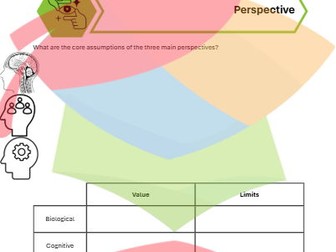
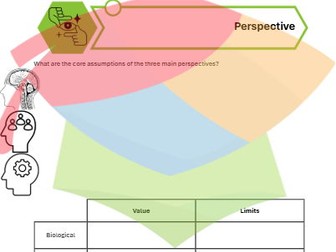
This workbook can be used to support student note taking for the Learning and Cognition Context.
It covers all of the Areas of Study from the Learning and Cognition Context as well as covering a range of Psychological Terminology from the Biological, Cognitive, Social Cultural and Research Methodology Content.
The resource starts with a contents page that splits the Context into Cognitive Processes and Thinking & Learning (Paper 1), Research Methods (The Class Practical - Paper 2) and the HL Inquiry (Paper 3) which can be left off for your SL students.
There is a page promoting literacy with a list of key terms taken from the syllabus glossary as well as a range of texts that students can explore.
On the lesson pages you will find:
small spaces for definitions of key terms
fill in the gaps exercises
diagrams that are part drawn to be completed
lines for jotting down notes from class discussions
images to prompt students to include examples from either studies or real world
comparison tables to complete
comic strip/story board format spaces to support a deeper level of processing
useful mnemonics for evaluations, theories etc.
The workbook has 2 pages for recording the class practical and covers each of the four paper 2 questions in order to fully prepare students for how they will be assessed.
The final page contains easy to understand step by step instruction to guide students through independent and small group tasks - these can be amended to suit your class numbers. Students will be prompted to develop their own inquiry, explore data on the topic, and practice paper 3 questions - massively cutting down your workload in creating example papers for your students and ensuring that they develop a range of knowledge across the extension areas ready for assessment.
The document uses the same iconography that is present throughout my new range of resources for IB Psychology (first assessment 2027) to support students with dual-coding.
This workbook is designed to be used alongside a set of 90 slides that can be used to guide students in completing them, you can find this additional resource in my shop. The slides and workbook are designed to be a complete set of resourced lessons, fully planned, with full coverage of this section of the syllabus and is likely to take around 10-12 weeks to complete depending on hours and pacing.
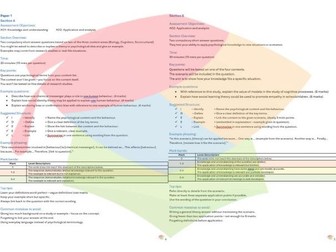
Gives a detailed overview of the external assessments for the IB Psychology course (first assessment '27), including components, times, marks and weightings for both HL and SL.
Each paper is broken down into individual sections and questions, including HL only paper 3.
Each question contains:
The relevant assessment objectives
An overview
Suggested timings
Key points
Example questions
Suggested structure
Example phrasing
Mark bands with level descriptors
Top tips
Mistakes to avoid
It’s an all in one document with clear and easy formatting suitable to support both teachers understanding as well as a resource that can be shared directly with students.
The Complete Exam Guide for IB Psychology '27 by Olivia_Ed
This workbook can be used to introduce the 6 concepts for the new curriculum. It is a vocab and definition builder designed to give a short overview (of between 6 and 8 lessons) ready for students to refer back to during delivery of the course as they build up their understanding and begin to develop their ability to apply these concepts to a range of contexts.
This workbook has a slide presentation that can be used to guide students in completing them, you can find this additional resource in my shop.
The workbook includes spaces for definitions, comparison tables to complete, fill the gaps activities and spaces to write general notes and examples. The document used the same iconography that is present throughout my new range of resources for IB Psychology (first assessment 2027) to support students with dual-coding
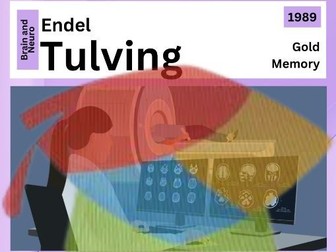
Display poster/handout with dual coding graphic, AO1 (Describe) and AO3 (Evaluate) information about Tulving’s Gold Memory Study. This is a named study for the AQA GCSE Psychology specification and the details include Aim, Method, Results and Conclusions as well as evaluation points aligned with AQA specifications and mark schemes.
Also contains QR codes for:
Psychboost videos that contains similar information alongside related parts of the course
Olivia_Ed Quizlets with flashcards to support revision that are also aligned to the AQA Psychology GCSE specification and previous mark schemes
Display poster/handout with dual coding graphic, AO1 (Describe) and AO3 (Evaluate) information about Wile’s CoBalT Study of Treatment Resistant Depression. This is a named study for the AQA GCSE Psychology specification and the details include Aim, Method, Results and Conclusions as well as evaluation points aligned with AQA specifications and mark schemes.
Also contains QR codes for:
Psychboost videos that contains similar information alongside related parts of the course
Olivia_Ed Quizlets with flashcards to support revision that are also aligned to the AQA Psychology GCSE specification and previous mark schemes
Display poster/handout with dual coding graphic, AO1 (Describe) and AO3 (Evaluate) information about Kaij’s Twin Study of the Heritability of Alcohol Addiction**. This is a named study for the AQA GCSE Psychology specification and the details include Aim, Method, Results and Conclusions as well as evaluation points aligned with AQA specifications and mark schemes.
Also contains QR codes for:
Psychboost videos that contains similar information alongside related parts of the course
Olivia_Ed Quizlets with flashcards to support revision that are also aligned to the AQA Psychology GCSE specification and previous mark schemes
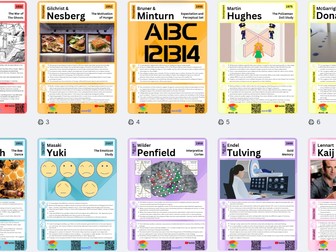
Display poster/handout with dual coding graphic, AO1 (Describe) and AO3 (Evaluate) information about
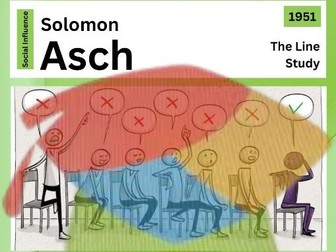
Asch’s Line Study
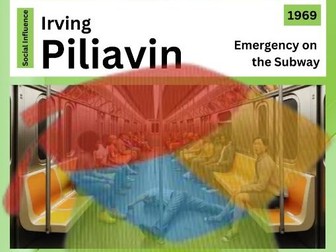
Piliavin’s Subway Study
Von Frisch’s Bee Study
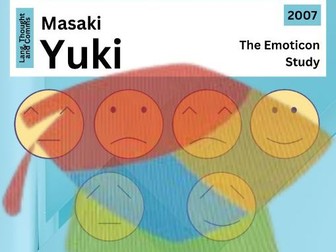
Yuki’s Emoticon Study
Penfield’s Study of the Interpretive Cortex
Tulving’s Gold Memory Study
Wiles’ CoBalT Study
Kaij’s Heritability Study
This is a named study for the AQA GCSE Psychology specification and the details include Aim, Method, Results and Conclusions as well as evaluation points aligned with AQA specifications and mark schemes.
Also contains QR codes for:
Psychboost videos that contains similar information alongside related parts of the course
Olivia_Ed Quizlets with flashcards to support revision that are also aligned to the AQA Psychology GCSE specification and previous mark schemes
Display poster/handout with dual coding graphic, AO1 (Describe) and AO3 (Evaluate) information about Penfield’s Study of the Interpretive Cortex. This is a named study for the AQA GCSE Psychology specification and the details include Aim, Method, Results and Conclusions as well as evaluation points aligned with AQA specifications and mark schemes.
Also contains QR codes for:
Psychboost videos that contains similar information alongside related parts of the course
Olivia_Ed Quizlets with flashcards to support revision that are also aligned to the AQA Psychology GCSE specification and previous mark schemes
Display poster/handout with dual coding graphic, AO1 (Describe) and AO3 (Evaluate) information about Von Frisch’s Bee Study. This is a named study for the AQA GCSE Psychology specification and the details include Aim, Method, Results and Conclusions as well as evaluation points aligned with AQA specifications and mark schemes.
Also contains QR codes for:
Psychboost videos that contains similar information alongside related parts of the course
Olivia_Ed Quizlets with flashcards to support revision that are also aligned to the AQA Psychology GCSE specification and previous mark schemes
Display poster/handout with dual coding graphic, AO1 (Describe) and AO3 (Evaluate) information about Asch’s Line Study of Conformity. This is a named study for the AQA GCSE Psychology specification and the details include Aim, Method, Results and Conclusions as well as evaluation points aligned with AQA specifications and mark schemes.
Also contains QR codes for:
Psychboost videos that contains similar information alongside related parts of the course
Olivia_Ed Quizlets with flashcards to support revision that are also aligned to the AQA Psychology GCSE specification and previous mark schemes
Display poster/handout with dual coding graphic, AO1 (Describe) and AO3 (Evaluate) information about Piliavin’s Subway Study. This is a named study for the AQA GCSE Psychology specification and the details include Aim, Method, Results and Conclusions as well as evaluation points aligned with AQA specifications and mark schemes.
Also contains QR codes for:
Psychboost videos that contains similar information alongside related parts of the course
Olivia_Ed Quizlets with flashcards to support revision that are also aligned to the AQA Psychology GCSE specification and previous mark schemes
Display poster/handout with dual coding graphic, AO1 (Describe) and AO3 (Evaluate) information about Yuki’s Emoticon Study. This is a named study for the AQA GCSE Psychology specification and the details include Aim, Method, Results and Conclusions as well as evaluation points aligned with AQA specifications and mark schemes.
Also contains QR codes for:
Psychboost videos that contains similar information alongside related parts of the course
Olivia_Ed Quizlets with flashcards to support revision that are also aligned to the AQA Psychology GCSE specification and previous mark schemes
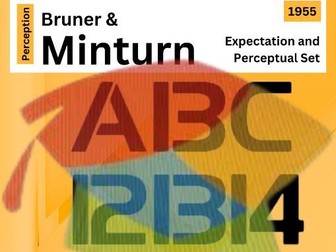
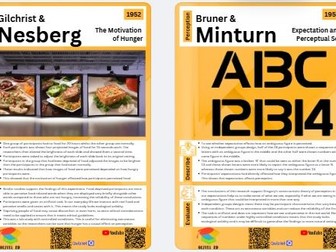
Display poster/handout with dual coding graphic, AO1 (Describe) and AO3 (Evaluate) information about Bruner & Minturn’s Study on Perceptual Set. This is a named study for the AQA GCSE Psychology specification and the details include Aim, Method, Results and Conclusions as well as evaluation points aligned with AQA specifications and mark schemes.
Also contains QR codes for:
Psychboost videos that contains similar information alongside related parts of the course
Olivia_Ed Quizlets with flashcards to support revision that are also aligned to the AQA Psychology GCSE specification and previous mark schemes
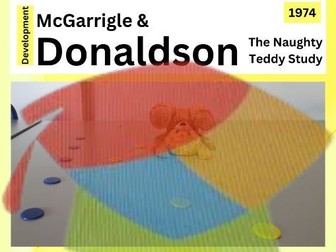
Display poster/handout with dual coding graphic, AO1 (Describe) and AO3 (Evaluate) information about McGarrigle & Donaldson’s Naughty Teddy Study. This is a named study for the AQA GCSE Psychology specification and the details include Aim, Method, Results and Conclusions as well as evaluation points aligned with AQA specifications and mark schemes.
Also contains QR codes for:
Psychboost videos that contains similar information alongside related parts of the course
Olivia_Ed Quizlets with flashcards to support revision that are also aligned to the AQA Psychology GCSE specification and previous mark schemes
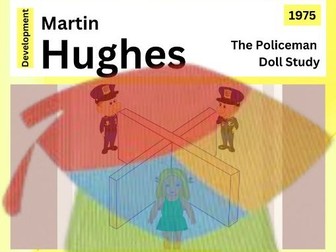
Display poster/handout with dual coding graphic, AO1 (Describe) and AO3 (Evaluate) information about Hughes Policeman Doll Study. This is a named study for the AQA GCSE Psychology specification and the details include Aim, Method, Results and Conclusions as well as evaluation points aligned with AQA specifications and mark schemes.
Also contains QR codes for:
Psychboost videos that contains similar information alongside related parts of the course
Olivia_Ed Quizlets with flashcards to support revision that are also aligned to the AQA Psychology GCSE specification and previous mark schemes
Display poster/handouts with dual coding graphic, AO1 (Describe) and AO3 (Evaluate) information about:
Murdock’s Serial Position Study
Bartlett’s War of the Ghosts Study
Gilchrist & Nesberg’s Motivation and Perception Study
Bruner & Minturn’s Perceptual Set Study
Hughes’ Policeman Doll Study
McGarrigle & Donaldson’s Naughty Teddy Study
These are the named studies for the AQA GCSE Psychology Paper 1 specification and the details include Aim, Method, Results and Conclusions as well as evaluation points aligned with AQA specifications and mark schemes.
Also contains QR codes for:
Psychboost videos that contains similar information alongside related parts of the course
Olivia_Ed Quizlets with flashcards to support revision that are also aligned to the AQA Psychology GCSE specification and previous mark schemes


 Quick View