Franco-Prussian War Year 6 PowerpointQuick View
katiemwells_kw

Franco-Prussian War Year 6 Powerpoint

(0)
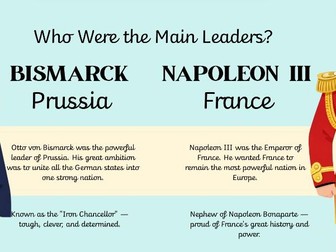
An engaging and age-appropriate history lesson for Year 6 exploring the Franco-Prussian War and how it helped create tensions that eventually contributed to World War One. Through colourful visuals, discussion tasks, and simple historical explanations, pupils learn about the rivalry between France and Prussia, the rise of a united Germany, and why France wanted revenge after losing the war. What Pupils Will Learn Who fought in the Franco-Prussian War (1870-71). Why the war happened. What France lost after the war. Why feelings of anger and revenge can affect future events. How this conflict helped sow the seeds of World War One. Included in This Resource -Clear learning objectives -Background information presented in child-friendly language -Key individuals, including Otto von Bismarck and Napoleon III Timeline of important events -Discussion and retrieval activities -Opportunities for historical thinking and debate -Plenary/exit ticket questions to check understanding Perfect for Year 6 History Primary World War One topics Transition-to-KS3 History Whole-class teaching End-of-unit enrichment lessons
Year 5 SPaG MatQuick View
katiemwells_kw

Year 5 SPaG Mat

(0)
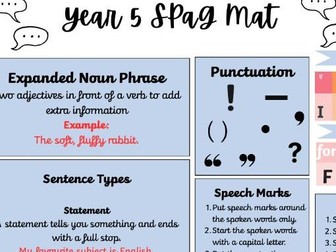
Copilot said: A handy, pupil-friendly reference mat designed to support Year 5 learners with key SPaG knowledge. This resource provides clear explanations, examples and reminders of essential grammar, punctuation and spelling terminology. It is ideal for classroom learning, revision, independent practice and building confidence with the Year 5 curriculum. Contents include: Sentence types (statements, questions, commands and exclamations) Modal verbs Relative clauses Prefixes and suffixes Expanded noun phrases Speech punctuation rules Key tense forms Coordinating and subordinating conjunctions Year 5/6 statutory spellings Perfect for: Daily SPaG lessons Independent writing tasks Guided and shared writing sessions Grammar revision Homework support Intervention groups Building confidence in writing Preparing pupils for Year 6 expectations Displaying on desks or in writing areas Quick reference during English lessons
Narnia Narrative PowerpointQuick View
katiemwells_kw

Narnia Narrative Powerpoint

(0)
Bring the magic of The Lion, the Witch and the Wardrobe to your classroom with this engaging narrative writing unit based on Lucy’s first journey into Narnia. Pupils follow Lucy as she discovers the wardrobe, steps into the snowy woodland beyond, and meets the friendly faun, Mr Tumnus. Designed specifically for Year 5, this resource develops key narrative writing skills through a series of carefully structured lessons, model texts and writing activities. Children explore how authors create atmosphere, describe settings and characters, and use dialogue to move a story forward. Grammar and Writing Focus Expanded noun phrases Fronted adverbials Direct speech and accurate punctuation Adverbs for cohesion Past tense consistency Varying sentence types and structures Pupils will: Describe Lucy’s discovery of the wardrobe using rich vocabulary. Create atmospheric setting descriptions of snowy Narnia. Explore characterisation through Mr Tumnus. Use dialogue effectively to develop character and advance the narrative. Build suspense and wonder through carefully chosen language. Write an extended narrative based on Lucy’s first adventure in Narnia. Perfect for: Whole-class writing sequences Guided writing groups English lessons linked to class reading Independent narrative writing Grammar application in context Upper KS2 literacy units An engaging and immersive writing project that combines a classic children’s novel with essential Year 5 grammar and composition objectives, helping pupils develop both technical accuracy and creative writing skills.
Year 6 SPaG MatQuick View
katiemwells_kw

Year 6 SPaG Mat

(0)
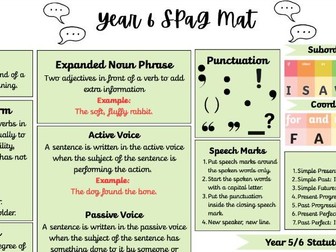
A handy, pupil-friendly reference mat designed to support Year 6 learners with key SPaG knowledge. This resource provides clear explanations, examples and reminders of essential grammar, punctuation and spelling terminology, making it ideal for revision, independent learning and SATs preparation. Contents include: Subjunctive form Active and passive voice Modal verbs Relative clauses Prefixes and suffixes Expanded noun phrases Speech punctuation rules Key tense forms Coordinating and subordinating conjunctions Year 5/6 statutory spellings Perfect for: SATs revision English working walls Independent reference Morning starter activities Homework support Booster and intervention groups Classroom revision packs This visually organised SPaG mat helps pupils quickly recap important terminology and grammar concepts, building confidence and supporting success in Year 6 assessments.
Show Don't Tell Emotion CardsQuick View
katiemwells_kw

Show Don't Tell Emotion Cards

(0)
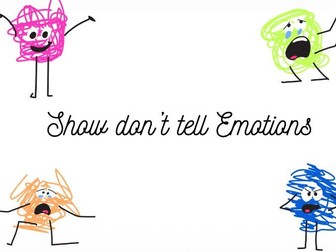
Help your pupils bring their writing to life with these Show, Don’t Tell Emotion Cards. Designed to develop descriptive writing skills, this engaging resource encourages children to move beyond simply naming emotions and instead show how characters feel through actions, body language, facial expressions, thoughts, and dialogue. Perfect for creative writing lessons, literacy interventions, guided writing groups, and independent activities, these cards help pupils deepen characterisation and create more vivid, engaging narratives.
Rosa Parks Colouring SheetQuick View
katiemwells_kw

Rosa Parks Colouring Sheet

(0)
Celebrate the life and achievements of Rosa Parks with this simple and engaging colouring sheet, perfect for children aged 7–11. Featuring a clear illustration and a child-friendly information paragraph, this resource introduces pupils to Rosa Parks’ bravery and her important role in the Civil Rights Movement. Ideal for Black History Month, history lessons, assemblies, and independent learning activities, it helps children develop an understanding of equality, courage, and standing up for what is right while enjoying a creative colouring task.
"This Classroom is better with you in it" Classroom PosterQuick View
katiemwells_kw

"This Classroom is better with you in it" Classroom Poster

(0)
Brighten up your classroom and remind students how valued they are with this positive and uplifting wall poster! This motivational classroom poster is ideal for teachers who want to encourage kindness, boost morale, and remind every student that they matter. Great for classrooms, counseling offices, libraries, and learning spaces.
"Every Day is a Fresh Start" Classroom PosterQuick View
katiemwells_kw

"Every Day is a Fresh Start" Classroom Poster

(0)
Start each morning with encouragement! This uplifting poster reminds students (and teachers!) that every day is a new opportunity to learn, grow, and shine. Hang this poster to inspire growth, encourage perseverance, and remind everyone that a new beginning is always possible.
Propaganda of WW1Quick View
katiemwells_kw

Propaganda of WW1

(0)
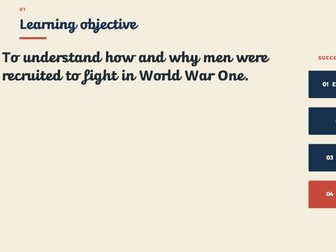
Year 6 History: How Were Soldiers Recruited to Fight in WW1? | Complete Lesson PPT Bring World War One to life with this engaging and fully-resourced Year 6 history lesson exploring how and why soldiers were recruited to fight during WW1. Pupils investigate volunteering, patriotism, Pals Battalions, propaganda and conscription while developing their historical enquiry and source-analysis skills. Perfect for upper KS2 history topics, this lesson encourages pupils to think critically about recruitment campaigns and evaluate the effectiveness of wartime propaganda. The lesson culminates in pupils designing their own WW1 recruitment poster using their new knowledge. Included: Clear learning objective and success criteria Engaging discussion starter: “Would you have joined up in 1914?” Teaching slides on volunteering and patriotism Exploration of Pals Battalions Source investigation using recruitment posters Propaganda analysis activities Poster-ranking discussion task Conscription vs volunteering comparison activity Creative recruitment poster final task Exit ticket assessment questions Professional, visually engaging design throughout Learning Objectives Explain why some men volunteered to fight. Describe what a Pals Battalion was. Understand why conscription was introduced. Identify and analyse propaganda techniques used during WW1 recruitment campaigns. Suitable For: Year 6 KS2 History World War One topics Whole-class teaching Observation lessons and curriculum showcases