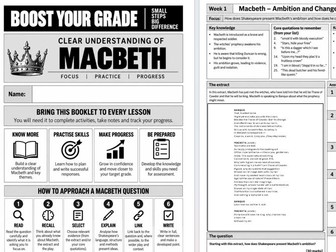
Boost Your Grade: Clear Understanding of Macbeth is a focused six-week intervention designed to help students turn secure knowledge into clearer, more successful exam responses. Each week guides students through a key character or theme, carefully selected core quotations, relevant context and an exam-style extract before modelling what an achievable Band 4 response looks like. Students repeatedly practise the same approach to select evidence, explain ideas using ‘because’, connect the extract to the wider play, plan and write, building confidence and independence week by week.
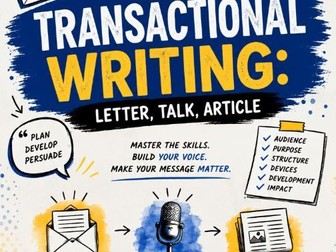
This scheme develops students’ confidence in transactional writing, taking them step-by-step from understanding genre, audience and purpose through to producing a complete, effective response. Students learn how to plan efficiently, select and develop convincing ideas, use ethos, pathos and logos, and create an engaging voice through purposeful transactional devices.
The sequence is deliberately cumulative: students move from supported planning and modelling to developing ideas in detail, sustaining an argument across a whole text and adapting their writing for different audiences and forms. By the end, students bring these skills together in increasingly independent responses, with explicit comparison of Band 3, 4 and 5 writing, before completing a summative transactional writing task.
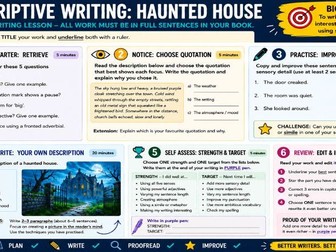
This bank contains 12 ready-to-use KS3 English cover lessons focused on developing students’ descriptive writing. The lessons are designed to provide a consistent, purposeful approach to cover while continuing to build the core writing skills students need throughout KS3 and into GCSE.
Each lesson follows the same clear six-part structure, making the tasks easy for students to follow and straightforward for non-specialist cover teachers to deliver. Across the 12 lessons, students encounter a range of engaging settings and scenarios while repeatedly practising key descriptive writing techniques.
Every lesson includes a model extract to demonstrate effective writing and support students before they write independently. The six-part sequence moves students through retrieval, model exploration, quotation selection, sentence-level practice, extended descriptive writing and self-assessment/editing.
The lessons are designed to be displayed on the board with no additional printing required. Students complete all work in their exercise books and use purple pen to review and improve their writing, ensuring that cover lessons result in meaningful practice and visible progress.
The key to success for EDUQAS C2 reading is for students to be able to read, understand and then select the most relevant quotations. If they can do this 10 times with quick comments, they can get 10/10.
This 6 week intervention is designed using I do, we do, you do and guides students though reading and selecting the most relevant quotations. The aim is that students feel more confident and so can do this faster.
This overview includes my findings as an experienced examiner for each question of Paper 2. It also includes some worked models that guide students from level 2 to 3 and 3 to 4, and top tips for the teaching of this paper.
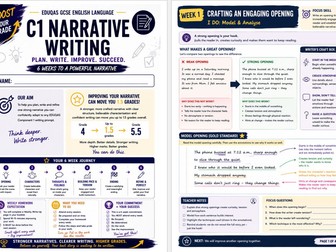
Give students a clear, structured route to success in EDUQAS GCSE English Language Component 1 with this fully resourced 6-week narrative writing intervention. Instead of asking students to invent a new story every lesson, this programme develops one carefully planned narrative, teaching them how to improve it week by week until it becomes a polished, adaptable exam response.
Using a highly scaffolded I Do → We Do → You Do approach, students explicitly learn the craft of narrative writing: engaging openings, believable characters, thoughts and feelings, pace and tension, meaningful endings, and effective editing. Every session combines expert modelling, guided practice, independent writing and reflection, while weekly write-up pages ensure students continually revisit, extend and refine their story.
Designed to reduce cognitive overload and maximise confidence, the intervention also includes a pre-session planning booklet, allowing students to arrive with their story already mapped out so lesson time focuses on improving writing rather than generating ideas.
Perfect for teachers who want:
A fully planned, ready-to-teach 6-week intervention
Explicit instruction in narrative writing rather than vague creative tasks
A proven step-by-step sequence from planning to polished exam writing
High levels of student confidence through repeated drafting and refinement
Better-crafted, more engaging narratives that are easily adapted to any EDUQAS C1 writing prompt.
Boost GCSE Reading Scores with Explicit, Skills-Based Retrieval
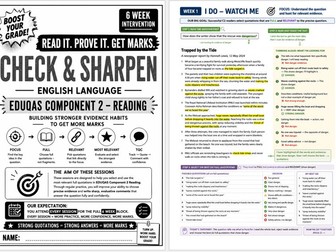
Transform how students tackle the EDUQAS English Language Component 2 reading paper with this fully planned 6-week intervention programme. Rather than relying on generic exam practice, this resource explicitly teaches students how to select full, relevant and high-value quotations before writing clear Track → Quote → Comment responses—the skill that underpins success across the entire reading paper.
Built around an I Do → We Do → You Do model, each week introduces one carefully sequenced skill before providing guided practice, independent application, retrieval activities and review. The booklet also includes teacher guidance, self-assessment and final exam consolidation, making it ideal for intervention groups, revision sessions or classroom teaching.
Perfect for teachers who want:
A ready-to-teach, low-preparation intervention
Explicit modelling that builds genuine exam confidence
A clear progression from supported practice to independence
Resources based on what EDUQAS examiners reward most
Students who choose better evidence and write stronger answers—not just more answers.
EDUQAS GCSE English Language Component 1 Reading Intervention (6 Weeks)
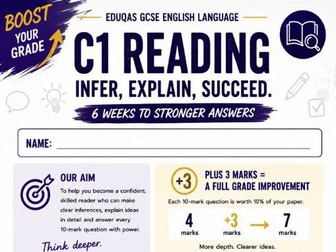
Designed specifically for students who are consistently achieving around 3–4 marks out of 10 on the EDUQAS Component 1 reading questions, this intervention provides a structured, evidence-informed approach to improving analytical writing.
Rather than relying on repeated exam practice, the programme explicitly teaches students how to think like successful readers. Drawing on recurring themes from EDUQAS examiner feedback, the six-week course focuses on the skills that weaker candidates often struggle with: selecting the best evidence, making clear inferences, developing explanations and maintaining a clear focus on the question.
Each week follows a consistent I Do – We Do – You Do model, gradually reducing scaffolding as students build confidence and independence. Carefully sequenced lessons ensure that only one new analytical skill is introduced each week, allowing students to master the core processes needed for success before moving on.
The intervention has been designed to help students move from simple, descriptive comments to clear, developed explanations that meet the expectations of the higher mark bands. Because the same reading routine is revisited every lesson, students develop habits that transfer directly into the exam.
What’s included:
Six fully planned intervention lessons
Three-page student workbook for each week (I Do, We Do, You Do)
Progressive extracts and EDUQAS-style 10-mark questions
Explicit modelling and scaffolded practice
Focus on inference, evidence selection and explanation—not terminology spotting
Gradual reduction of support to build independence
For many students, an improvement of just three marks on each 10-mark reading question can equate to around one GCSE grade overall. This intervention is designed to target those crucial marks by teaching students exactly what EDUQAS examiners are looking for in successful responses.
Ideal for:
GCSE intervention programmes
Boost Your Grade sessions
Small group tuition
Pupil Premium interventions
Borderline Grade 3–5 students
Catch-up after mock examinations
This resource has been created to be practical, highly scaffolded and easy to deliver, while remaining firmly rooted in the demands of the EDUQAS specification and examiner expectations. It is particularly effective for students who understand the text but struggle to communicate clear, developed analytical comments in their written responses.
Boost Your Grade: EDUQAS GCSE English Language Component 1 – Narrative Writing (6-Week Intervention)
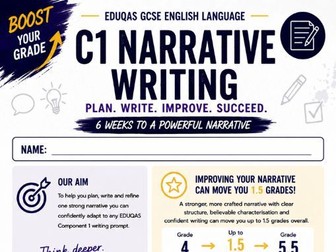
Designed specifically for students who are just below the next grade boundary, this six-week intervention helps students move beyond simply writing stories and instead learn how to craft them.
Rather than producing a new narrative each week, students spend six weeks planning, drafting, refining and editing one believable, exam-ready narrative that can be adapted to a range of EDUQAS Component 1 prompts. The programme is built around the principle that great writers improve their work through deliberate redrafting, with every lesson adding a new layer of narrative craft.
Each session follows an explicit I Do – We Do – You Do structure and includes high-quality model examples, guided practice and independent application. Students develop the key skills rewarded by the EDUQAS mark scheme, including engaging openings, believable characterisation, thoughts and feelings, pace and tension, meaningful endings, and effective editing.
The intervention also includes:
Pre-course planning activities to eliminate wasted lesson time.
Weekly homework write-ups to embed and refine learning.
Retrieval and review activities to strengthen long-term memory.
A teacher guidance booklet to support consistent delivery.
A final focus on typing, proofreading, learning and adapting the completed narrative for both mock examinations and the final GCSE.
Ideal for small-group intervention, Boost Your Grade sessions, after-school revision or targeted support, this programme gives students a structured route to producing a polished, adaptable narrative while building confidence as writers. It is particularly suited to students aiming to secure the next grade by improving their Content and Organisation marks on EDUQAS Component 1.
English Reconnect – A 6-Week KS3 Reading & Writing Intervention
English Reconnect is a fully planned six-week intervention designed to help Year 8 and Year 9 students rebuild confidence in English through engaging reading, discussion and creative writing.
Created for students with low attendance or those who have become disengaged from English, this programme is not tied to a specific curriculum or class text. Instead, it develops the core reading and writing skills that underpin success across KS3 and beyond. Each lesson builds carefully on the last, taking students from reading short, accessible texts to planning, drafting, editing and publishing a story they can be genuinely proud of.
The resource includes 12 fully scaffolded lessons, independent consolidation activities, model reading texts, planning pages, drafting sheets, showcase pages and a detailed teacher guide. Designed to be delivered under a visualiser, it is easy for any member of staff to pick up and teach, making it ideal for intervention, alternative provision, virtual schools or reintegration programmes.
Rather than simply closing gaps in knowledge, English Reconnect aims to help students rediscover enjoyment in English and leave the programme feeling more confident as readers, writers and storytellers.
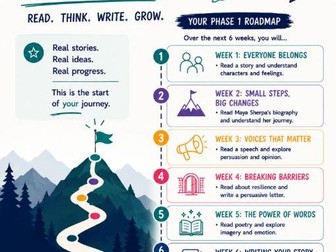
Reconnect with English – Phase 1
Rebuilding confidence. Reconnecting with learning. Preparing students to succeed.
Reconnect with English is a six-week intervention programme designed for students whose attendance has disrupted their learning. Rather than beginning with GCSE content, Phase 1 focuses on rebuilding the foundations that confident readers and writers need: reading fluency, vocabulary, discussion, writing, and self-belief.
Across six carefully sequenced chapters, students explore inspiring real-life stories, speeches and poems before applying their understanding through purposeful writing tasks. Every lesson follows a consistent structure, combining explicit teacher modelling, guided practice and independent application to reduce cognitive load and build confidence step by step.
The programme has been designed specifically for students who may have gaps in learning, low confidence or prolonged absence. Activities are highly scaffolded without feeling simplistic, allowing students to experience success while gradually increasing independence.
By the end of Phase 1, students will have:
developed greater confidence as readers and writers;
expanded their academic vocabulary;
practised analysing and discussing texts;
written for a range of real purposes and audiences;
established the core literacy skills needed for the next stage of learning.
Rather than asking students to catch up immediately, Reconnect with English helps them reconnect first—with reading, with writing and, most importantly, with themselves as successful learners.
Read. Think. Write. Grow.
These knowledge organisers are designed to lead students through the most transferable themes based on 2026 predictions. Students have used them as essay support, to help develop plans or to support making quality revision resources.
These knowledge organisers are designed to lead students through the most transferable themes based on 2026 predictions. Students have used them as essay support, to help develop plans or to support making quality revision resources.
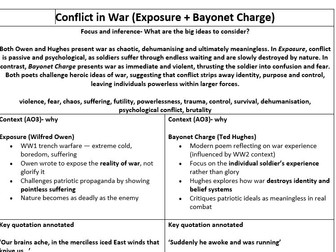
The are designed to reduce the number of poems for students to revise and ensure that all main themes are covered: nature, power of identity, individuals in conflict, wider effects of conflict, contrasting views of conflict.
This series of KOs is designed to lead students through plans for the most likely themes based on 2026 predictions. I have used them in lesson and students have used them as essay scaffolds, to create revision or to create plans.
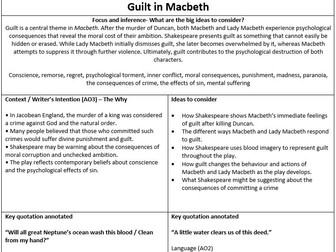
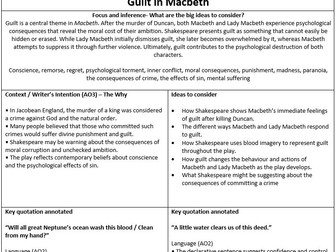
This bundle of 14 KOs includes everything students need to revise for their exams. They are designed to maximise crossover of themes, quotations etc to help students to build a revision schema:
Macbeth
Macbeth’s attitude to violence
mbition
Macbeth’s guilt / state of mind
The supernatural
A Christmas Carol
Family
Scrooge’s transformation
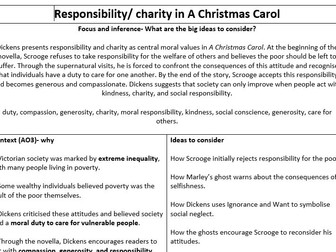
Social responsibility
Poverty / attitudes to poverty
An Inspector Calls — 6 topics
Set 1
Mr Birling – business & society
Responsibility
Set 2
3. Eva Smith – victim of society
4. Inequality
Set 3
5. Sheila – character development
6. Truth vs deception
Power and Conflict anthology
Power of nature (Storm on the Island)
Identity (Checking Out Me History)
Power of nature (The Prelude)
Effects of war on individuals (Poppies)
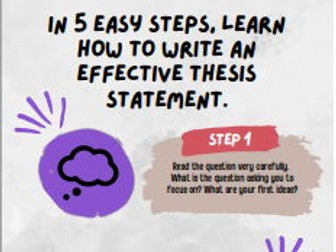
This collection of posters can be used as a display or as a work booklet. It guides them through how to write thesis statement, how to write topic sentences, how to choose the best quotations and how to write a conclusion. It then gives them an opportunity to have a scaffolded go at writing an essay.
Questions:
guilt in Macbeth
redemption in A Christmas Carol
Edna in An Inspector Calls
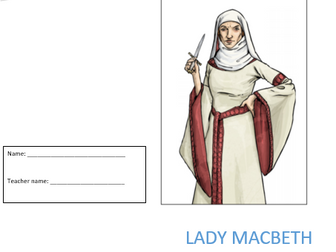
This booklet is designed to help students navigate Lady Macbeth’s character through background reading, extracts and activities. It uses ideas from Jennifer Webb’s ‘How to Teach English Literature’.
I have used this booklet to support my students to understand the character of Lady Macbeth. It has also been used as an effective intervention resource.
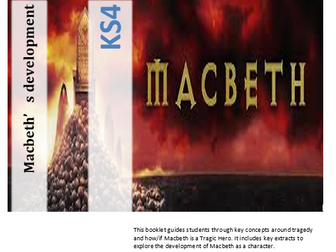
A booklet that focuses on the character of Macbeth and his development through key extracts throughout the play. This booklet is designed to help students to understand elements of Macbeth as a tragic hero.
This booklet contains all the key extracts to help students understand the development and relationships of the lovers. It includes quizzes for plot recaps throughout, activities, and an opportunity for formative assessments and models.
It is everything the students will need in lesson to cover the lovers after reading.
This a report of my findings as an AQA examiner on June 2018 Paper 2. It includes top tips, models and some of the more useful things AQA gave us.
This is useful in helping to develop the teaching of this paper and key strategies to help students move up the mark scheme.
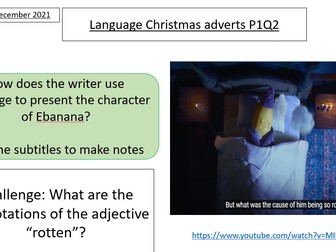
Revise some key Englaish Language skills using Christmas adverts. They include models and get students to have a go at P1 Q2,3 and P2Q2.
These are fun festive lessons where students still practice skills they will need for the exams.


 Quick View