 Quick View
Y8: KS3 CATHOLIC RED: Encounter (World Faith: Abrahamic) - L4: Who was the Prophet Muhammad (PBUH)?
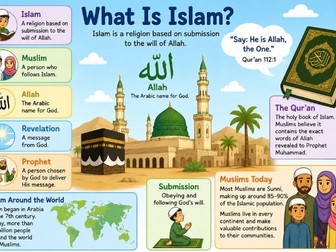
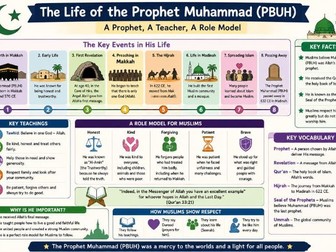
This fully resourced Year 8 Religious Education lesson explores the life of the Prophet Muhammad (PBUH), helping pupils understand why he is the final prophet in Islam and why he is so important to Muslims today. Carefully aligned with the Catholic Religious Education Directory (RED), particularly the Dialogue and Encounter strand, the lesson develops pupils’ understanding of Muhammad’s life, the first revelation, the Qur’an, the Hijrah, the Seal of the Prophets, and the difference between respect and worship in Islam.
Designed for accessibility (reading age 8–12), the lesson uses clear explanations, one-sentence definitions, misconception checks, dual-coded visuals, comprehension activities, retrieval practice, and structured literacy support to make challenging religious concepts accessible to all learners.
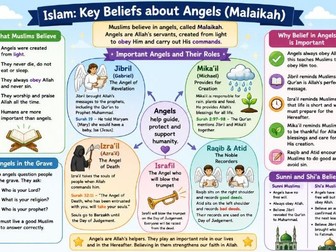
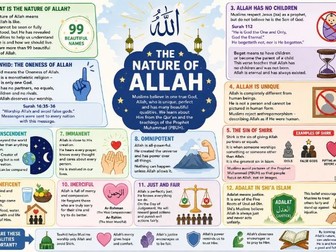
Pupils explore the Prophet Muhammad’s early life, marriage to Khadijah, the first revelation in the Cave of Hira through the Angel Jibril, the spread of Islam, the Hijrah to Madinah, and the importance of Makkah and Madinah. They investigate key Muslim beliefs about Muhammad as Allah’s final messenger and the Seal of the Prophets, examine the Shahadah and why Muslims worship only Allah, and consider how Muhammad’s example continues to influence Muslim belief, worship and daily life.
Engaging activities include comprehension tasks, misconception corrections, vocabulary development, source analysis, creative learning activities, retrieval practice, and opportunities for personal reflection and discussion. Through studying the life of the Prophet Muhammad (PBUH), pupils develop religious literacy, critical thinking, and a deeper understanding of Islamic beliefs, while building the skills of dialogue and encounter that are central to the Religious Education Directory.