Graphing Linear FunctionsQuick View
dannyog9

Graphing Linear Functions

(0)
Graphing Linear Equations: Tables & Coordinates Included: Scaffolded learning objectives and success criteria Complete answer key Creating input-output tables using substitution Plotting ordered pairs from tables on a coordinate plane Connecting equations, tables, and graphs Step-by-step worked examples with positive and negative slopes Common error analysis and correction Check-for-understanding activity Fluency practice with linear equations Real-world application involving a music streaming cost function Interpretation and reasoning questions Working with fractional coefficients Challenge problems involving fractional slopes and vertical lines Summary and student self-assessment Description: Help students develop a clear understanding of how equations, tables, and graphs represent the same linear relationship. The resource begins by connecting substitution to the creation of input-output tables. Students learn how an equation can be used to generate ordered pairs and how those points can then be plotted to represent the equation as a line. Students work through examples, including equations with positive and negative coefficients, before progressing to independent practice. The resource also addresses a common coordinate-order error and reinforces the importance of plotting the input (x) before the output (y). The resource then moves beyond basic graphing into real-world applications, including a music streaming cost model, as well as interpretation and reasoning questions that encourage students to understand what the equation and graph represent rather than simply plot points. More challenging tasks introduce fractional coefficients and vertical lines, while error analysis, self-assessment, and a final summary of the equation to table to graph work flow reinforce the key concepts. Ideal for classwork, homework, independent practice, revision, or reinforcing the connection between algebraic equations, tables, and coordinate graphs.
Linear Equations Slope intercept formQuick View
dannyog9

Linear Equations Slope intercept form

(0)
Graphing Linear Equations: Slope & Intercept Included: Scaffolded learning objectives and success criteria Complete answer key Key vocabulary including slope, rise/run, y-intercept, and slope-intercept form Clear explanation of y = mx + b Identifying slope and y-intercept directly from a graph Step-by-step worked examples with positive and negative slopes Graduated fluency practice Writing equations from graphs Real-life applications involving growth and spending Conceptual and abstract reasoning challenges Practice interpreting slope and y-intercept in context Description: Help students develop a strong understanding of slope-intercept form and learn how to identify the key features of a linear equation from a graph. The resource introduces the structure of y = mx + b, with a clear focus on understanding slope as rise/run and the y-intercept as the starting value. Students learn how to identify these features from a graph and use them to construct the equation of a line. Step-by-step worked examples model both positive and negative slopes before students progress to graduated practice, where they identify the slope and y-intercept and write the corresponding equation. Students then apply slope-intercept form to real-life situations, including the growth of a tree and the changing balance of a subscription account. These problems reinforce the meaning of slope and y-intercept as rate of change and starting value. The final challenge section develops deeper mathematical reasoning, including calculating the equation of a line from two points and explaining the relationship between two lines with the same slope. A complete answer key is included.
Y intercept notation and graphing from tablesQuick View
dannyog9

Y intercept notation and graphing from tables

(0)
Linear Functions: Graphing & Tables Included: Scaffolded learning objectives and success criteria Complete answer key Identifying slope and y-intercept from equations, graphs, and tables Understanding slope-intercept form Calculating slope using rise over run and change in y over change in x Connecting tables, graphs, and equations Step-by-step worked examples for graphing from an equation Writing linear equations from tables of values Fluency and skills practice Real-world application involving a streaming service and monthly costs Reverse-engineering challenge requiring students to determine an equation from a graph Practice interpreting slope and y-intercept in context Description: Help students build a strong understanding of linear functions by connecting equations, tables, and graphs. The resource begins by developing student understanding of slope and y-intercept, including how to identify each from an equation and graph. Students also learn how to calculate slope using rise over run and how the y-intercept represents the value of y when x = 0. Students then learn how to connect a table of values to its corresponding graph, recognizing that the pattern in the table represents the slope of the line. Step-by-step examples show students how to graph a linear equation using its slope and y-intercept, as well as how to work backwards and construct an equation from a table. The practice section reinforces these skills through slope calculations, identifying the components of an equation, sketching graphs, and converting tables into equations. Students then apply their knowledge to a real-world streaming-service scenario involving a starting fee and monthly cost. The final challenge asks students to reverse-engineer a linear equation directly from a graph, identifying the y-intercept and slope before constructing and verifying the equation.
Scatter PlotsQuick View
dannyog9

Scatter Plots

(0)
Scatter Plots: Visualizing Relationships in Data Included: Scaffolded learning objectives and success criteria Complete answer key Plotting and interpreting bivariate data Positive, negative, and no correlation Identifying trends, outliers, and clusters Real-world contextual problems Using trends to estimate values Error analysis and reasoning Challenge problems involving non-linear patterns and clustering Student self-assessment Description: Help students understand how scatter plots can be used to visualize and interpret relationships between two variables. Students learn to plot bivariate data, identify positive, negative, and no correlation, recognize outliers and clusters, and use trends to make estimates. Real-world examples, error analysis, contextual problems, and challenge activities help students develop both data interpretation and mathematical reasoning skills.
Graphing Linear InequalitiesQuick View
dannyog9

Graphing Linear Inequalities

(0)
Graphing Linear Inequalities Included: Scaffolded learning objectives and success criteria Complete answer key Graphing inequalities in slope-intercept and standard form Identifying slope and y-intercept Choosing between solid and dashed boundary lines Shading the correct solution region using test points Step-by-step worked examples Practice with contextual and real-world problems Horizontal and vertical inequalities Error analysis and reasoning activities Reverse-engineering challenges Summary decision path and self-assessment Description: Help students master graphing linear inequalities by connecting algebraic inequalities to visual solution regions. Students learn how to choose the correct boundary line, determine the appropriate shading, and use test points to verify their solutions. The resource progresses from guided examples to contextual problems, error analysis, and more challenging reverse-engineering tasks, including horizontal and vertical inequalities.
Interest, Commision and PayQuick View
dannyog9

Interest, Commision and Pay

(0)
Applications of Percentages: Simple Interest & Commission What’s Included: Scaffolded learning objectives and tiered success criteria Worked examples for simple interest and commission Simple interest using formula Commission calculations and commission + base salary problems Converting percentages to decimals Working with time in years, including converting months to years Fluency practice problems Real-world financial scenarios Multi-step and backward-working challenge problems Error analysis and correction activities Interpretation and reasoning questions Self-assessment and reflection Complete answer key Description: Help students apply their knowledge of percentages to practical financial situations involving simple interest, commission and pay. This resource begins by connecting prior knowledge of percentages and proportional relationships to new applications of those skills. Students are introduced to the simple interest formula and the commission formula, with clear worked examples showing how to identify variables, substitute values and solve. The practice then progresses from basic fluency questions to real-world scenarios involving car loans, savings, real estate commissions and salary packages. Students also develop their mathematical reasoning by comparing commission structures and considering whether a higher percentage rate always results in greater earnings. The resource also includes error analysis, challenge problems requiring students to work backwards to find a missing rate, and self-assessment activities to help students identify areas where they need further practice. Ideal for classwork, homework, independent practice, revision, or as part of a unit on percentages and financial mathematics.
Percentage ChangeQuick View
dannyog9

Percentage Change

(0)
Percentage Change & Real-World Percentages - Scaffolded Math Resource Slides Scaffolded learning objectives for each practice set 5 progressive practice sets that increase in difficulty Percentage conversions and the percent equation Calculating percentages, parts and original amounts Percentage increase and decrease Real-world financial applications including discounts, sales tax, tips, markups, commissions, savings and simple interest Multi-step Challenge Zone problems Complete answer key Student-friendly explanations and worked examples Description: Help students build confidence with percentages through a carefully scaffolded sequence of problems that gradually increases in difficulty. The resource begins by developing students understanding of the relationship between fractions, decimals and percentages, before progressing to finding a percentage of an amount, calculating the percentage, finding the original amount, and calculating percentage increase and decrease. Students then apply these skills to real-world financial situations, including discounts, sales tax, tips, markups, commissions, savings and simple interest. The final Challenge Zone requires students to combine multiple percentage skills to solve more complex, multi-step problems.
Coordinate Geometry: Plotting Distance, ReflectionQuick View
dannyog9

Coordinate Geometry: Plotting Distance, Reflection

(0)
The Coordinate Plane: Plotting, Distance & Reflections What’s Included: Clear introduction to the coordinate plane and key vocabulary Scaffolded learning objectives and success criteria Plotting ordered pairs in all four quadrants Identifying quadrants and understanding the x- and y-axes Finding horizontal and vertical distances between points Reflection rules across the x- and y-axes Visual explanations of coordinate transformations Step-by-step worked examples Graduated fluency practice Error analysis and mathematical reasoning Real-world application using a city map and coordinate grid Multi-step geometric reasoning challenges Complete answer key Description: Help students build confidence with coordinate geometry through a carefully structured resource covering plotting, distance, and reflections. The resource begins by establishing the key language of the coordinate plane, including ordered pairs, quadrants, reflections, and absolute value. Students then develop their ability to plot points accurately in all four quadrants and understand how coordinates describe horizontal and vertical movement. Students are introduced to the rules for reflecting points across the x- and y-axes and learn how to calculate horizontal and vertical distances between points that share the same coordinate. Clear visual explanations and worked examples reinforce the underlying reasoning rather than simply asking students to memorize rules. Practice progresses from basic plotting and reflection skills to distance calculations, error analysis, and real-world applications. Students apply their coordinate skills to a city-grid scenario involving locations, walking distances, a subway line, and reflections. The final challenge section develops deeper geometric reasoning through problems involving rectangles, perimeter, and abstract reflections. A complete answer key is included for all activities. Ideal for classwork, homework, independent practice, revision, or introducing and reinforcing coordinate geometry.
Functions- Function NotationQuick View
dannyog9

Functions- Function Notation

(0)
Mastering Function Notation & Substitution What’s Included: Clear introduction to function notation and key vocabulary Complete answer key Scaffolded learning objectives and success criteria Explanation of inputs, outputs, arguments, and function rules Function machine visual to reinforce input, rule, output Worked examples for writing and evaluating functions Guidance on substitution, including using parentheses with negative values Error analysis activity Scaffolded practice progressing from developing to secure skills Practice with decimals, inverse operations, and finding inputs Real-life applications involving cost and geometry Exam-style challenge questions Engaging Code Breaker activity Description: Help students develop a strong understanding of function notation and learn how to confidently evaluate functions using substitution. The resource begins by introducing the language of functions, including inputs, outputs, arguments and substitution. Students then learn how to interpret notation such as f(x), write function rules from word descriptions, and understand the function-machine concept of input, rule, output. A strong emphasis is placed on accurate substitution, particularly when working with negative numbers and exponents. Worked examples model the process step by step, while an error-analysis activity challenges students to identify and correct a common substitution mistake. Practice is carefully scaffolded, progressing from basic evaluation and writing function notation to decimals, inverse operations, and finding unknown inputs. Students then apply their knowledge to real-life contexts, including calculating the cost of a plumber and finding the area of a square. The final Challenge Zone introduces more demanding exam-style problems involving abstract substitution, working backwards, and composite functions. The resource finishes with an engaging Code Breaker activity and a complete answer key
Fractions Decimlas PercentagesQuick View
dannyog9

Fractions Decimlas Percentages

(0)
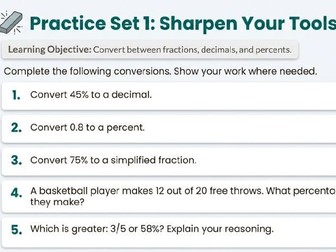
Mastering Fractions, Decimals, and Percents What’s Included: Scaffolded, four-level progression of practice Clear explanations of converting between fractions, decimals, and percentages Step-by-step guided example Level 1: Core translation skills Level 2: Reverse conversions and trickier numbers Level 3: Real-world percentage, fraction, and decimal problems Level 4: A final challenge requiring explanation and mathematical reasoning Real-life contexts including shopping, surveys, test scores, recipes, and phone battery life Complete answer key with worked solutions Student-friendly “how to” explanations Description: Help students master the connections between fractions, decimals, and percentages with this engaging, scaffolded resource. The resource begins by establishing the key idea that fractions, decimals, and percentages are different ways of representing the same value. Students are then explicitly taught how to translate between the three forms, including converting fractions to decimals, decimals to percentages, and completing the full translation loop. A guided “Pizza Problem” then models how students can move between fractions, decimals, and percentages step by step before they begin independent practice. Practice is carefully scaffolded through four levels, beginning with core conversions and progressing to reverse conversions, trickier numbers, and real-world scenarios. The final challenge asks students to justify their reasoning by comparing two different ways of calculating a percentage discount. The resource is ideal for classwork, homework, revision, intervention, or introducing the relationship between fractions, decimals, and percentages. A complete answer key provides both answers and the methods used to solve each problem.
Foundations and Applications of Calculus Unit 7- Applications of Differentiation 2Quick View
dannyog9

Foundations and Applications of Calculus Unit 7- Applications of Differentiation 2

(0)
Foundations & Applications of Calculus – Unit Booklet A ready-to-teach calculus unit designed to save teachers hours of preparation time. Each unit contains a complete sequence of planned lessons, with everything you need to teach the topic effectively: Clear learning objectives Concise explanations and key concepts Worked examples with space for students to try them Fluency and practice questions Challenge questions Review and consolidation Exam practice where appropriate Complete answer keys Each lesson is already structured and ready to use, so there is no need to create individual worksheets, source questions or prepare solutions. Students work through a coherent booklet rather than a collection of disconnected resources, while teachers can focus on teaching, questioning and supporting their students. Save preparation time. Teach more. Create less.
Foundations and Applications of Calculus Unit 6- Applications of Differentiation 1Quick View
dannyog9

Foundations and Applications of Calculus Unit 6- Applications of Differentiation 1

(0)
Foundations & Applications of Calculus – Unit Booklet A ready-to-teach calculus unit designed to save teachers hours of preparation time. Each unit contains a complete sequence of planned lessons, with everything you need to teach the topic effectively: Clear learning objectives Concise explanations and key concepts Worked examples with space for students to try them Fluency and practice questions Challenge questions Review and consolidation Exam practice where appropriate Complete answer keys Each lesson is already structured and ready to use, so there is no need to create individual worksheets, source questions or prepare solutions. Students work through a coherent booklet rather than a collection of disconnected resources, while teachers can focus on teaching, questioning and supporting their students. Save preparation time. Teach more. Create less.
Foundations and Applications of Calculus Unit 3- Differentiation Rules and TechniquesQuick View
dannyog9

Foundations and Applications of Calculus Unit 3- Differentiation Rules and Techniques

(0)
Foundations & Applications of Calculus – Unit Booklet A ready-to-teach calculus unit designed to save teachers hours of preparation time. Each unit contains a complete sequence of planned lessons, with everything you need to teach the topic effectively: Clear learning objectives Concise explanations and key concepts Worked examples with space for students to try them Fluency and practice questions Challenge questions Review and consolidation Exam practice where appropriate Complete answer keys Each lesson is already structured and ready to use, so there is no need to create individual worksheets, source questions or prepare solutions. Students work through a coherent booklet rather than a collection of disconnected resources, while teachers can focus on teaching, questioning and supporting their students. Save preparation time. Teach more. Create less.
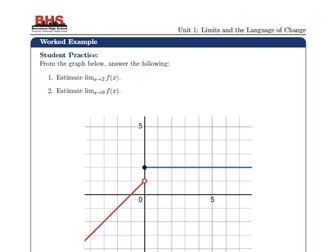
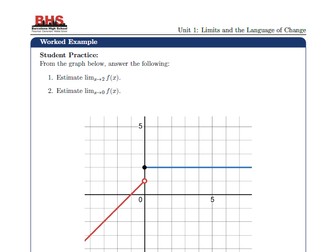
Foundations and Applications of Calculus Unit 1- LimitsQuick View
dannyog9

Foundations and Applications of Calculus Unit 1- Limits

(0)
Foundations & Applications of Calculus Unit Booklet A ready-to-teach calculus unit designed to save teachers hours of preparation time. Each unit contains a complete sequence of planned lessons, with everything you need to teach the topic effectively: Clear learning objectives Concise explanations and key concepts Worked examples with space for students to try them Fluency and practice questions Challenge questions Review and consolidation Exam practice where appropriate Complete answer keys Each lesson is already structured and ready to use, so there is no need to create individual worksheets, source questions or prepare solutions. Students work through a coherent booklet rather than a collection of disconnected resources, while teachers can focus on teaching, questioning and supporting their students. Save preparation time. Teach more. Create less.
Foundations and Applications of Calculus Unit 2- Derivatives as rates of changeQuick View
dannyog9

Foundations and Applications of Calculus Unit 2- Derivatives as rates of change

(0)
Foundations & Applications of Calculus – Unit Booklet A ready-to-teach calculus unit designed to save teachers hours of preparation time. Each unit contains a complete sequence of planned lessons, with everything you need to teach the topic effectively: Clear learning objectives Concise explanations and key concepts Worked examples with space for students to try them Fluency and practice questions Challenge questions Review and consolidation Exam practice where appropriate Complete answer keys Each lesson is already structured and ready to use, so there is no need to create individual worksheets, source questions or prepare solutions. Students work through a coherent booklet rather than a collection of disconnected resources, while teachers can focus on teaching, questioning and supporting their students. Save preparation time. Teach more. Create less.
Foundations and Applications of Calculus Unit 9Quick View
dannyog9

Foundations and Applications of Calculus Unit 9

(0)
Foundations & Applications of Calculus – Unit Booklet A ready-to-teach calculus unit designed to save teachers hours of preparation time. Each unit contains a complete sequence of planned lessons, with everything you need to teach the topic effectively: Clear learning objectives Concise explanations and key concepts Worked examples with space for students to try them Fluency and practice questions Challenge questions Review and consolidation Exam practice where appropriate Complete answer keys Each lesson is already structured and ready to use, so there is no need to create individual worksheets, source questions or prepare solutions. Students work through a coherent booklet rather than a collection of disconnected resources, while teachers can focus on teaching, questioning and supporting their students. Save preparation time. Teach more. Create less.
Foundations and Applications of Calculus Unit 8Quick View
dannyog9

Foundations and Applications of Calculus Unit 8

(0)
Foundations & Applications of Calculus – Unit Booklet A ready-to-teach calculus unit designed to save teachers hours of preparation time. Each unit contains a complete sequence of planned lessons, with everything you need to teach the topic effectively: Clear learning objectives Concise explanations and key concepts Worked examples with space for students to try them Fluency and practice questions Challenge questions Review and consolidation Exam practice where appropriate Complete answer keys Each lesson is already structured and ready to use, so there is no need to create individual worksheets, source questions or prepare solutions. Students work through a coherent booklet rather than a collection of disconnected resources, while teachers can focus on teaching, questioning and supporting their students. Save preparation time. Teach more. Create less.
Foundations and Applications of Calculus Unit 4- Advanced Differentiation Rules and TechniquesQuick View
dannyog9

Foundations and Applications of Calculus Unit 4- Advanced Differentiation Rules and Techniques

(0)
Foundations & Applications of Calculus – Unit Booklet A ready-to-teach calculus unit designed to save teachers hours of preparation time. Each unit contains a complete sequence of planned lessons, with everything you need to teach the topic effectively: Clear learning objectives Concise explanations and key concepts Worked examples with space for students to try them Fluency and practice questions Challenge questions Review and consolidation Exam practice where appropriate Complete answer keys Each lesson is already structured and ready to use, so there is no need to create individual worksheets, source questions or prepare solutions. Students work through a coherent booklet rather than a collection of disconnected resources, while teachers can focus on teaching, questioning and supporting their students. Save preparation time. Teach more. Create less.
Foundations and Applications of Calculus Unit 5- Curve Analysis and Mathmatical BehaviourQuick View
dannyog9

Foundations and Applications of Calculus Unit 5- Curve Analysis and Mathmatical Behaviour

(0)
Foundations & Applications of Calculus – Unit Booklet A ready-to-teach calculus unit designed to save teachers hours of preparation time. Each unit contains a complete sequence of planned lessons, with everything you need to teach the topic effectively: Clear learning objectives Concise explanations and key concepts Worked examples with space for students to try them Fluency and practice questions Challenge questions Review and consolidation Exam practice where appropriate Complete answer keys Each lesson is already structured and ready to use, so there is no need to create individual worksheets, source questions or prepare solutions. Students work through a coherent booklet rather than a collection of disconnected resources, while teachers can focus on teaching, questioning and supporting their students. Save preparation time. Teach more. Create less.
Foundations and Applications of Calculus Unit 10Quick View
dannyog9

Foundations and Applications of Calculus Unit 10

(0)
Foundations & Applications of Calculus – Unit Booklet A ready-to-teach calculus unit designed to save teachers hours of preparation time. Each unit contains a complete sequence of planned lessons, with everything you need to teach the topic effectively: Clear learning objectives Concise explanations and key concepts Worked examples with space for students to try them Fluency and practice questions Challenge questions Review and consolidation Exam practice where appropriate Complete answer keys Each lesson is already structured and ready to use, so there is no need to create individual worksheets, source questions or prepare solutions. Students work through a coherent booklet rather than a collection of disconnected resources, while teachers can focus on teaching, questioning and supporting their students. Save preparation time. Teach more. Create less.
Foundations and Applications of Calculus Complete Course OverviewQuick View
dannyog9

Foundations and Applications of Calculus Complete Course Overview

(0)
Foundations & Applications of Calculus is a complete, teacher-created calculus curriculum designed to develop mathematical fluency alongside genuine understanding and real-world application. The course contains 10 structured units, a full course syllabus and learning objectives, professionally formatted student resources, worked examples, progressive practice, challenge questions, answer keys, review materials, examination practice and project-based investigations. Each unit follows a consistent progression: students first develop the mathematical skills and concepts, before applying them to contexts such as physics, business, economics, growth, motion, geometry, science and modelling. The course also includes extended projects in which students use calculus to investigate realistic problems, construct mathematical models, interpret graphs and results, and make evidence-based conclusions or recommendations. Rather than being a collection of disconnected worksheets, Foundations & Applications of Calculus is designed as a coherent course that can be taught from beginning to end. Build the foundations. Understand the mathematics. Apply it to the world. Included here are is the course overview. The individual unit booklets are available on my page.