What the ladybird heard at the seaside by Julia Donaldson symbolsQuick View
emily_vie2008

What the ladybird heard at the seaside by Julia Donaldson symbols

(0)
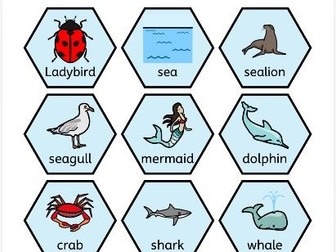
This symbol-supported resource is based on the story What the Ladybird Heard at the Seaside and is designed to support comprehension, communication, and engagement for learners with additional needs. It uses Widgit symbols alongside key vocabulary, characters, and actions from the story to help make the narrative more accessible. The resource includes visual representations of characters (such as the ladybird, animals, and the two robbers), key events, and descriptive language from the seaside setting. It supports learners in developing their understanding of the story sequence, identifying emotions, and exploring key themes such as teamwork, problem-solving, and helping others. Ideal for use in inclusive classrooms, speech and language support, or one-to-one interventions, this resource can be used for storytelling, retelling activities, vocabulary building, and discussion. It is particularly beneficial for learners with learning disabilities, autism, or communication difficulties, providing visual scaffolding to enhance understanding and participation
Chinese new year symbolsQuick View
emily_vie2008

Chinese new year symbols

(0)
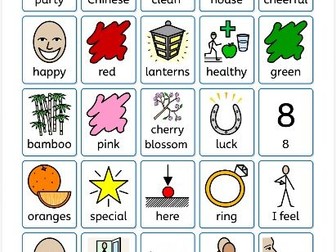
This symbol-supported resource is designed to introduce and explore key vocabulary and concepts related to Chinese New Year in an accessible and engaging way. Using Widgit symbols, it presents important cultural elements such as traditions, foods, zodiac animals, celebrations, and feelings associated with the festival. The resource includes visual representations of core themes such as family, celebration, luck, and customs (e.g. red envelopes, lanterns, and special foods), helping learners to build understanding through clear, structured visuals. It also supports recognition of the Chinese zodiac animals and introduces descriptive and emotional language linked to the celebration. Ideal for inclusive classrooms and learners with additional needs, this resource supports vocabulary development, cultural awareness, and communication skills. It can be used for discussion, matching activities, storytelling, and topic-based learning, particularly for learners with autism, speech and language needs, or learning disabilities.
Chinese new year core boardQuick View
emily_vie2008

Chinese new year core board

(0)
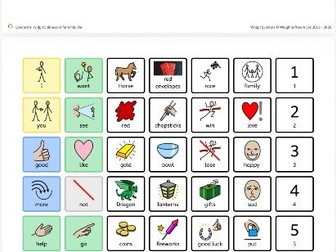
This Chinese New Year core board is an AAC (Augmentative and Alternative Communication) resource designed to support functional communication during topic-based learning. It combines core vocabulary (such as “want”, “go”, “like”, and “help”) with topic-specific fringe vocabulary related to Chinese New Year, enabling learners to communicate meaningfully in context. Structured using the Modified Fitzgerald Key colour-coding system, the board visually organises language into categories (e.g. people, actions, objects, descriptors), supporting language development and sentence building. It enables users to form phrases, make requests, express feelings, and engage in social interaction during activities linked to the celebration. This resource is particularly beneficial for individuals with complex communication needs, including AAC users, and supports participation, independence, and inclusion. It can be used in classrooms, interventions, or group activities to scaffold communication, encourage interaction, and build confidence in expressive language.