

 Quick ViewQuick View
 Quick View
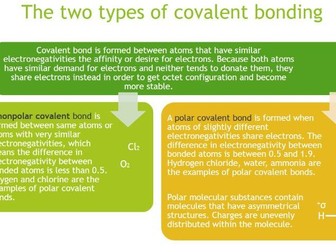
Reactivity of Metals: An Introduction
Reactivity of Metals: An Introduction
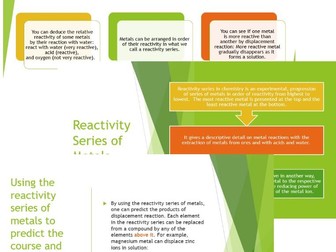
• Relative reactivity of some metals
• The reactivity series of metals
• Reactions of various metals with water and acids
• Using the reactivity series to predict the course and products of displacement reactions
• Using the reactivity series to predict the reactions of less reactive metals
• Metal displacement reactions as redox reactions
• Explanation of oxidation
How to use it?
Extract a zip file
Open a file: story or story_HTML5 in your web browser
 Quick View
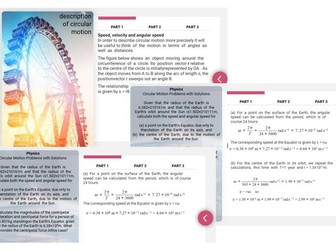
Uniform circular motion theory, formulas, solved problems (interactive)
The physics of uniform circular motion and its applications. Description, formulas and solved problems (step by step)
Speed, velocity and angular speed
Centripetal acceleration.
How to use it:
Extract a zip file
Open a file: ‘story’
The file will open in your web browser
 Quick View
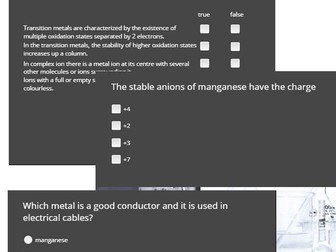
Transition metals -quiz
A quiz that corresponds with the presentation about transition metals.
How to use it?
Extract a zip file
Open a file: story or story_HTML5 in your web browser
 Quick View
 Quick View
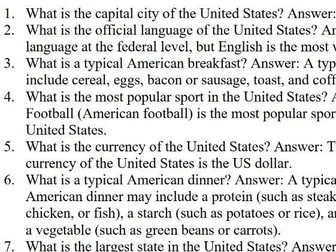
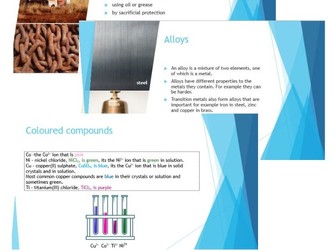
Transition metals - an interactive presentation
•Transition metals and that their typical properties
•Electron configuration
•Colorful compounds of transition metals
•Alloys
•Uses of transition metals and their alloys including magnalium and brass
•Catalytic activity of the transition metals
•Corrosion
•Rust prevention
How to use it?
Extract a zip file
Open a file: story or story_HTML5 in your web browser
undefined
 Quick View
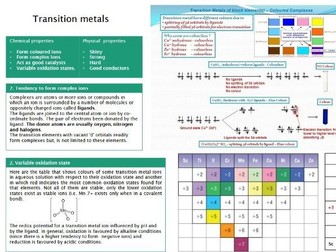
Transition metals and complexes
Classification
Coloured ion formation
The Tendency to form complex ions
Variable oxidation state
Geometry of complexes
Complexes - colours
Ligands
Transition metals: catalytic activity
 Quick View
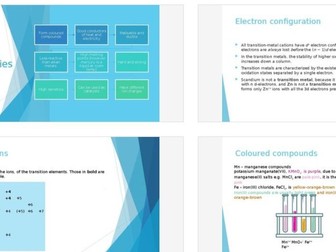
Transition metals, corrosion and alloys (chemistry) - editable PowerPoint
•Transition metals and that their typical properties
•Electron configuration
•Colorful compounds of transition metals
•Alloys
•Uses of transition metals and their alloys including magnalium and brass
•Catalytic activity of the transition metals
•Corrosion
•Rust prevention
 Quick View
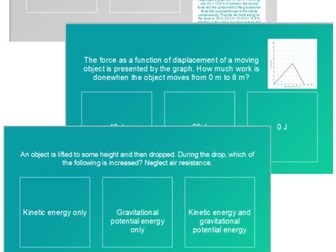
Work and energy interactive quiz with detailed answers
11 Quiz Questions – ideal for revision or self-study. The quiz covers:
Kinetic and potential energy
Conservation of energy
Work
Thermal energy
Collisions
Includes detailed tips and step-by-step answers with calculations. Unlimited attempts allowed.
How to use it:
Extract the ZIP file.
Open the file named ‘story’.
The quiz will launch in your web browser.
 Quick View
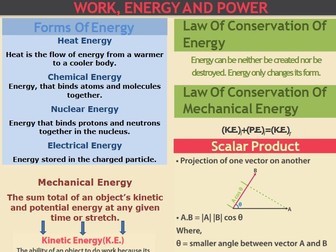
Work, energy and power revision (infographic)
Types and Concepts of Energy
• Forms of Energy
– Heat (Thermal) Energy
– Chemical Energy
– Nuclear Energy
– Electrical Energy
• Mechanical Energy
– Kinetic Energy (KE) and Potential Energy (PE)
• Work and Work-Energy Principle
– Definition of work
– Work-Energy relationship: Work done = Change in energy
• Law of Conservation of Energy
– Energy cannot be created or destroyed, only transformed
• Spring Potential Energy
• Power
 Quick View
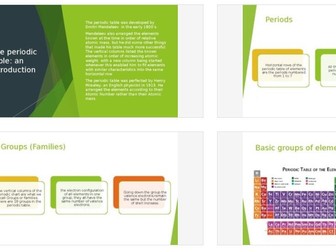
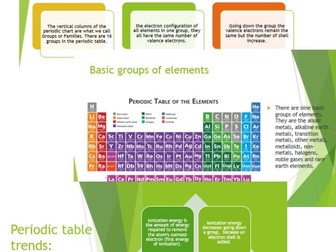
The periodic table: an introduction for beginners
•The periodic table: an introduction for beginners
•Position of elements in modern periodic table
•Groups and periods
•Trends in periodic table
 Quick View
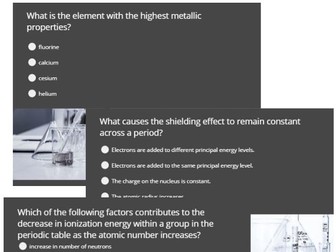
the periodic table quiz
A quiz about the periodic table of elements. It corresponds with both preriodic table presentation (browser and pptx).
 Quick View
Periodic Table: An Introduction (Presentation)
• Periodic Table: An Introduction
• Position of Elements in the Modern Periodic Table
• Groups and Periods
• Trends in the Periodic Table
How to Use It:
Extract the ZIP file.
Open the file named story or story_HTML5 in your web browser.
 Quick View
 Quick View
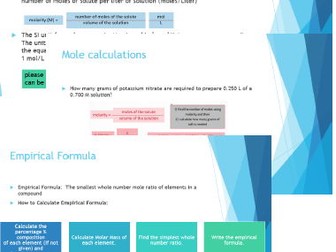
Chemical Formulae, Equations and Calculations: Interactive Presentation
An interactive presentation about calculations in chemistry:
•Writing chemical equations
•Calculating relative formula masses
•The mole (mol) concept
•Empirical formula and molecular formula
•Calculations involving the amount of substance
•Calculations involving reacting masses and percentage yield and molarity
•Empirical and molecular formulae from experimental data
How to use it?
Extract a zip file
Open a file: story or story_HTML5 in your web browser
 Quick View
 Quick View
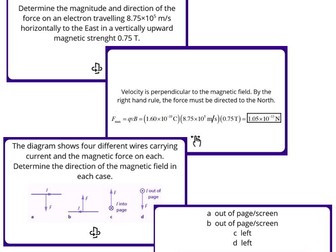
(interactive) 20 Solved Magnetic Force and Field Problems flashcards
20 Solved Magnetic Force and Field Problems flashcards with an extensive explanation. Simply flip the flashcard to see the solution and explanation. Order - Random.
the right hand rule
the magnitude and direction of the magnetic force
Lenz's law
induced current
the magnetic flux of B
strength of the magnetic field
calculating angles
determining the direction of the magnetic field and paths of the charges
How to use it:
Extract a zip file
Open a file: ‘story’
The file will open in your web browser
 Quick View
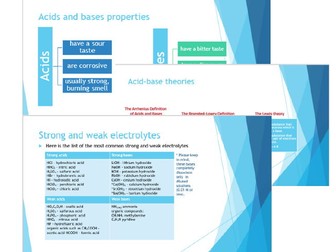
Acids and bases - an introduction (chemistry) - editable PowerPoint presentation
A great presentation as an introduction to acids, bases, and their properties, including:
Naming acids and hydroxides
Acid-base theories and properties
Strength of acids and bases, the pH scale, and pH indicators
 Quick View
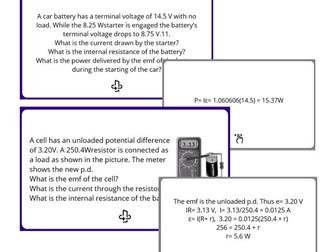
(Interactive) 13 flashcards on electric cells problems with solutions or just answers
Electric cells, batteries flashcards with answers and/or solutions (13 problems)
the cell rating, resistance, current
potential difference
energy transfer
electromotive force (emf)
How to use it:
Extract a zip file
Open a file: ‘story’
The file will open in your web browser
 Quick View
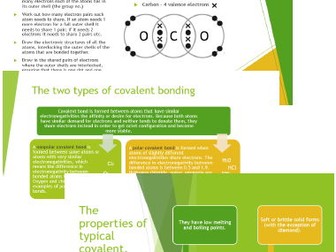
Covalent Bonds: Interactive Presentation
A presentation about covalent bonds:
•The formation of a covalent bond
•Dot and cross diagrams
•State of matter of covalent substances
•Explaining the forces between the molecules
•The properties of typical covalent, simple molecular compounds
•The properties of a graphite and diamond
How to use it?
Extract a zip file
Open a file: story or story_HTML5 in your web browser
 Quick View
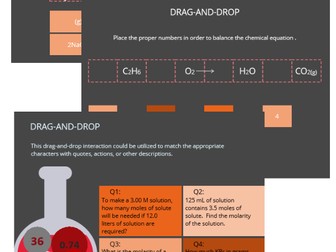
Chemical Formulae, Equations and Calculations: Interactive Quiz
An interactive quiz that corresponds with the Chemical formulae, equations and calculations presentation.
How to use it?
Extract a zip file
Open a file: story or story_HTML5 in your web browser