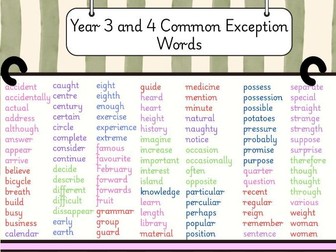
Double sided Common Exception Word and Letter Formation handouts. I print these and laminate them double-sided. They then sit in their table pots as easy to access support.
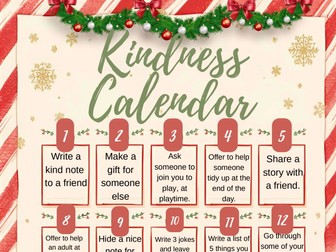
Here is a kindness advent calendar that I use in my class. It is a nice way for children to open something each day and has a task to achieve behind each door. I have edited it to match the days that the children are in school during December, so that it doesn’t become complicated. I usually invite 2 children a day to open the door and complete the task so that everyone is involved.
I hope you enjoy your class spreading a little bit of kindness each day!
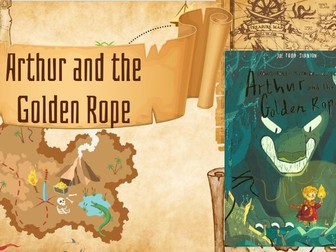
A series of 10 lessons, with notes to guide and handouts included, on Arthur and the Golden Rope. An ideal book topic if you are looking at any element of Norse Mythology or if you are sharing an adventure story unit or a fantasy story unit.
This series of lessons includes, making predictions, reading comprehension, inference, writing an extract of the text, justifying with evidence and writing a book review (any many more).
I have loved using Joe Todd-Stanton’s books with all of my classes, there are so many clues in the illustrations, making them perfect for comprehension support.
This unit would be suitable for any class in KS2.
I hope you enjoy!
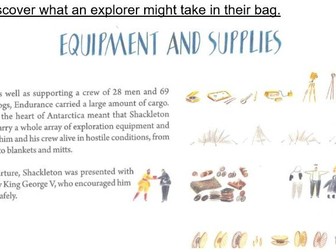
A series of guided/whole class reading activities and inference lessons based on the explorer Ernest Shackleton and taking inspiration from the book ‘The Ice Trap’. I taught this to year 4 but it could easily be used throughout all of KS2.
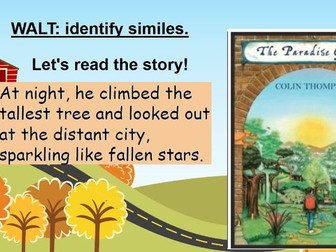
Three lessons to begin writing descriptions based on the Paradise Garden story. The lessons begin with identifying similes, looking at onomatopoeia and then seeing what a good description looks like, using The Paradise Garden as a stimulus throughout.
I teach in Year 3 but this is easily adaptable for Year 4, 5 and 6.
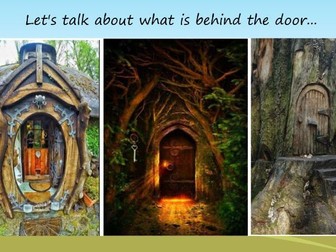
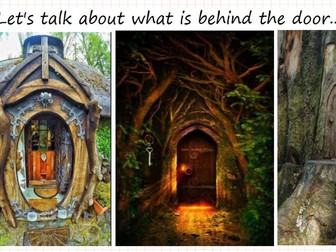
A short free-write unit about a magical set of doors. Great for assessing children’s writing ability and exploring their prior knowledge. This short unit explores different magical doors and how they might inspire us to write our own stories. Aimed at children in Year 3 but equally would be easily used across the key stages, with some small adaptations to make it KS1 appropriate.
Looking for something a little different to the usual end of year quiz? Have fun on the last few days of term by enjoying some fun and engaging team building tasks. These tasks are designed to inspire creativity and allow children to all fully participate within their teams. Feel free to edit all tasks to suit your school/class. This resource is suitable for children from Year 3-6 (KS2)
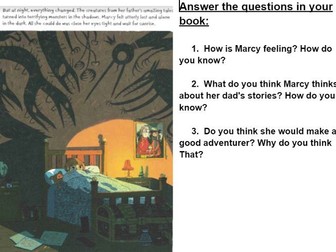
Whole class/guided reading unit for the topic Ancient Egypt, using the book Marcy and the Riddle of the Sphinx.
This is a full 12 lessons on making predictions and using evidence. It includes the slides and the resources for these lessons.
This is a fantastic book with so much scope for developing inference and comprehension skills, using the illustrations alone. My class adore reading it every year!
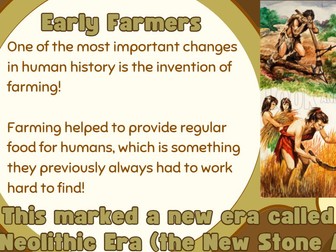
This is a really exciting and hands-on unit covering the Stone, Bronze and Iron Ages for KS2 children. I love history and strive to make learning it as fun and engaging as possible. This exciting unit is packed with 9 lessons and activities for children to participate in, including; building Stonehenge out of biscuits, creating our own roundhouses, designing and creating cave paintings/cave art, going on a classroom archaeological dig for artefacts and finally designing and making our own Stone Age tools using the knapping method.
If you love fun History, this is the unit for you!!
Unit includes:
Lesson 1: Use artefacts to generate questions.
Lesson 2: Understanding primary and secondary sources (doing an archaeological dig).
Lesson 3: Explore cave art and its importance.
Lesson 4: Create cave art.
Lesson 5: Identify Stone, Bronze and Iron Ages on a timeline.
Lesson 6: Understand how tools were made (create Stone Age tools using the knapping method).
Lesson 7: Describe the changes from Hunter-gatherer to Early Farmers.
Lesson 8: How homes changes throughout Prehistory (create your own roundhouses).
Lesson 9: Understand the significance of Sonehenge (make Stonehenge out of biscuits).
Throughout the unit there are helpful links and handouts to help you on your way. You will find additional information (like links and how I present certain slides) in the notes under the relevant slides.
I really hope this helps you to build on your Stone Age topics and that you enjoy carrying out these activities, as much as I love delivering them!
Are you looking for an exciting way to end the Autumn term? This Christmas quiz is my ultimate favourite way to end the term. Every year we have so much fun with it. There is a music round, film round, food round, building round etc. A great way to get rid of all of your scap paper and have your class working well as a team!!
Let me know how you get on with it!!
This story writing unit is a great introduction to the key features you might find in a story. This unit is suitable for LKS2 although could be adapted to easily suit Year 5. Lessons 1-4 include:
Lesson 1 - Free write (stimulus and support materials) for children to show what they already know about story writing. Although, this could easily become 2 lessons of work.
Lesson 2 - Introduction to fronted adverbials.
Lesson 3 - Use fronted adverbials in writing.
Lesson 4 - Introduction/using direct speech.
I hope you enjoy using it. I always find that these lessons allow children to share their creativity when it comes to story writing!
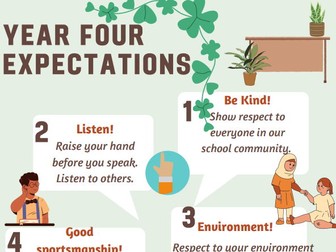
I created this poster to show our Year 4 classroom rules/expectations. These talk about the usual classroom expectations, but also the importance of good sportsmanship, respecting the community and others property and how every child has the right to learn. Great for any Year 4 classroom!
 Quick View

 Quick View
 Quick View
 Quick View
 Quick View
 Quick View
 Quick View
 Quick View
 Quick View
 Quick View
 Quick View
 Quick View
 Quick View
 Quick View