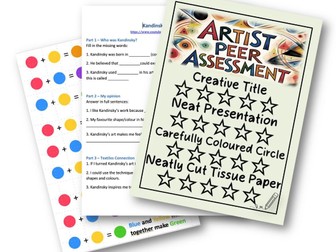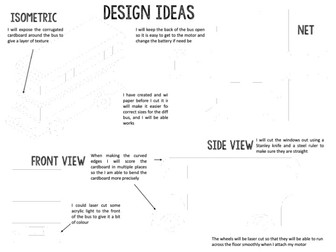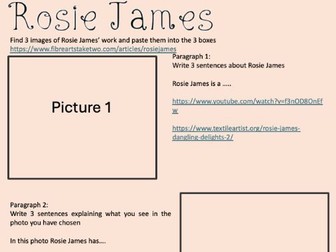
Art/Textiles - Rosie James - Artist Research WorksheetQuick View
harrietr2

Art/Textiles - Rosie James - Artist Research Worksheet

(0)
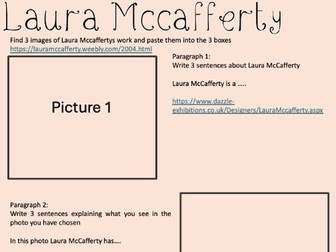
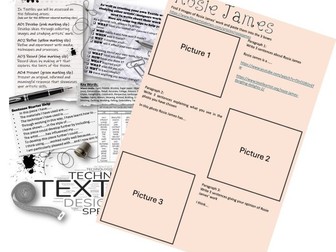
A structured artist research worksheet focused on the work of Rosie James, designed to support students in developing research, analysis, and written evaluation skills in Art and Textiles. This scaffolded resource guides students through researching the artist, analysing selected artworks, and expressing their own opinions using full sentences. The worksheet provides a clear framework to help learners build confidence when writing about artists and their work. The worksheet includes: A biographical research section about Rosie James Space for students to find and insert examples of the artist’s work Artwork analysis prompts encouraging observational and descriptive writing Personal response questions to develop critical thinking and evaluation skills Structured paragraph tasks to support literacy in Art and Design Perfect for: KS3-KS4 Art & Design/Textiles Artist studies and contextual research Cover lessons and homework Portfolio and sketchbook development Skills developed: Artist research Visual analysis Annotation and evaluation Written communication Critical thinking
Art/Textiles - Artist Research Worksheet ScaffoldsQuick View
harrietr2

Art/Textiles - Artist Research Worksheet Scaffolds

4 Resources
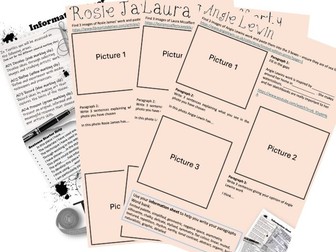
A comprehensive Textiles Artist Research Bundle designed to support students in developing research, analysis, annotation, and evaluation skills for KS3 and GCSE Art & Design (Textiles). This bundle includes scaffolded research worksheets with links for contemporary textile artists, alongside a detailed textiles information sheet packed with subject-specific vocabulary, sentence starters, and guidance on the assessment objectives. The resources help students build confidence when writing about artists, analysing artwork, and linking artist influences to their own practical work. Included in this bundle: Artists - Laura McCafferty, Rosie James and Angie Lewin Sentence starters for annotation and evaluation GCSE AO1–AO4 guidance Art and textiles vocabulary bank Tips for analysing artists and reflecting on practical work Skills developed: Artist research and contextual understanding Visual analysis and interpretation Annotation and written evaluation Use of specialist textiles vocabulary GCSE coursework and sketchbook development Independent research skills Perfect for: KS3 - KS4 Art/Textiles Artist research lessons Homework and cover work Coursework and sketchbook support
Art/Textiles - Laura McCafferty - Research BundleQuick View
harrietr2

Art/Textiles - Laura McCafferty - Research Bundle

2 Resources
This resource provides clear guidance on how to write about artists, analyse practical work, use subject-specific vocabulary, and understand assessment objectives, making it ideal for supporting both KS3 and GCSE students. Included in this bundle: Laura McCafferty research worksheet Sentence starters for artist analysis and evaluation Structured prompts to help students discuss their own work and the work of others Artist research and annotation support Art vocabulary mat to support written analysis and annotation Skills developed: Artist research and analysis Annotation and evaluation Use of specialist textiles vocabulary Written communication in Art & Design GCSE coursework development Independent learning and reflection Perfect for: KS3 - KS4 Art/Textiles Coursework support Homework and independent study Cover lessons Sketchbook development
Art/Textiles - Laura McCafferty - Artist Research WorksheetQuick View
harrietr2

Art/Textiles - Laura McCafferty - Artist Research Worksheet

(0)
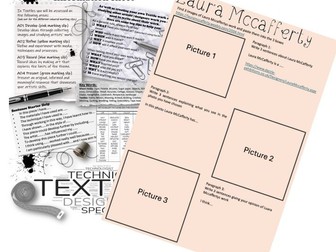
A structured artist research worksheet focused on the work of Laura McCafferty, designed to support students in developing research, analysis, and written evaluation skills in Art and Textiles. This scaffolded resource guides students through researching the artist, analysing selected artworks, and expressing their own opinions using full sentences. The worksheet provides a clear framework to help learners build confidence when writing about artists and their work. The worksheet includes: A biographical research section about Laura McCafferty Space for students to find and insert examples of the artist’s work Artwork analysis prompts encouraging observational and descriptive writing Personal response questions to develop critical thinking and evaluation skills Structured paragraph tasks to support literacy in Art and Design Perfect for: KS3-KS4 Art & Design/Textiles Artist studies and contextual research Cover lessons and homework Portfolio and sketchbook development Skills developed: Artist research Visual analysis Annotation and evaluation Written communication Critical thinking
Art/Textiles - Angie Lewin Research BundleQuick View
harrietr2

Art/Textiles - Angie Lewin Research Bundle

2 Resources
This resource provides clear guidance on how to write about artists, analyse practical work, use subject-specific vocabulary, and understand assessment objectives, making it ideal for supporting both KS3 and GCSE students. Included in this bundle: Angie Lewin research worksheet Sentence starters for artist analysis and evaluation Structured prompts to help students discuss their own work and the work of others Artist research and annotation support Art vocabulary mat to support written analysis and annotation Skills developed: Artist research and analysis Annotation and evaluation Use of specialist textiles vocabulary Written communication in Art & Design GCSE coursework development Independent learning and reflection Perfect for: KS3 - KS4 Art/Textiles Coursework support Homework and independent study Cover lessons Sketchbook development
Art/Textiles - Rosie James - Research BundleQuick View
harrietr2

Art/Textiles - Rosie James - Research Bundle

2 Resources
This resource provides clear guidance on how to write about artists, analyse practical work, use subject-specific vocabulary, and understand assessment objectives, making it ideal for supporting both KS3 and GCSE students. Included in this bundle: Rosie James research worksheet Sentence starters for artist analysis and evaluation Structured prompts to help students discuss their own work and the work of others Artist research and annotation support Art vocabulary mat to support written analysis and annotation Skills developed: Artist research and analysis Annotation and evaluation Use of specialist textiles vocabulary Written communication in Art & Design GCSE coursework development Independent learning and reflection Perfect for: KS3 - KS4 Art/Textiles Coursework support Homework and independent study Cover lessons Sketchbook development
GCSE Art & Design/Textiles - Sentence Starters & Writing Guide | AO1–AO4 SupportQuick View
harrietr2

GCSE Art & Design/Textiles - Sentence Starters & Writing Guide | AO1–AO4 Support

(0)
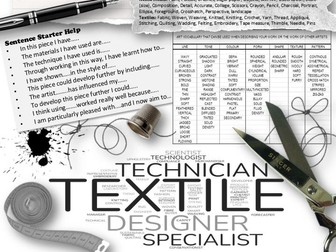
A clear Textiles information sheet designed for KS3 and GCSE Art & Design, helping students confidently analyse, reflect on, and write about their practical work and artist research. This resource provides structured guidance to develop students’ written responses, encouraging them to use appropriate subject vocabulary and link their ideas to assessment objectives. The worksheet includes: Sentence starters to support writing about their own work and artists’ work Prompts to guide analysis (What, Who, When, Why, How) Guidance on evaluating and developing ideas further A comprehensive textiles and art vocabulary bank (e.g. stitching, appliqué, embroidery) Clear explanation of GCSE assessment objectives (AO1–AO4) to support understanding of marking criteria Skills developed: Writing about practical work Artist analysis and evaluation Use of subject-specific vocabulary Understanding GCSE assessment criteria Reflecting and improving work Perfect for: KS3 & GCSE Art and Textiles Coursework support Artist research and annotation
Art/Textiles - Angie Lewin - Artist Research WorksheetQuick View
harrietr2

Art/Textiles - Angie Lewin - Artist Research Worksheet

(0)
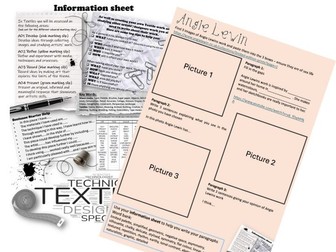
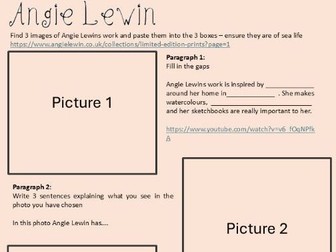
A structured and engaging artist research worksheet focused on the work of Angie Lewin, designed to support students in developing both their knowledge and written responses in Art & Design. This scaffolded resource guides pupils through analysing artwork, building their understanding, and expressing their own opinions using appropriate subject vocabulary. The worksheet includes: A guided introduction paragraph to build factual knowledge about Angie Lewin Image analysis task encouraging students to describe what they see in selected artworks A personal response section to develop opinions and critical thinking A word bank of key art vocabulary to support extended writing Skills developed: Artist research and analysis Written responses in Art Use of subject-specific vocabulary Observational and descriptive skills Perfect for: KS3–KS4 Art & Design Artist studies / artist pages Homework or cover lessons Supporting literacy across the Art curriculum
DT - GCSE - 9 Mark Questions - Specialist Section - Scaffolded Exam PracticeQuick View
harrietr2

DT - GCSE - 9 Mark Questions - Specialist Section - Scaffolded Exam Practice

(0)
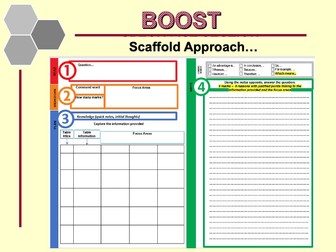
A focused GCSE Design & Technology exam preparation resource designed to support students in successfully answering 9-mark extended response questions from the specialist section. This scaffolded PowerPoint helps pupils understand how to structure high-level answers, breaking down the process step-by-step and building confidence with longer written responses. The resource includes: A clear scaffolded approach to answering 9-mark questions Guidance on identifying command words, key information, and focus areas Structured prompts encouraging students to develop justified points and reasoning Timed practice tasks to build exam confidence and pacing Model-style answers demonstrating how to link ideas using connectives and full sentences Skills developed: Writing extended exam answers Justifying ideas with clear reasoning Applying knowledge to real-world contexts Improving exam technique and structure Perfect for: KS4 GCSE Design & Technology (Edexcel) Exam revision lessons Intervention or booster sessions Teaching students how to access higher mark bands
DT - GCSE - Material Properties Retrieval -Exam Practice Questions - Edexcel Q1Quick View
harrietr2

DT - GCSE - Material Properties Retrieval -Exam Practice Questions - Edexcel Q1

(0)
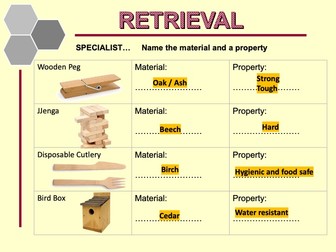
A focused GCSE Design & Technology retrieval and exam practice resource designed to develop students’ understanding of material properties and their real-world applications. This worksheet-style PowerPoint presents students with a range of everyday wooden products, requiring them to identify and explain key material properties that make each product suitable for its use. The structured format mirrors common GCSE exam questions, helping to build confidence and improve exam technique. The resource includes: Retrieval practice tasks to reinforce key knowledge A range of products and contexts to apply learning to real-world situations Prompts asking students to name and justify material properties Clear guidance and examples to support understanding of what examiners expect Opportunities to develop short exam-style written responses This powerpoint can be adapted to add different products Skills developed: Identifying material properties (e.g. strength, durability) Applying knowledge to real products Structuring exam answers clearly Developing technical vocabulary Perfect for: KS4 / GCSE Design & Technology Starter activities or retrieval practice Exam preparation and revision lessons Building confidence with 1–2 mark questions
DT - Wood CategoriesQuick View
harrietr2

DT - Wood Categories

(0)
A simple and effective classification worksheet designed to help students understand the different types of timber used in Design & Technology. This resource introduces pupils to the three main categories of wood: Hardwoods Softwoods Manufactured boards Students categorise materials into each group, helping to build a strong foundation in materials knowledge. The worksheet supports: Understanding key material categories Developing knowledge of timber types Reinforcing learning through sorting/classification Preparing for further DT topics and GCSE content Perfect for: KS2–KS3 Design & Technology Introductory materials lessons Starters, plenaries Supporting revision of material categories
DT - Paper Making - Specification fill in the gapsQuick View
harrietr2

DT - Paper Making - Specification fill in the gaps

(0)
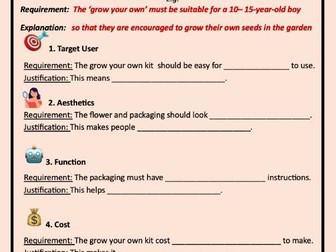
A structured Design & Technology specification worksheet designed to help students develop clear and justified design criteria for a “grow your own” seed product project. This fill-in-the-gaps resource guides pupils step-by-step through writing a specification, supporting them in creating well-explained requirements linked to user needs, function, and sustainability. The worksheet includes: Scaffolded sentence starters to support writing clear requirements and justifications Focus on key design areas including target user, aesthetics, function, cost, and environment Opportunities to develop literacy skills in DT, particularly explaining “why” design decisions matter Clear structure to help students prepare for the design and making stages Students are introduced to key concepts such as ACCESSFM, encouraging them to think about: Perfect for: KS2–KS3 Design & Technology Sustainability / “grow your own” projects Supporting the design specification stage Developing written justification skills
DT - GCSE - Cardboard Vehicle PowerpointQuick View
harrietr2

DT - GCSE - Cardboard Vehicle Powerpoint

(0)
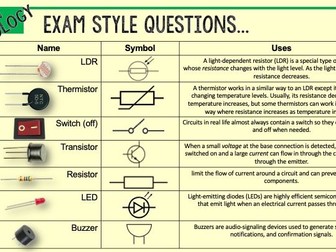
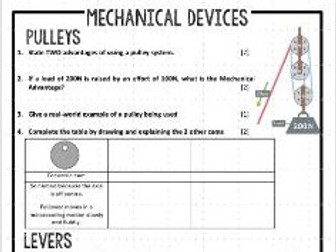
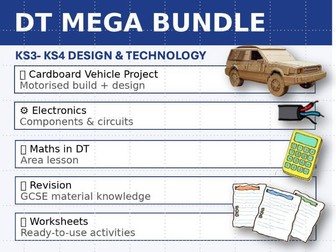
A complete Design & Technology scheme of work PowerPoint supporting a cardboard vehicle project, combining materials knowledge, electronics, mechanisms, and practical making skills. This resource guides students through the full design process, helping them understand the context, develop ideas, and build a working motorised product. The PowerPoint includes: Design context and brief linked to a real-world client scenario Theme board and design development tasks to generate creative ideas Specification writing using ACCESSFM to justify design decisions Electronics knowledge (components, symbols, inputs/outputs) Step-by-step soldering guidance to build a working motor circuit safely Mechanisms content including pulleys, gears, and levers Maths links (e.g. calculations, mechanical advantage, moments) Evaluation and reflection tasks to assess final outcomes Perfect for: KS3–KS4 Design & Technology revision STEM and cross-curricular learning Teaching electronics through practical projects Supporting a full project or scheme of work
DT - Paper Making ProjectQuick View
harrietr2

DT - Paper Making Project

4 Resources
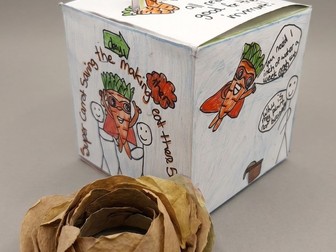
Design & Technology mini-project bundle focused on paper making and eco-product design, where students create their own seed-embedded paper and matching packaging/accessories. This bundle supports pupils through the early stages of the design process, from research and context exploration to generating and presenting creative ideas. The bundle includes: scaffolded specification focused on key design areas including target user, aesthetics, function, cost, and environment Exploring the Context Worksheet Research tasks on plant growth (water, sunlight), materials, tools, and user needs to build understanding before making Paper Making Storyboard Template A visual sequencing activity helping students plan and explain the paper-making process step-by-step Seed Marker Design Ideas Sheet A creative worksheet where students generate and annotate multiple design ideas for a seed marker product Skills developed: Research and investigation Design thinking and idea generation Understanding of sustainability and eco-friendly materials Drawing, annotation, and communication skills Product design (including packaging and accessories) Perfect for: KS2–KS3 Design & Technology Sustainability / eco-projects Paper making or recycling units Short projects or introductory schemes of work
DT - GCSE - Cardboard Vehicle Theme BoardQuick View
harrietr2

DT - GCSE - Cardboard Vehicle Theme Board

(0)
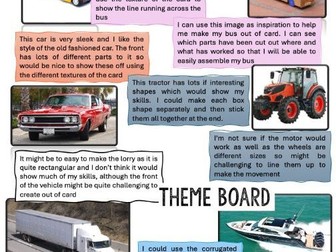
A creative theme board is designed to support students in researching and developing ideas for a cardboard vehicle design project. This resource encourages pupils to gather visual inspiration and annotate their ideas, helping them explain design choices and begin developing a clear concept for their final product. Students explore different vehicle ideas (e.g. cars, buses, boats) and evaluate which designs will best demonstrate their skills and suitability for making. Perfect for: KS3–KS4 Design & Technology Cardboard modelling or product design projects Supporting the research and inspiration stage Developing annotation and design thinking skills
DT - Explore The Context - Paper MakingQuick View
harrietr2

DT - Explore The Context - Paper Making

(0)
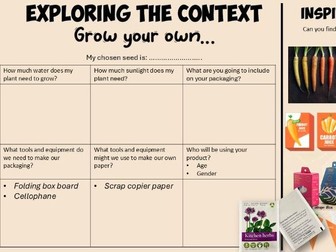
A structured and engaging research worksheet designed to support a sustainable paper-making project, where students create their own paper embedded with seeds and design packaging for their product. This resource helps pupils explore the context before making, encouraging them to research their seed, materials, and user requirements. It develops both practical DT understanding and design thinking. The worksheet includes: Research prompts about plant care (water, sunlight, growing conditions) Questions to guide packaging design ideas and inspiration Identification of tools and equipment for both paper making and packaging Consideration of the target user (age, user needs, purpose) Space for visual research and inspiration images Students investigate materials such as recycled paper and packaging options, linking to sustainability and eco-friendly design. Perfect for: KS2–KS3 Design & Technology Sustainability and recycling projects Paper making and packaging units Developing research and design skills
DT - GCSE - Cardboard vehicle Project BookletQuick View
harrietr2

DT - GCSE - Cardboard vehicle Project Booklet

(0)
A comprehensive Design & Technology project booklet supporting students through the full process of designing and making a motorised cardboard vehicle. This structured booklet guides learners through each stage of the design cycle, combining creative design, practical making, and electronics knowledge in one engaging project. The booklet includes: Research and inspiration tasks (theme boards and idea development) Design specification writing using ACCESSFM principles (aesthetics, cost, customer, environment, size, safety, function, materials) Electronics knowledge (components, input/output systems, multiple-choice questions) Practical making guidance including soldering and working with motors Activities on mechanisms (pulleys, gears, levers, cams) to build technical understanding Evaluation section to reflect on the final product and improvements Students develop key skills in: Designing and annotating ideas Understanding and applying electronics Problem-solving and prototyping Evaluating and improving products Revision booklet Perfect for: KS3-KS4 Design & Technology STEM / cross-curricular projects Extended projects or schemes of work Introducing electronics through practical making
DT - Seed Marker Design ideasQuick View
harrietr2

DT - Seed Marker Design ideas

(0)
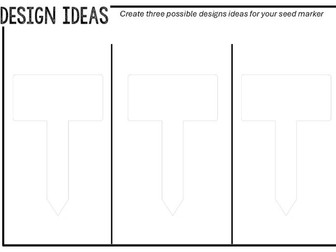
A creative design ideas worksheet for a sustainable Design & Technology project, where students generate concepts for a seed marker to accompany their handmade seeded paper product. This resource supports pupils in developing and communicating their design ideas, encouraging creativity, practical thinking, and links to real-world products. Their ideas can then be transfered onto Techsoft to be lasercut, in order for students to get an understanding of CAD & CAM The worksheet includes: Space to create three different design ideas for a seed marker Opportunities to develop drawing, annotation, and presentation skills Links to a wider sustainability project (seed paper and planting) Encourages students to explore function, aesthetics, and user needs Students can experiment with different shapes, materials, and styles, preparing them for the making stage of their project. Perfect for: KS2–KS3 Design & Technology Sustainability and eco-product design projects Supporting the design phase of a making project Developing creativity and idea generation skills
DT - GCSE - Cardboard Vehicle Project with Revision WorksheetsQuick View
harrietr2

DT - GCSE - Cardboard Vehicle Project with Revision Worksheets

5 Resources
A creative and engaging Design & Technology project where pupils design and make a cardboard vehicle that moves using simple electronics. Students develop both practical making skills and basic electronic understanding by designing a model vehicle and integrating a motor to create forward movement. The project encourages problem-solving, creativity, and hands-on learning. The resource includes: Design and idea development (theme board and annotated ideas) Guidance on working with corrugated cardboard, including cutting, shaping, and scoring techniques Introduction to simple electronics (motor, battery, movement) Making skills such as measuring, cutting, assembling, and prototyping Focus on sustainable materials and reducing waste Maths in Design & Technology Revision Mat - Timbers, Plastics, Metals, Textiles and Paper and boards Students explore how to: Create accurate nets and prototypes before final making Use tools safely to cut and shape materials Attach and position a motor for effective movement Evaluate and improve their design Perfect for: KS3-KS4 Design & Technology STEM / cross-curricular projects Introducing electronics in a practical context Projects focused on sustainability and modelling
DT - Cardboard Vehicle Design Ideas ExampleQuick View
harrietr2

DT - Cardboard Vehicle Design Ideas Example

(0)
A detailed design ideas example to support students in developing and refining a concept for a cardboard vehicle project. This resource encourages pupils to think like designers by annotating their ideas and explaining how they will create their final product. It focuses on both practical making skills and design thinking. The worksheet includes: Space for annotated design ideas Prompts to explain how and why design decisions are made Consideration of tools, materials, and processes such as cutting, scoring, and assembling cardboard Opportunities to plan for electronics integration (motor and movement) Encouragement to explore creativity, structure, and detail (e.g. textures, shapes, features) Students develop ideas such as: Creating accurate templates before cutting Using techniques like scoring for curved shapes Adding features like windows, textures, and moving parts Perfect for: KS3- KS4 Design & Technology Cardboard modelling projects Electronics projects (motorised products) Building design and annotation skills