A lesson to celebrate the life and legacy of Sir David Attenborough on his 100th Birthday on Friday 8th May 2026.
The lesson includes:
Animal related starter
A David Attenborough quiz (with answers animating out)
4 different David Attenborough themed tasks for students to complete
Videos to show his legacy and work
A plenary focusing on future environmentalists
All information is correct as of May 2026.
A lesson containing vital exam skills before the 2026 AQA Geography GSCE paper 1 on Thursday 13th May 2026.
The lesson includes:
Case study reminders (focus on cold environments)
Different question types and what the answer requires
Different mark questions and what the answer requires to get full marks
Command term revision with focus on how to answer these questions
How to analyse and use figures
Kahoots for all the differnet paper 1 sections.
All information correct as of May 2026.
A 20-30 minute assembly focusing on and celebrating Sir David Attenborough’s 100th Birthday.
The assembly focuses on his legacy with some key facts about his life, a short game where students have to guess the animal based on David Attenborough’s description, and finishes with looking at other inspiring geographers.
All information correct as of April 2026.
This lesson focuses on how to answer all the different maths questions which could come up in the AQA Geography GCSE for paper 1, paper 2 and paper 3.
This lesson focuses on:
How to complete mean, median, mode
How to calculate the range
How to calculate the interquartile range
What a dispersion graph is and how to read and plot on
How to calculate percentage change
Worked answers for each of the above
Worksheets for students to complete based on the above
Explore what different countries around the world eat for Christmas! The lesson starts asking students to think about Christmas traditions in the UK, before a quick quiz about food around the world, and how different countries saying “Merry Christmas”. The main task of the lesson is a poster making task where students make a poster about Christmas food in a country of their choice.
This lesson is recommended as a pre-exam lesson focusing on different exam skills and exam practice for students before sitting their AQA Geography paper 1 exam.
The lesson includes the following:
Recap of key information about the paper 1 exam
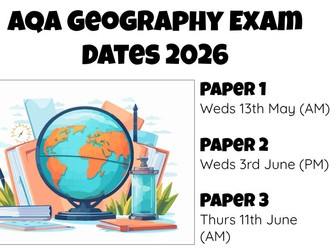
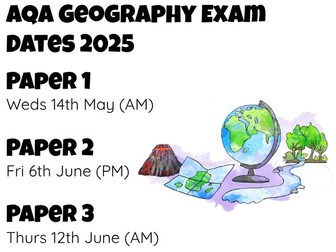
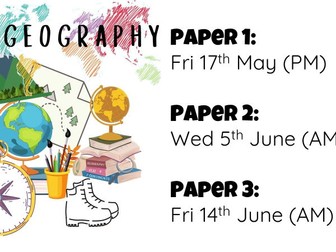
Exam dates for all three exams
Different decisions students have to make in the exam (e.g. cold environments or hot deserts)
Case study challenge asking students to remember what their case study is for each topic in paper 1
How to answer each exam question based on the marks - and what they look like
Picture/figure analysis - how to extract information from a figure to be able to answer the question
What each command term means and how many marks it could be worth
Kahoot - a selection of Kahoots covering all paper 1 topics
This lesson is designed to be taught as one of the last lessons before the exam but could be taught over several lessons and stretched out if needed.
All information is for the 2024/25 AQA exam series. Case studies can be amended depending on what has been taught at your school.
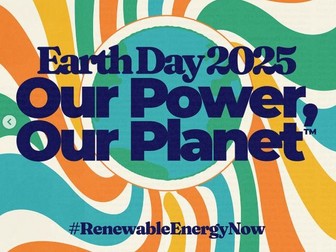
A 30 minute assembly for World Earth Day 2025 focusing on this years theme: Our Power, Our Planet
The assembly covers:
What is World Earth Day
When is World Earth Day
What is this years theme
What does renewable energy mean
Examples of renewable energy
Interactive element - How common is renewable energy, put your hand up if you’ve seen this type of renewable energy before
Interactive element - Higher or lower looking at countries overall renewable energy usage
What you can do to help use more renewable energy
This could also be used as a lesson about renewable energy, or a tutor time based around World Earth Day.
All facts correct as of April 2025.
A 1 hour one off lesson for World Earth Day 2025 focusing on this years theme: Our Power, Our Planet
This one off lesson says what World Earth Day is then focuses on what renewable energy is, examples of renewable energy and looks at the use of renewable energy in the UK and in countries around the world.
There are several discussion points through the lesson, there are 5 tasks including an interactive higher or lower task looking at renewable energy usage around the world, writing a convincing letter about renewable energy (with succes criteria), with students then peer assessing this using a step-by-step marking method.
All facts correct as of April 2025.
This lesson focuses on the wildfires that raged through Los Angeles at the start of 2025 and what some of the impacts were and then a general discussion of wildfires.
This lesson includes: fact slides about the Los Angeles wildfire, location describing task, wildfire sensory task, video questions task, causes of wildfires and a wildfire evacuation simulation. This lesson also includes an optional piece of homework for students to complete about the 2025 Los Angeles wildfires with a success criteria for this.
All information correct as of March 2025.
A full resourced weather and climate unit made for year 8 but could be taught to any KS3 class. This unit consists of 12, 1hr lessons and includes lessons and resources for a microclimate investigation/fieldwork to be conducted around your school site.
Two seperate assessment points - one peer assessment, one teacher marked. Lessons contain fieldwork investigation including extended writing and graph creation and analysis, map analysis (TEA), creative weather report group task, creative writing tasks, research tasks, carousel tasks, QR code tasks, interactive timers and news reports, video tasks, drawing tasks, colouring tasks and more.
Lessons are as follows:
1 - What is weather and climate?
2 - How do we measure weather?
3 - Why does it rain?
4 - Climate graphs
5 - Climate zones
6 - Extreme Weather: Hurricanes
7 - Extreme Weather: Wildfires
8 - Extreme Weather and Climate Change
9 - What is a Microclimate?
10 - Microclimate Investigation
11 - Fieldwork Analysis
12 - Fieldwork Write-Up (Extended Writing)
All resources requiring printing are as hidden slides on the PowerPoint. Links to any videos are in the notes section of the slide.
All information is as of May 2023.
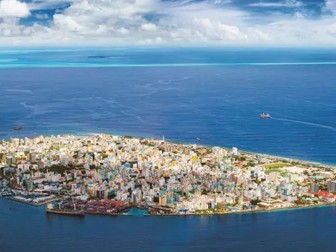
A lesson focusing on how The Maldives are under threat from climate change specifically focusing on sea level rise but also discussing coral bleaching and coastal erosion.
The main task of the lesson is an interactive task where students help make a plan to protect the island of Male from sea level rise, as well as letter writing, map and picture interpretation and getting information from videos.
All statistics are correct as of November 2023.
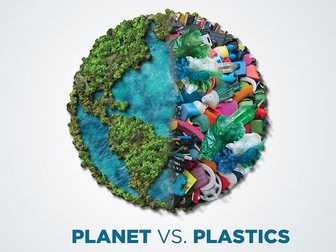
A 30 minute assembly for World Earth Day 2024 focusing on this years theme: Planet VS Plastic.
The assembly covers:
What is World Earth Day
When is World Earth Day
What is this years theme
What does this mean
How do you contribute to this - fast and fashion
What impact does this have on you - fish and chips
Interactive elements regarding the break down of plastic products
The Great Pacific Garbage Patch information
What you can do to help reduce your plastic pollution impact
This could also be used and adapted to create a lesson about plastic pollution, or a tutor time based around World Earth Day.
All facts correct as of April 2024.
An completed and fully resourced unit of 17 lessons covering map skills and amazing places. Students learn a map skill and then have it applied to a different amazing place around the world.
There are two separate assessment points, the first is a multiple choice assessment with some written questions. The second is extended writing at the end of the unit.
The lessons are as follows:
L1 - Welcome to Geography!
L2 - Geography 101 (continents + oceans, and the UK)
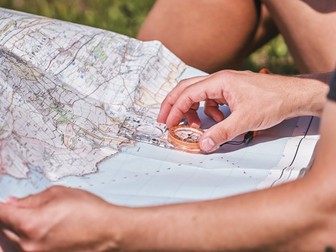
L3 - Introduction to Maps
L4 - Compass Points (Amazing Place: New York City)
L5 - Map Symbols
L6 - Symbol Stories (Amazing Place: New Zealand)
L7 - 4 Figure Grid References (Amazing Place: Bath)
L8 - 6 Figure Grid References
L9 - OS Map Reading (Amazing Place: The Isle Of Wight)
L10 - Amazing Map Skills Assessment
L11 - Height and Relief (Amazing Place: The Breacon Beacons)
L12 - Map Distance and Scale (Amazing Place: Namibia)
L13 - Latitude and Longitude (Amazing Place: Alaska)
L14 - GIS
L15 - Everyday GIS (Amazing Place: Iceland)
L16 - Amazing Map Skills Extended Writing
L17 - Handy Maps
All information on slides is current as of May 2024
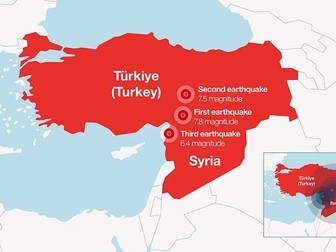
A research lesson based around the 2023 Turkey/Syria earthquake. This can either be a standalone lesson or serve as part of a tectonics unit. The resource download includes a template to provide to students either virutally or on paper to help focus their research. It also provides links to BBC News articles which will help students complete the task.
All information and statistics are as of 26th February 2023.
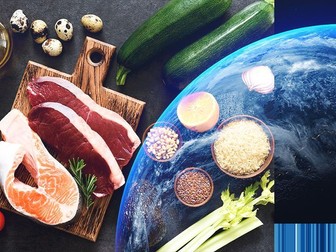
This lesson focuses on the impact climate change will have on food production around the world. It also focuses on the impact of food miles and the impact importing food will have on climate change.
The lesson includes scenario based tasks where students have to respond to different changes (related to climate change) and how this will impact food production. There is also a food miles guessing game, as well as debating plenary.
All information correct as of January 2024.
A full one hour lesson designed to help students with the AQA Geography Paper 1. This lessons focuses on how to answer the exam questions looking at:
Details about the exam
Case studies students need
How to answer each exam question based on its marks
What each command term means
Examples to support all of the above
A selection of paper 1 Kahoots
All information is for the current 2023/24 AQA exam series. Case studies can be changed depending on what each individual has taught.
This lesson is designed to be taught as one of the last lessons before the exam to recap exam practice and answering exam questions.
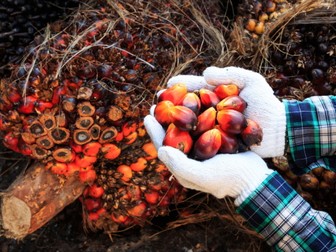
This lesson focuses on the threats palm oil poses to our tropical rainforests. This could be a standalone lesson or integrate into a tropical rainforest, climate change or deforestation unit.
This lesson involves an interactive unit where students identify foods they have containing palm oil and involves a creation task where students create their own TV advert.
All facts and stats accurate as of November 2023.
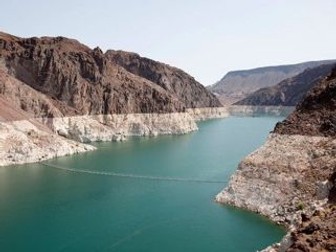
A lesson focused around water insecurity in Las Vegas and looking at xeriscaping as a way to save water.
This lesson involves map reading, picture interpretation, comparison work, gathering information from a video, and a creative task.
All facts and stats are as of April 2023.
A lesson introducing students to what is a refugee, why people become refugees and them applying this to the current Ukraine refugee crisis.
This lesson involves picture interpretation, creative writing, adaptative teaching tasks, and data interpretation.
All facts and stats are as of April 2023.
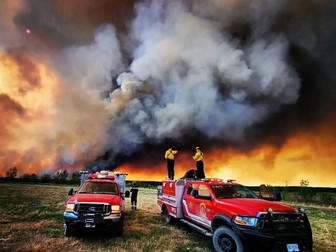
A lesson based around the current 2023 Canada Wildfires. The lessons includes a sensory task based around drone footage from New York as it covered with smoke from the wildfires, a task based around climate change, a mock wildfire evacuation decision making task and a poster task to raise awareness of the causes of wildfires where students get to create their own mascot!
As statistics are as of 15th June 2023.
This lesson focuses on what Christmas is like in different countries and cultures around the world.
This lesson includes a match the tradition to the country game, match the country to how they say happy Christmas, and a research poster producing task following an outlined success criteria.
This is perfect for a geography, PSHE, MFL or tutor time activity.
All information is accurate as of December 2024.