Rebecca Chapters 21-27Quick View
gazren

Rebecca Chapters 21-27

(0)
Each chapter has a Word document which includes questions and answers which allow for close reading to be done while reading (alternatively they can be used for end of chapter review after reading). These questions were written by myself as I read this novel with IGCSE students in Year 10; therefore, the Word documents will include screenshots from our reading and additional notes on most questions.
A Streetcar Named DesireQuick View
gazren

A Streetcar Named Desire

(0)
There is a Word document for each of the eleven scenes in the play. Questions and answers are provided in the document. Question types range from basic comprehension of plot progression right through to detailed analysis of Tennesse Williams’s ‘plastic theatre’ so the resources are suitable for all levels.
The Odyssesy (Robert Fagles Translation)Quick View
gazren

The Odyssesy (Robert Fagles Translation)

(0)
This includes Word documents with comprehension questions (and answers) through each book of ‘The Odyssey’. Please note that these questions (which include some evidence from the text) are based on Robert Fagles’s translation of the text.
The Pedestrian by Ray Bradbury study guideQuick View
gazren

The Pedestrian by Ray Bradbury study guide

(0)
Study guide for The Pedestrian including Topic question (to get students on task) Genre explanation Key vocabulary gap-fill activity Reading comprehension including questions (and answers) on, but not limited to - Plot progression - Characterisation - Figurative language - Literary devices Post-reading extension activities
The Lottery by Shirley Jackson study guideQuick View
gazren

The Lottery by Shirley Jackson study guide

(0)
Study guide for The Lottery including Topic question (to get students on task) Genre explanation Key vocabulary gap-fill activity Reading comprehension including questions (and answers) on, but not limited to - Plot progression - Characterisation - Figurative language - Literary devices Post-reading extension activities
Rebecca Chapters 11-20Quick View
gazren

Rebecca Chapters 11-20

(0)
Each chapter has a Word document which includes questions and answers which allow for close reading to be done while reading (alternatively they can be used for end of chapter review after reading). These questions were written by myself as I read this novel with IGCSE students in Year 10; therefore, the Word documents will include screenshots from our reading and additional notes on most questions.
A Streetcar Named Desire - vocabulary worksheetsQuick View
gazren

A Streetcar Named Desire - vocabulary worksheets

(0)
There is a vocabulary worksheet for each of the eleven scenes of the play. I have chosen ten words per scene that are challenging for the average reader. Each worksheet contains three activities for the ten vocabulary: definition match/search, sentence gap-fill and challenge for students to write their own sentences. I have also provided an answer book for the teacher’s ease!
Aaron's Gift by Myron Levoy study guideQuick View
gazren

Aaron's Gift by Myron Levoy study guide

(0)
Study guide for ‘Aaron’s Gift’ including Topic question (to get students on task) Genre explanation Key vocabulary gap-fill activity Reading comprehension including questions (and answers) on, but not limited to - Plot progression - Characterisation - Figurative language - Literary devices Post-reading extension activities
Rebecca (all chapters)Quick View
gazren

Rebecca (all chapters)

3 Resources
All reading comprehension questions and answers from Chapter 1 to Chapter 27 (the end). The whole book is covered in-depth and you are able to handpick the questions that are most suitable for your audience. The level of the questions are catered towards GCSE students and with an extensive question and answer list from each chapter, the teaches is able to craft the perfect lesson with their own objective.
The Great Gatsby chapter-by-chapter study guideQuick View
gazren

The Great Gatsby chapter-by-chapter study guide

(0)
Reading comprehension and vocabulary worksheets for each chapter. Each chapter has one vocabulary worksheet (vocabulary definitions and sentence gap-fill) and between two and four pages of comprehension questions and spaces to write. Questions include main plot points, characterisation, symbolism and prompts to link answers to the context (1920s America). The last two pages are six paragraph-response questions as a post-reading check.
Harrison Bergeron study guideQuick View
gazren

Harrison Bergeron study guide

(0)
Study guide for Harrison Bergeron including Topic question (to get students on task) Genre explanation Key vocabulary gap-fill activity Reading comprehension including questions (and answers) on, but not limited to - Plot progression - Characterisation - Figurative language - Literary devices Post-reading extension activities
Yellow Wallpaper by Charlotte Perkins GilmanQuick View
gazren

Yellow Wallpaper by Charlotte Perkins Gilman

(0)
Study guide for Yellow Wallpaper including Topic question (to get students on task) Genre explanation Key vocabulary gap-fill activity Reading comprehension including questions (and answers) on, but not limited to - Plot progression - Characterisation - Figurative language - Literary devices Post-reading extension activities
Eleven by Sandra Cisneros study guideQuick View
gazren

Eleven by Sandra Cisneros study guide

(0)
Study guide for ‘Eleven’ including Topic question (to get students on task) Genre explanation Key vocabulary gap-fill activity Reading comprehension including questions (and answers) on, but not limited to - Plot progression - Characterisation - Figurative language - Literary devices Post-reading extension activities
Arachne (retold by Olivia E. Coolidge) study guideQuick View
gazren

Arachne (retold by Olivia E. Coolidge) study guide

(0)
Study guide for ‘Arachne’ including Topic question (to get students on task) Genre explanation Key vocabulary gap-fill activity Reading comprehension including questions (and answers) on, but not limited to - Plot progression - Characterisation - Figurative language - Literary devices Post-reading extension activities
Jeremiah's Song by Walter Dean Myers study guideQuick View
gazren

Jeremiah's Song by Walter Dean Myers study guide

(0)
Study guide for Jeremiah’s Song including Topic question (to get students on task) Genre explanation Key vocabulary gap-fill activity Reading comprehension including questions (and answers) on, but not limited to - Plot progression - Characterisation - Figurative language - Literary devices Post-reading extension activities
Ghost of the Lagoon by Armstrong Sperry study guideQuick View
gazren

Ghost of the Lagoon by Armstrong Sperry study guide

(0)
Study guide for ‘Ghost of the Lagoon’ including Topic question (to get students on task) Genre explanation Key vocabulary gap-fill activity Reading comprehension including questions (and answers) on, but not limited to - Plot progression - Characterisation - Figurative language - Literary devices Post-reading extension activities
The Outsiders study guideQuick View
gazren

The Outsiders study guide

(0)
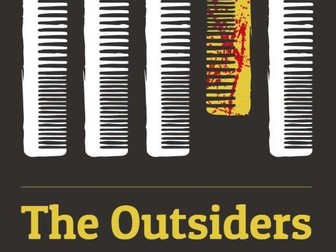
This workbook has vocabulary and reading comprehensions for each chapter. Each chapter has ten key vocabulary with three tasks for each. Following that, the chapter has between 7 and 11 short response questions focused on key plot development, characterisation and literary devices.
The Red-Headed League - Sherlock HolmesQuick View
gazren

The Red-Headed League - Sherlock Holmes

(0)
This pdf workbook is split into three parts which coincide with the plot. Each part has a vocabulary section (definition match, sentence gap-fill and synonym match). Reading comprehension questions are based on characterisation, figurative language, literary devices, plot development, etc. Questions are either written response or multiple choice.
The Adventure of the Speckled Band - Sherlock HolmesQuick View
gazren

The Adventure of the Speckled Band - Sherlock Holmes

(0)
This pdf workbook is split into three parts which coincide with the plot. Each part has a vocabulary section (definition match, sentence gap-fill and synonym match). Reading comprehension questions are based on characterisation, figurative language, literary devices, plot development, etc. Questions are either written response of multiple choice.