Chemical Formulae Dominoes Game | GCSE Chemistry Retrieval ActivityQuick View
alexpboulton

Chemical Formulae Dominoes Game | GCSE Chemistry Retrieval Activity

(0)
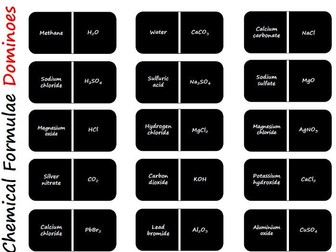
A fun and engaging GCSE Chemistry chemical formulae dominoes game designed to help students practise recalling the names and formulae of common compounds. Students match compound names to the correct chemical formulae either as a dominoes activity or by creating a complete card loop. This resource is ideal for GCSE and IGCSE Chemistry revision and works particularly well as: Retrieval practice Starter activity Plenary task Revision lesson activity Pair or small group work Low-prep cover lesson The activity helps reinforce knowledge of commonly encountered compounds and improves confidence with chemical formulae through active recall and repetition. Included: Printable dominoes/card loop cards Ready-to-use classroom activity Easy classroom setup Flexible gameplay options Typically takes around 10 minutes to complete, making it perfect for retrieval practice, lesson transitions or quick revision sessions. Suitable for GCSE, IGCSE and high-attaining KS3 Chemistry students. Topics covered include: Chemical formulae Compound names Ionic compounds Chemistry vocabulary GCSE Chemistry revision
Electron Configuration Model Activity | KS3 GCSE Chemistry Electron ShellsQuick View
alexpboulton

Electron Configuration Model Activity | KS3 GCSE Chemistry Electron Shells

(1)
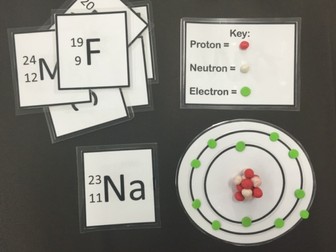
A hands-on electron configuration model activity designed to help students understand electron arrangement and atomic structure at KS3 and GCSE Chemistry level. Students build electron configurations using electron shell cards, element symbols and modelling materials such as Plasticine to create a clear visual representation of atoms. This interactive Chemistry resource is ideal for introducing or revising: Electron configuration Electron arrangement Atomic structure Electron shells Atomic models Periodic table relationships The activity provides a much more engaging and memorable alternative to simply drawing electron diagrams. Perfect for: KS3 Chemistry lessons GCSE Chemistry revision Atomic structure topics Starter or plenary activities Practical-style learning Small group tasks SEN-friendly science activities Included: Printable electron shell templates Element symbol cards Electron configuration key Ready-to-use classroom resource Simply print and add Plasticine (or similar modelling material) for students to build atoms and explore electron arrangements in a practical and interactive way. Suitable for KS3 Science and GCSE Chemistry students, including mixed ability classes. A highly effective low-prep resource for teaching one of the most important foundational Chemistry topics.
Leaf Structure 3D Cube Model | KS3 Biology Plant Structure ActivityQuick View
alexpboulton

Leaf Structure 3D Cube Model | KS3 Biology Plant Structure Activity

(1)
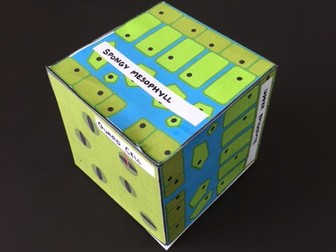
A hands-on 3D leaf structure model activity designed to help students understand and label the different parts of a plant leaf in an engaging and memorable way. Students identify key leaf structures before cutting out and assembling a 3D cube model to create a visual cross section of a leaf. This interactive Biology resource provides a far more effective alternative to traditional textbook diagrams and helps students better visualise leaf structure and function. Perfect for teaching: Leaf structure Plant tissues Photosynthesis Adaptations of leaves Xylem and phloem Palisade mesophyll Spongy mesophyll Stomata and guard cells Ideal for: KS3 Biology lessons GCSE Biology revision Plant biology topics Interactive science lessons Cover lessons SEN-friendly visual learning Cut and stick revision tasks Included: Printable 3D leaf cube template Leaf labelling activity Ready-to-use classroom resource Student-friendly layout Students actively build and explore the structure of a leaf, making the topic much more engaging and memorable than simply studying a 2D image in a textbook or worksheet. Suitable for KS3 Science and GCSE Biology students, including mixed ability classes. A highly visual and low-prep Biology resource that works brilliantly for classroom displays and interactive learning.
Circulatory System Board Game | Journey of a Red Blood Cell Biology ActivityQuick View
alexpboulton

Circulatory System Board Game | Journey of a Red Blood Cell Biology Activity

(0)
A fun and engaging circulatory system board game in which students take on the role of red blood cells travelling through the human circulatory system while answering Biology questions along the way. This interactive Biology activity helps students develop their understanding of: The circulatory system Blood vessels The heart Oxygen transport Red blood cells Blood circulation Human Biology vocabulary Students move around the board as they journey through the body, making this a memorable and highly engaging alternative to traditional worksheet-based revision. Perfect for: KS3 Biology lessons GCSE Biology revision Retrieval practice End-of-topic activities Cover lessons Small group learning Interactive revision sessions Included: Printable A3 game board Red blood cell counters Question cards/activity prompts Suggested rules and instructions Ready-to-print classroom resource The game is simple to prepare — just print, cut out the counters and laminate the board for repeated classroom use. Multiple gameplay options are included, allowing teachers to adapt the activity for different class sizes and ability levels. A highly interactive revision game that combines teamwork, competition and retrieval practice to make learning the circulatory system fun and memorable.
Human Skin Layers 3D Cube Model | KS3 GCSE Biology ActivityQuick View
alexpboulton

Human Skin Layers 3D Cube Model | KS3 GCSE Biology Activity

(0)
A hands-on 3D human skin model activity designed to help students identify and label the structure and layers of the skin in an engaging and memorable way. Students label the different parts of the skin before assembling a 3D cube model which creates a clear cross section of human skin. This resource provides a far more interactive alternative to traditional 2D textbook diagrams and is ideal for helping students visualise the structure and function of the skin. Perfect for KS3 and GCSE Biology lessons covering: Human skin structure Skin layers Epidermis and dermis Hair follicles Sweat glands Sensory receptors Thermoregulation This activity works particularly well as: A cut and stick revision task Interactive Biology lesson Cover lesson activity SEN-friendly visual learning task GCSE Biology revision resource Included: Printable 3D skin cube template Labelling activity Ready-to-use classroom resource A highly engaging practical-style Biology activity that encourages active learning and helps students better understand the structure of human skin through a visual and kinaesthetic approach. Suitable for KS3 Science and GCSE Biology.
3D Solar System Planets Fact Cubes | KS2 KS3 Space ActivityQuick View
alexpboulton

3D Solar System Planets Fact Cubes | KS2 KS3 Space Activity

(0)
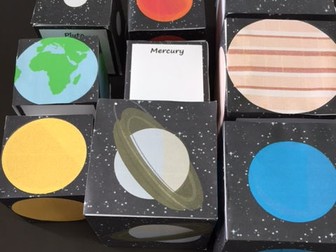
A fun and engaging 3D Solar System activity in which students build planet fact cubes for all the planets (and Pluto) before arranging them in order from the Sun. Each planet includes key facts such as size, distance from the Sun and other important Space topic information. This highly visual and interactive resource helps students develop their understanding of the Solar System while creating an impressive classroom display. Perfect for: KS2 Space topics KS3 Physics lessons Solar System revision STEM activities Science display work Cover lessons End-of-term projects Interactive classroom activities Students cut out, assemble and organise the planets, making this a far more memorable alternative to traditional worksheet-based learning. Included: 3D printable planet fact cubes All planets plus Pluto Planet information and key facts Ready-to-print classroom activity The completed models make an excellent hanging display or classroom exhibit for Space and Astronomy topics. Printing guidance: Larger planets (Jupiter, Saturn, Uranus and Neptune) should be printed on A3 card Smaller planets can be printed on A4 card Suitable for Year 5 to Year 9 Science students and adaptable for a range of ability levels. A highly engaging hands-on resource for teaching the Solar System and planetary science.
GCSE Biology Revision Board Game | Win Lose or Draw ActivityQuick View
alexpboulton

GCSE Biology Revision Board Game | Win Lose or Draw Activity

(0)
A fun and highly engaging GCSE Biology revision board game based on the classic “Win, Lose or Draw” format. Students have 60 seconds to draw a Biology keyword while teammates try to correctly identify the term, making this an excellent active revision and retrieval practice activity. This resource is consistently popular with GCSE Biology students and works brilliantly for: GCSE Biology revision lessons End-of-topic revision Retrieval practice Starter or plenary activities Cover lessons Small group competition tasks End-of-term fun lessons The game encourages students to recall and explain key Biology vocabulary while developing confidence with scientific terminology in a relaxed and interactive way. Included: Biology keyword cards Printable playing board Counters Drawing boards/templates Full game instructions Ready-to-print classroom resource The activity is easy to set up and ideal for maintaining engagement during revision lessons while still reinforcing essential GCSE Biology content. Suitable for GCSE and IGCSE Biology students and adaptable for mixed ability classes. A fantastic low-prep revision game that combines retrieval practice with teamwork and competition.
Fluid Mosaic Model 3D Cube | A Level Biology Cell Membrane ActivityQuick View
alexpboulton

Fluid Mosaic Model 3D Cube | A Level Biology Cell Membrane Activity

(0)
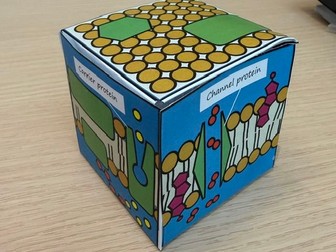
A highly visual and engaging 3D fluid mosaic model activity designed to help students understand the structure of the cell membrane at A Level Biology. Students identify, label and assemble the different components of the fluid mosaic model before constructing a 3D cube representation of the membrane. The resource also includes a feature-definition matching/table fill activity to reinforce understanding of the role and function of key membrane components. This hands-on Biology resource provides a far more effective alternative to traditional textbook diagrams and helps students visualise membrane structure in three dimensions. Perfect for teaching and revising: Fluid mosaic model Cell membrane structure Phospholipid bilayer Channel proteins Carrier proteins Glycoproteins Cholesterol Membrane transport Ideal for: A Level Biology lessons IB Biology Advanced Biology revision Retrieval practice Interactive classroom activities Cover lessons and consolidation tasks Included: Printable 3D fluid mosaic model cube Labelling activity Feature and definition table fill task Answer sheet/mark scheme Ready-to-use classroom resource Students actively build and explore the structure of the cell membrane while reinforcing key terminology and functions, making complex A Level Biology content easier to understand and remember. Suitable for A Level Biology, IB Biology and high-attaining GCSE students. A highly engaging low-prep Biology resource that works particularly well for revision lessons, independent learning and classroom displays.
Element Symbols Playing Cards | KS3 GCSE Chemistry Revision GameQuick View
alexpboulton

Element Symbols Playing Cards | KS3 GCSE Chemistry Revision Game

(0)
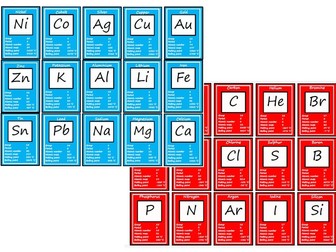
A fun and versatile set of Chemistry playing cards featuring 30 element symbols from the periodic table. Metals are colour-coded in blue and non-metals in red, helping students quickly identify and classify different types of elements while developing familiarity with element names and symbols. These cards can be used in a wide range of engaging classroom activities including: Top Trumps style games Revision games Retrieval practice Matching activities Classification tasks Starter and plenary activities Small group competitions Cover lessons The resource is ideal for helping students improve recall of: Element symbols Element names Metals and non-metals Periodic table knowledge Chemistry vocabulary Included: 30 printable element playing cards Colour-coded metals and non-metals Blank card templates for student completion Flexible classroom uses Ready-to-print resource The blank cards allow students to create their own element cards, making the activity ideal for independent learning, revision and consolidation tasks. Suitable for KS3 Science, GCSE Chemistry and IGCSE Chemistry students. A highly engaging low-prep resource that encourages active learning and makes periodic table revision far more interactive and memorable.