R.E Unit - Reception - What makes us special?Quick View
CMarie1

R.E Unit - Reception - What makes us special?

(0)
This is a unit block of 6 R.E reception lessons. The unit focuses on the key question ‘What makes us special?’. During each lesson, the children will explore God, and Christianity and the link between being special and how God helps Christians feel this way.
History - Houses Past and Present - Reception UnitQuick View
CMarie1

History - Houses Past and Present - Reception Unit

(0)
The Unit of Houses Past and Present, covers prior knowledge of what objects, items and buildings might have looked like in the past and comparing them to modern day. The unit focuses on houses, and buildings such as schools. The children leave key vocabulary and use lots of AFL to test their knowledge and challenge them during this unit.
Guided Reading - Year 2Quick View
CMarie1

Guided Reading - Year 2

(0)
A week of guided reading resources. The guided reading slides link to John Murray Guided Reading - Core 4 and Vipers stratergies. This week of work is on Cinderella. First lesson - The children listen to the story and answer the first set of questions. Second Lesson/Third Lesson - Listen to the story again and the children focus on the vocabulary, what does it mean, put it in a sentence, make an action. Fourth/Fifth Lesson - The children apply their knowledge to answer questions surrounding the text. Fifth Lesson - If there is any time, the children read for pleasure.
EYFS - Letter Formation Assessment Documents.Quick View
CMarie1

EYFS - Letter Formation Assessment Documents.

(0)
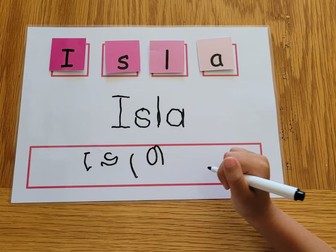
The documents can be edited per term. They contain an editable template for tracking letter formation/name writing in EYFS. The children are assessed half termly in the name writing template. I have attached an intervention timetable, and an excel spreadsheet to track which children are secure with which letter formations. In Nursery, the children focus on the letter formation of the letters in their name. In Reception, the children the progress onto the formation of all the letters in the alphabet.
Year 4 - Science - Predator, Prey and ProducerQuick View
CMarie1

Year 4 - Science - Predator, Prey and Producer

(1)
This lesson is lesson 3 in the animals including humans topic. The lesson looks at what predator and prey are, and the characteristics that make them so. It touches upon what a producer is ready for the next food chain lesson. The activity is to sort pictures of animals into predators and prey. A challenge has been added for higher ability to write a sentence about what prey can do to avoid being hunted.
Year 1 - Morning WorkQuick View
CMarie1

Year 1 - Morning Work

(0)
A variety of simple tasks to go on the board for when the children come in, to help with low level disruption. The slides can be adapted and changed to suit different classes, but the initial idea is there.
Year 4 -Science - Food ChainsQuick View
CMarie1

Year 4 -Science - Food Chains

(0)
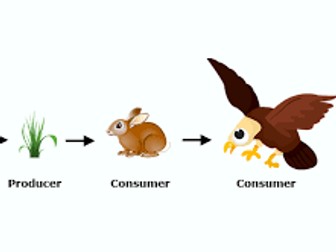
Lesson 4 of the animals including humans module. This lesson looks at describing and identifying food chains. The slides are informative and are aimed towards pupils understanding before moving on to the next lesson of food webs. There are challenges for the higher ability children. The activities include creating food chains from worksheets, putting them in order and then a challenge of creating their own.
Year 6 - Week 2 - Modal VerbsQuick View
CMarie1

Year 6 - Week 2 - Modal Verbs

(0)
This resource is an introduction to modal verbs. This can be adapted on top of and used within the second week as a writing piece with the focus being modal verbs. This is a part of the national curriculum focusing on the second week of SPaG for year 6.
Year 5 - R.E Muslim beliefs about God .Quick View
CMarie1

Year 5 - R.E Muslim beliefs about God .

(0)
This lesson is the introduction to year 5 R.E focusing on Muslim beliefs about God. The slides go through the background and information of Islam in detail. It goes through the five pillars of Islam and what each means. A spider diagram is one of the activities with the question in the middle ‘what do Muslims believe about God?’. The next task is to pick one of the names of God that Muslims use and try write it in Arabic and create a piece of artwork to go along with this. For example; AL CHAFFAR - The Great Forgiver. There is also a challenge to explain why they have drawn God this way and what it could mean to Muslim believers.
Year 4 - Science - The digestive systemQuick View
CMarie1

Year 4 - Science - The digestive system

(0)
This lesson is the second lesson in the topic animals including humans. This lesson looks at the digestive system,the vocabulary and its function. The slides are in depth and informative and tailor to lower ability and include challenges for higher ability. The task is to label the digestive system.
Year 6 - Expanded Noun PhrasesQuick View
CMarie1

Year 6 - Expanded Noun Phrases

(0)
This lesson is one of the first for year 6 SPaG. It can be used as an introduction and adapted or built upon with a writing task afterwards.
Year 4 - Science - Food WebQuick View
CMarie1

Year 4 - Science - Food Web

(0)
This lesson concludes the animals including humans topic. The slides look at how a habitat is codependent on all the living things in the ecosystem. It touches on what an ecosystem is and what would happen if a producer was taken away. The slides include a ‘do it together’ food web, and an activity to cut and stick producers, consumers and predators in the food web. With the challenge for the higher ability to write about the food web they have created.