Snakes and Ladders gameboard for Chinese learningQuick View
Doraleqi

Snakes and Ladders gameboard for Chinese learning

(0)
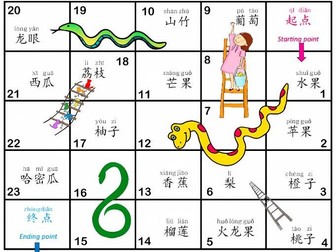
This game is a Chinese version inspired by Snakes and Ladders. The rules of the game are as follows: Students play in pairs. Each group needs one dice, and each student needs a small object to represent themselves, such as a small piece of colored paper or different colors of modeling clay. Students take turns rolling the dice to determine the number of steps to move. Landing on a ladder allows the player to climb up and advance to a higher square. If they land on a snake’s head, they must slide back down to the snake’s tail. The first player to reach the finish line wins the game. The game board is available in both horizontal and vertical layouts. Each layout comes in four different designs: a blank board, a board with numbers, a board with Chinese characters, and a board with both Chinese characters and Pinyin. For boards with Chinese characters, teachers can assign specific tasks. Students must complete the corresponding task before continuing the game. For example, if a student lands on the word “苹果” (apple), one student might ask, “你爱吃苹果吗?” (Do you like to eat apples?), and the other would answer, “我爱吃苹果” (I like to eat apples) or “我不爱吃苹果” (I don’t like to eat apples), before continuing the game. Teachers may choose the appropriate version of the board according to their teaching needs.
Snakes and Ladders gameboard for Chinese learningQuick View
Doraleqi

Snakes and Ladders gameboard for Chinese learning

(0)
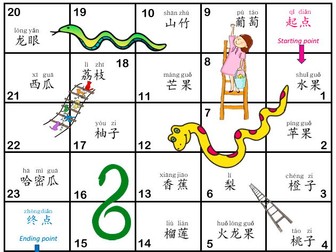
This game is a Chinese version designed with reference to the Snakes and Ladders game. The rules of the game are as follows: Students play the game in pairs. Each pair needs one dice, and each player needs a small object to represent themselves, such as a small piece of colored paper, different colors of modeling clay, etc. Students roll the dice to determine the number of steps they move each turn. If they land on a ladder, they can climb up to a higher position; if they land on a snake’s head, they must move back to the snake’s tail. The first player to reach the ending point wins. This game board comes in both horizontal and vertical versions, with four designs for each: a blank grid board, a numbered board, a board with Chinese characters, and a board with both Chinese characters and Pinyin. If using a board with Chinese characters, teachers can set corresponding tasks, requiring students to complete a task related to the Chinese character they land on before continuing the game. For example, if they land on the word “苹果” (apple), one student might ask: “Do you like eating apples?你喜欢吃苹果吗?” and the other would respond: “I like eating apples我喜欢吃苹果” (or: “I don’t like eating apples我不喜欢吃苹果。”), after which they continue the game. Teachers can choose the appropriate version according to their needs.